Departamento de Ciencias Agronómicas y Recursos Naturales, Facultad de Ciencias Agropecuarias y Medioambiente and Center of Plant, Soil Interactions and Natural Resources Biotechnology, Scientific and Technological Bioresource Nucleus, Universidad de La Frontera, Temuco 4811230, Chile.
Biocontrol Research Laboratory and Scientific and Technological Bioresource Nucleus, Universidad de La Frontera, Temuco 4811230, Chile.
Int J Mol Sci. 2023 Jul 7;24(13):11211. doi: 10.3390/ijms241311211.
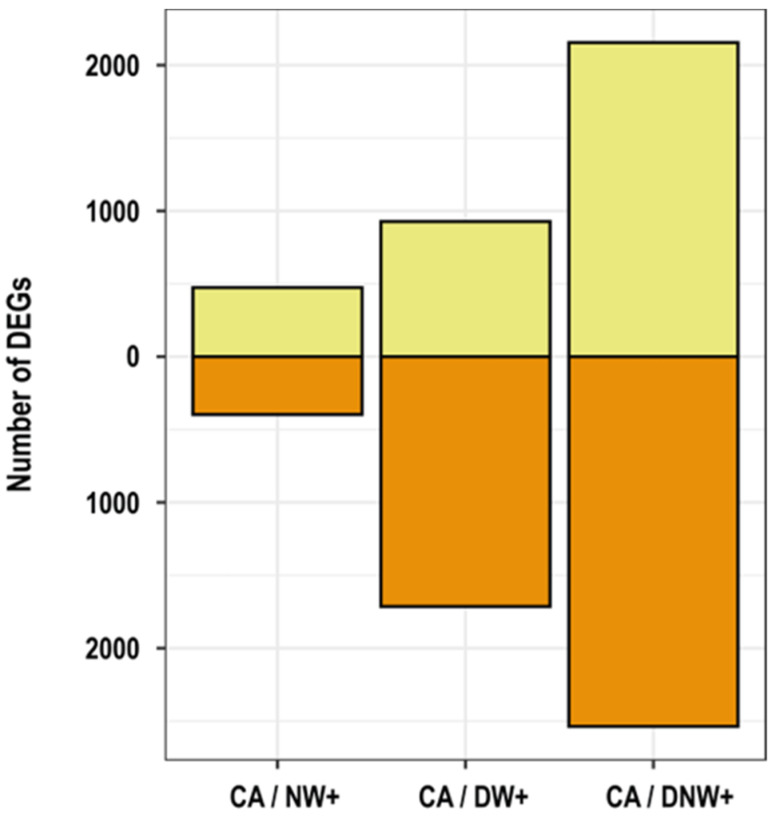
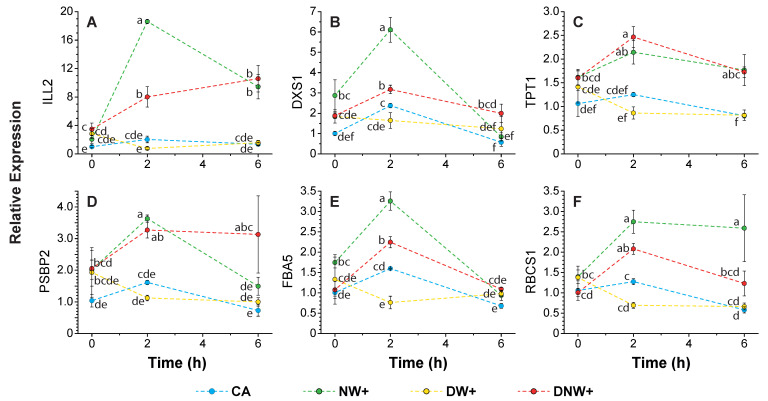
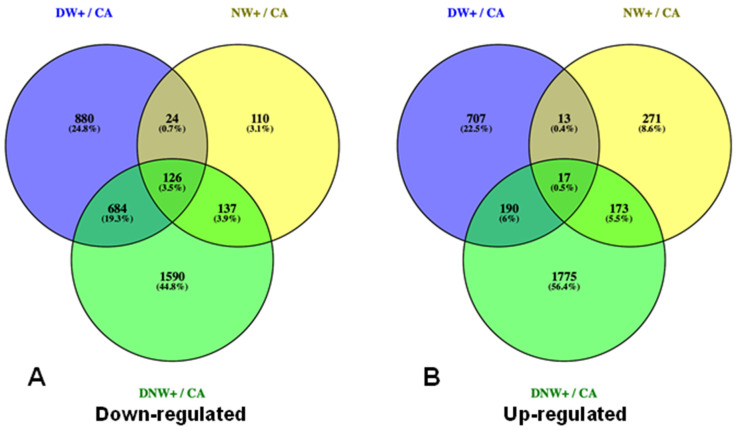
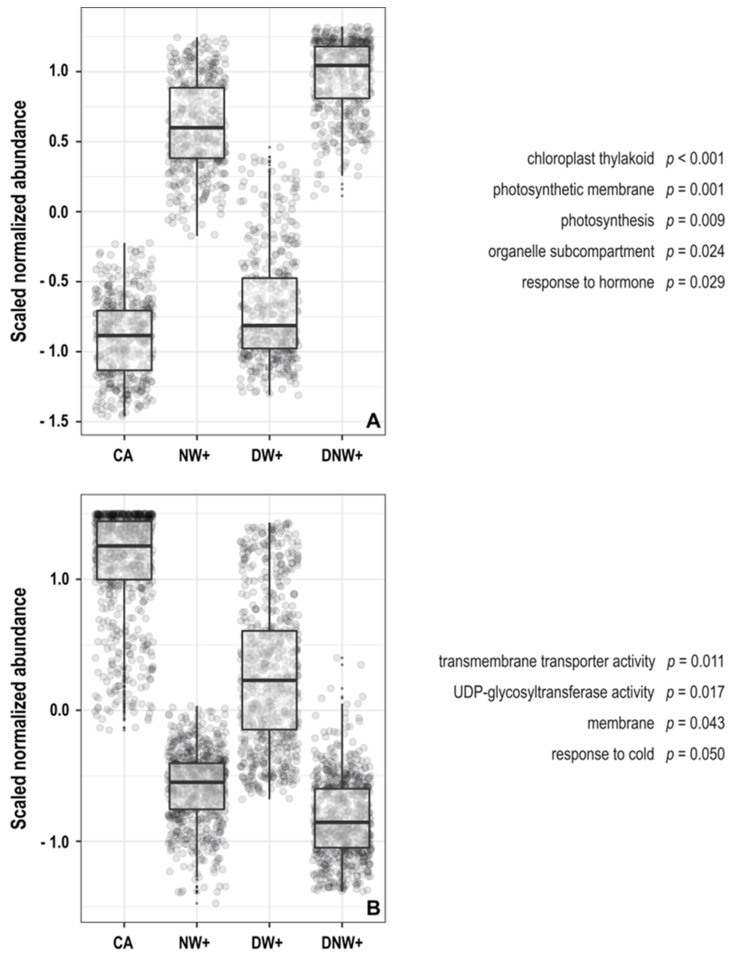
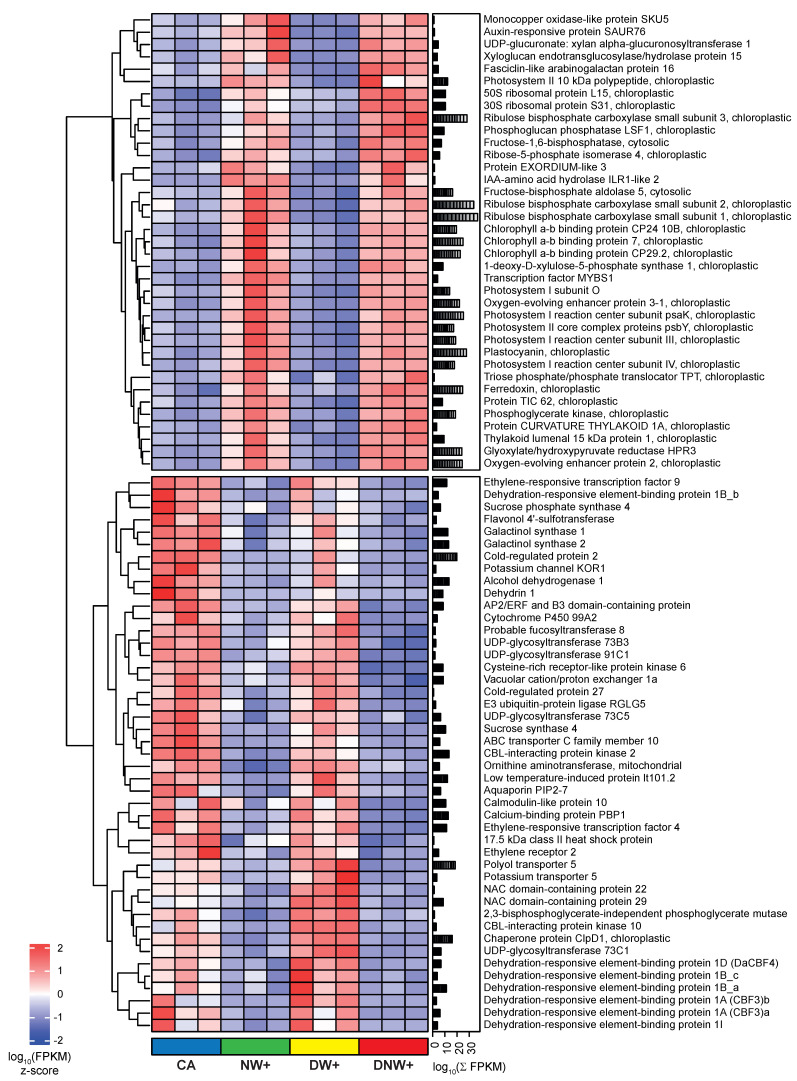
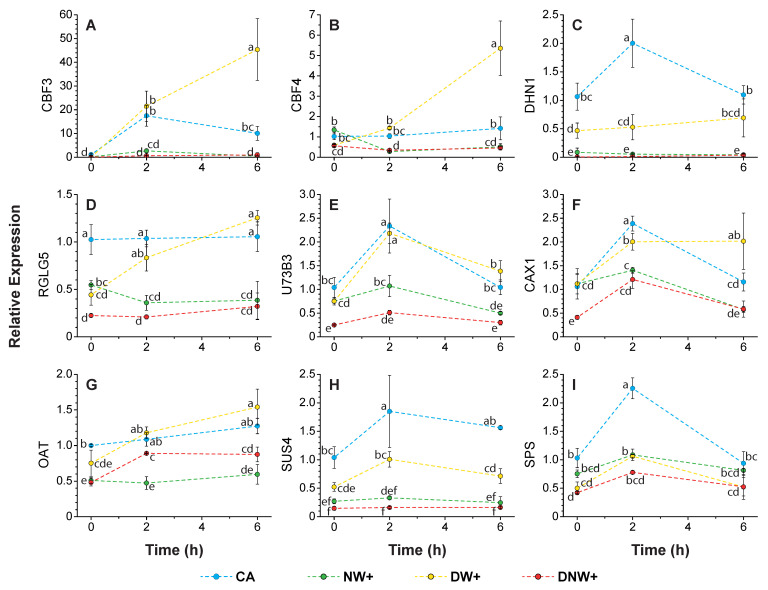
Warming in the Antarctic Peninsula is one of the fastest on earth, and is predicted to become more asymmetric in the near future. Warming has already favored the growth and reproduction of Antarctic plant species, leading to a decrease in their freezing tolerance (deacclimation). Evidence regarding the effects of diurnal and nocturnal warming on freezing tolerance-related gene expression in is negligible. We hypothesized that freezing tolerance-related gene (such as CBF-regulon) expression is reduced mainly by nocturnal warming rather than diurnal temperature changes in The present work aimed to determine the effects of diurnal and nocturnal warming on cold deacclimation and its associated gene expression in , under laboratory conditions. Fully cold-acclimated plants (8 °C/0 °C), with 16h/8h thermoperiod and photoperiod duration, were assigned to four treatments for 14 days: one control (8 °C/0 °C) and three with different warming conditions (diurnal (14 °C/0 °C), nocturnal (8 °C/6 °C), and diurnal-nocturnal (14 °C/6 °C). RNA-seq was performed and differential gene expression was analyzed. Nocturnal warming significantly down-regulated the CBF transcription factors expression and associated cold stress response genes and up-regulated photosynthetic and growth promotion genes. Consequently, nocturnal warming has a greater effect than diurnal warming on the cold deacclimation process in . The eco-physiological implications are discussed.
南极半岛的变暖速度是地球上最快的之一,预计在不久的将来会变得更加不对称。变暖已经有利于南极植物物种的生长和繁殖,导致它们的抗冻能力下降(去驯化)。关于昼夜变暖对南极植物抗冻相关基因表达的影响的证据几乎没有。我们假设,与昼夜温度变化相比,主要是夜间变暖降低了与抗冻能力相关的基因(如 CBF 调控因子)的表达。本研究旨在确定昼夜和夜间变暖对实验室条件下南极植物冷驯化及其相关基因表达的影响。完全冷驯化的植物(8°C/0°C),具有 16h/8h 温度周期和光照周期持续时间,被分配到四个处理组中 14 天:一个对照(8°C/0°C)和三个不同的加热条件(昼夜(14°C/0°C)、夜间(8°C/6°C)和昼夜夜间(14°C/6°C)。进行了 RNA-seq 并分析了差异基因表达。夜间变暖显著下调了 CBF 转录因子的表达和相关的冷胁迫反应基因,并上调了光合作用和生长促进基因。因此,与昼夜变暖相比,夜间变暖对南极植物的冷驯化过程有更大的影响。讨论了生态生理意义。