School of Food Science and Bioengineering, Hunan Provincial Key Laboratory of Cytochemistry, Changsha University of Science & Technology, Changsha 410114, China.
School of Food Science and Engineering, Qilu University of Technology, Jinan 250353, China.
Molecules. 2023 Jul 5;28(13):5224. doi: 10.3390/molecules28135224.
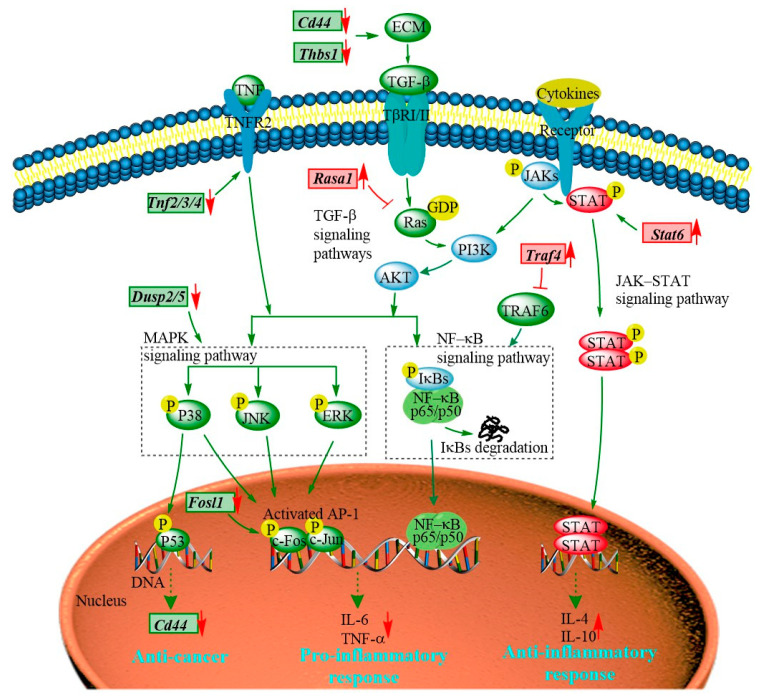
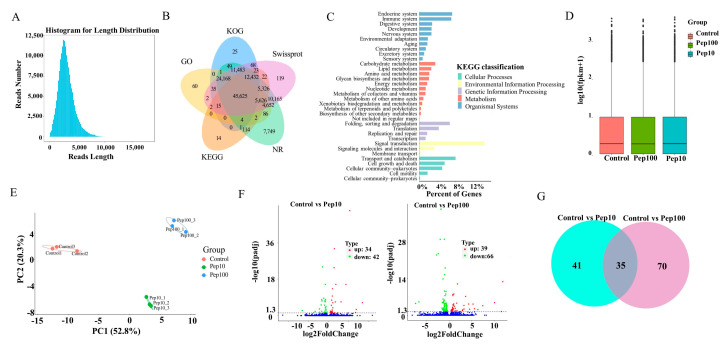
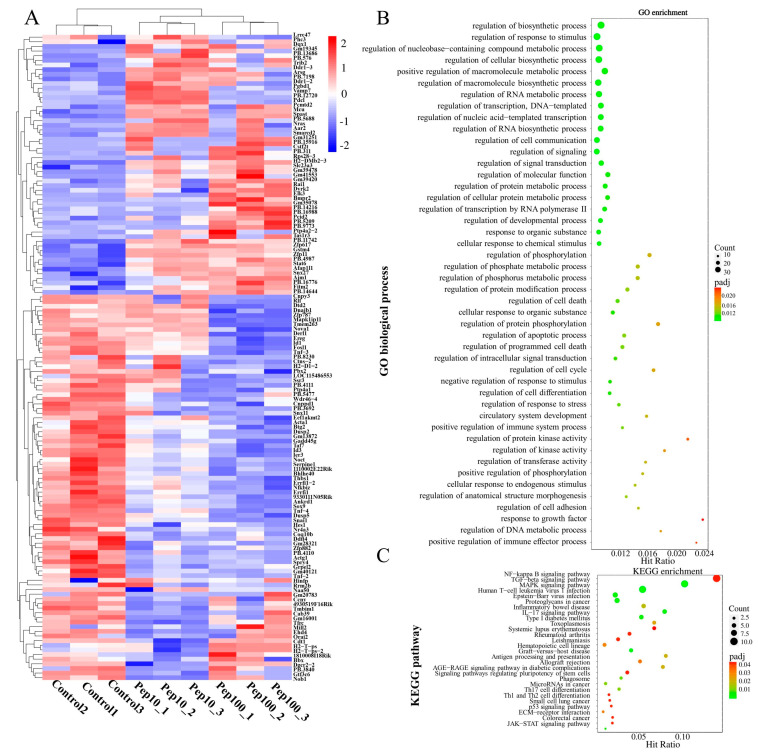
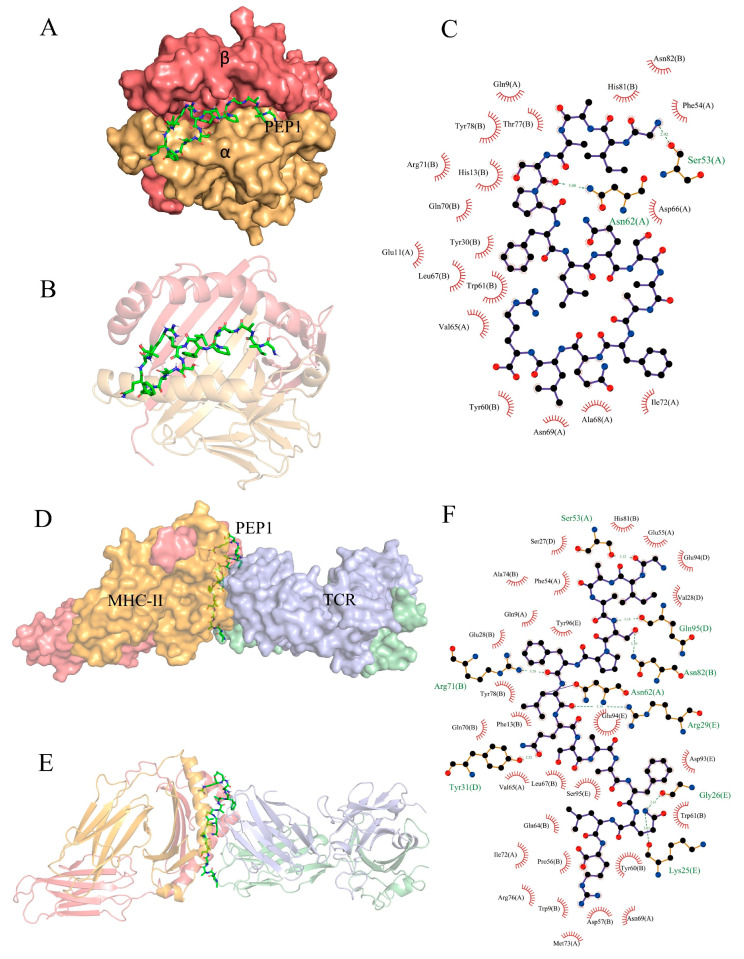
Some food-derived bioactive peptides exhibit prominent immunoregulatory activity. We previously demonstrated that the rice-derived PEP1 peptide, GIAASPFLQSAAFQLR, has strong immunological activity. However, the mechanism of this action is still unclear. In the present study, full-length transcripts of mouse dendritic cells (DC2.4) treated with PEP1 were sequenced using the PacBio sequencing platform, and the transcriptomes were compared via RNA sequencing (RNA-Seq). The characteristic markers of mature DCs, the cluster of differentiation CD86, and the major histocompatibility complex (MHC-II), were significantly upregulated after the PEP1 treatment. The molecular docking suggested that hydrogen bonding and electrostatic interactions played important roles in the binding between PEP1, MHC-II, and the T-cell receptor (TCR). In addition, the PEP1 peptide increased the release of anti-inflammatory factors (interleukin-4 and interleukin-10) and decreased the release of pro-inflammatory factors (interleukin-6 and tumor necrosis factor-α). Furthermore, the RNA-seq results showed the expression of genes involved in several signaling pathways, such as the NF-κB, MAPK, JAK-STAT, and TGF-β pathways, were regulated by the PEP1 treatment, and the changes confirmed the immunomodulatory effect of PEP1 on DC2.4 cells. This findings revealed that the PEP1 peptide, derived from the byproduct of rice processing, is a potential natural immunoregulatory alternative for the treatment of inflammation.
一些食物来源的生物活性肽具有显著的免疫调节活性。我们之前证明,源于大米的 PEP1 肽 GIAASPFLQSAAFQLR 具有很强的免疫活性。然而,其作用机制尚不清楚。在本研究中,我们使用 PacBio 测序平台对经 PEP1 处理的小鼠树突状细胞 (DC2.4) 的全长转录本进行测序,并通过 RNA 测序 (RNA-Seq) 比较转录组。成熟 DC 的特征标记物,分化抗原 CD86 和主要组织相容性复合体 (MHC-II),在 PEP1 处理后显著上调。分子对接表明氢键和静电相互作用在 PEP1、MHC-II 和 T 细胞受体 (TCR) 之间的结合中起重要作用。此外,PEP1 肽增加了抗炎因子(白细胞介素 4 和白细胞介素 10)的释放,减少了促炎因子(白细胞介素 6 和肿瘤坏死因子-α)的释放。此外,RNA-seq 结果表明,PEP1 处理调节了几个信号通路(如 NF-κB、MAPK、JAK-STAT 和 TGF-β 通路)中参与的基因表达,这些变化证实了 PEP1 对 DC2.4 细胞的免疫调节作用。这些发现表明,源于大米加工副产物的 PEP1 肽是一种有潜力的天然免疫调节剂,可用于炎症治疗。