Department of Neurology, University of Michigan, Ann Arbor, MI 48109, USA.
University of Michigan Medical School, Ann Arbor, MI 48109, USA.
Nutrients. 2023 Jul 7;15(13):3068. doi: 10.3390/nu15133068.
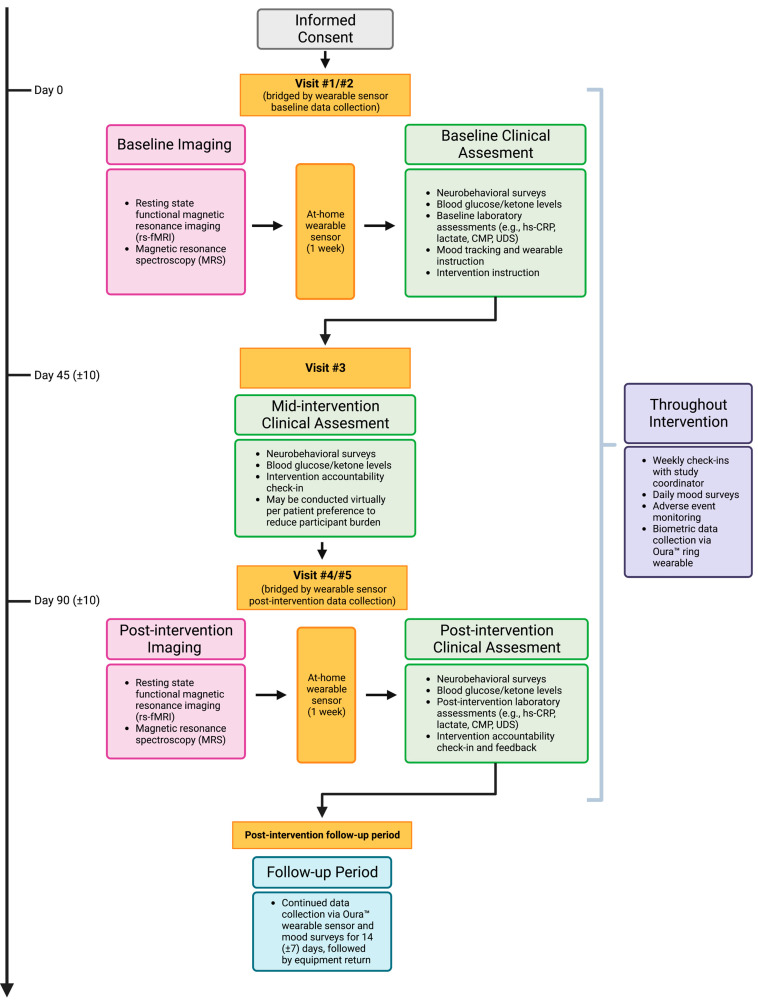
There is growing interest in the investigation of ketogenic diets as a potential therapy for bipolar disorder. The overlapping pharmacotherapies utilized for both bipolar disorder and seizures suggest that a mechanistic overlap may exist between these conditions, with fasting and the ketogenic diet representing the most time-proven therapies for seizure control. Recently, preliminary evidence has begun to emerge supporting a potential role for ketogenic diets in treating bipolar disorder. Notably, some patients may struggle to initiate a strict diet in the midst of a mood episode or significant life stressors. The key question addressed by this pilot clinical trial protocol is if benefits can be achieved with a less restrictive diet, as this would allow such an intervention to be accessible for more patients. Recent development of so-called ketone esters, that once ingested is converted to natural ketone bodies, combined with low glycemic index dietary changes has the potential to mimic two foundational components of therapeutic ketosis: high levels of ketones and minimal spiking of glucose/insulin. This pilot clinical trial protocol thus aims to investigate the effect of a 'ketogenic-mimicking diet' (combining supplementation of ketone esters with a low glycemic index dietary intervention) on neural network stability, mood, and biomarker outcomes in the setting of bipolar disorder. Positive findings obtained via this pilot clinical trial protocol may support future target engagement studies of ketogenic-mimicking diets or related ketogenic interventions. A lack of positive findings, in contrast, may justify a focus on more strict dietary interventions for future research.
人们对生酮饮食作为双相情感障碍潜在治疗方法的研究兴趣日益浓厚。双相情感障碍和癫痫的重叠治疗方法表明,这两种情况之间可能存在机制上的重叠,禁食和生酮饮食是控制癫痫最久经考验的疗法。最近,初步证据开始支持生酮饮食在治疗双相情感障碍方面的潜在作用。值得注意的是,一些患者可能在情绪发作或重大生活压力期间难以开始严格的饮食。这项初步临床试验方案所解决的关键问题是,如果通过限制较少的饮食可以获得益处,那么这种干预措施是否可以为更多的患者所接受。最近开发的所谓酮酯,一旦被摄入,就会转化为天然酮体,结合低血糖指数的饮食改变,有可能模拟治疗性酮症的两个基本组成部分:高酮水平和最小的葡萄糖/胰岛素飙升。因此,这项初步临床试验方案旨在研究“生酮模拟饮食”(将酮酯补充与低血糖指数饮食干预相结合)对双相情感障碍患者神经网络稳定性、情绪和生物标志物结果的影响。通过这项初步临床试验方案获得的积极发现可能支持未来对生酮模拟饮食或相关生酮干预的靶向作用研究。相反,如果没有积极的发现,可能需要将重点放在未来研究中更严格的饮食干预上。