Lu Jiewei, He Dahang, Zhao Zhenyi, Bao Hong
Key Laboratory of Electronic Equipment Structure Design, Ministry of Education, Xidian University, Xi'an 710071, China.
Intelligent Robot Laboratory, Hangzhou Research Institute of Xidian University, Hangzhou 311231, China.
Sensors (Basel). 2023 Jun 21;23(13):5793. doi: 10.3390/s23135793.
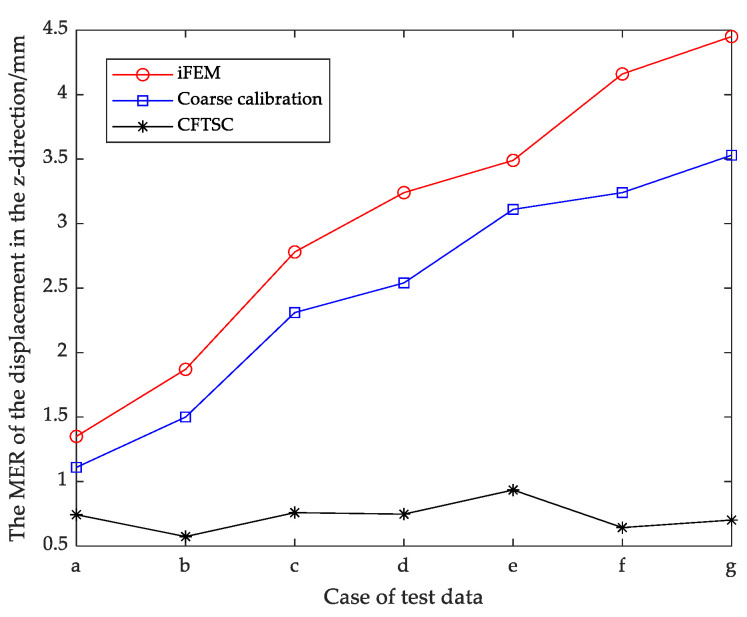
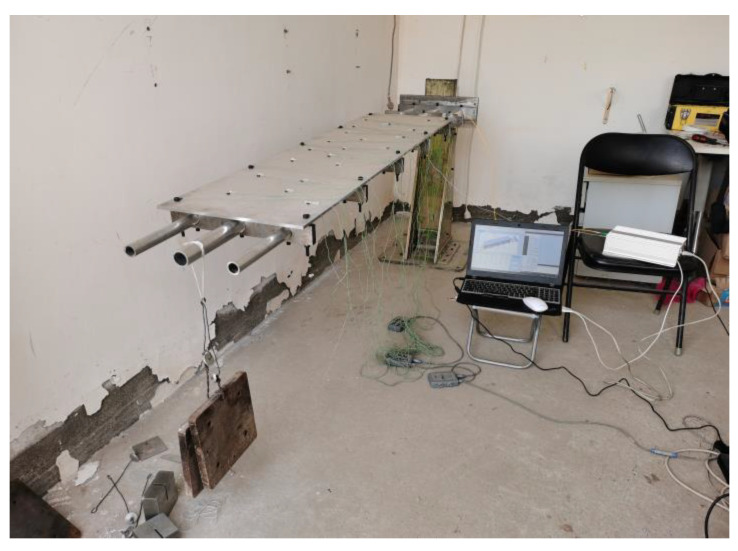
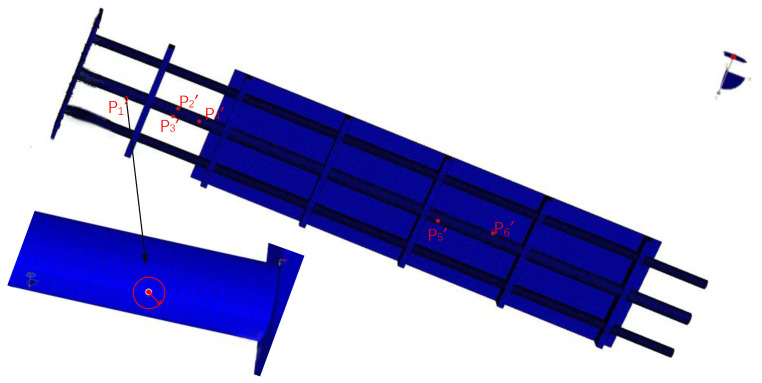
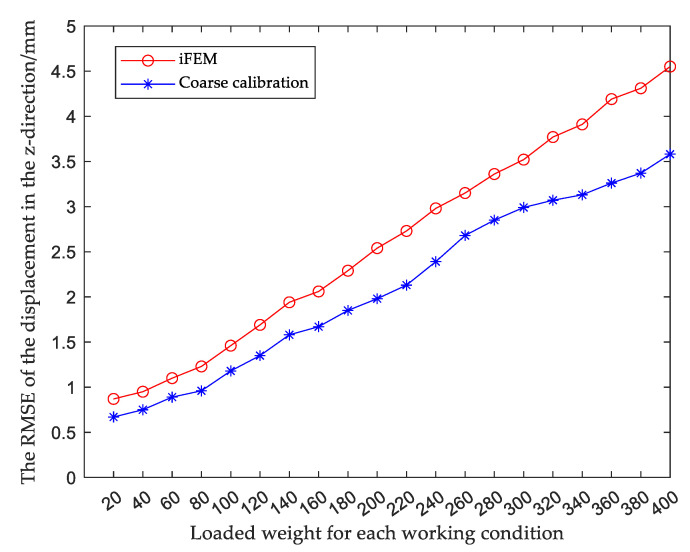
The inverse finite element method (iFEM) is a novel method for reconstructing the full-field displacement of structures by discrete measurement strain. In practical engineering applications, the accuracy of iFEM is reduced due to the positional offset of strain sensors during installation and errors in structural installation. Therefore, a coarse and fine two-stage calibration (CFTSC) method is proposed to enhance the accuracy of the reconstruction of structures. Firstly, the coarse calibration is based on a single-objective particle swarm optimization algorithm (SOPSO) to optimize the displacement-strain transformation matrix related to the sensor position. Secondly, as selecting different training data can affect the training effect of self-constructed fuzzy networks (SCFN), this paper proposes to screen the appropriate training data based on residual analysis. Finally, the experiments of the wing-integrated antenna structure verify the efficiency of the method on the reconstruction accuracy of the structural body displacement field.
逆有限元法(iFEM)是一种通过离散测量应变来重构结构全场位移的新方法。在实际工程应用中,由于应变传感器在安装过程中的位置偏移以及结构安装误差,iFEM的精度会降低。因此,提出了一种粗、细两级校准(CFTSC)方法来提高结构重构的精度。首先,粗校准基于单目标粒子群优化算法(SOPSO)来优化与传感器位置相关的位移 - 应变变换矩阵。其次,由于选择不同的训练数据会影响自构建模糊网络(SCFN)的训练效果,本文提出基于残差分析筛选合适的训练数据。最后,机翼集成天线结构的实验验证了该方法对结构体位移场重构精度的有效性。