School of Computer Science, University of Nottingham Ningbo China, Ningbo 315100, China.
Nottingham Ningbo China Beacons of Excellence Research and Innovation Institute, School of Computer Science, University of Nottingham Ningbo China, Ningbo 315100, China.
Sensors (Basel). 2023 Jul 2;23(13):6099. doi: 10.3390/s23136099.
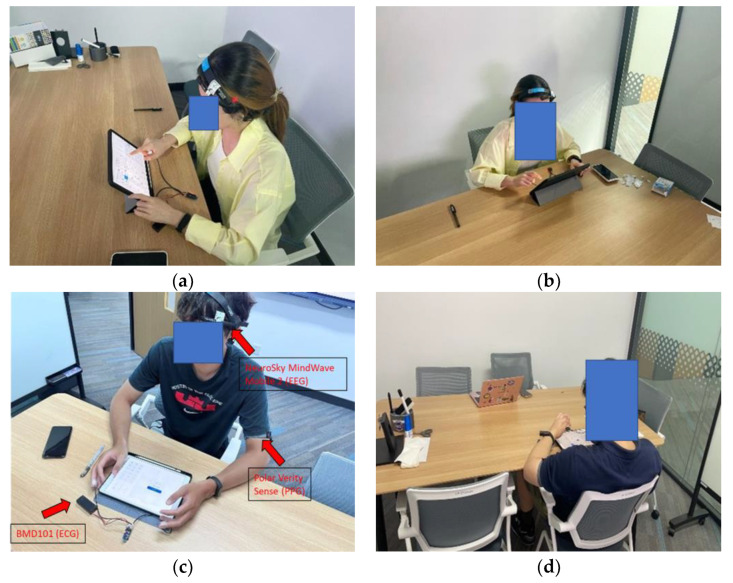
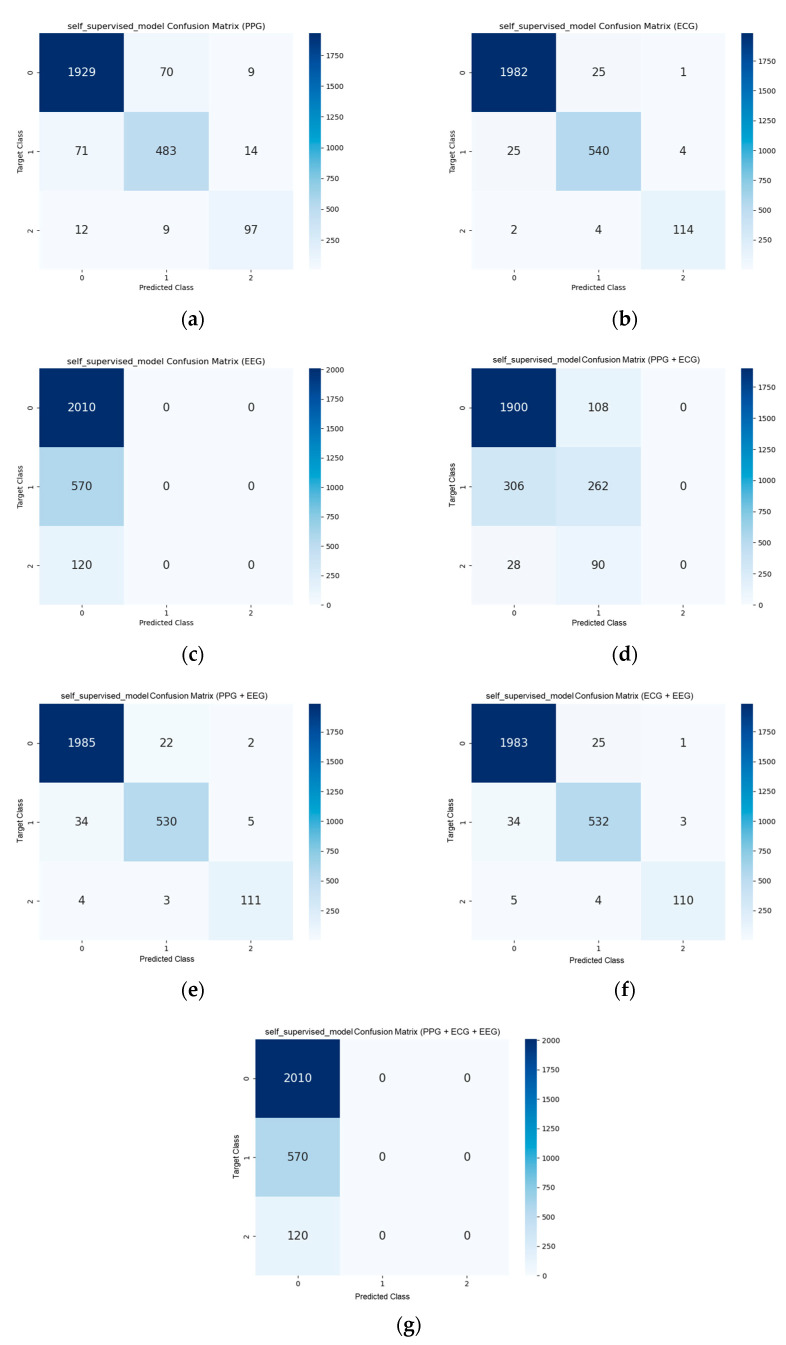
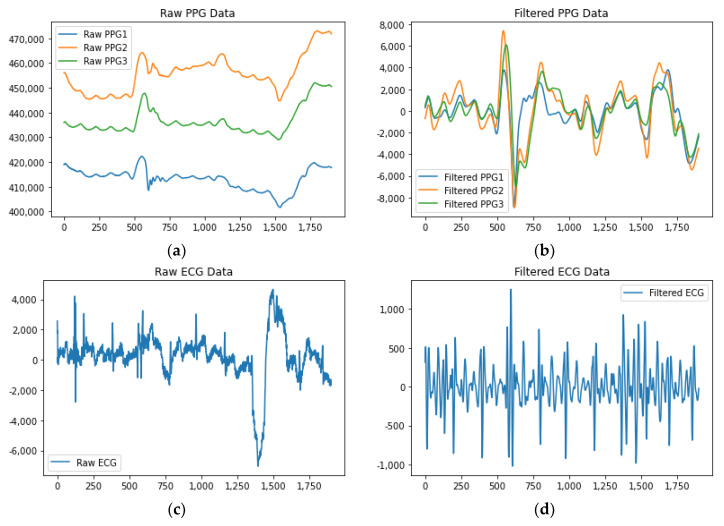
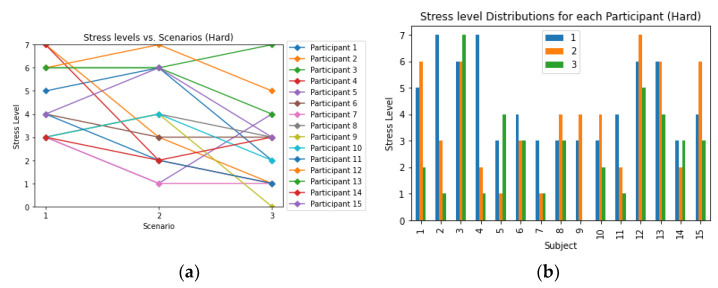
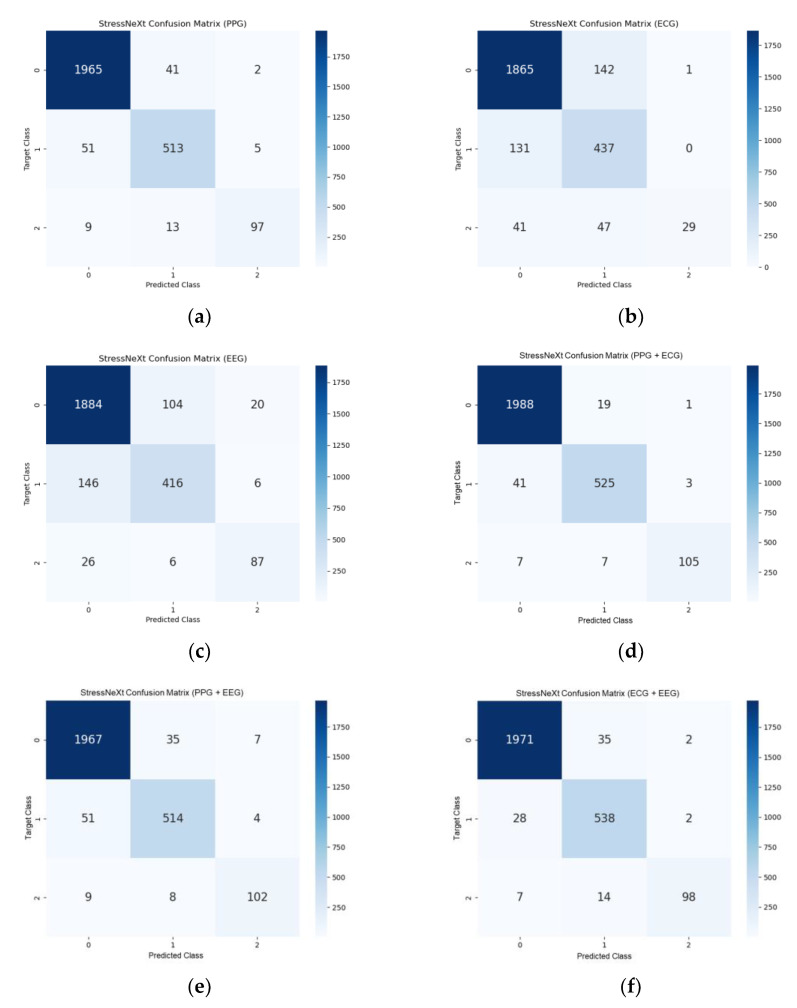
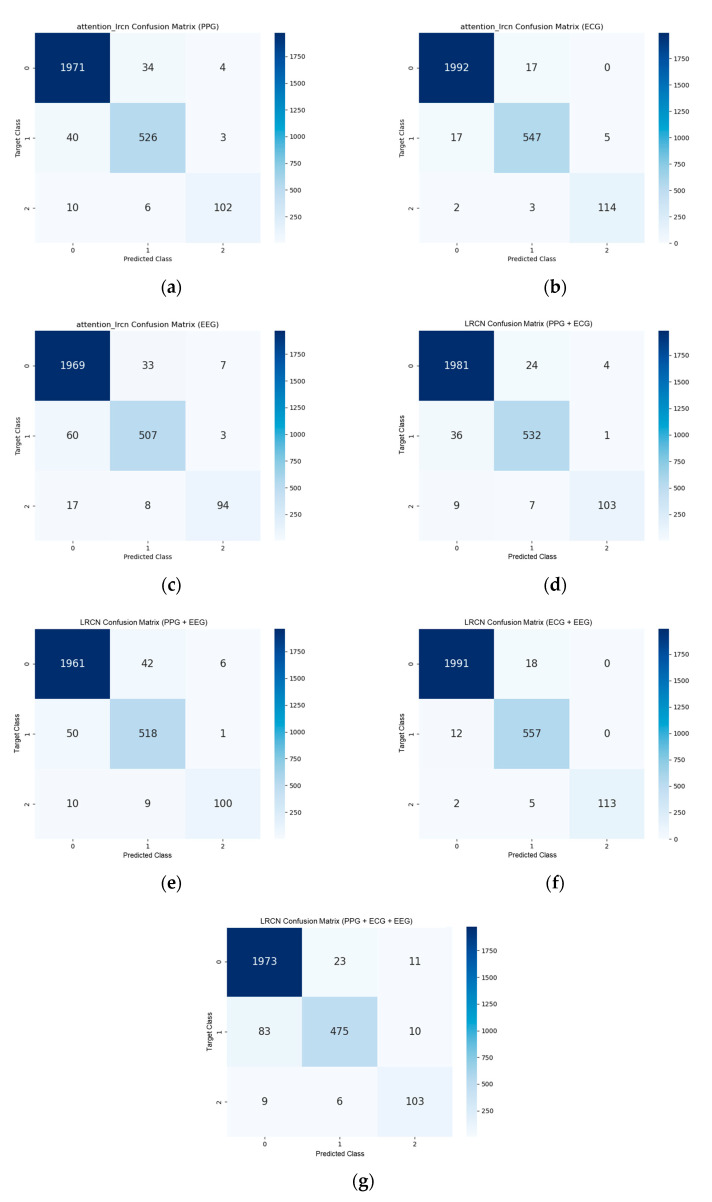
Due to the phenomenon of "involution" in China, the current generation of college and university students are experiencing escalating levels of stress, both academically and within their families. Extensive research has shown a strong correlation between heightened stress levels and overall well-being decline. Therefore, monitoring students' stress levels is crucial for improving their well-being in educational institutions and at home. Previous studies have primarily focused on recognizing emotions and detecting stress using physiological signals like ECG and EEG. However, these studies often relied on video clips to induce various emotional states, which may not be suitable for university students who already face additional stress to excel academically. In this study, a series of experiments were conducted to evaluate students' stress levels by engaging them in playing Sudoku games under different distracting conditions. The collected physiological signals, including PPG, ECG, and EEG, were analyzed using enhanced models such as LRCN and self-supervised CNN to assess stress levels. The outcomes were compared with participants' self-reported stress levels after the experiments. The findings demonstrate that the enhanced models presented in this study exhibit a high level of proficiency in assessing stress levels. Notably, when subjects were presented with Sudoku-solving tasks accompanied by noisy or discordant audio, the models achieved an impressive accuracy rate of 95.13% and an F1-score of 93.72%. Additionally, when subjects engaged in Sudoku-solving activities with another individual monitoring the process, the models achieved a commendable accuracy rate of 97.76% and an F1-score of 96.67%. Finally, under comforting conditions, the models achieved an exceptional accuracy rate of 98.78% with an F1-score of 95.39%.
由于中国的“内卷化”现象,当前这一代的大学生在学业和家庭方面承受着越来越大的压力。大量研究表明,压力水平的升高与整体幸福感的下降之间存在很强的相关性。因此,监测学生的压力水平对于改善他们在教育机构和家庭中的幸福感至关重要。之前的研究主要集中在通过 ECG 和 EEG 等生理信号来识别情绪和检测压力,但这些研究往往依赖于视频剪辑来诱发各种情绪状态,而对于已经面临额外学术压力的大学生来说,这可能并不合适。在这项研究中,通过让学生在不同分心条件下玩数独游戏,进行了一系列实验来评估学生的压力水平。收集的生理信号,包括 PPG、ECG 和 EEG,使用增强模型(如 LRCN 和自监督 CNN)进行分析,以评估压力水平。实验后,将结果与参与者的自我报告压力水平进行比较。研究结果表明,该研究中提出的增强模型在评估压力水平方面表现出很高的水平。值得注意的是,当受试者在伴有嘈杂或不和谐音频的情况下完成数独任务时,模型的准确率达到了 95.13%,F1 得分为 93.72%。此外,当受试者在另一个人监控的情况下完成数独活动时,模型的准确率达到了 97.76%,F1 得分为 96.67%。最后,在舒适的条件下,模型的准确率达到了 98.78%,F1 得分为 95.39%。