• 文献检索
  • 文档翻译
  • 深度研究
  • 学术资讯
  • Suppr Zotero 插件Zotero 插件
  • 邀请有礼
  • 套餐&价格
  • 历史记录
应用&插件
Suppr Zotero 插件Zotero 插件浏览器插件Mac 客户端Windows 客户端微信小程序
定价
高级版会员购买积分包购买API积分包
服务
文献检索文档翻译深度研究API 文档MCP 服务
关于我们
关于 Suppr公司介绍联系我们用户协议隐私条款
关注我们

Suppr 超能文献

核心技术专利:CN118964589B侵权必究
粤ICP备2023148730 号-1Suppr @ 2026

文献检索

告别复杂PubMed语法,用中文像聊天一样搜索,搜遍4000万医学文献。AI智能推荐,让科研检索更轻松。

立即免费搜索

文件翻译

保留排版,准确专业,支持PDF/Word/PPT等文件格式,支持 12+语言互译。

免费翻译文档

深度研究

AI帮你快速写综述,25分钟生成高质量综述,智能提取关键信息,辅助科研写作。

立即免费体验

鼻内急救疗法在癫痫学生癫痫发作丛集期的应用:护士的知识、认知与实践

Use of intranasal rescue therapy for seizure clusters in students with epilepsy: Nurses' knowledge, perceptions, and practice.

作者信息

Santilli Nancy, Dewar Sandra, Guerra Cynthia, Misra Sunita N, Rabinowicz Adrian L, Carrazana Enrique

机构信息

Human Care Systems, 720-84 State St, Boston, MA 02109, United States.

Department of Neurology, Virginia Commonwealth University School of Medicine, 1101 E Marshall St, Richmond, VA 23298-0599, United States.

出版信息

Epilepsy Behav Rep. 2023 Apr 27;22:100604. doi: 10.1016/j.ebr.2023.100604. eCollection 2023.

DOI:10.1016/j.ebr.2023.100604
PMID:37448486
原文链接:https://pmc.ncbi.nlm.nih.gov/articles/PMC10337358/
Abstract

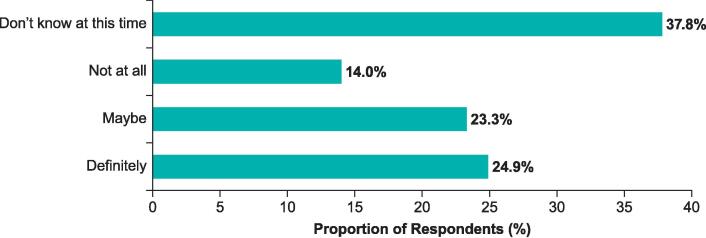
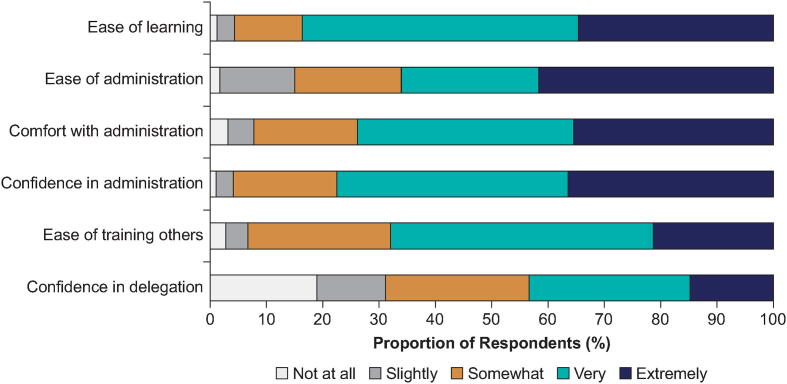
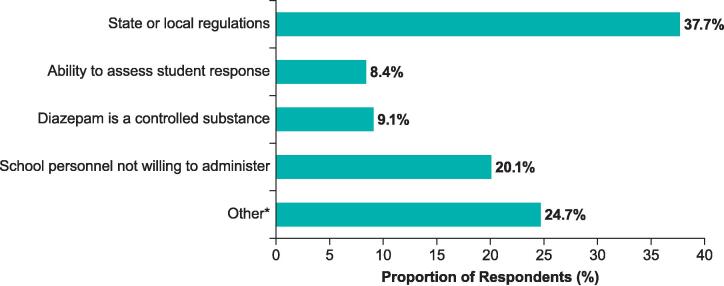
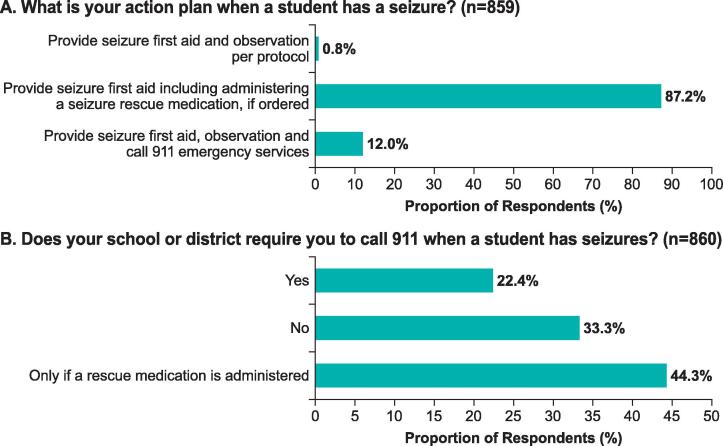
School nurses play a crucial role in the prompt, appropriate response to epilepsy-related seizure emergencies among students in the school setting. Two intranasal benzodiazepine rescue therapies are now approved and offer potential benefits of being easy to use and socially acceptable. In July 2021, a survey was sent to 49,314 US school nurses to assess knowledge, perceptions, and practice with seizure rescue therapy. Responses were received from 866 (1.8% response rate). Of respondents, 45.7% had used rectal diazepam gel; 9.3%, midazolam nasal spray; and 6.0%, diazepam nasal spray. The majority (58.7%) had not delegated authority to administer rescue therapy, with state/local regulations and lack of willingness of school personnel being the most common barriers to delegation (37.7% and 20.1%, respectively). Additional training of nurses and school staff and progress on delegation policies may help optimize appropriate use of intranasal rescue therapy for seizures and enhance care of students with epilepsy in schools.

摘要

学校护士在学校环境中对学生癫痫相关发作紧急情况做出迅速、恰当的反应方面发挥着关键作用。目前有两种鼻内苯二氮䓬类急救疗法已获批准,它们具有易于使用和社会接受度高的潜在优势。2021年7月,一项调查被发送给49314名美国学校护士,以评估他们对发作急救疗法的知识、认知和实践情况。收到了866份回复(回复率为1.8%)。在受访者中,45.7%使用过直肠地西泮凝胶;9.3%使用过咪达唑仑鼻喷雾剂;6.0%使用过地西泮鼻喷雾剂。大多数(58.7%)没有下放急救疗法的给药权限,州/地方法规和学校工作人员不愿意是下放权限最常见的障碍(分别为37.7%和20.1%)。对护士和学校工作人员进行额外培训以及在授权政策方面取得进展,可能有助于优化鼻内癫痫急救疗法的合理使用,并加强学校中癫痫学生的护理。
https://cdn.ncbi.nlm.nih.gov/pmc/blobs/f7f0/10337358/a3eb43090d2a/gr4.jpg
https://cdn.ncbi.nlm.nih.gov/pmc/blobs/f7f0/10337358/6d090c515fb2/gr1.jpg
https://cdn.ncbi.nlm.nih.gov/pmc/blobs/f7f0/10337358/bc1c4f7f339c/gr2.jpg
https://cdn.ncbi.nlm.nih.gov/pmc/blobs/f7f0/10337358/d289493e639a/gr3.jpg
https://cdn.ncbi.nlm.nih.gov/pmc/blobs/f7f0/10337358/a3eb43090d2a/gr4.jpg
https://cdn.ncbi.nlm.nih.gov/pmc/blobs/f7f0/10337358/6d090c515fb2/gr1.jpg
https://cdn.ncbi.nlm.nih.gov/pmc/blobs/f7f0/10337358/bc1c4f7f339c/gr2.jpg
https://cdn.ncbi.nlm.nih.gov/pmc/blobs/f7f0/10337358/d289493e639a/gr3.jpg
https://cdn.ncbi.nlm.nih.gov/pmc/blobs/f7f0/10337358/a3eb43090d2a/gr4.jpg

相似文献

1
Use of intranasal rescue therapy for seizure clusters in students with epilepsy: Nurses' knowledge, perceptions, and practice.鼻内急救疗法在癫痫学生癫痫发作丛集期的应用:护士的知识、认知与实践
Epilepsy Behav Rep. 2023 Apr 27;22:100604. doi: 10.1016/j.ebr.2023.100604. eCollection 2023.
2
Managing Acute Seizures: New Rescue Delivery Option and Resources to Assist School Nurses.管理急性发作:新的急救药物选择和资源,以协助学校护士。
NASN Sch Nurse. 2021 Nov;36(6):346-354. doi: 10.1177/1942602X211026333. Epub 2021 Jun 30.
3
Overcoming the challenges of developing an intranasal diazepam rescue therapy for the treatment of seizure clusters.克服开发鼻腔内地西泮救援疗法治疗癫痫发作群集的挑战。
Epilepsia. 2021 Apr;62(4):846-856. doi: 10.1111/epi.16847. Epub 2021 Feb 22.
4
Overcoming barriers to the management of seizure clusters: ease of use and time to administration of rescue medications.克服癫痫发作群管理障碍:急救药物的使用便利性和给药时间。
Expert Rev Neurother. 2023 May;23(5):425-432. doi: 10.1080/14737175.2023.2206568. Epub 2023 May 1.
5
Benzodiazepines for the Treatment of Seizure Clusters.苯二氮䓬类药物治疗癫痫发作簇。
CNS Drugs. 2024 Feb;38(2):125-140. doi: 10.1007/s40263-023-01060-1. Epub 2024 Feb 15.
6
Acute Abortive Therapies for Seizure Clusters in Long-Term Care.长期护理中癫痫发作的急性中止治疗。
J Am Med Dir Assoc. 2023 Aug;24(8):1225-1232. doi: 10.1016/j.jamda.2023.04.015. Epub 2023 May 27.
7
Treatment of Seizure Clusters in Epilepsy: A Narrative Review on Rescue Therapies.癫痫发作簇的治疗:救援疗法的叙述性综述
Neurol Ther. 2023 Oct;12(5):1439-1455. doi: 10.1007/s40120-023-00515-3. Epub 2023 Jun 21.
8
Rapid Rescue Treatment with Diazepam Nasal Spray Leads to Faster Seizure Cluster Termination in Epilepsy: An Exploratory Post Hoc Cohort Analysis.地西泮鼻喷雾剂快速救援治疗可使癫痫发作簇更快终止:一项探索性事后队列分析。
Neurol Ther. 2024 Feb;13(1):221-231. doi: 10.1007/s40120-023-00568-4. Epub 2024 Jan 4.
9
Taking a Newer, Faster, Intranasal Route: A Narrative Review of Transitioning to a Less-Invasive Rescue Treatment for Seizure Clusters.采用更新、更快的鼻内给药途径:关于向癫痫丛集性发作的微创救援治疗过渡的叙述性综述
Patient Prefer Adherence. 2024 Feb 7;18:383-389. doi: 10.2147/PPA.S447028. eCollection 2024.
10
Rescue therapies for seizure clusters: Pharmacology and target of treatments.癫痫持续状态的救治策略:治疗的药理学和靶点。
Epilepsia. 2022 Sep;63 Suppl 1(Suppl 1):S34-S44. doi: 10.1111/epi.17341.

引用本文的文献

1
Intranasal Delivery of Medications for the Treatment of Neurologic Conditions: A Pharmacology Update.经鼻腔给予药物治疗神经系统疾病:药理学更新。
J Neurosci Nurs. 2024 Aug 1;56(4):136-142. doi: 10.1097/JNN.0000000000000769. Epub 2024 Jun 11.
2
Short-Term Impact of Seizures and Mitigation Opportunities.癫痫发作的短期影响及缓解机会。
Curr Neurol Neurosci Rep. 2024 Aug;24(8):303-314. doi: 10.1007/s11910-024-01350-1. Epub 2024 Jun 28.

本文引用的文献

1
Psychosocial outcomes of repeated treatment of seizure clusters with midazolam nasal spray: Results of a phase 3, open-label extension trial.咪达唑仑鼻喷雾剂重复治疗癫痫发作丛集的心理社会结局:一项3期开放标签扩展试验的结果
Epilepsy Behav. 2023 Jan;138:108989. doi: 10.1016/j.yebeh.2022.108989. Epub 2022 Nov 18.
2
Implications of Seizure-Cluster Treatment on Healthcare Utilization: Use of Approved Rescue Medications.癫痫发作簇治疗对医疗资源利用的影响:使用已批准的急救药物。
Neuropsychiatr Dis Treat. 2022 Oct 25;18:2431-2441. doi: 10.2147/NDT.S376104. eCollection 2022.
3
Safety of Diazepam Nasal Spray in Children and Adolescents With Epilepsy: Results From a Long-Term Phase 3 Safety Study.
地西泮鼻喷剂在癫痫儿童和青少年中的安全性:一项长期 3 期安全性研究的结果。
Pediatr Neurol. 2022 Jul;132:50-55. doi: 10.1016/j.pediatrneurol.2022.04.011. Epub 2022 Apr 28.
4
Medication Administration Practices in United States' Schools: A Systematic Review and Meta-synthesis.美国学校的药物管理实践:系统评价和元综合。
J Sch Nurs. 2022 Feb;38(1):21-34. doi: 10.1177/10598405211026300. Epub 2021 Jul 5.
5
Managing Acute Seizures: New Rescue Delivery Option and Resources to Assist School Nurses.管理急性发作:新的急救药物选择和资源,以协助学校护士。
NASN Sch Nurse. 2021 Nov;36(6):346-354. doi: 10.1177/1942602X211026333. Epub 2021 Jun 30.
6
Examining the patient and caregiver experience with diazepam nasal spray for seizure clusters: Results from an exit survey of a phase 3, open-label, repeat-dose safety study.检查地西泮鼻喷剂治疗癫痫发作簇的患者和照护者体验:一项 3 期、开放标签、重复剂量安全性研究的退出调查结果。
Epilepsy Behav. 2021 Aug;121(Pt A):108013. doi: 10.1016/j.yebeh.2021.108013. Epub 2021 May 19.
7
Overcoming the challenges of developing an intranasal diazepam rescue therapy for the treatment of seizure clusters.克服开发鼻腔内地西泮救援疗法治疗癫痫发作群集的挑战。
Epilepsia. 2021 Apr;62(4):846-856. doi: 10.1111/epi.16847. Epub 2021 Feb 22.
8
Empowering seizure management skills: Knowledge, attitudes, and experiences of school staff trained in administering rescue drugs in Northern Italy.赋能癫痫管理技能:意大利北部接受急救药物管理培训的学校工作人员的知识、态度和经验。
Epilepsy Behav. 2021 Jan;114(Pt A):107362. doi: 10.1016/j.yebeh.2020.107362. Epub 2020 Oct 9.
9
Management of epileptic seizures in school-age children: Educational project dedicated to school staff.学龄儿童癫痫发作的管理:面向学校工作人员的教育项目
Epilepsy Behav. 2020 Apr;105:106951. doi: 10.1016/j.yebeh.2020.106951. Epub 2020 Feb 18.
10
Medication Use in Schools: Current Trends, Challenges, and Best Practices.学校中的药物使用:当前趋势、挑战及最佳实践
J Pediatr Pharmacol Ther. 2020 Jan-Feb;25(1):7-24. doi: 10.5863/1551-6776-25.1.7.