Cure SMA, Elk Grove Village, IL, USA.
Boston Children's Hospital/Harvard Medical School, Boston, MA, USA.
J Neuromuscul Dis. 2023;10(5):937-954. doi: 10.3233/JND-230054.
Spinal muscular atrophy (SMA) is caused by bi-allelic, recessive mutations of the survival motor neuron 1 (SMN1) gene and reduced expression levels of the survival motor neuron (SMN) protein. Degeneration of alpha motor neurons in the spinal cord causes progressive skeletal muscle weakness. The wide range of disease severities, variable rates of decline, and heterogenous clinical responses to approved disease-modifying treatment remain poorly understood and limit the ability to optimize treatment for patients. Validation of a reliable biomarker(s) with the potential to support early diagnosis, inform disease prognosis and therapeutic suitability, and/or confirm response to treatment(s) represents a significant unmet need in SMA.
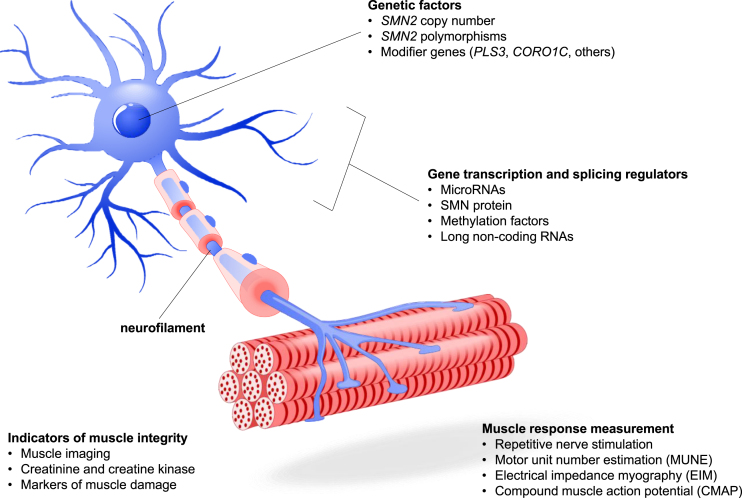
The SMA Multidisciplinary Biomarkers Working Group, comprising 11 experts in a variety of relevant fields, sought to determine the most promising candidate biomarker currently available, determine key knowledge gaps, and recommend next steps toward validating that biomarker for SMA.
The Working Group engaged in a modified Delphi process to answer questions about candidate SMA biomarkers. Members participated in six rounds of reiterative surveys that were designed to build upon previous discussions.
The Working Group reached a consensus that neurofilament (NF) is the candidate biomarker best poised for further development. Several important knowledge gaps were identified, and the next steps toward filling these gaps were proposed.
NF is a promising SMA biomarker with the potential for prognostic, predictive, and pharmacodynamic capabilities. The Working Group has identified needed information to continue efforts toward the validation of NF as a biomarker for SMA.
脊髓性肌萎缩症(SMA)是由生存运动神经元 1(SMN1)基因的双等位隐性突变和生存运动神经元(SMN)蛋白表达水平降低引起的。脊髓中的α运动神经元退化导致进行性骨骼肌无力。疾病严重程度范围广泛、下降速度不一,以及对已批准的疾病修饰治疗的临床反应异质性,这些都尚未得到充分理解,限制了为患者优化治疗的能力。验证具有支持早期诊断、告知疾病预后和治疗适宜性以及/或确认对治疗反应潜力的可靠生物标志物,是 SMA 的一个重大未满足需求。
由 11 名在多个相关领域的专家组成的 SMA 多学科生物标志物工作组,旨在确定目前最有前途的候选生物标志物,确定关键知识空白,并推荐下一步验证该生物标志物在 SMA 中的适用性。
工作组采用改良 Delphi 流程来回答有关候选 SMA 生物标志物的问题。成员们参与了六轮反复调查,旨在在前几轮讨论的基础上进一步开展工作。
工作组达成共识,认为神经丝(NF)是最有潜力进一步开发的候选生物标志物。确定了几个重要的知识空白,并提出了填补这些空白的下一步措施。
NF 是一种很有前途的 SMA 生物标志物,具有预后、预测和药效动力学的潜力。工作组已经确定了继续努力验证 NF 作为 SMA 生物标志物所需的信息。