Biology Department, University of North Carolina, Chapel Hill, North Carolina, United States of America.
PLoS Biol. 2023 Jul 17;21(7):e3002185. doi: 10.1371/journal.pbio.3002185. eCollection 2023 Jul.
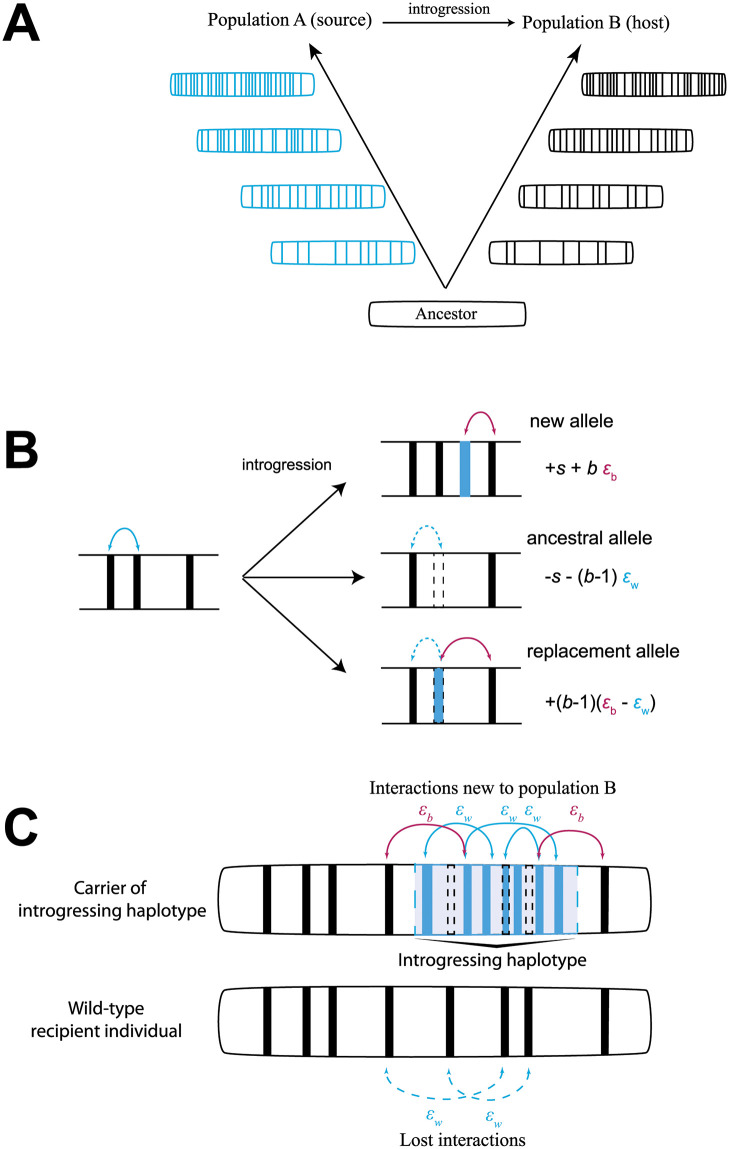
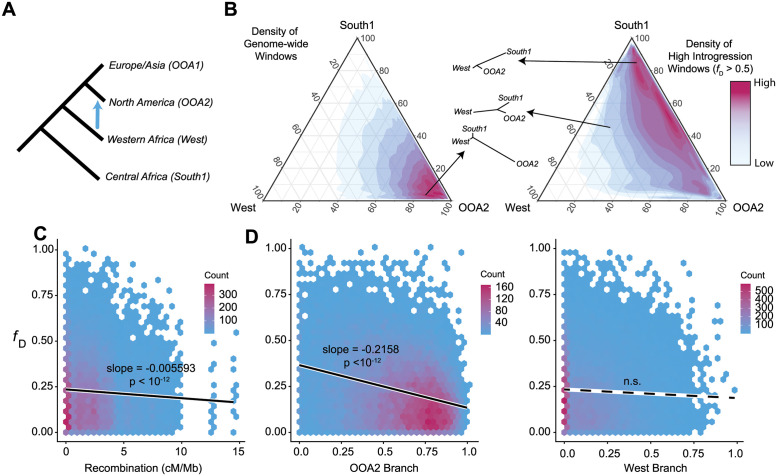
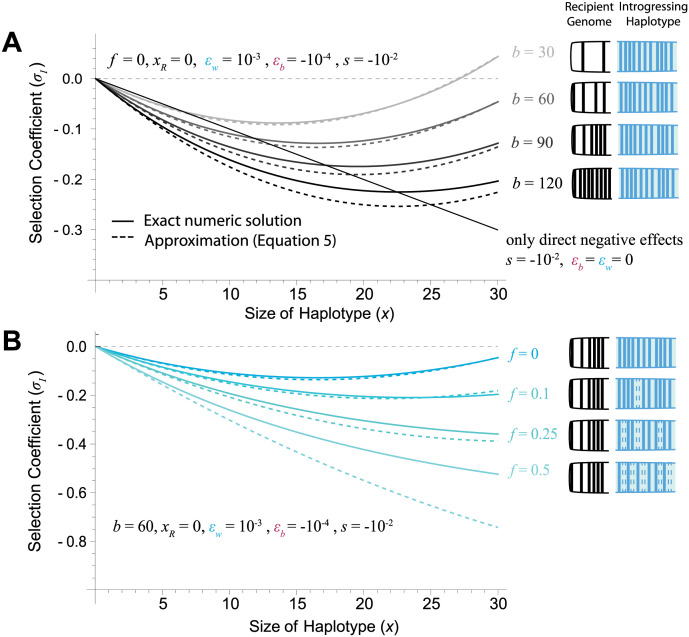
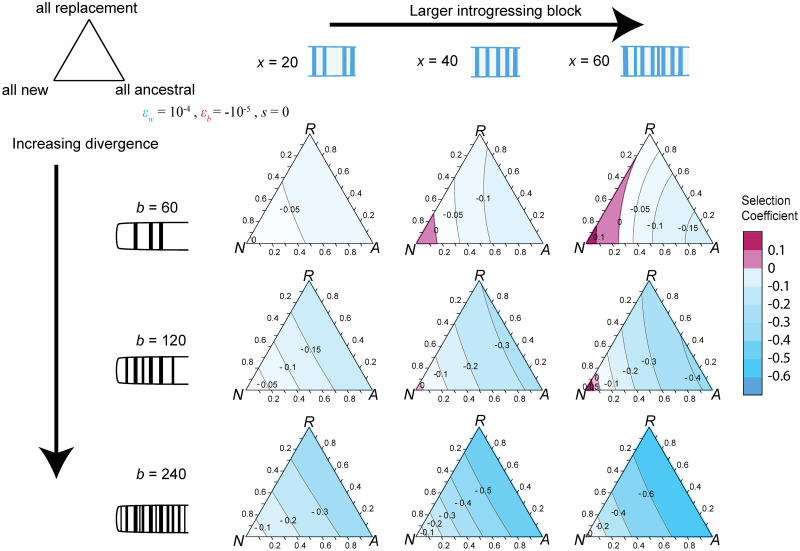
The genomic era has made clear that introgression, or the movement of genetic material between species, is a common feature of evolution. Examples of both adaptive and deleterious introgression exist in a variety of systems. What is unclear is how the fitness of an introgressing haplotype changes as species diverge or as the size of the introgressing haplotype changes. In a simple model, we show that introgression may more easily occur into parts of the genome which have not diverged heavily from a common ancestor. The key insight is that alleles from a shared genetic background are likely to have positive epistatic interactions, increasing the fitness of a larger introgressing block. In regions of the genome where few existing substitutions are disrupted, this positive epistasis can be larger than incompatibilities with the recipient genome. Further, we show that early in the process of divergence, introgression of large haplotypes can be favored more than introgression of individual alleles. This model is consistent with observations of a positive relationship between recombination rate and introgression frequency across the genome; however, it generates several novel predictions. First, the model suggests that the relationship between recombination rate and introgression may not exist, or may be negative, in recently diverged species pairs. Furthermore, the model suggests that introgression that replaces existing derived variation will be more deleterious than introgression at sites carrying ancestral variants. These predictions are tested in an example of introgression in Drosophila melanogaster, with some support for both. Finally, the model provides a potential alternative explanation to asymmetry in the direction of introgression, with expectations of higher introgression from rapidly diverged populations into slowly evolving ones.
基因组时代已经明确,基因渗入,即遗传物质在物种之间的流动,是进化的一个共同特征。在各种系统中都存在适应性和有害性基因渗入的例子。不清楚的是,随着物种的分化或渗入单倍型的大小的变化,渗入单倍型的适合度如何变化。在一个简单的模型中,我们表明,基因渗入更容易发生在与共同祖先没有严重分化的基因组部分。关键的见解是,来自共享遗传背景的等位基因可能具有正的上位性相互作用,从而增加了更大渗入块的适合度。在基因组中很少有现有替代物被破坏的区域,这种正上位性可能比与受体基因组的不兼容性更大。此外,我们表明,在分化的早期过程中,大单倍型的渗入比单个等位基因的渗入更有利。该模型与整个基因组中重组率与基因渗入频率之间存在正相关关系的观察结果一致;然而,它产生了几个新的预测。首先,该模型表明,重组率与基因渗入之间的关系可能不存在,或者在最近分化的物种对中可能为负。此外,该模型表明,取代现有衍生变异的基因渗入将比在携带祖先变异的位点上的基因渗入更具危害性。在黑腹果蝇基因渗入的一个例子中对这些预测进行了测试,得到了一些支持。最后,该模型为基因渗入方向的不对称性提供了一个潜在的替代解释,预期快速分化的种群向缓慢进化的种群的基因渗入程度更高。