Department of Mechanical Engineering, Sharif University of Technology, Tehran, Iran.
School of Medicine, Tehran University of Medical Sciences, Tehran, Iran.
BMC Musculoskelet Disord. 2023 Jul 17;24(1):579. doi: 10.1186/s12891-023-06709-y.
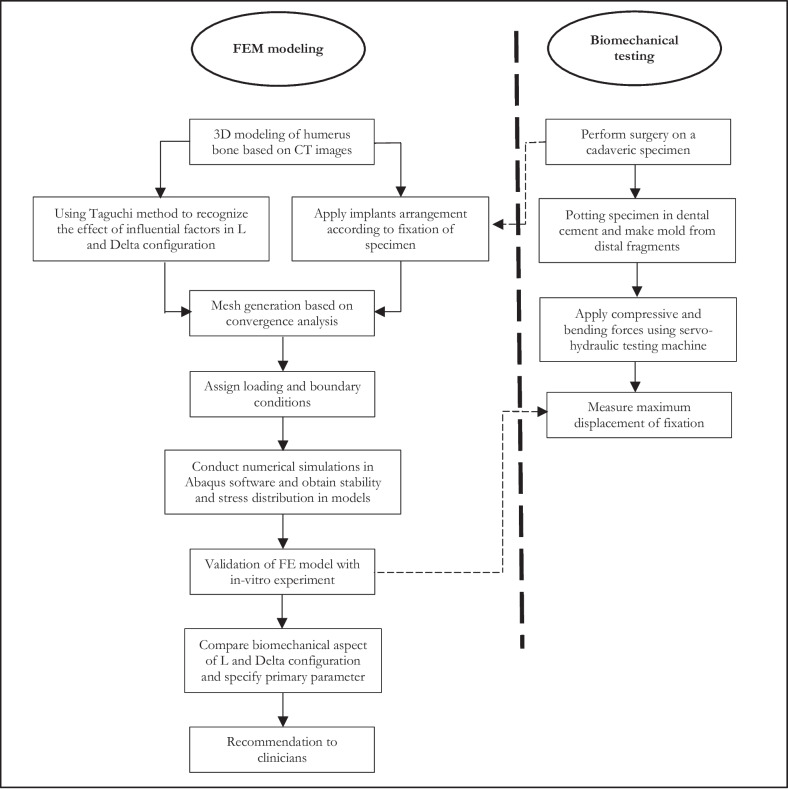
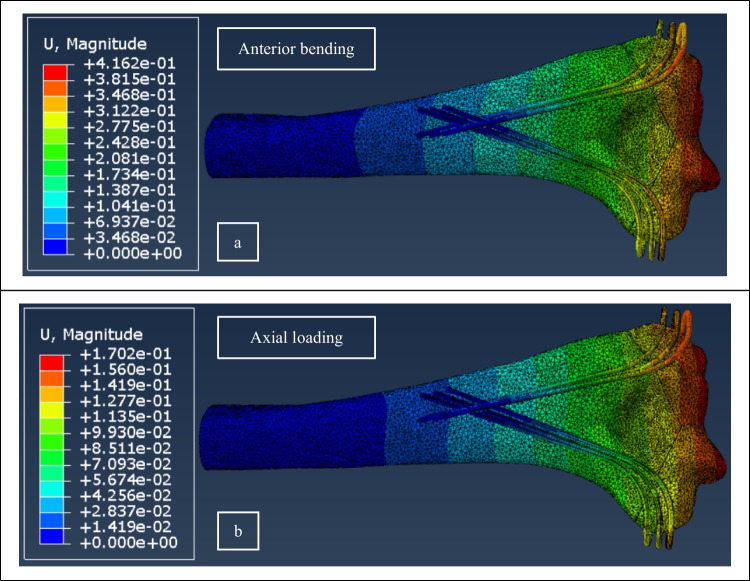
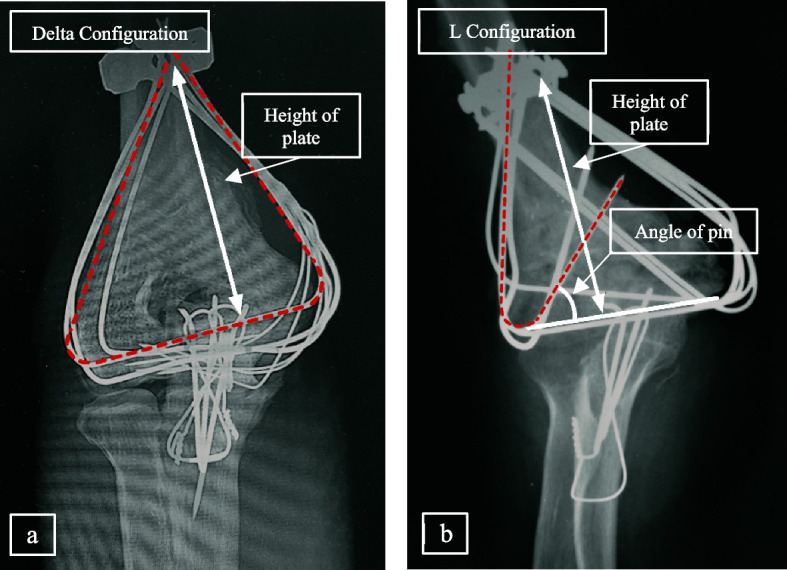
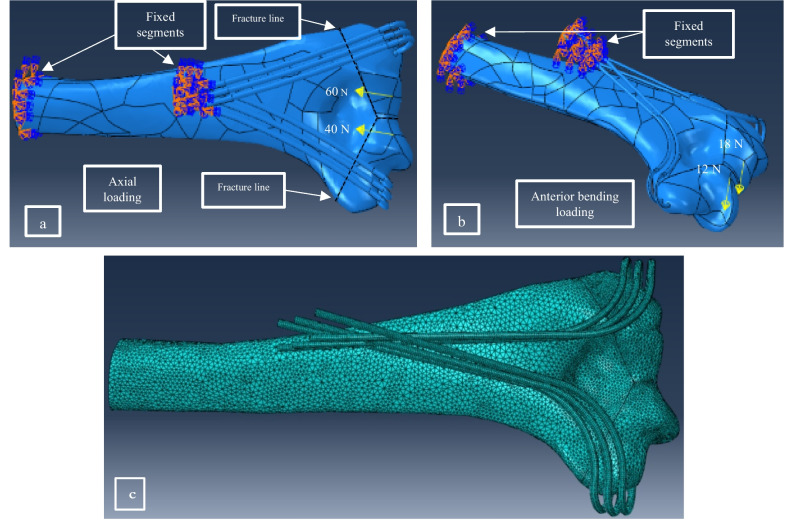
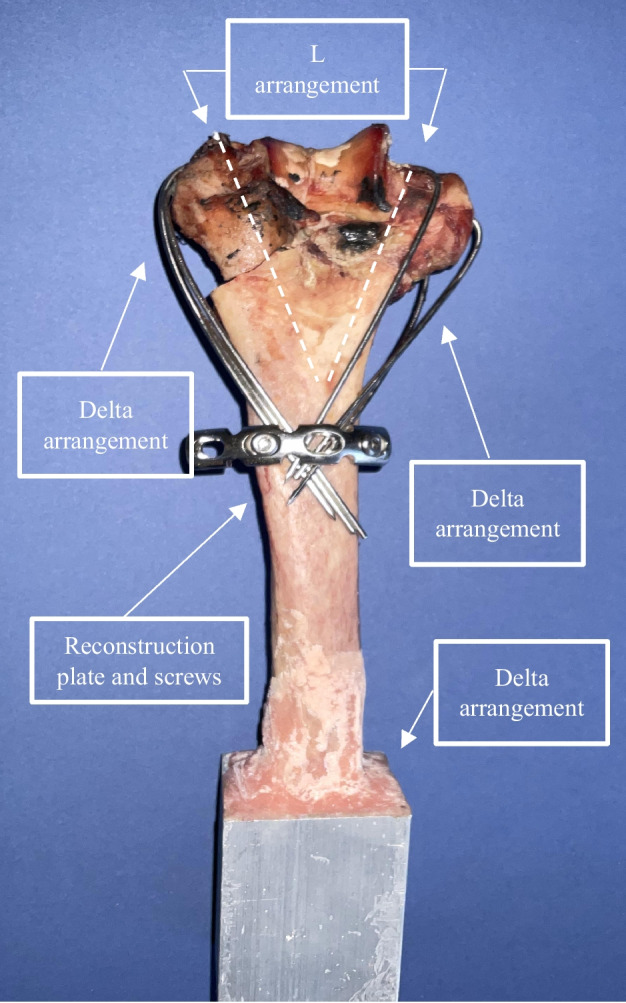
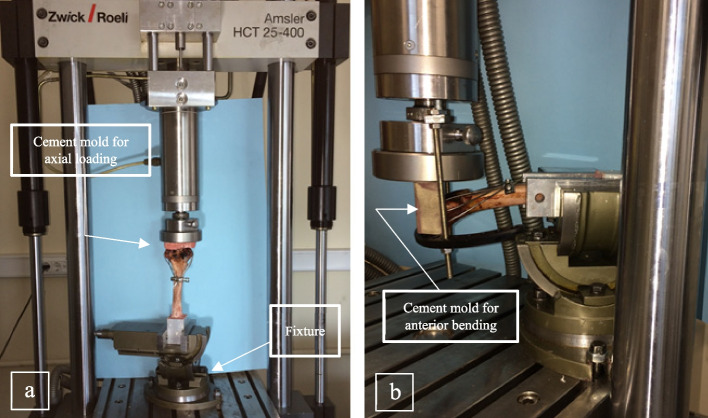
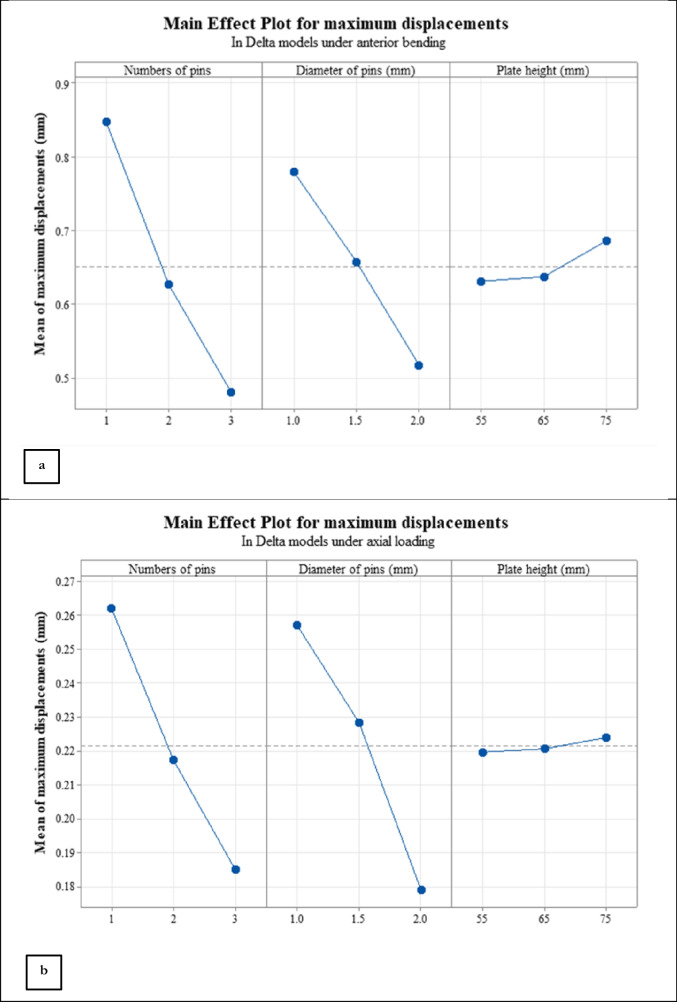
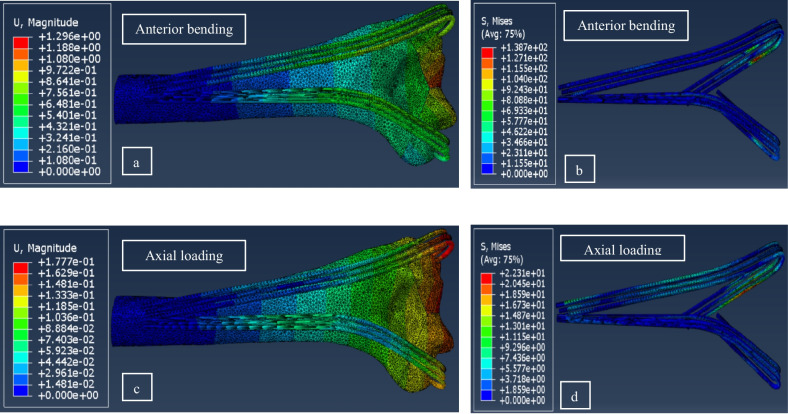
Distal humerus fractures commonly occur in adults with low bone mineral density causing major technical challenges for orthopedic surgeons. Persian fixation method was introduced as a novel technique to stabilize small fragments in comminuted distal humerus fractures using a set of K-wires and a reconstruction plate. The present study aims to measure this technique's stiffness and stability of this technique and analyze the effect of influential parameters with numerical simulation and biomechanical testing on a cadaveric specimen. Validation of the finite element (FE) model was conducted based on results of experiments. The results indicated that Delta configuration mainly led to a higher stiffness in the case of axial loading and anterior bending compared to L configuration. Analyzing the influential factors of this technique suggests that changes in diameter and number of K-wires have a similarly significant effect on the construct stiffness while the height of plate had a slight influence. Also, the diameter of wires was the most effective parameter for implant failure, particularly in the 3-pin construct, which caused a reduction in failure risk by about 60%. The results revealed that the Persian fixation method would achieve suitable stability compared to the dual-plating technique.
肱骨远端骨折在骨密度低的成年人中很常见,这给骨科医生带来了很大的技术挑战。波斯固定法是一种新的技术,用于使用一组克氏针和重建板稳定粉碎性肱骨远端骨折的小碎片。本研究旨在通过数值模拟和生物力学测试对尸体标本进行分析,测量该技术的刚度和稳定性,并分析影响参数的影响。基于实验结果对有限元(FE)模型进行了验证。结果表明,与 L 型相比,Delta 构型在轴向加载和前屈时主要导致更高的刚度。分析该技术的影响因素表明,改变克氏针的直径和数量对结构刚度有同样显著的影响,而钢板的高度只有轻微的影响。此外,线材的直径是植入物失效的最有效参数,特别是在 3 针结构中,这将使失效风险降低约 60%。结果表明,与双钢板技术相比,波斯固定法将获得足够的稳定性。