Department of Hepatobiliary Surgery, the First Affiliated Hospital of Gannan Medical University, 341000, Ganzhou, P R China.
Department of general surgery III, the First Affiliated Hospital of Gannan Medical University, 341000, Ganzhou, P R China.
BMC Cancer. 2023 Jul 17;23(1):671. doi: 10.1186/s12885-023-11030-x.
Previous studies have shown that Family with sequence similarity 134 member B (FAM134B) was involved in the occurrence and development of malignancy, however, the function and molecular mechanism of FAM134B in Hepatocellular Carcinoma (HCC) radiotherapy resistance remain unclear. Therefore, it may clinical effective to clarify the molecular mechanism and identify novel biomarker to overcome radiotherapy resistance in HCC.
The protein and mRNA expression of FAM134B were determined using Real-time PCR and Western blot, respectively. IHC assay was performed to investigate the association between FAM134B expression and the clinicopathological characteristics of 132 HCC patients. Functional assays, such as in situ model, colon formation, FACS, and Tunel assay were used to determine the oncogenic role of FAM134B in human HCC progression. Furthermore, western blotting and luciferase assay were used to determine the mechanism of FAM134B promotes radiation-sensitive in HCC cells.
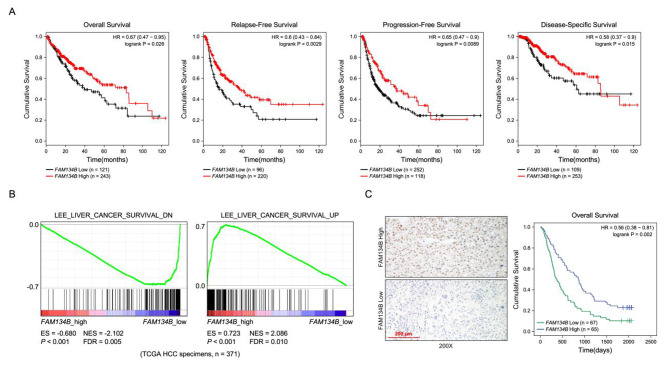
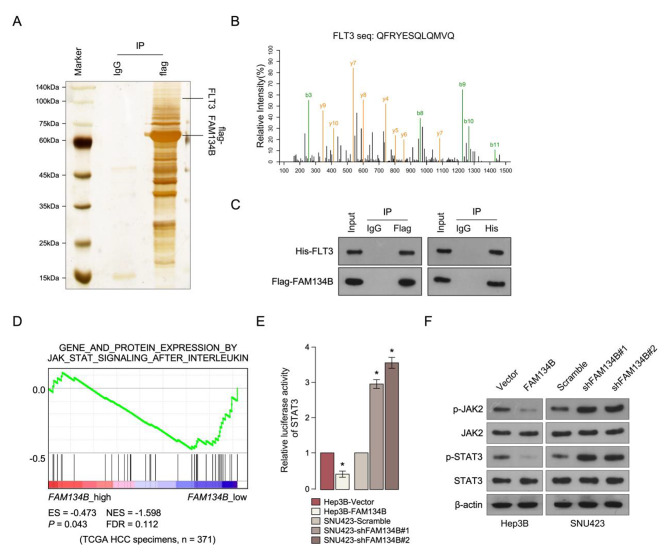
We noted that FAM134B was downregulated in HCC, which was correlated with the radiation resistance in patients with HCC. Overexpression of FAM134B contribute to radiation sensitive in HCC; however, inhibition of FAM134B confers HCC cell lines to radiation resistance both in vitro and in vivo. Moreover, we found that FAM134B interacts with FMS related receptor tyrosine kinase 3 (FLT3) and downregulation of FAM134B activated JAK/Stat3 signaling pathway. Importantly, pharmacological inhibition of JAK/Stat3 signaling pathway significantly counteracted downregulation of FAM134B-induced radiation resistance and enhanced radiation therapeutic efficacy in HCC.
Our findings suggest that FAM134B may be a potential therapeutic biomarker for the treatment of HCC patients with radiotherapy tolerance.
先前的研究表明,家族与序列相似性 134 成员 B(FAM134B)参与了恶性肿瘤的发生和发展,然而,FAM134B 在肝细胞癌(HCC)放疗抵抗中的功能和分子机制仍不清楚。因此,阐明分子机制并识别克服 HCC 放疗抵抗的新型生物标志物可能具有临床意义。
使用实时 PCR 和 Western blot 分别测定 FAM134B 的蛋白和 mRNA 表达。免疫组织化学检测 FAM134B 表达与 132 例 HCC 患者临床病理特征的相关性。原位模型、结肠形成、FACS 和 Tunel 检测等功能检测用于确定 FAM134B 在人 HCC 进展中的致癌作用。此外,Western blot 和荧光素酶检测用于确定 FAM134B 促进 HCC 细胞辐射敏感的机制。
我们注意到 FAM134B 在 HCC 中下调,与 HCC 患者的辐射抵抗相关。FAM134B 的过表达有助于 HCC 的辐射敏感;然而,FAM134B 的抑制赋予 HCC 细胞系体外和体内的辐射抵抗。此外,我们发现 FAM134B 与 FMS 相关受体酪氨酸激酶 3(FLT3)相互作用,下调 FAM134B 激活 JAK/Stat3 信号通路。重要的是,JAK/Stat3 信号通路的药理学抑制显著抵消了 FAM134B 下调诱导的辐射抵抗,并增强了 HCC 的放射治疗疗效。
我们的研究结果表明,FAM134B 可能是治疗 HCC 患者放疗耐受的潜在治疗生物标志物。