Graduate Institute of Medicine, College of Medicine, Kaohsiung Medical University, Kaohsiung, 807, Taiwan.
Department of Medical Research, Kaohsiung Medical University Hospital, Kaohsiung, 807, Taiwan.
J Transl Med. 2023 Jul 17;21(1):473. doi: 10.1186/s12967-023-04343-9.
Interleukin-1 receptor antagonist (IL-1RA), a member of the IL-1 family, has diverse roles in cancer development. However, the role of IL-1RA in oral squamous cell carcinoma (OSCC), in particular the underlying mechanisms, remains to be elucidated.
Tumor tissues from OSCC patients were assessed for protein expression by immunohistochemistry. Patient survival was evaluated by Kaplan-Meier curve analysis. Impact of differential IL-1RA expression on cultured OSCC cell lines was assessed in vitro by clonogenic survival, tumorsphere formation, soft agar colony formation, and transwell cell migration and invasion assays. Oxygen consumption rate was measured by Seahorse analyzer or multi-mode plate reader. PCR array was applied to screen human cancer stem cell-related genes, proteome array for phosphorylation status of kinases, and Western blot for protein expression in cultured cells. In vivo tumor growth was investigated by orthotopic xenograft in mice, and protein expression in xenograft tumors assessed by immunohistochemistry.
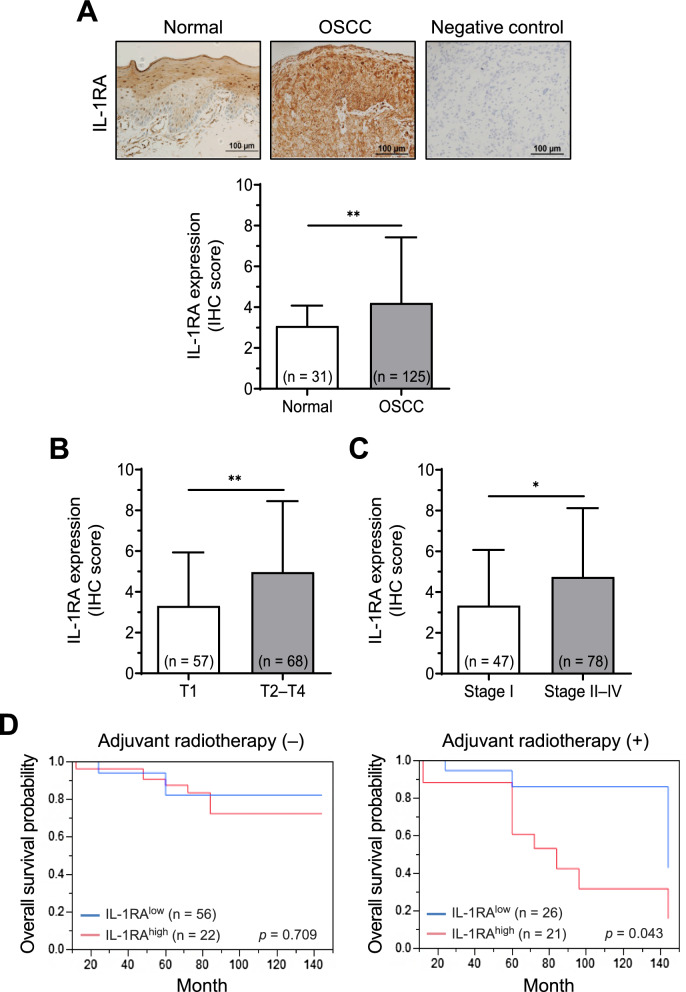
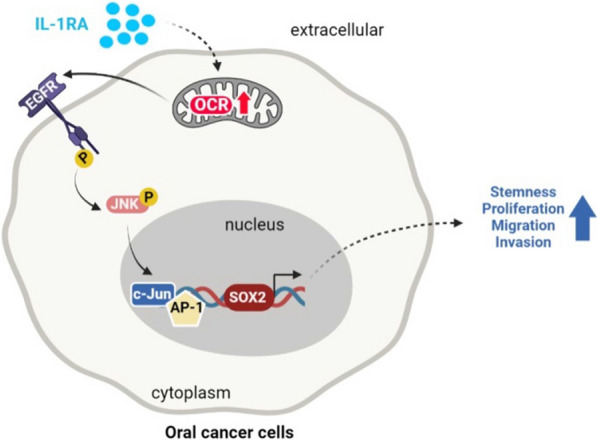
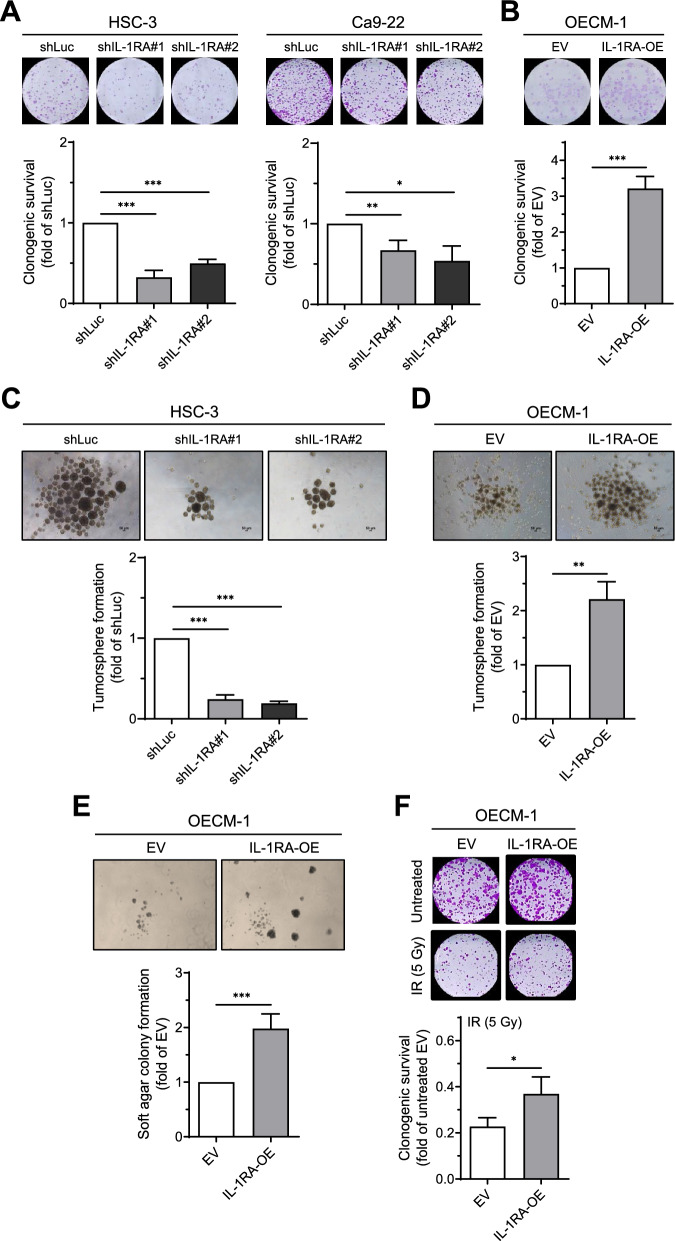
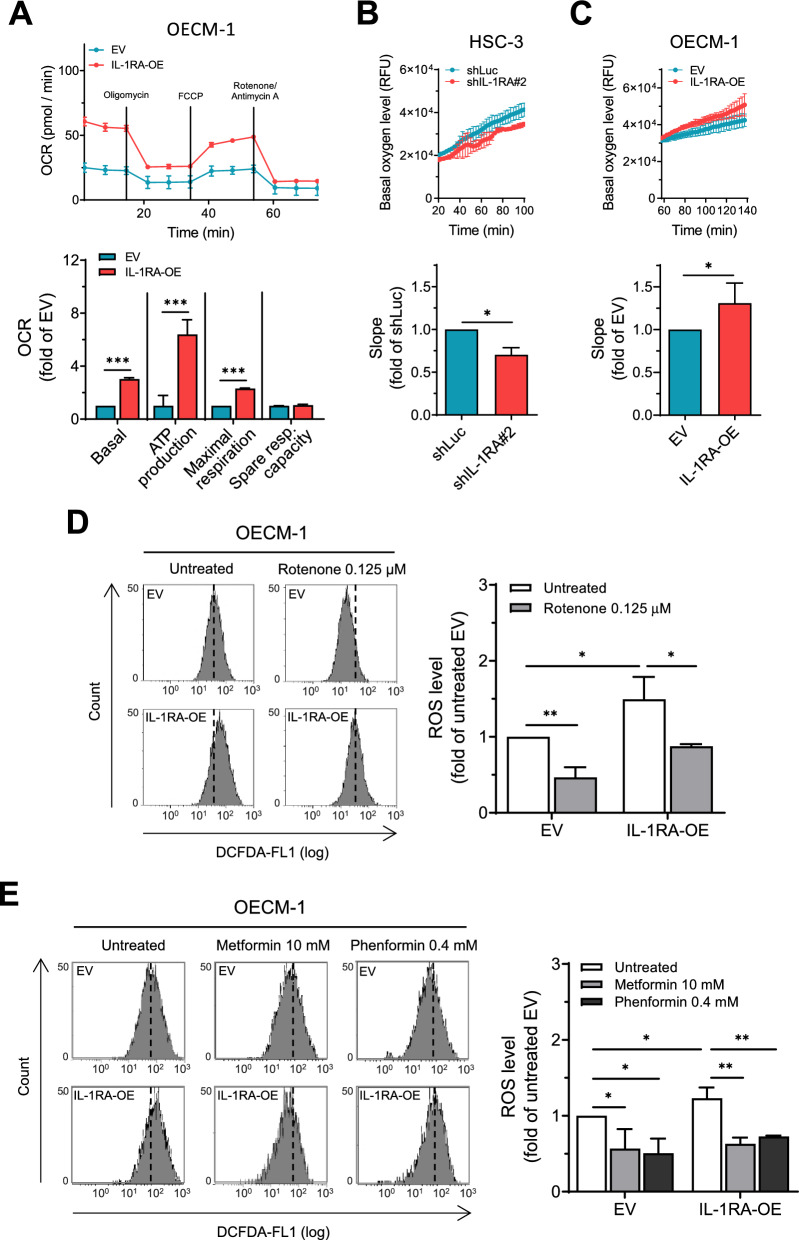
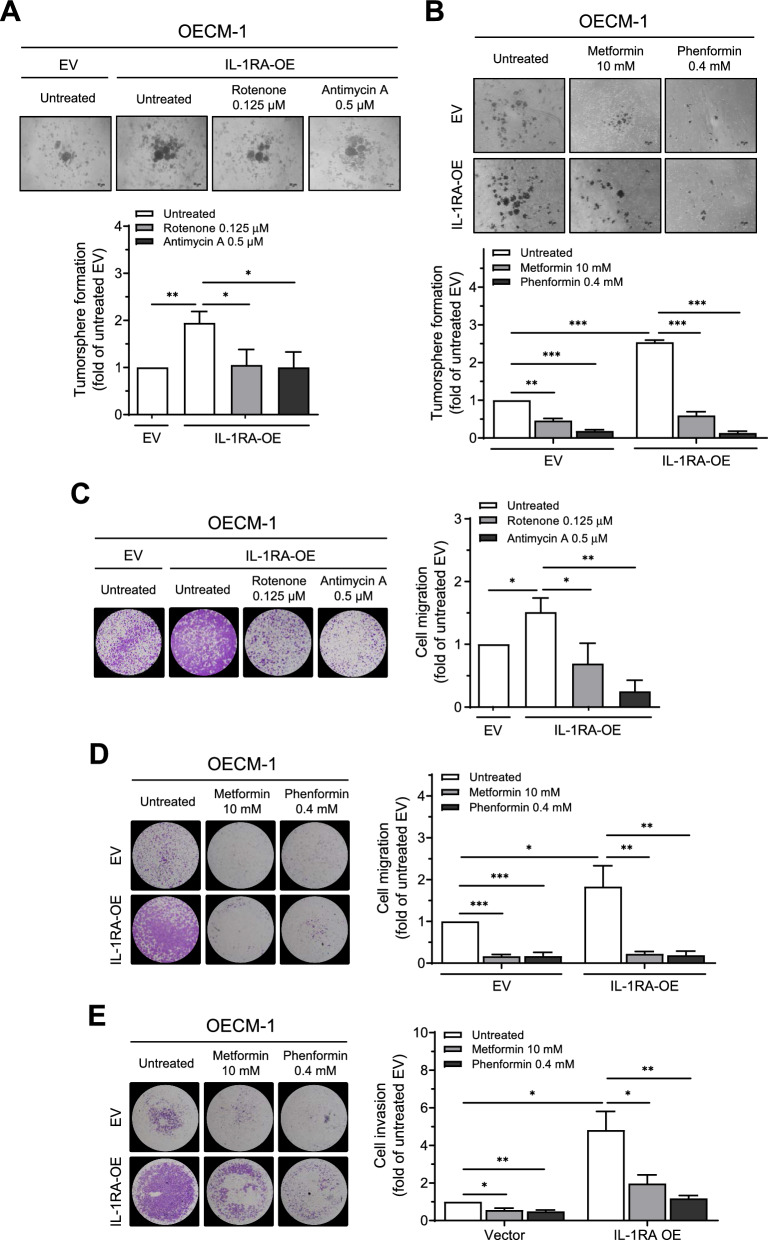
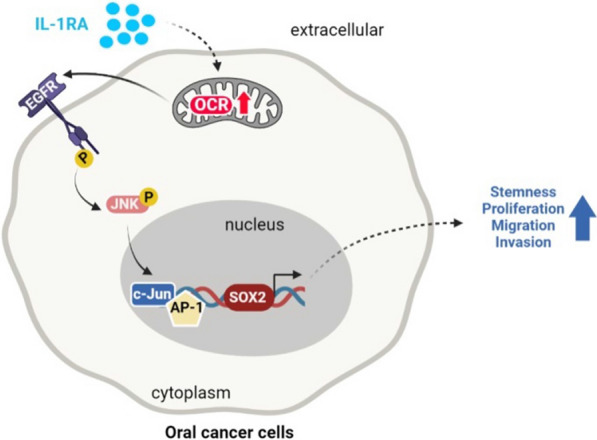
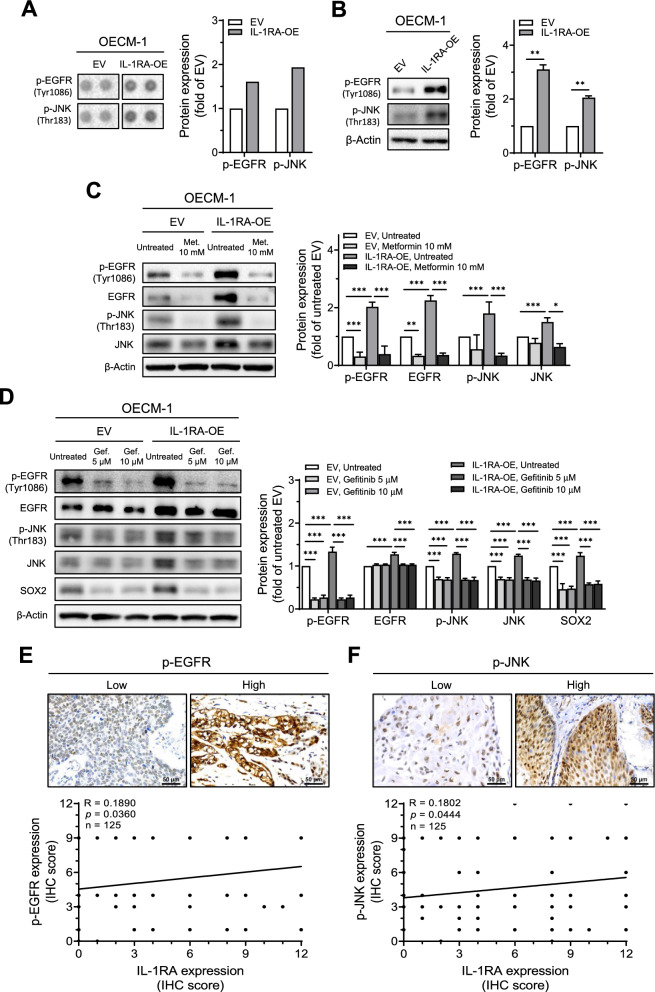
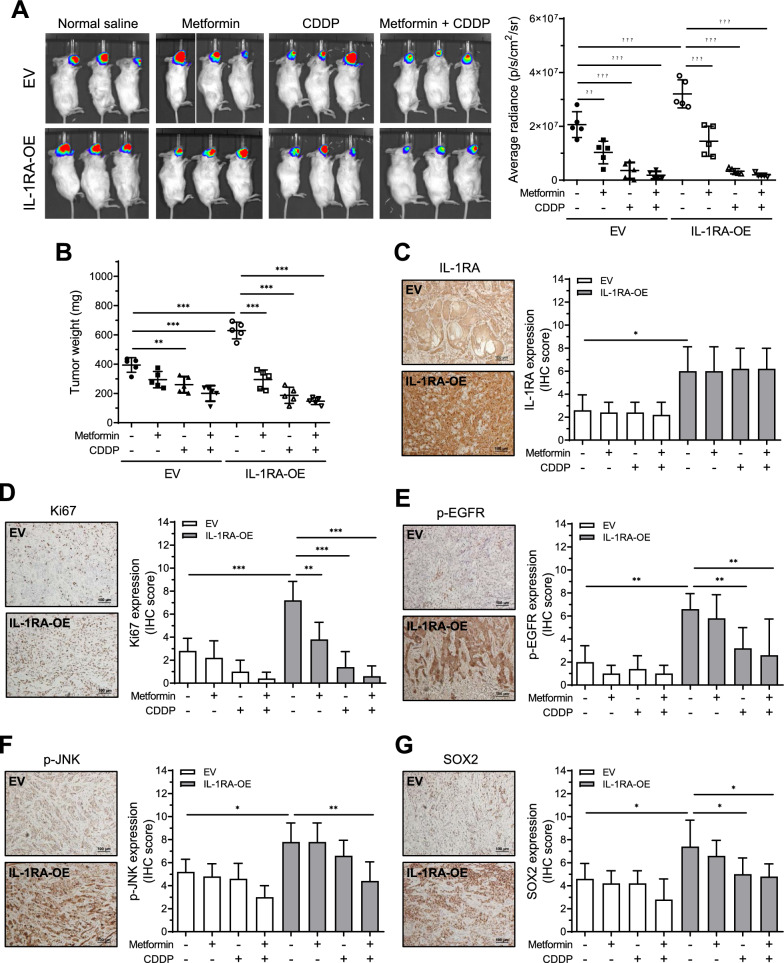
Clinical analysis revealed that elevated IL-1RA expression in OSCC tumor tissues was associated with increased tumor size and cancer stage, and reduced survival in the patient group receiving adjuvant radiotherapy compared to the patient group without adjuvant radiotherapy. In vitro data supported these observations, showing that overexpression of IL-1RA increased OSCC cell growth, migration/invasion abilities, and resistance to ionizing radiation, whereas knockdown of IL-1RA had largely the opposite effects. Additionally, we identified that EGFR/JNK activation and SOX2 expression were modulated by differential IL-1RA expression downstream of mitochondrial metabolism, with application of mitochondrial complex inhibitors suppressing these pathways. Furthermore, in vivo data revealed that treatment with cisplatin or metformin-a mitochondrial complex inhibitor and conventional therapy for type 2 diabetes-reduced IL-1RA-associated xenograft tumor growth as well as EGFR/JNK activation and SOX2 expression. This inhibitory effect was further augmented by combination treatment with cisplatin and metformin.
The current study suggests that IL-1RA promoted OSCC malignancy through mitochondrial metabolism-mediated EGFR/JNK activation and SOX2 expression. Inhibition of this mitochondrial metabolic pathway may present a potential therapeutic strategy in OSCC.
白细胞介素-1 受体拮抗剂(IL-1RA)是白细胞介素-1 家族的一员,在癌症发展中具有多种作用。然而,IL-1RA 在口腔鳞状细胞癌(OSCC)中的作用,特别是其潜在机制,仍有待阐明。
通过免疫组织化学评估 OSCC 患者肿瘤组织中的蛋白表达。通过 Kaplan-Meier 曲线分析评估患者的生存情况。通过集落形成、肿瘤球形成、软琼脂集落形成和 Transwell 细胞迁移和侵袭实验评估差异表达的 IL-1RA 对体外培养的 OSCC 细胞系的影响。通过 Seahorse 分析仪或多模式板读数器测量耗氧率。应用 PCR 阵列筛选人类癌症干细胞相关基因,蛋白质组阵列筛选激酶磷酸化状态,Western blot 检测培养细胞中的蛋白表达。通过在小鼠体内进行原位异种移植研究体内肿瘤生长情况,并通过免疫组织化学评估异种移植肿瘤中的蛋白表达。
临床分析表明,OSCC 肿瘤组织中升高的 IL-1RA 表达与肿瘤大小增加和癌症分期降低以及接受辅助放疗的患者组的生存时间缩短有关,与未接受辅助放疗的患者组相比。体外数据支持这些观察结果,表明过表达 IL-1RA 增加了 OSCC 细胞的生长、迁移/侵袭能力和对电离辐射的抵抗力,而 IL-1RA 的敲低则产生了相反的效果。此外,我们发现 EGFR/JNK 激活和 SOX2 表达受线粒体代谢下游差异表达的 IL-1RA 调节,应用线粒体复合物抑制剂抑制这些途径。此外,体内数据表明,顺铂或二甲双胍-一种线粒体复合物抑制剂和 2 型糖尿病的常规治疗-降低了与 IL-1RA 相关的异种移植肿瘤生长以及 EGFR/JNK 激活和 SOX2 表达。顺铂和二甲双胍联合治疗进一步增强了这种抑制作用。
本研究表明,IL-1RA 通过线粒体代谢介导的 EGFR/JNK 激活和 SOX2 表达促进了 OSCC 的恶性程度。抑制这条线粒体代谢途径可能为 OSCC 提供一种潜在的治疗策略。