Institute of Molecular Medicine, National Tsing Hua University, Hsinchu, Taiwan.
National Institute of Cancer Research, National Health Research Institutes, Miaoli, Taiwan.
J Biomed Sci. 2022 Jun 15;29(1):42. doi: 10.1186/s12929-022-00824-z.
The development of drug resistance in oral squamous cell carcinoma (OSCC) that frequently leads to recurrence and metastasis after initial treatment remains an unresolved challenge. Presence of cancer stem cells (CSCs) has been increasingly reported to be a critical contributing factor in drug resistance, tumor recurrence and metastasis. Thus, unveiling of mechanisms regulating CSCs and potential targets for developing their inhibitors will be instrumental for improving OSCC therapy.
siRNA, shRNA and miRNA that specifically target keratin 17 (KRT17) were used for modulation of gene expression and functional analyses. Sphere-formation and invasion/migration assays were utilized to assess cancer cell stemness and epithelial mesenchymal transition (EMT) properties, respectively. Duolink proximity ligation assay (PLA) was used to examine molecular proximity between KRT17 and plectin, which is a large protein that binds cytoskeleton components. Cell proliferation assay was employed to evaluate growth rates and viability of oral cancer cells treated with cisplatin, carboplatin or dasatinib. Xenograft mouse tumor model was used to evaluate the effect of KRT17- knockdown in OSCC cells on tumor growth and drug sensitization.
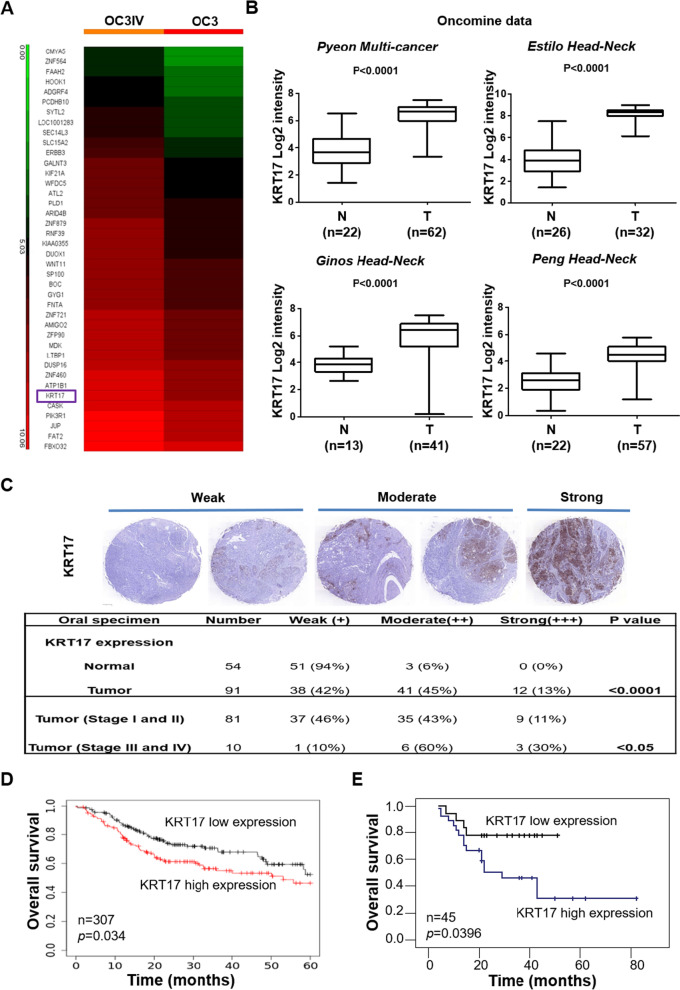
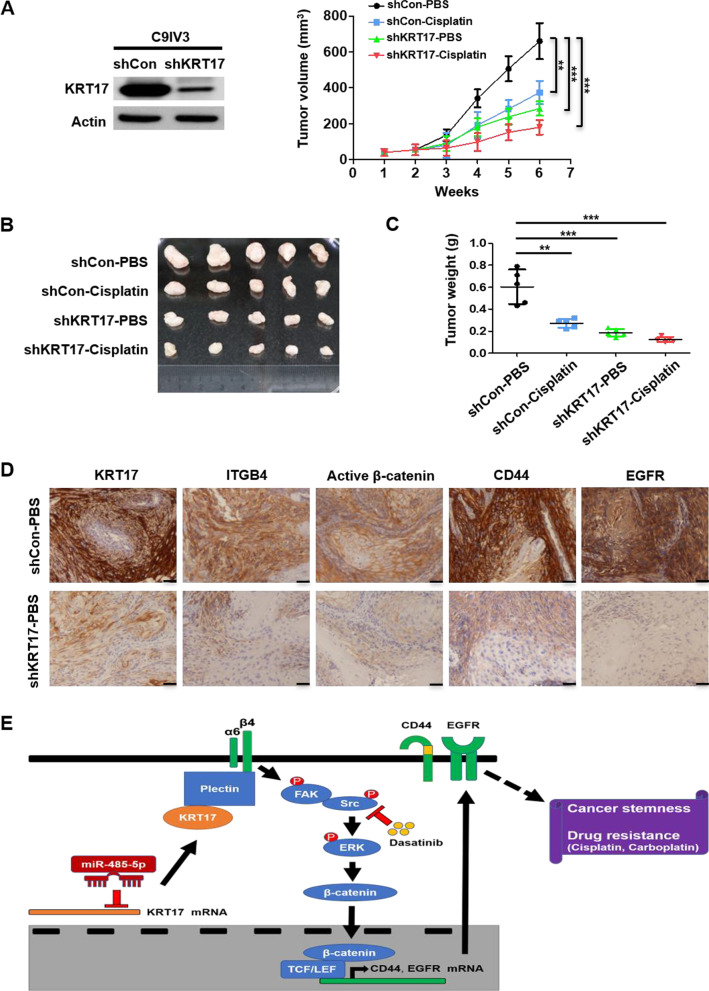
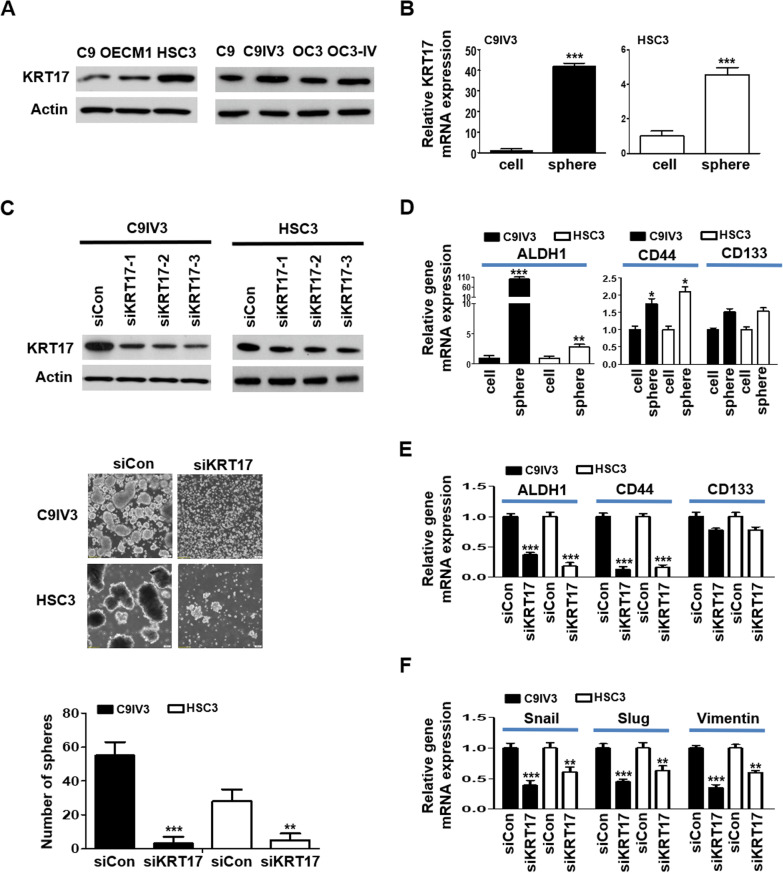
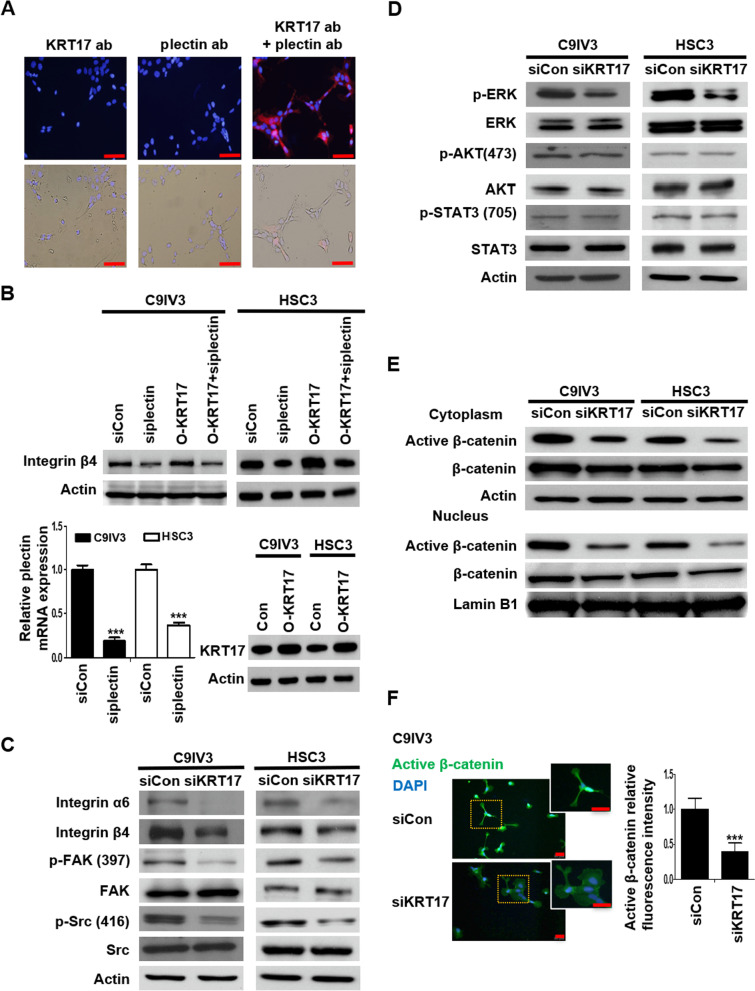
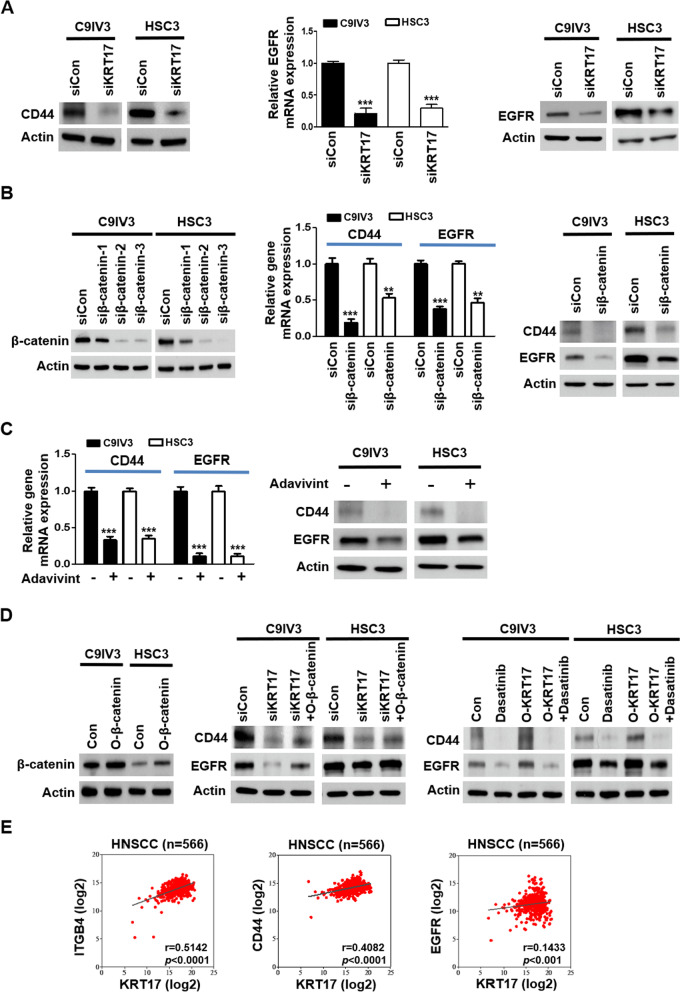
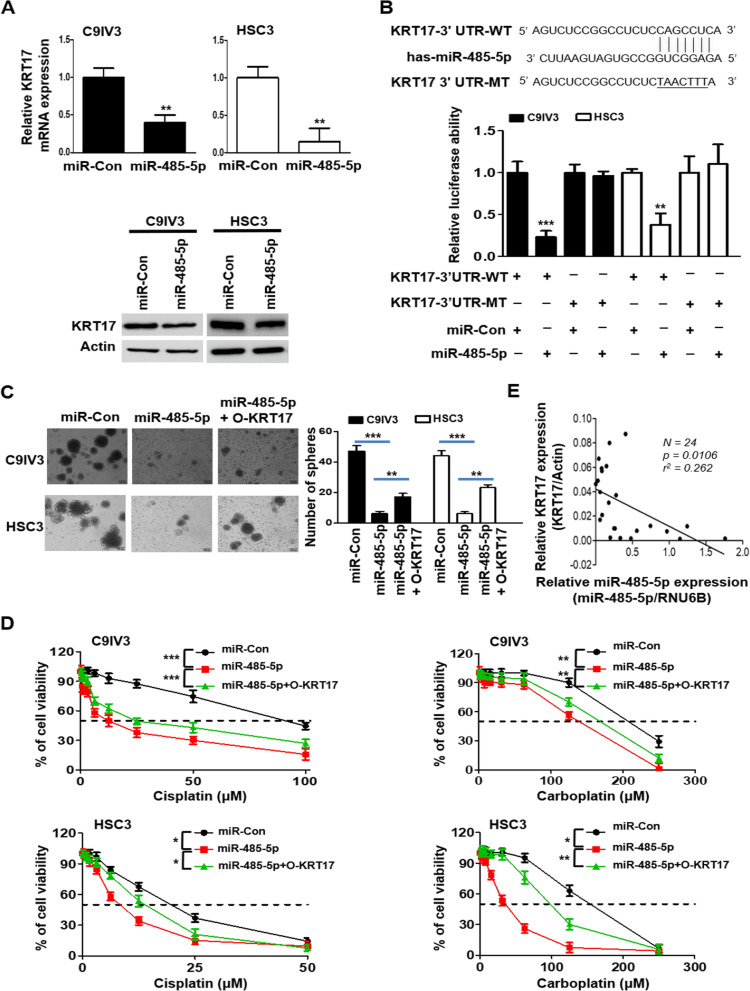
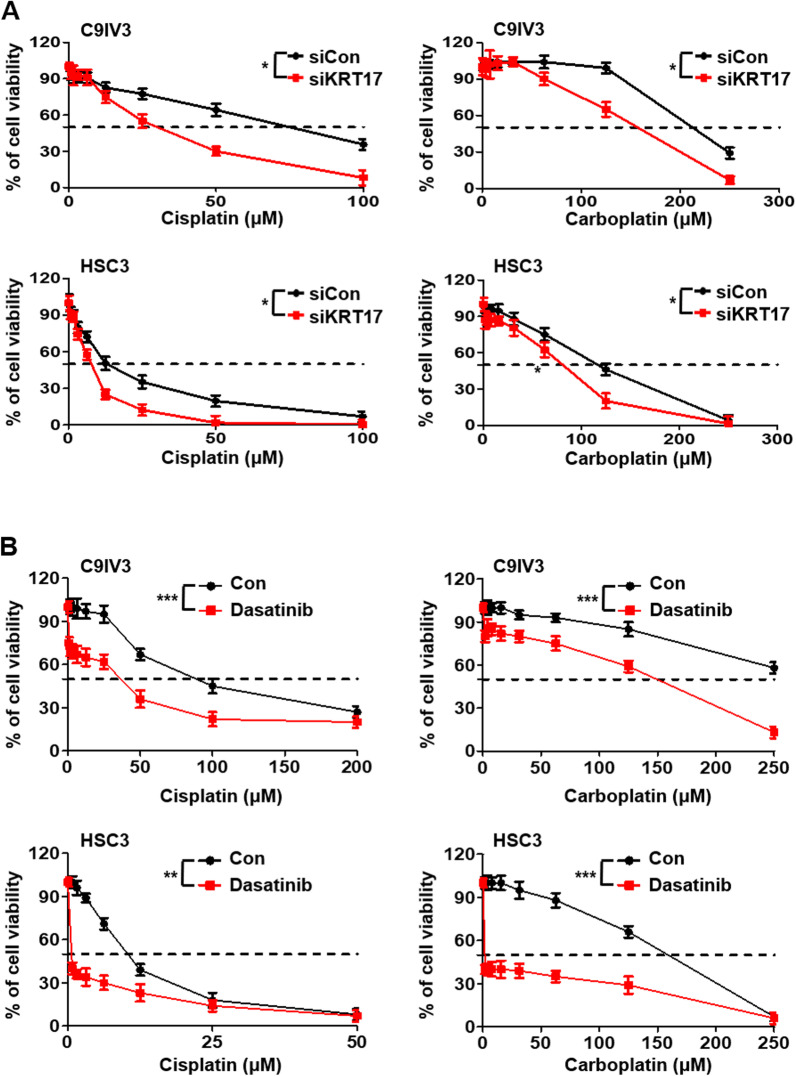
Significantly elevated expression of KRT17 in highly invasive OSCC cell lines and advanced tumor specimens were observed and high KRT17 expression was correlated with poor overall survival. KRT17 gene silencing in OSCC cells attenuated their stemness properties including markedly reduced sphere forming ability and expression of stemness and EMT markers. We identified a novel signaling cascade orchestrated by KRT17 where its association with plectin resulted in activation of integrin β4/α6, increased phosphorylation of FAK, Src and ERK, as well as stabilization and nuclear translocation of β-catenin. The activation of this signaling cascade was correlated with enhanced OSCC cancer stemness and elevated expression of CD44 and epidermal growth factor receptor (EGFR). We identified and demonstrated KRT17 to be a direct target of miRNA-485-5p. Ectopic expression of miRNA-485-5p inhibited OSCC sphere formation and caused sensitization of cancer cells towards cisplatin and carboplatin, which could be significantly rescued by KRT17 overexpression. Dasatinib treatment that inhibited KRT17-mediated Src activation also resulted in OSCC drug sensitization. In OSCC xenograft mouse model, KRT17 knockdown significantly inhibited tumor growth, and combinatorial treatment with cisplatin elicited a greater tumor inhibitory effect. Consistently, markedly reduced levels of integrin β4, active β-catenin, CD44 and EGFR were observed in the tumors induced by KRT17 knockdown OSCC cells.
A novel miRNA-485-5p/KRT17/integrin/FAK/Src/ERK/β-catenin signaling pathway is unveiled to modulate OSCC cancer stemness and drug resistance to the common first-line chemotherapeutics. This provides a potential new therapeutic strategy to inhibit OSCC stem cells and counter chemoresistance.
口腔鳞状细胞癌(OSCC)中耐药性的发展经常导致初始治疗后复发和转移,这仍然是一个未解决的挑战。越来越多的报道表明,癌症干细胞(CSCs)的存在是导致耐药性、肿瘤复发和转移的一个关键因素。因此,揭示调节 CSCs 的机制和开发其抑制剂的潜在靶点,将有助于改善 OSCC 的治疗。
使用特异性针对角蛋白 17(KRT17)的 siRNA、shRNA 和 miRNA 来调节基因表达并进行功能分析。球体形成和侵袭/迁移实验分别用于评估癌细胞的干性和上皮间质转化(EMT)特性。双连接邻近连接分析(PLA)用于检测 KRT17 与细丝蛋白的分子接近程度,细丝蛋白是一种与细胞骨架成分结合的大型蛋白。细胞增殖实验用于评估用顺铂、卡铂或达沙替尼处理的口腔癌细胞的生长速度和活力。异种移植小鼠肿瘤模型用于评估 OSCC 细胞中 KRT17 敲低对肿瘤生长和药物敏感性的影响。
在高侵袭性 OSCC 细胞系和晚期肿瘤标本中观察到 KRT17 的表达显著上调,高 KRT17 表达与总生存率差相关。OSCC 细胞中 KRT17 基因沉默减弱了其干性特性,包括明显减少球体形成能力以及干性和 EMT 标志物的表达。我们鉴定了一个由 KRT17 协调的新型信号级联,其中它与细丝蛋白的关联导致整合素β4/α6 的激活、FAK、Src 和 ERK 的磷酸化增加,以及β-连环蛋白的稳定和核转位。该信号级联的激活与增强的 OSCC 癌症干性和表皮生长因子受体(EGFR)的高表达相关。我们鉴定并证实 KRT17 是 miRNA-485-5p 的直接靶标。miRNA-485-5p 的异位表达抑制了 OSCC 球体的形成,并导致癌细胞对顺铂和卡铂的敏感性增加,而 KRT17 的过表达可显著挽救这种敏感性。抑制 KRT17 介导的Src 激活的达沙替尼治疗也导致 OSCC 药物敏感性增加。在 OSCC 异种移植小鼠模型中,KRT17 敲低显著抑制肿瘤生长,并用顺铂联合治疗可产生更大的肿瘤抑制作用。一致地,在由 KRT17 敲低的 OSCC 细胞诱导的肿瘤中观察到整合素β4、活性β-连环蛋白、CD44 和 EGFR 的水平明显降低。
揭示了一种新的 miRNA-485-5p/KRT17/整合素/FAK/Src/ERK/β-连环蛋白信号通路,用于调节 OSCC 癌症干性和对常用一线化疗药物的耐药性。这为抑制 OSCC 干细胞和对抗化疗耐药性提供了一种潜在的新治疗策略。