Department of Breast Oncology, Shanxi Provincial Cancer Hospital, Taiyuan, China.
Department of Rheumatology, The Second Hospital of Shanxi Medical University, Taiyuan, Shanxi, China.
Adv Ther. 2023 Oct;40(10):4339-4357. doi: 10.1007/s12325-023-02577-z. Epub 2023 Jul 18.
Epithelial-mesenchymal transition (EMT) is an important biological process in tumor invasion and metastasis, and thus a potential indicator of the progression and drug resistance of breast cancer. This study comprehensively analyzed EMT-related genes in triple-negative breast cancer (TNBC) to develop an EMT-related prognostic gene signature.
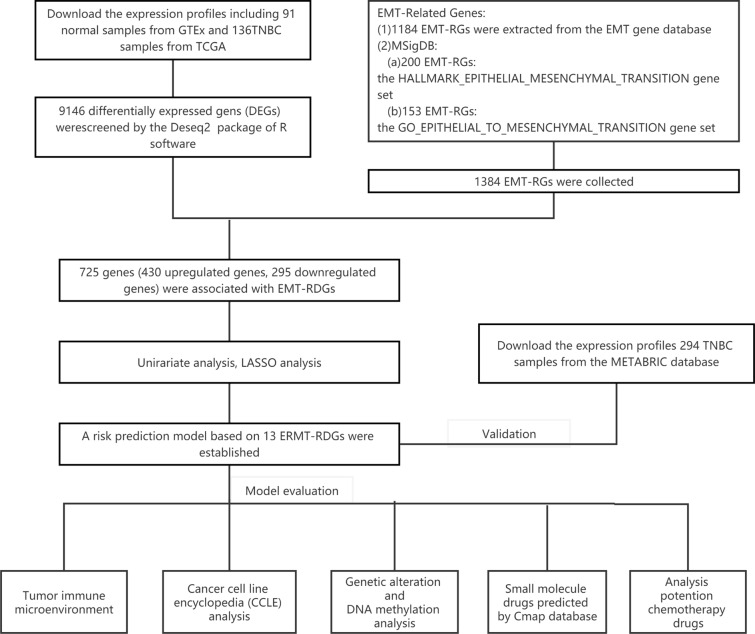
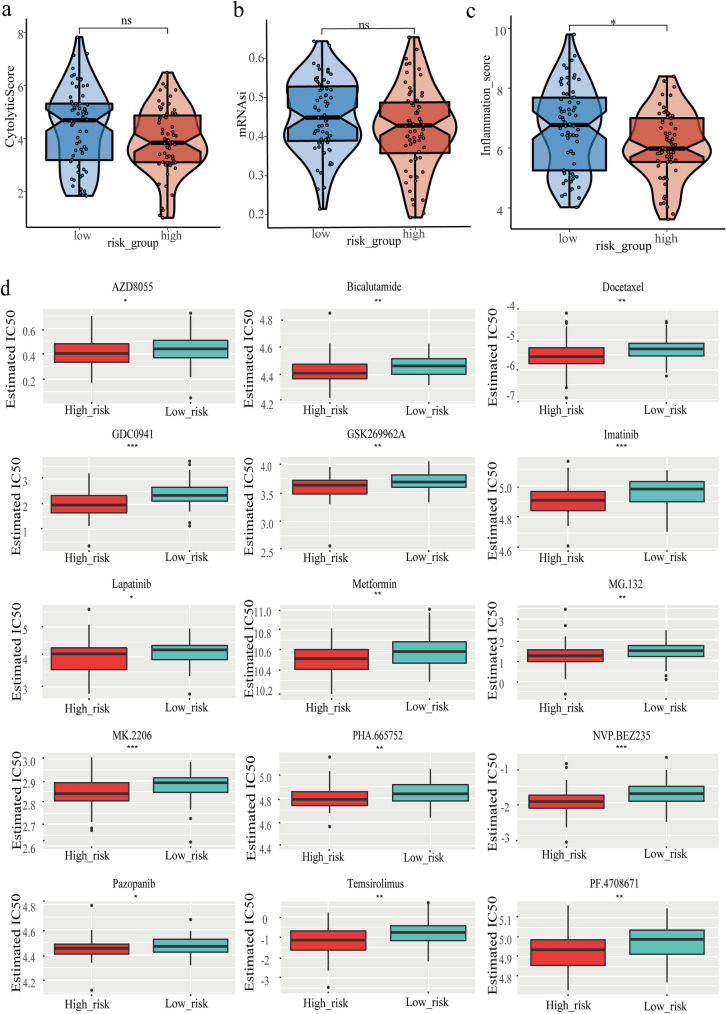
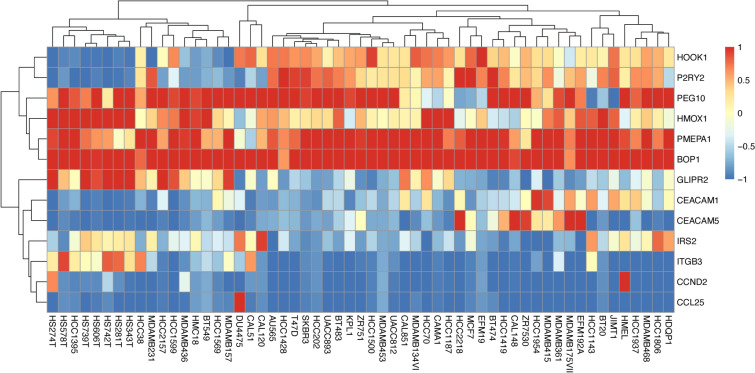
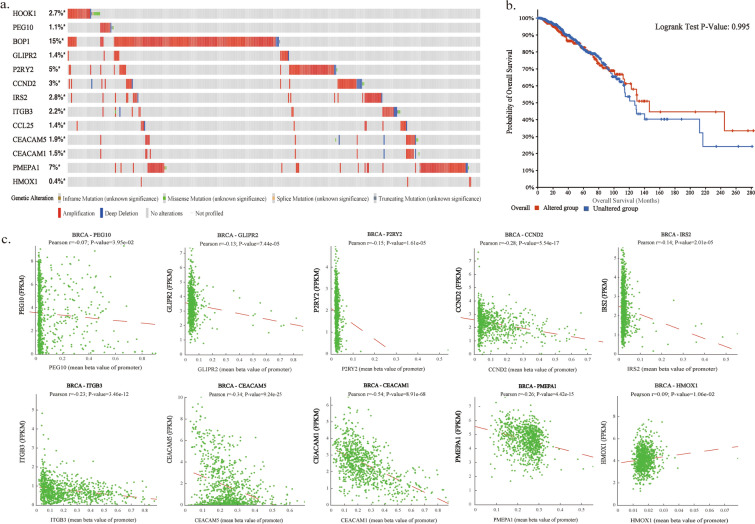
With the application of The Cancer Genome Atlas (TCGA) database, Molecular Taxonomy of Breast Cancer International Consortium (METABRIC), and the Genotype-Tissue Expression (GTEx) database, we identified EMT-related signature genes (EMGs) by Cox univariate regression and LASSO regression analysis. Risk scores were calculated and used to divide patients with TNBC into high-risk group and low-risk groups by the median value. Kaplan-Meier (K-M) and receiver operating characteristic (ROC) curve analyses were applied for model validation. Independent prognostic predictors were used to develop nomograms. Then, we assessed the risk model in terms of the immune microenvironment, genetic alteration and DNA methylation effects on prognosis, the probability of response to immunotherapy and chemotherapy, and small molecule drugs predicted by The Connectivity Map (Cmap) database.
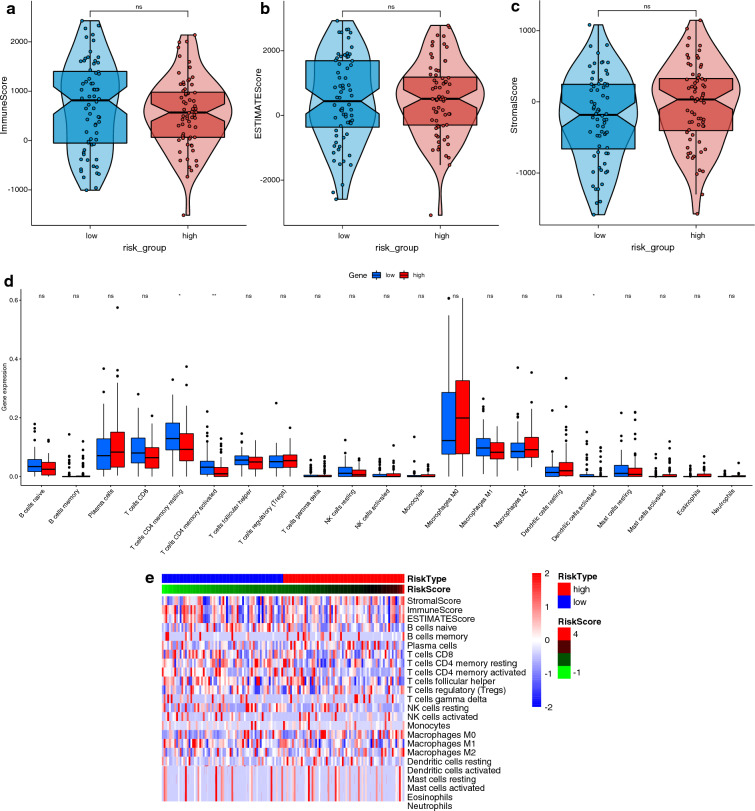
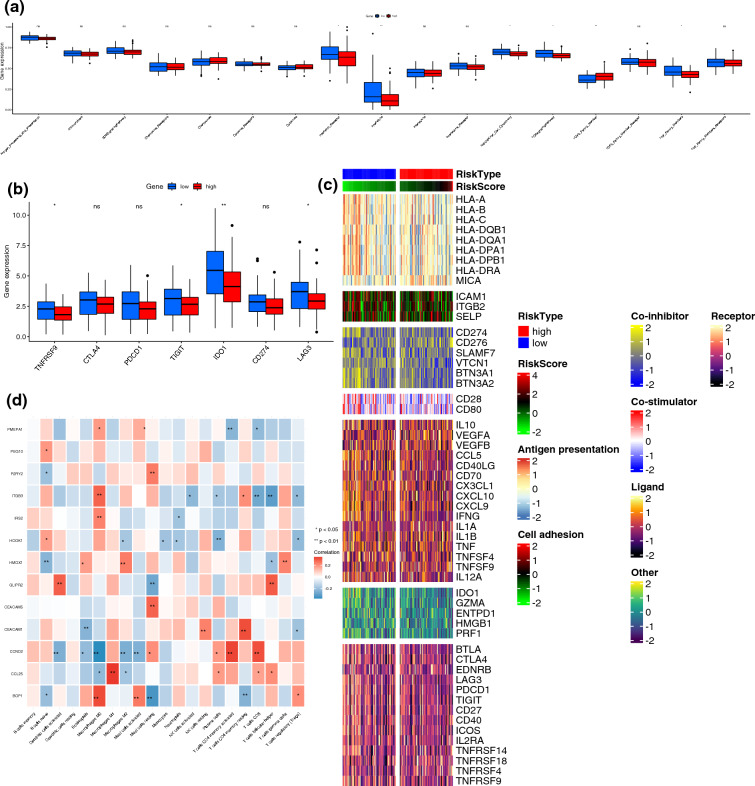
Thirteen EMT-related genes with independent prognostic value were identified and used to stratify the patients with TNBC into high- and low-risk groups. The survival analysis revealed that patients in the high-risk group had significantly poorer overall survival than patients in the low-risk group. Populations of immune cells, including CD4 memory resting T cells, CD4 memory activated T cells, and activated dendritic cells, significantly differed between the high- and low-risk groups. Moreover, some therapeutic drugs to which the high-risk group might show sensitivity were identified.
Our research identified the significant impact of EMGs on prognosis in TNBC, providing new strategies for personalizing TNBC treatment and improving clinical outcomes.
上皮-间充质转化(EMT)是肿瘤侵袭和转移的重要生物学过程,因此也是乳腺癌进展和耐药的潜在指标。本研究综合分析了三阴性乳腺癌(TNBC)中的 EMT 相关基因,以开发 EMT 相关的预后基因特征。
通过应用癌症基因组图谱(TCGA)数据库、乳腺癌国际分子分类协会(METABRIC)和组织表达(GTEx)数据库,我们通过 Cox 单因素回归和 LASSO 回归分析鉴定 EMT 相关特征基因(EMGs)。通过中位数计算风险评分,将 TNBC 患者分为高风险组和低风险组。采用 Kaplan-Meier(K-M)和受试者工作特征(ROC)曲线分析进行模型验证。采用独立预后预测因子构建列线图。然后,我们从免疫微环境、遗传改变和 DNA 甲基化对预后的影响、对免疫治疗和化疗的反应概率以及通过 Connectivity Map(Cmap)数据库预测的小分子药物等方面评估风险模型。
确定了 13 个具有独立预后价值的 EMT 相关基因,用于将 TNBC 患者分为高风险组和低风险组。生存分析显示,高风险组患者的总生存率明显低于低风险组。CD4 记忆静息 T 细胞、CD4 记忆激活 T 细胞和激活树突状细胞等免疫细胞群在高风险组和低风险组之间存在显著差异。此外,还确定了一些高风险组可能敏感的治疗药物。
我们的研究表明 EMTs 对 TNBC 的预后有显著影响,为 TNBC 的个体化治疗提供了新策略,可改善临床结局。