Health Systems Research Unit, South African Medical Research Council, Francie Van Zijl Dr, Parrow Valley, Cape Town, 7501, South Africa.
Department of Psychology, University of Cape Town, Cape Town, South Africa.
AIDS Behav. 2024 Apr;28(4):1137-1151. doi: 10.1007/s10461-023-04130-z. Epub 2023 Jul 18.
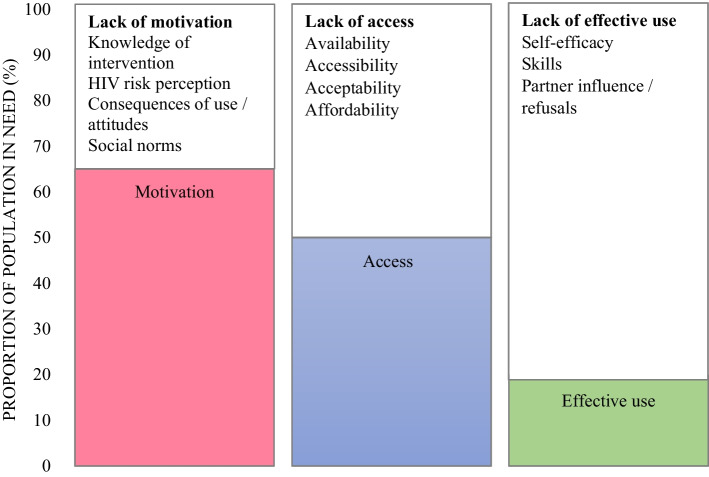
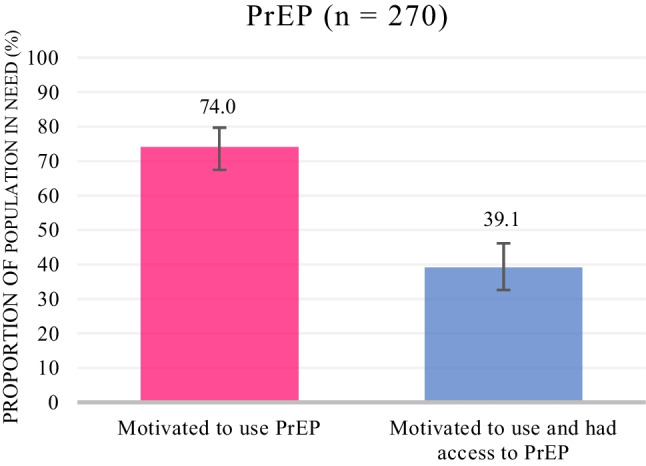
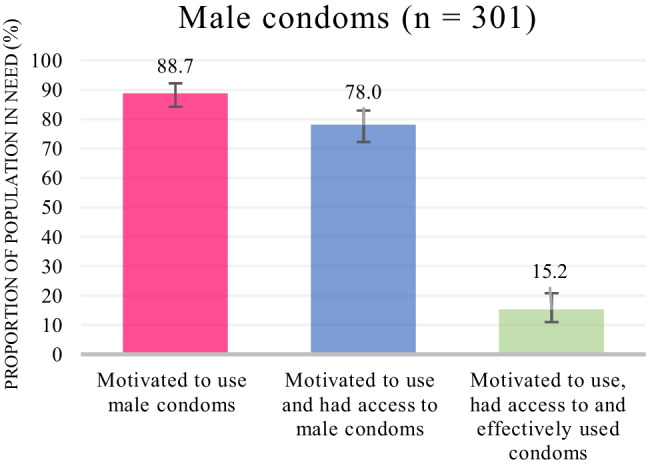
Adolescent girls and young women (AGYW) in South Africa are at a three times higher risk of acquiring HIV than their male counterparts. The HIV prevention cascade is a tool which can be used to measure coverage of HIV prevention services, although there is limited empirical evidence to demonstrate its application in low-resourced settings. The unifying framework is a conceptualisation of the HIV prevention cascade which theorises that both motivation and access are required for an individual to effectively use an HIV prevention method. We applied this framework to data from a random sample of 127,951 beneficiaries of a combination HIV prevention programme for AGYW aged 15-24 in South Africa to measure the steps to, and identify key barriers to, effective use of male condoms and oral pre-exposure prophylaxis (PrEP) among this vulnerable population. Barriers to each step were analysed using univariate and multivariable logistic regression. Among self-reported HIV-negative AGYW who had sex in the past 6 months, effective use of condoms (15.2%), access to PrEP (39.1%) and use of PrEP (3.8%) were low. AGYW were: less likely to be motivated to use condoms if they believed that they had a faithful partner (aOR 0.44, 95% CI 0.22-0.90) or disliked condoms (aOR 0.26, 95% CI 0.11-0.57), less likely to access condoms if the place where AGYW accessed them was far away (aOR 0.25, 95% CI 0.10-0.64), more likely to effectively use condoms if they received counselling on how to use them (aOR 2.24, 95% CI 1.05-4.76), less likely to be motivated to use PrEP if they did not believe PrEP was efficacious (aOR 0.35, 95% CI 0.17-0.72), more likely to be motivated if they felt confident that they could use PrEP, and more likely to have access to PrEP if they had ever been offered PrEP (aOR 2.94, 95% CI 1.19-7.22). This combination HIV prevention programme and similar programmes should focus on risk-reduction counselling interventions for AGYW and their male partners to improve effective use of condoms and ensure easy access to condoms and PrEP by making them available in youth-friendly spaces. Our findings demonstrate that the application of HIV prevention cascades can inform AGYW HIV prevention programming in low-resourced settings.
南非青春期女孩和年轻女性(AGYW)感染 HIV 的风险比男性高三倍。HIV 预防阶梯是一种可以用来衡量 HIV 预防服务覆盖率的工具,尽管目前只有有限的经验证据证明它在资源匮乏的环境中的应用。统一框架是对 HIV 预防阶梯的概念化,它理论化地认为,个人要有效地使用 HIV 预防方法,既需要动机,也需要获得方法的途径。我们将这一框架应用于南非一项针对 15-24 岁 AGYW 的组合 HIV 预防方案的 127951 名受益人的随机样本数据中,以衡量在这一弱势群体中,有效使用男用避孕套和口服暴露前预防(PrEP)的步骤,并确定关键障碍。使用单变量和多变量逻辑回归分析了每个步骤的障碍。在过去 6 个月中有过性行为且自我报告 HIV 阴性的 AGYW 中,有效使用避孕套(15.2%)、获得 PrEP(39.1%)和使用 PrEP(3.8%)的比例较低。AGYW:如果她们认为自己有一个忠实的伴侣(比值比 0.44,95%置信区间 0.22-0.90)或不喜欢避孕套(比值比 0.26,95%置信区间 0.11-0.57),那么使用避孕套的动机就会降低;如果 AGYW 获取避孕套的地方很远(比值比 0.25,95%置信区间 0.10-0.64),那么获取避孕套的可能性就会降低;如果接受过如何使用避孕套的咨询(比值比 2.24,95%置信区间 1.05-4.76),那么有效使用避孕套的可能性就会增加;如果她们不相信 PrEP 有效(比值比 0.35,95%置信区间 0.17-0.72),那么使用 PrEP 的动机就会降低;如果她们对使用 PrEP 有信心,那么使用 PrEP 的动机就会增加;如果她们曾经被提供过 PrEP(比值比 2.94,95%置信区间 1.19-7.22),那么获得 PrEP 的可能性就会增加。这种组合 HIV 预防方案和类似方案应重点关注针对 AGYW 及其男性伴侣的减少风险咨询干预措施,以改善避孕套的有效使用,并通过在青年友好的空间提供避孕套和 PrEP,确保其易于获得。我们的研究结果表明,HIV 预防阶梯的应用可以为资源匮乏环境中的 AGYW HIV 预防规划提供信息。