Department for Congenital Disorders, Statens Serum Institut, Copenhagen, Denmark.
Centre for Medical Parasitology at Department of Immunology and Microbiology, University of Copenhagen, Copenhagen, Denmark.
Commun Biol. 2023 Jul 18;6(1):743. doi: 10.1038/s42003-023-05118-0.
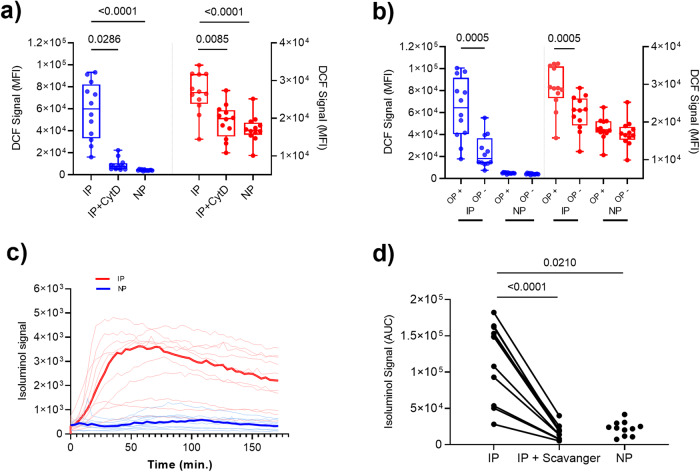
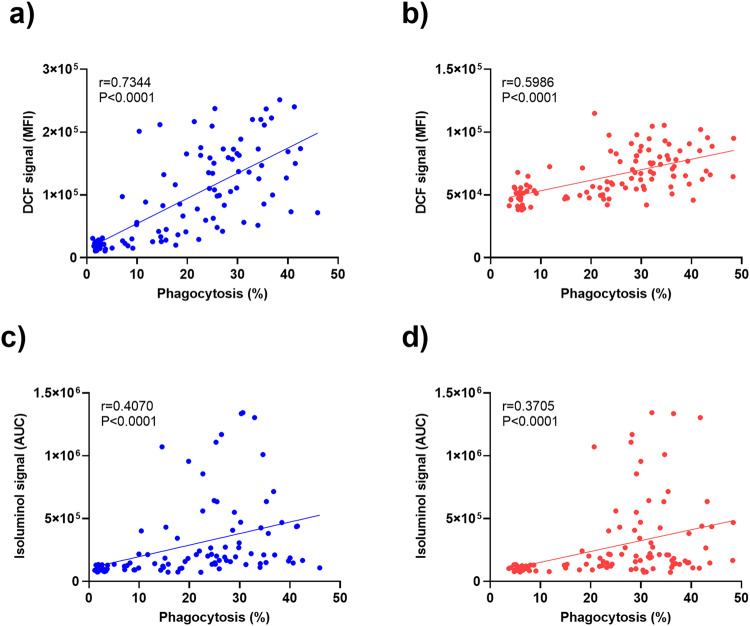
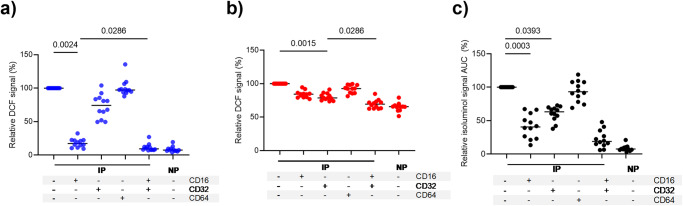
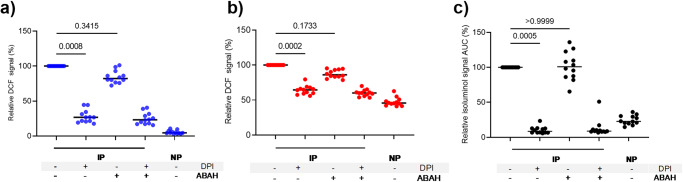
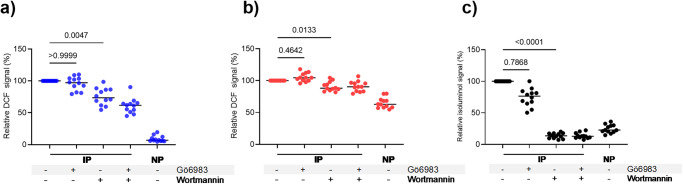
Blood phagocytes, such as neutrophils and monocytes, generate reactive oxygen species (ROS) as a part of host defense response against infections. We investigated the mechanism of Fcγ-Receptor (FcγR) mediated ROS production in these cells to understand how they contribute to anti-malarial immunity. Plasmodium falciparum merozoites opsonized with naturally occurring IgG triggered both intracellular and extracellular ROS generation in blood phagocytes, with neutrophils being the main contributors. Using specific inhibitors, we show that both FcγRIIIB and FcγRIIA acted synergistically to induce ROS production in neutrophils, and that NADPH oxidase 2 and the PI3K intracellular signal transduction pathway were involved in this process. High levels of neutrophil ROS were also associated with protection against febrile malaria in two geographically diverse malaria endemic regions from Ghana and India, stressing the importance of the cooperation between anti-malarial IgG and neutrophils in triggering ROS-mediated parasite killing as a mechanism for naturally acquired immunity against malaria.
血液吞噬细胞,如中性粒细胞和单核细胞,会产生活性氧物质 (ROS),作为宿主防御感染反应的一部分。我们研究了 Fcγ 受体 (FcγR) 在这些细胞中介导 ROS 产生的机制,以了解它们如何有助于抗疟免疫。被天然 IgG 调理的恶性疟原虫裂殖子触发血液吞噬细胞产生细胞内和细胞外 ROS,其中中性粒细胞是主要贡献者。使用特异性抑制剂,我们表明 FcγRIIIB 和 FcγRIIA 协同作用诱导中性粒细胞产生 ROS,并且 NADPH 氧化酶 2 和 PI3K 细胞内信号转导途径参与了这一过程。高水平的中性粒细胞 ROS 也与加纳和印度两个地理上不同的疟疾流行地区发热性疟疾的保护有关,这强调了抗疟 IgG 和中性粒细胞之间合作在触发 ROS 介导的寄生虫杀伤中的重要性,这是对疟疾自然获得性免疫的一种机制。