Medical Sciences Center, Division of Neuropsychiatry, Universidade Federal de Pernambuco, Recife, Pernambuco, Brasil.
Neurology Unit, Hospital da Restauração, Recife, Pernambuco, Brasil.
BMC Neurol. 2023 Jul 18;23(1):273. doi: 10.1186/s12883-023-03327-y.
Different names for stroke might mislead physicians and emergency medical service workers. This study aimed to assess the different words for stroke in Brazil and both intended response and related symptoms associated with those names.
Cross-sectional study enrolling healthy individuals from urban areas in Northeast of Brazil for an open-ended survey. We presented a typical clinical case of a stroke (an elderly who had sudden onset of hemiparalysis and slurred speech) and asked "what is happening?", "what would you do?" and "which other symptoms could happen in this condition?".
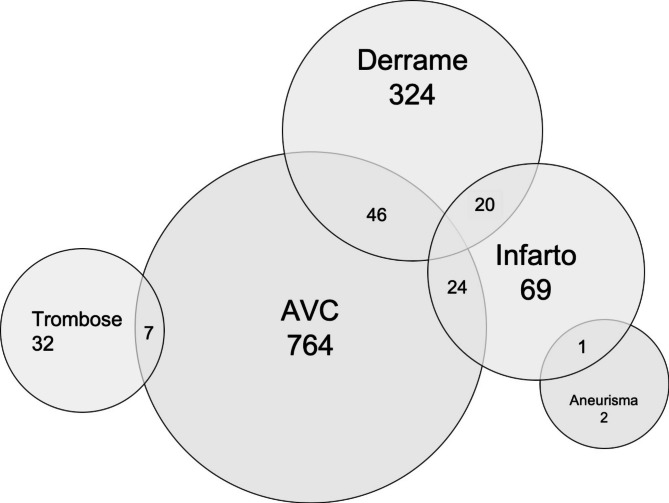
From 1,475 interviewed individuals, 1,220 (82,7%) recognized the scenario as a stroke. There were 3 words to correctly identify (based on correct intended response and spontaneously evoked associated symptoms) the stroke, which were "AVC" (acronym for cerebrovascular accident, in Portuguese), "derrame" (spillage) and "trombose" (thrombosis). There were significant differences among them concerning demographic, economic, educational and geographical aspects, but there was no difference according to the intended reaction among them. The most cited associated symptoms (excluding those present in the case) were impaired consciousness (10.6%), headache (8.9%) and dysesthesia (7.7%). "Aneurisma" (aneurism) was also cited, by 3 individuals.
There are at least three words for stroke in Portuguese ("AVC", "derrame" and "trombose"); they were similar in terms of correct intended responses and spontaneously cited accompanying symptoms. Stroke campaigns should apply different names to reach a broader audience and to improve stroke recognition.
不同的中风名称可能会误导医生和急救医疗服务人员。本研究旨在评估巴西中风的不同名称,以及这些名称对应的预期反应和相关症状。
这是一项在巴西东北部城市地区招募健康个体的横断面研究,采用开放式问卷调查。我们呈现了一个典型的中风临床病例(一位突发偏瘫和言语不清的老年患者),并询问“发生了什么?”、“你会怎么做?”以及“这种情况下可能会出现哪些其他症状?”
在接受采访的 1475 人中,有 1220 人(82.7%)正确识别出该情景为中风。有 3 个词可以正确识别中风,即“AVC”(脑血管意外的缩写,葡萄牙语)、“derrame”(溢出)和“trombose”(血栓形成)。它们在人口统计学、经济、教育和地理方面存在显著差异,但在预期反应方面没有差异。最常被提及的相关症状(不包括病例中已有的症状)是意识障碍(10.6%)、头痛(8.9%)和感觉异常(7.7%)。还有 3 个人提到了“aneurisma”(动脉瘤)。
葡萄牙语中至少有 3 个中风名称(“AVC”、“derrame”和“trombose”);它们在正确的预期反应和自发提及的伴随症状方面相似。中风宣传活动应使用不同的名称,以覆盖更广泛的受众,并提高中风识别率。