Faculty of Fisheries and Protection of Waters, South Bohemian Research Center of Aquaculture and Biodiversity of Hydrocenoses, University of South Bohemia in České Budějovice, Vodňany, Czech Republic.
Fish Disease Research Unit, Institute for Parasitology, University of Veterinary Medicine Hannover, Hannover, Germany.
PeerJ. 2023 Jul 14;11:e15614. doi: 10.7717/peerj.15614. eCollection 2023.
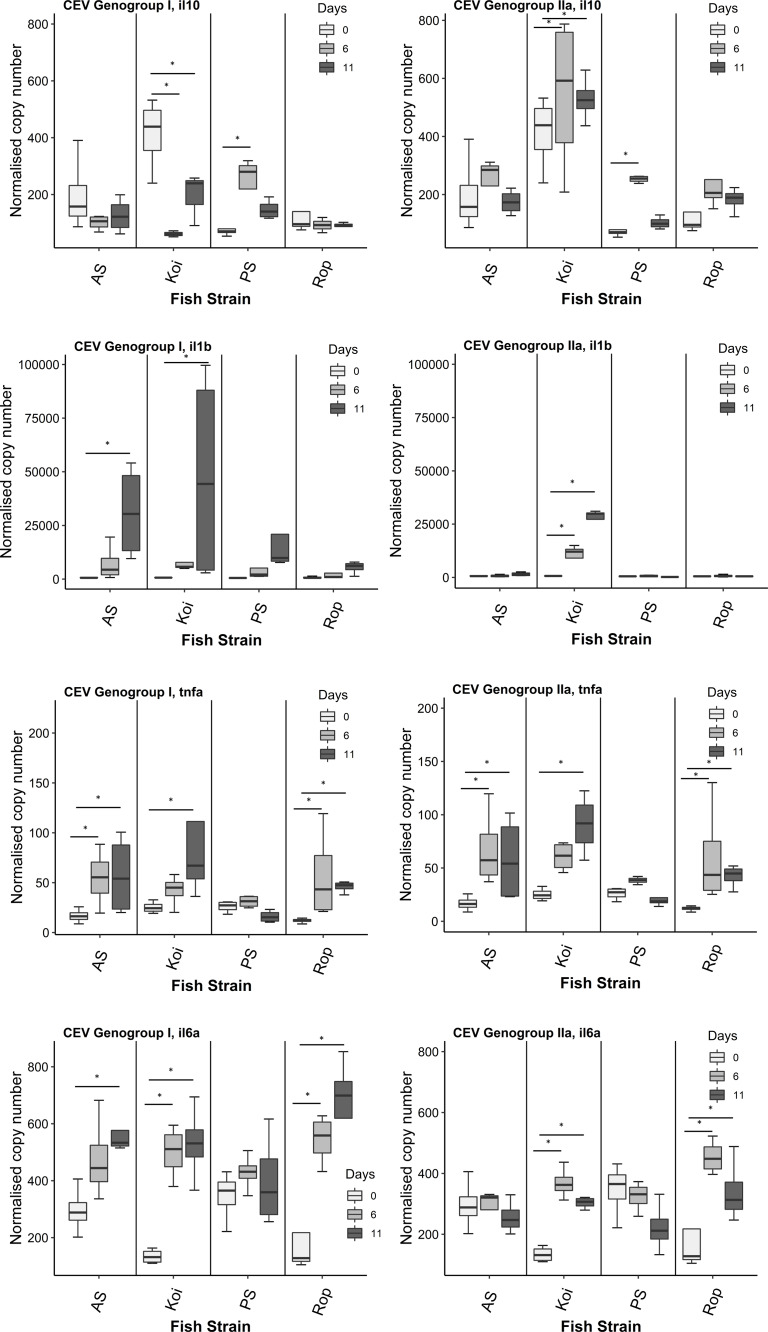
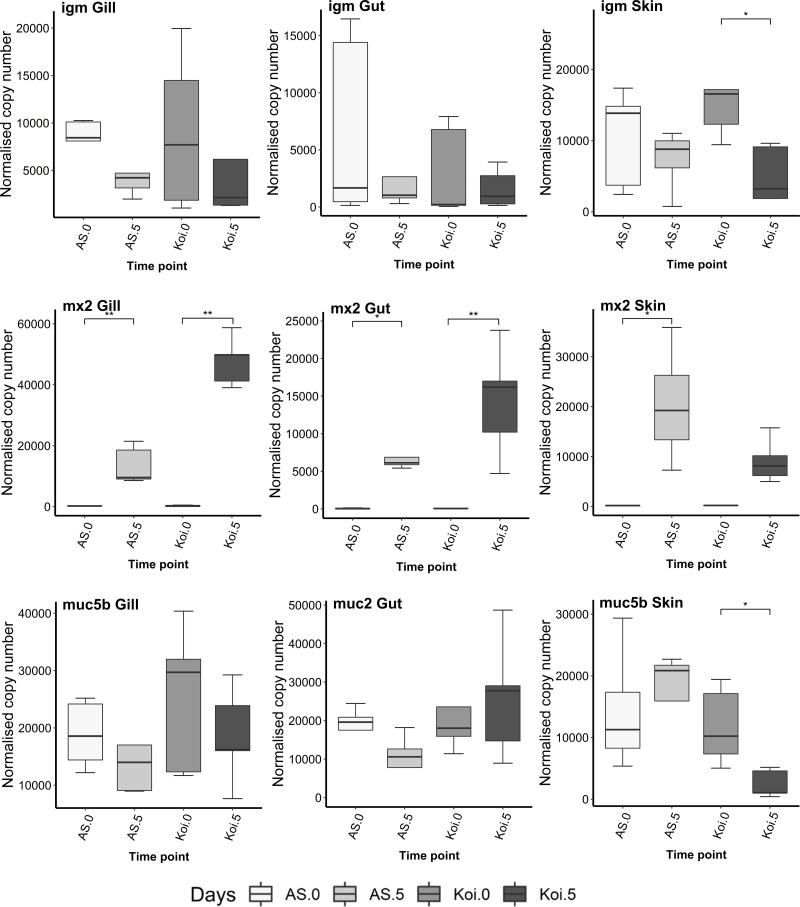
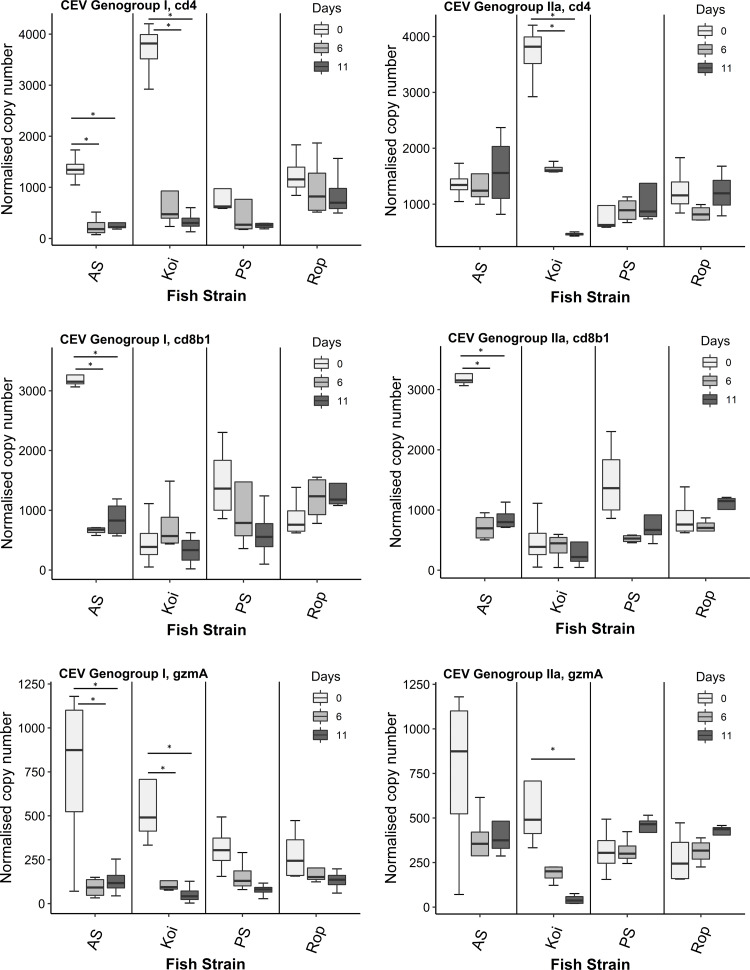
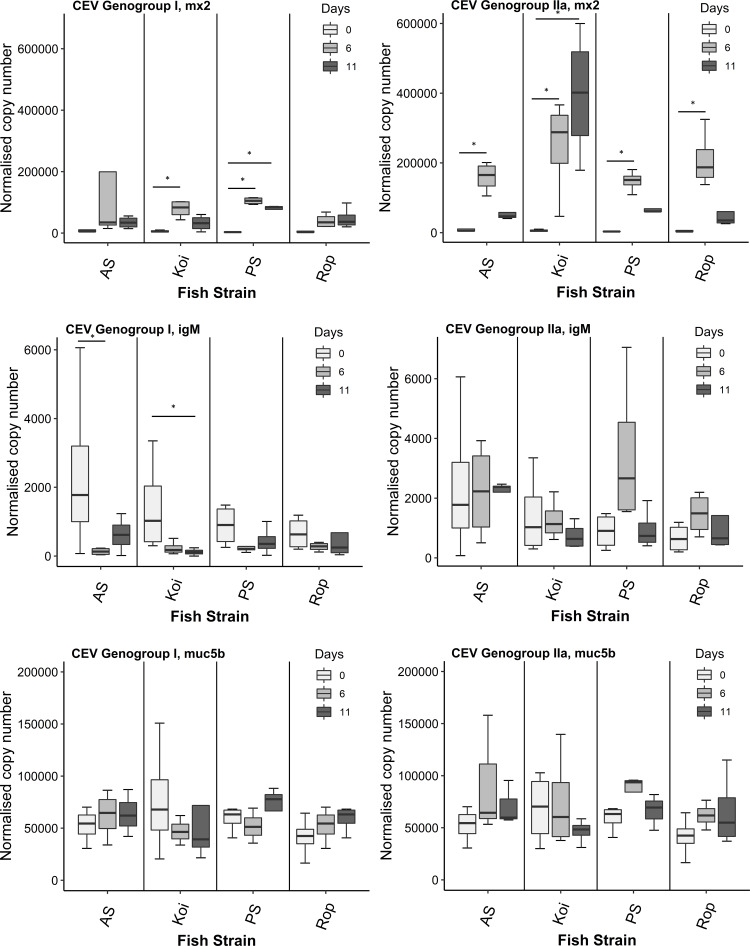
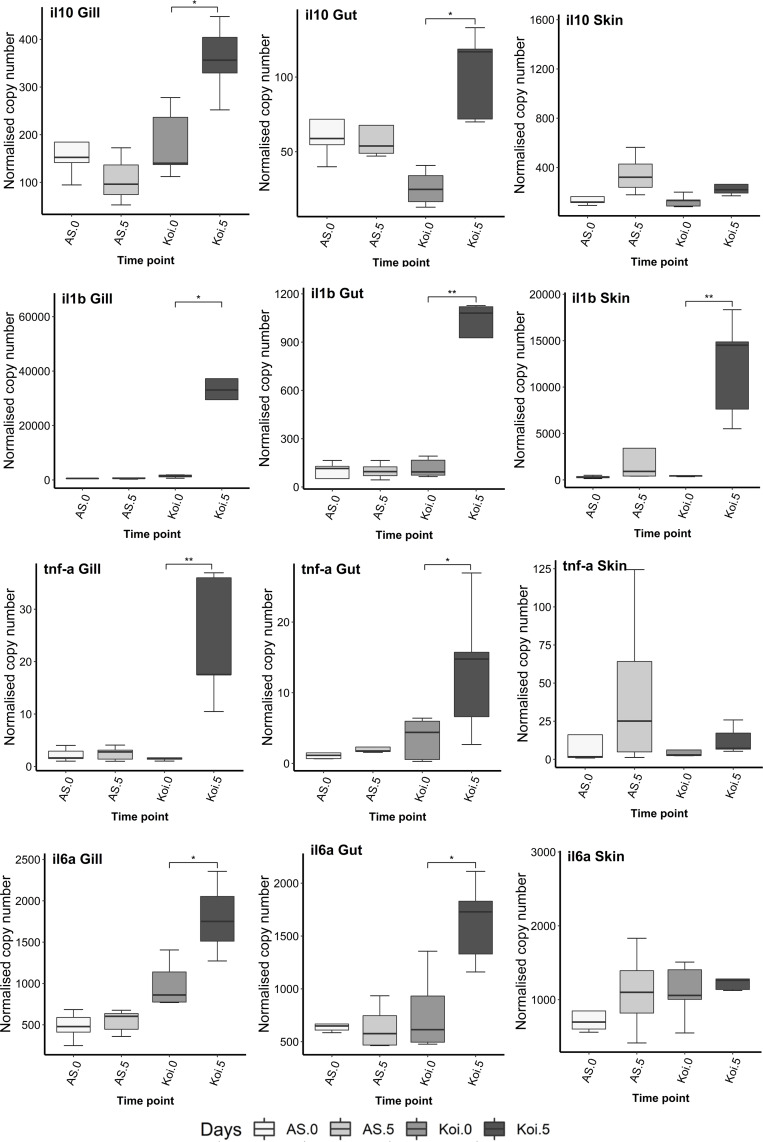
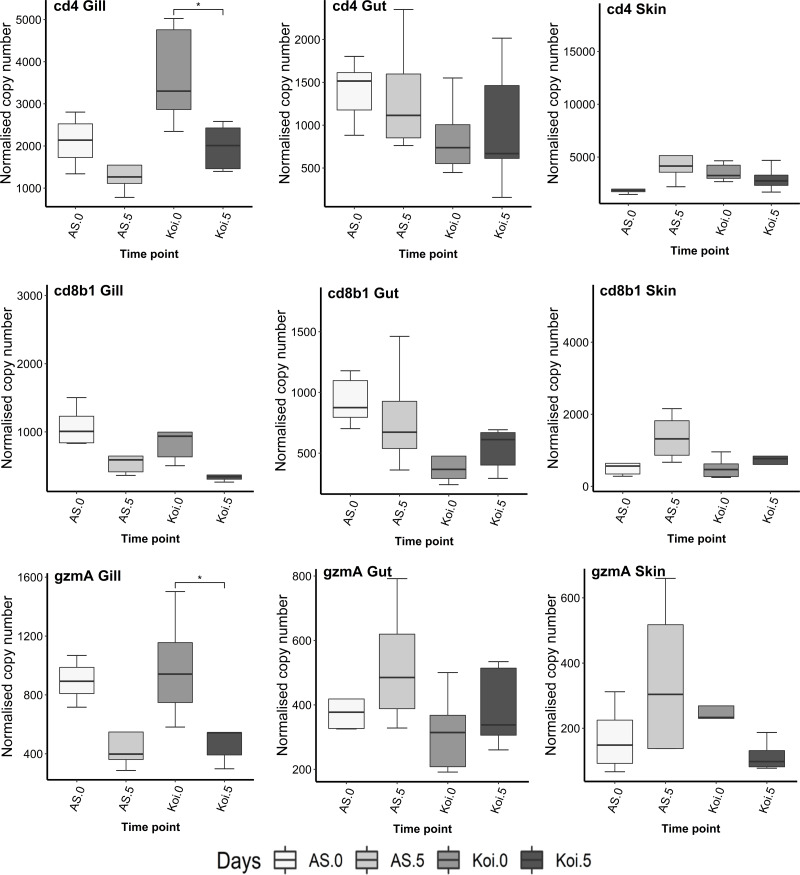
Carp edema virus disease (CEVD), also known as koi sleepy disease (KSD), represents a serious threat to the carp industry. The expression of immune-related genes to CEV infections could lead to the selection of crucial biomarkers of the development of the disease. The expression of a total of eleven immune-related genes encoding cytokines (IL-1, IL-10, IL-6a, and TNF-2), antiviral response (Mx2), cellular receptors (CD4, CD8b1, and ), immunoglobulin (IgM), and genes encoding-mucins was monitored in gills of four differently KSD-susceptible strains of carp (Amur wild carp, Amur Sasan, AS; Ropsha scaly carp, Rop; Prerov scaly carp, PS; and koi) on days 6 and 11 post-infection. Carp strains were infected through two cohabitation infection trials with CEV genogroups I or IIa. The results showed that during the infection with both CEV genogroups, KSD-susceptible koi induced an innate immune response with significant up-regulation ( < 0.05) of IL-1, IL-10, IL-6a, and TNF-2 genes on both 6 and 11 days post-infection (dpi) compared to the fish sampled on day 0. Compared to koi, AS and Rop strains showed up-regulation of IL-6a and TNF-2 but no other cytokine genes. During the infection with CEV genogroup IIa, Mx2 was significantly up-regulated in all strains and peaked on 6 dpi in AS, PS, and Rop. In koi, it remained high until 11 dpi. With genogroup I infection, Mx2 was up-expressed in koi on 6 dpi and in PS on both 6 and 11 dpi. No significant differences were noticed in selected mucin genes expression measured in gills of any carp strains exposed to both CEV genogroups. During both CEV genogroups infections, the expression levels of most of the genes for T cell response, including CD4, CD8b1, and were down-regulated in AS and koi at all time points compared to day 0 control. The expression data for the above experimental trials suggest that both CEV genogroups infections in common carp strains lead to activation of the same expression pattern regardless of the fish's susceptibility towards the virus. The expression of the same genes in AS and koi responding to CEV genogroup IIa infection in mucosal tissues such as gill, gut, and skin showed the significant up-regulation of all the cytokine genes in gill and gut tissues from koi carp at 5 dpi. Significant down-regulation of CD4 and levels were only detected in koi gill on 5 dpi but not in other tissues. AS carp displayed significant up-expression of Mx2 gene in all mucosal tissues on 5 dpi, whereas in koi, it was up-regulated in gill and gut only. In both carp strains, gill harbored a higher virus load on 5 dpi compared to the other tissues. The results showed that resistance to CEV could not be linked with the selected immune responses measured. The up-regulation of mRNA expression of most of the selected immune-related genes in koi gill and gut suggests that CEV induces a more systemic mucosal immune response not restricted to the target tissue of gills.
草鱼水肿病毒病(CEVD),又称锦鲤昏睡病(KSD),对鲤鱼养殖业构成严重威胁。针对 CEV 感染的免疫相关基因的表达可能会导致疾病发展的关键生物标志物的选择。共监测了来自四个不同 KSD 易感鲤鱼品种(草鱼、阿姆斯特丹鲤鱼、罗普莎鲤鱼和普雷罗夫鲤鱼)的 11 个编码细胞因子(IL-1、IL-10、IL-6a 和 TNF-2)、抗病毒反应(Mx2)、细胞受体(CD4、CD8b1 和 )、免疫球蛋白(IgM)和粘蛋白基因在感染后第 6 和第 11 天的鳃中的表达。鲤鱼通过两次同居感染试验用 CEV 基因群 I 或 IIa 感染。结果表明,在感染这两种 CEV 基因群时,与感染第 0 天相比,易感锦鲤在第 6 和第 11 天诱导了先天免疫反应,IL-1、IL-10、IL-6a 和 TNF-2 基因的表达显著上调(<0.05)。与锦鲤相比,AS 和 Rop 品系表现出 IL-6a 和 TNF-2 的上调,但没有其他细胞因子基因。在感染 CEV 基因群 IIa 时,所有品系的 Mx2 均显著上调,并在 AS、PS 和 Rop 中于第 6 天达到峰值。在锦鲤中,它一直持续到第 11 天。在感染基因群 I 时,锦鲤在第 6 天和 PS 在第 6 天和第 11 天的 Mx2 表达上调。在暴露于两种 CEV 基因群的任何鲤鱼品系的鳃中测量的选定粘蛋白基因的表达均未观察到显著差异。在两种 CEV 基因群感染期间,与对照组相比,AS 和锦鲤在所有时间点的 T 细胞反应的大多数基因,包括 CD4、CD8b1 和 ,的表达水平均下调。AS 和锦鲤对 CEV 基因群 IIa 感染的黏膜组织(如鳃、肠道和皮肤)的上述实验试验的表达数据表明,无论鱼类对病毒的易感性如何,两种 CEV 基因群感染都会导致相同的表达模式激活。AS 和锦鲤在黏膜组织(如鳃、肠道和皮肤)中对 CEV 基因群 IIa 感染的反应中,相同基因的表达表明,在第 5 天,锦鲤鳃和肠道组织中所有细胞因子基因的表达均显著上调。仅在锦鲤的第 5 天的鳃中检测到 CD4 和 的水平显著下调,但在其他组织中没有。AS 鲤鱼在所有黏膜组织中在第 5 天的 Mx2 基因表达上调,而在锦鲤中仅在鳃和肠道中上调。在这两种鲤鱼品系中,与其他组织相比,第 5 天的鳃中病毒载量更高。结果表明,对 CEV 的抗性不能与所测量的选择免疫反应相关联。锦鲤鳃和肠道中大多数选定的免疫相关基因的 mRNA 表达上调表明,CEV 诱导了不限于鳃靶组织的全身性黏膜免疫反应。