Kulakowski Daniel, Phansalkar Rasika M, Leme-Kraus Ariene A, McAlpine James, Chen Shao-Nong, Pauli Guido F, Ravindran Sriram, Bedran-Russo Ana K
Department of Pharmaceutical Sciences, College of Pharmacy, University of Illinois at Chicago, Chicago, Illinois 60612, United States.
Department of Restorative Dentistry, College of Dentistry, University of Illinois at Chicago, Chicago, Illinois 60612, United States.
J Bioact Compat Polym. 2022 May;37(3):220-230. doi: 10.1177/08839115221095154. Epub 2022 May 17.
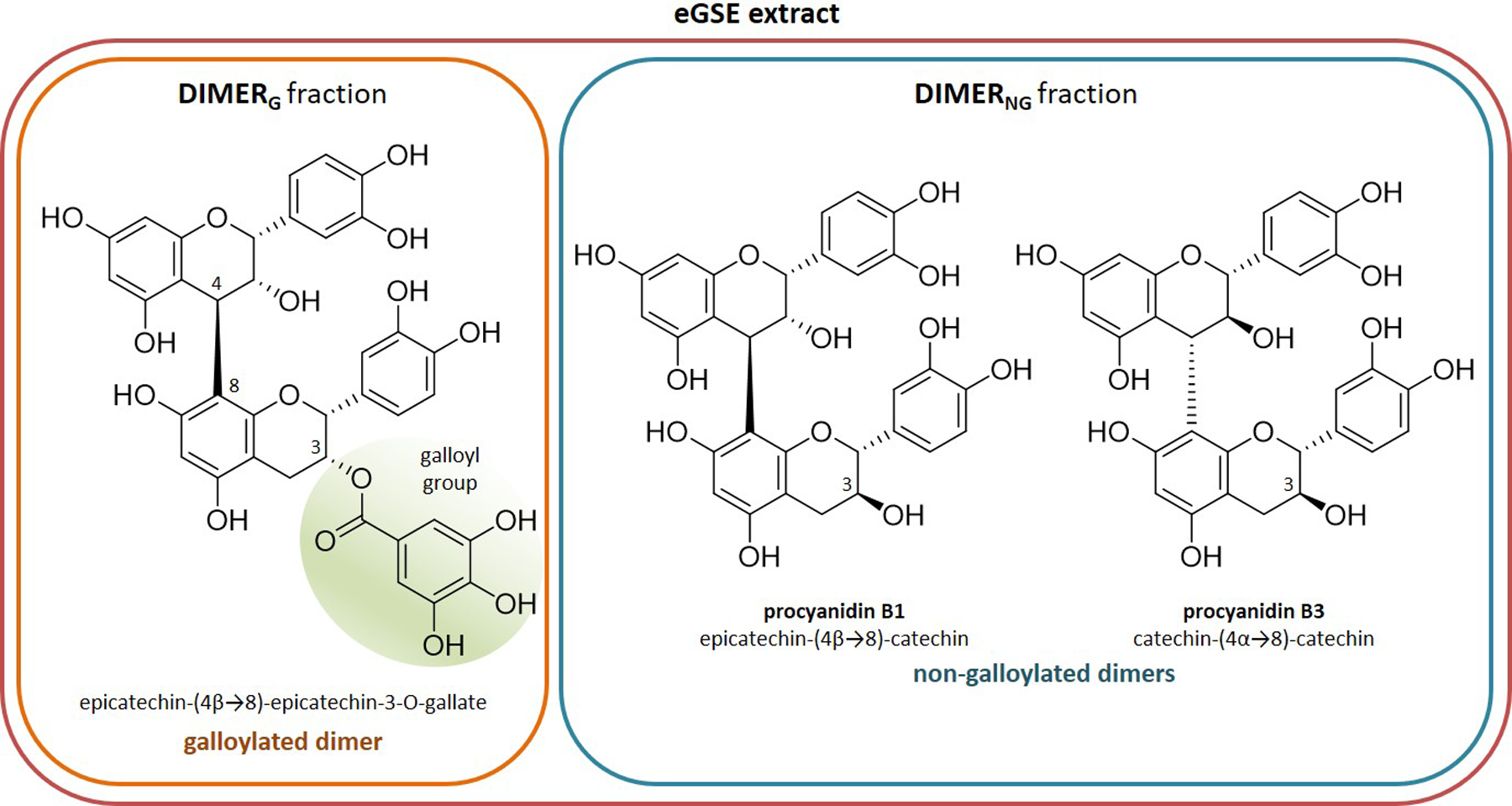
Grape seed extract contains a complex mixture of proanthocyanidins (PACs), a plant biopolymer used as a biomaterial to improve reparative and preventive dental therapies. Co-polymerization of PACs with type I collagen mechanically reinforces the dentin extracellular matrix. This study assessed the biocompatibility of PACs from grape seed extract on dental pulp stem cells (DPSCs) in a model simulating leaching through dentin to the pulp cavity. The aim was to determine the type of PACs (galloylated vs. non-galloylated) within grape seed extract that are most compatible with dental pulp tissue.
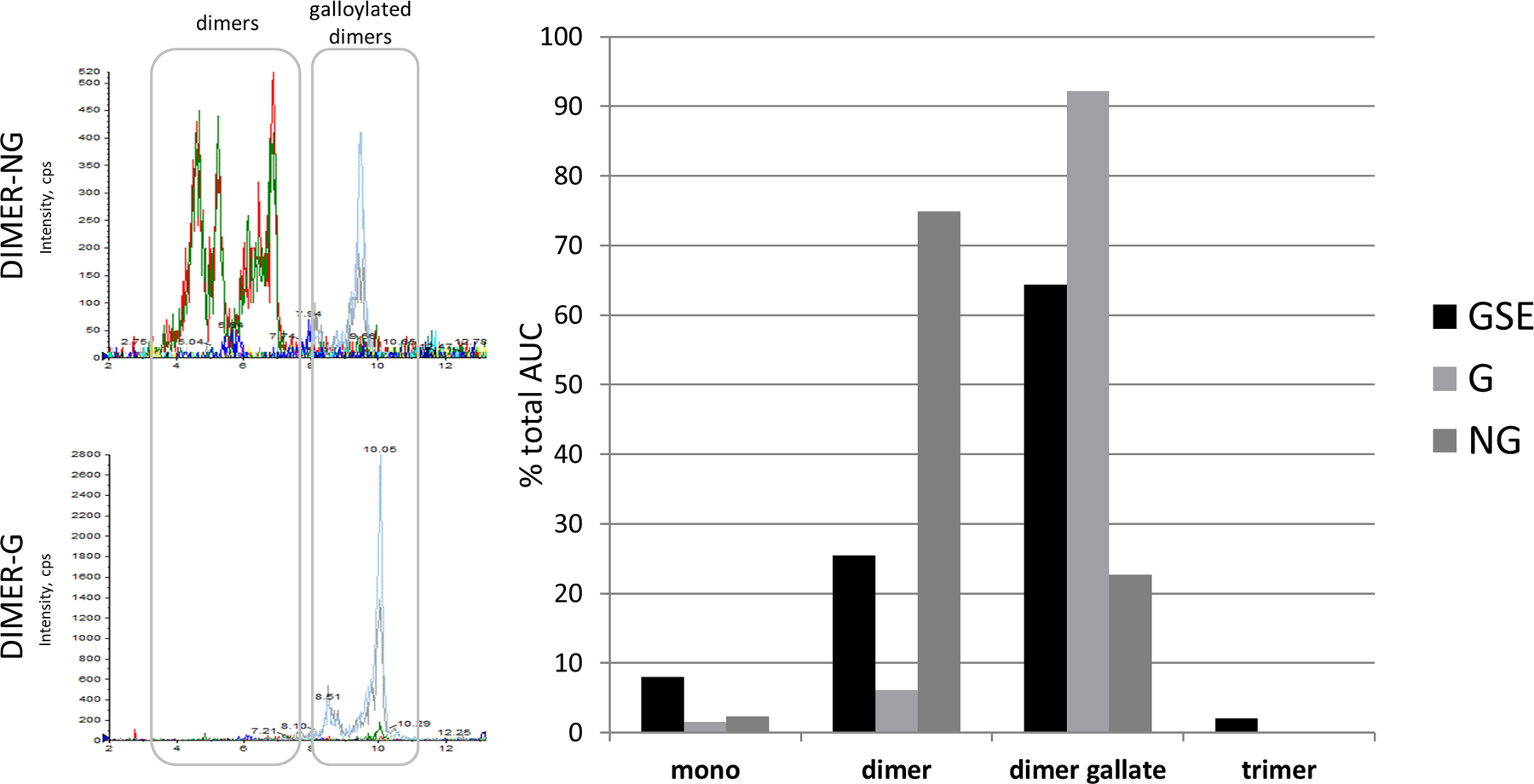
Human demineralized dentin was treated with selectively-enriched dimeric PACs prepared from grape seed extract using liquid-liquid chromatography. DPSCs were cultured within a 2D matrix and exposed to PAC-treated dentin extracellular matrix. Cell proliferation was measured using the MTS assay and expression of odontoblastic genes was analyzed by qRT-PCR. Categorization of PACs leaching from dentin was performed using HPLC-MS.
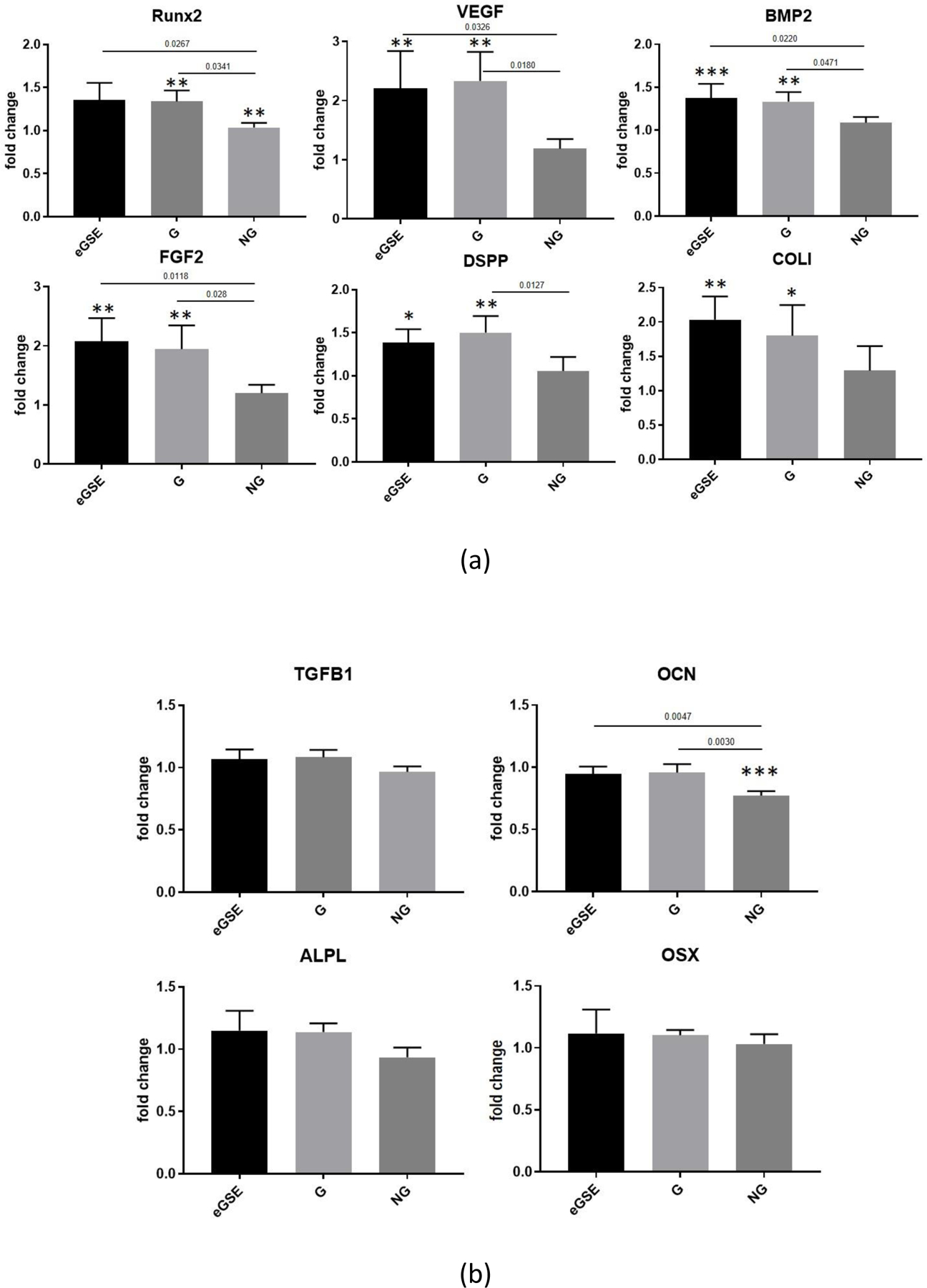
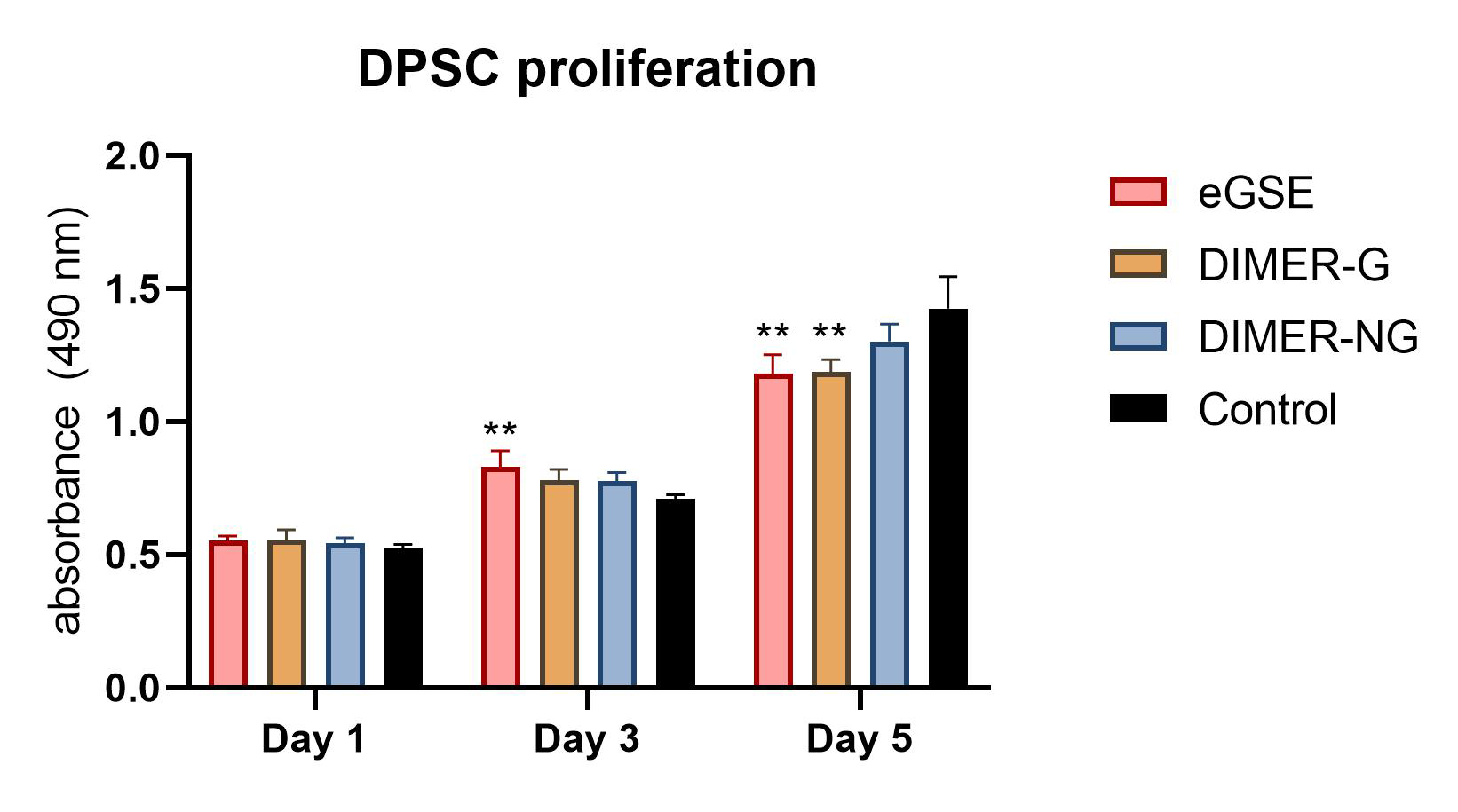
Enriched dimeric fractions containing galloylated PACs increased the expression of certain odontoblastic genes in DPSCs, including Runt-related transcription factor 2 (RUNX2), vascular endothelial growth factor (VEGF), bone morphogenetic protein 2 (BMP2), basic fibroblast growth factor (FGF2), dentin sialophosphoprotein (DSPP) and collagen, type I, alpha 1 (COLI). Galloylated dimeric PACs also exhibited minor effects on DPSC proliferation, resulting in a decrease compared to control after five days of treatment. The non-galloylated dimer fraction had no effect on these genes or on DPSC proliferation.
Galloylated PACs are biocompatible with DPSCs and may exert a beneficial effect on cells within dental pulp tissue. The observed increase in odontoblastic genes induced by galloylated PACs together with a decrease in DPSC proliferation is suggestive of a shift toward cell differentiation. This data supports the use of dimeric PACs as a safe biomaterial, with galloylated dimeric PACs exhibiting potential benefits to odontoblasts supporting dentin regeneration.
葡萄籽提取物含有原花青素(PACs)的复杂混合物,原花青素是一种植物生物聚合物,用作生物材料以改善修复性和预防性牙科治疗。PACs与I型胶原的共聚可机械增强牙本质细胞外基质。本研究在模拟通过牙本质向牙髓腔浸出的模型中评估了葡萄籽提取物中PACs对牙髓干细胞(DPSCs)的生物相容性。目的是确定葡萄籽提取物中与牙髓组织最相容的PACs类型(没食子酰化型与非没食子酰化型)。
使用液-液色谱法将人脱矿牙本质用从葡萄籽提取物中选择性富集的二聚体PACs处理。DPSCs在二维基质中培养并暴露于经PAC处理的牙本质细胞外基质。使用MTS测定法测量细胞增殖,并通过qRT-PCR分析成牙本质细胞基因的表达。使用HPLC-MS对从牙本质中浸出的PACs进行分类。
含有没食子酰化PACs的富集二聚体组分增加了DPSCs中某些成牙本质细胞基因的表达,包括 runt相关转录因子2(RUNX2)、血管内皮生长因子(VEGF)、骨形态发生蛋白2(BMP2)、碱性成纤维细胞生长因子(FGF2)、牙本质涎磷蛋白(DSPP)和I型胶原α1(COLI)。没食子酰化二聚体PACs对DPSC增殖也有轻微影响,处理五天后与对照相比导致增殖减少。非没食子酰化二聚体组分对这些基因或DPSC增殖没有影响。
没食子酰化PACs与DPSCs具有生物相容性,可能对牙髓组织中的细胞产生有益作用。没食子酰化PACs诱导的成牙本质细胞基因增加以及DPSC增殖减少表明细胞向分化方向转变。该数据支持使用二聚体PACs作为安全的生物材料,没食子酰化二聚体PACs对支持牙本质再生的成牙本质细胞具有潜在益处。