• 文献检索
  • 文档翻译
  • 深度研究
  • 学术资讯
  • Suppr Zotero 插件Zotero 插件
  • 邀请有礼
  • 套餐&价格
  • 历史记录
应用&插件
Suppr Zotero 插件Zotero 插件浏览器插件Mac 客户端Windows 客户端微信小程序
定价
高级版会员购买积分包购买API积分包
服务
文献检索文档翻译深度研究API 文档MCP 服务
关于我们
关于 Suppr公司介绍联系我们用户协议隐私条款
关注我们

Suppr 超能文献

核心技术专利:CN118964589B侵权必究
粤ICP备2023148730 号-1Suppr @ 2026

文献检索

告别复杂PubMed语法,用中文像聊天一样搜索,搜遍4000万医学文献。AI智能推荐,让科研检索更轻松。

立即免费搜索

文件翻译

保留排版,准确专业,支持PDF/Word/PPT等文件格式,支持 12+语言互译。

免费翻译文档

深度研究

AI帮你快速写综述,25分钟生成高质量综述,智能提取关键信息,辅助科研写作。

立即免费体验

2022年埃塞俄比亚南部瓦切莫大学综合专科医院新生儿重症监护病房收治新生儿的新生儿败血症及其相关因素

Neonatal sepsis and its associated factors among neonates admitted to the neonatal intensive care unit in Wachemo University Comprehensive Specialized Hospital, Southern Ethiopia, 2022.

作者信息

Mezgebu Taye, Ossabo Getachew, Zekiwos Asnakech, Mohammed Hamdino, Demisse Zerihun

机构信息

Department of Comprehensive Nursing, Schools of Nursing, College of Health Science and Medicine, Wachemo University, Hosanna, Ethiopia.

Department of Pediatrics and Child Health Nursing, Schools of Nursing, College of Health Science and Medicine, Wachemo University, Hosanna, Ethiopia.

出版信息

Front Pediatr. 2023 Jul 3;11:1184205. doi: 10.3389/fped.2023.1184205. eCollection 2023.

DOI:10.3389/fped.2023.1184205
PMID:37465417
原文链接:https://pmc.ncbi.nlm.nih.gov/articles/PMC10350534/
Abstract

BACKGROUND

Neonatal sepsis is a major public health problem worldwide. It is one of the leading causes of neonatal mortality and morbidity worldwide. The neonatal mortality rate is higher in developing countries, where the extent and causes of neonatal sepsis are not yet known. Neonatal sepsis is a leading cause of neonatal mortality in Ethiopia. As a result, this study aimed to assess the proportion and identify maternal and neonatal risk factors for neonatal sepsis among neonates admitted to the neonatal intensive care unit.

METHODS

An institutional-based cross-sectional study was conducted from May 2022 to July 2022 at the Wachemo University Comprehensive Specialized Teaching Hospital, Neonatal Intensive Care Unit, southern Ethiopia. A total of 205 neonates with indexed mothers participated in the study. Using a consecutive sampling technique, a structured, pretested questionnaire was used to collect data from the study subjects. Data were entered into EpiData Manager version 3.1 for Windows and then exported to SPSS version 22 for further data cleaning and analysis. Descriptive analyses were performed by using frequency, percentage, and summary statistics to describe the key variables. A multivariate regression model was used to identify factors associated with neonatal sepsis. Finally, statistical significance was declared at a -value of less than 0.05, and an adjusted odds ratio (AOR) with a 95% confidence level was used to declare the variable's association with the outcome variable.

RESULT

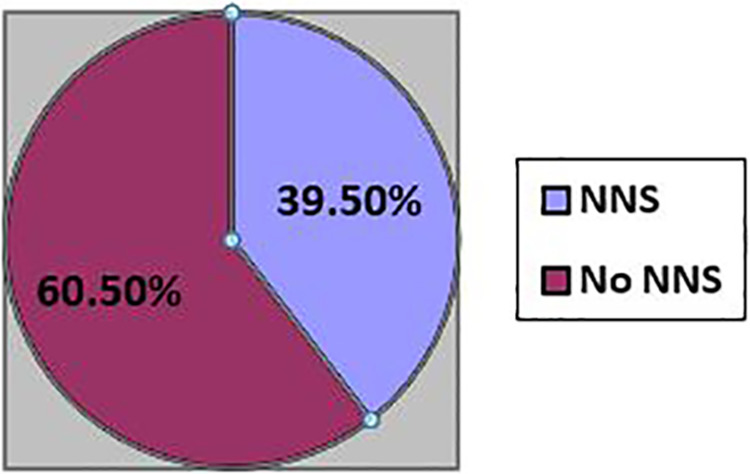
The overall prevalence rate of neonatal sepsis was 39.5% (95% CI: 33.7-45.9). Multivariable analysis was performed by taking a variable that is statistically significant in bivariate logistic regression as a candidate variable. Multivariable model analysis showed that unmarried status AOR = 18.37 (95% CI: 1.56-216.14), maternal fever during delivery AOR = 4.74 (95% CI: 1.63-13.8), and premature rupture of membrane AOR = 7.53 (95% CI: 2.19-25.6) were variables that increased the odds of developing neonatal sepsis.

CONCLUSION

The study's findings indicate that neonatal sepsis is highly prevalent. Unmarried maternal status, maternal fever during delivery, and premature rupture of the membrane were predictors of neonatal sepsis. Therefore, providing training for health workers and close monitoring and evaluation during obstetric and neonatal care are crucial to halt the occurrence of neonatal sepsis.

摘要

背景

新生儿败血症是全球主要的公共卫生问题。它是全球新生儿死亡和发病的主要原因之一。发展中国家的新生儿死亡率较高,而这些国家新生儿败血症的范围和病因尚不清楚。新生儿败血症是埃塞俄比亚新生儿死亡的主要原因。因此,本研究旨在评估埃塞俄比亚南部瓦切莫大学综合专科医院新生儿重症监护病房收治的新生儿中新生儿败血症的比例,并确定其母亲和新生儿的危险因素。

方法

2022年5月至2022年7月,在埃塞俄比亚南部瓦切莫大学综合专科医院新生儿重症监护病房进行了一项基于机构的横断面研究。共有205名有索引母亲的新生儿参与了研究。采用连续抽样技术,使用一份经过预测试的结构化问卷从研究对象中收集数据。数据录入适用于Windows的EpiData Manager 3.1版本,然后导出到SPSS 22版本进行进一步的数据清理和分析。通过频率、百分比和汇总统计进行描述性分析,以描述关键变量。使用多变量回归模型来确定与新生儿败血症相关的因素。最后,当P值小于0.05时宣布具有统计学意义,并使用95%置信水平的调整优势比(AOR)来宣布变量与结果变量之间的关联。

结果

新生儿败血症的总体患病率为39.5%(95%CI:33.7 - 45.9)。通过将双变量逻辑回归中具有统计学意义的变量作为候选变量进行多变量分析。多变量模型分析显示,未婚状态AOR = 18.37(95%CI:1.56 - 216.14)、分娩时母亲发热AOR = 4.74(95%CI:1.63 - 13.8)以及胎膜早破AOR = 7.53(95%CI:2.19 - 25.6)是增加新生儿败血症发病几率的变量。

结论

该研究结果表明新生儿败血症非常普遍。母亲未婚状态、分娩时母亲发热和胎膜早破是新生儿败血症的预测因素。因此,对卫生工作者进行培训以及在产科和新生儿护理期间进行密切监测和评估对于阻止新生儿败血症的发生至关重要。
https://cdn.ncbi.nlm.nih.gov/pmc/blobs/5fb8/10350534/3be38a8a5952/fped-11-1184205-g001.jpg

相似文献

1
Neonatal sepsis and its associated factors among neonates admitted to the neonatal intensive care unit in Wachemo University Comprehensive Specialized Hospital, Southern Ethiopia, 2022.2022年埃塞俄比亚南部瓦切莫大学综合专科医院新生儿重症监护病房收治新生儿的新生儿败血症及其相关因素
Front Pediatr. 2023 Jul 3;11:1184205. doi: 10.3389/fped.2023.1184205. eCollection 2023.
2
Neonatal mortality and associated factors among neonates admitted to neonatal intensive care unit at public hospitals of Somali Regional State, Eastern Ethiopia: A multicenter retrospective analysis.在埃塞俄比亚东部索马里州公立医院新生儿重症监护病房住院的新生儿的死亡率及其相关因素:一项多中心回顾性分析。
PLoS One. 2022 May 26;17(5):e0268648. doi: 10.1371/journal.pone.0268648. eCollection 2022.
3
Magnitude of Neonatal Sepsis and Factors Associated with It among Neonates Admitted to the Intensive Care Units of Neonate in the Primary Hospital of Hawzen, Tigray, Ethiopia, 2020.2020 年,在埃塞俄比亚提格雷的 Hawzen 地区初级医院新生儿重症监护病房住院的新生儿中,新生儿败血症的严重程度及其相关因素。
Glob Health Epidemiol Genom. 2024 Aug 22;2024:7393056. doi: 10.1155/2024/7393056. eCollection 2024.
4
Magnitude of neonatal sepsis and its associated factors among neonates admitted to the neonatal intensive care unit in Hawassa Comprehensive Specialized Hospital, Sidama Regional State, Ethiopia, 2020.2020 年,在埃塞俄比亚锡达马州哈瓦萨综合专科医院新生儿重症监护病房住院的新生儿中,新生儿败血症的严重程度及其相关因素。
BMC Pregnancy Childbirth. 2024 May 22;24(1):383. doi: 10.1186/s12884-024-06583-z.
5
Treatment outcome of neonatal sepsis and associated factors among neonates admitted to neonatal intensive care unit in public hospitals, Addis Ababa, Ethiopia, 2021. Multi-center cross-sectional study.2021 年,埃塞俄比亚亚的斯亚贝巴公立医院新生儿重症监护病房新生儿败血症的治疗结果及相关因素。多中心横断面研究。
PLoS One. 2023 May 30;18(5):e0284983. doi: 10.1371/journal.pone.0284983. eCollection 2023.
6
Determinants and Magnitude of Neonatal Sepsis at Hiwot Fana Comprehensive Specialized University Hospital, in Eastern Ethiopia: A Cross-Sectional Study.埃塞俄比亚东部希沃特·法纳综合专科医院新生儿败血症的决定因素及严重程度:一项横断面研究
Clin Med Insights Pediatr. 2024 Mar 28;18:11795565241242656. doi: 10.1177/11795565241242656. eCollection 2024.
7
Sepsis Risk Factors in Neonatal Intensive Care Units of Public Hospitals in Southeast Ethiopia, 2020: A Retrospective Unmatched Case-Control Study.2020年埃塞俄比亚东南部公立医院新生儿重症监护病房的脓毒症风险因素:一项回顾性非匹配病例对照研究
Int J Pediatr. 2023 Nov 11;2023:3088642. doi: 10.1155/2023/3088642. eCollection 2023.
8
Predictors of mortality among neonates hospitalized with neonatal sepsis: a case control study from southern Ethiopia.新生儿败血症住院患儿死亡率的预测因素:来自埃塞俄比亚南部的病例对照研究。
BMC Pediatr. 2022 Jan 3;22(1):1. doi: 10.1186/s12887-021-03049-5.
9
Neonatal Sepsis and Its Associated Factors Among Neonates Admitted to Neonatal Intensive Care Units in Primary Hospitals in Central Gondar Zone, Northwest Ethiopia, 2019.2019年埃塞俄比亚西北部贡德尔中部地区基层医院新生儿重症监护病房收治新生儿的新生儿败血症及其相关因素
Infect Drug Resist. 2020 Nov 3;13:3957-3967. doi: 10.2147/IDR.S276678. eCollection 2020.
10
Prevalence and determinants of early onset neonatal sepsis at two selected public referral hospitals in the Northwest Ethiopia: a cross-sectional study.在埃塞俄比亚西北部的两家选定的公立转诊医院进行的横断面研究:早发型新生儿败血症的患病率及其决定因素。
BMC Pediatr. 2023 Jan 5;23(1):10. doi: 10.1186/s12887-022-03824-y.

引用本文的文献

1
Development of a mouse model for -associated neonatal sepsis.用于[疾病名称]相关新生儿败血症的小鼠模型的建立。 (你提供的原文中“-associated”部分缺失具体疾病信息)
Microbiol Spectr. 2025 Sep 2;13(9):e0069725. doi: 10.1128/spectrum.00697-25. Epub 2025 Aug 1.
2
Prevalence of Neonatal Sepsis in a Tertiary Hospital in Jos: A Five-Year Retrospective Study.乔斯一家三级医院新生儿败血症的患病率:一项五年回顾性研究
Cureus. 2025 May 19;17(5):e84416. doi: 10.7759/cureus.84416. eCollection 2025 May.
3
The burden of neonatal sepsis and its risk factors in Africa. a systematic review and meta-analysis.

本文引用的文献

1
Prevalence and determinants of early onset neonatal sepsis at two selected public referral hospitals in the Northwest Ethiopia: a cross-sectional study.在埃塞俄比亚西北部的两家选定的公立转诊医院进行的横断面研究:早发型新生儿败血症的患病率及其决定因素。
BMC Pediatr. 2023 Jan 5;23(1):10. doi: 10.1186/s12887-022-03824-y.
2
Neonatal Sepsis and Associated Factors Among Newborns in Woldia and Dessie Comprehensive Specialized Hospitals, North-East Ethiopia, 2021.2021年埃塞俄比亚东北部沃尔迪亚和德西综合专科医院新生儿脓毒症及相关因素研究
Infect Drug Resist. 2022 Aug 1;15:4169-4179. doi: 10.2147/IDR.S374835. eCollection 2022.
3
Neonatal Sepsis and Associated Factors Among Neonates Admitted to Neonatal Intensive Care Unit in General Hospitals, Eastern Ethiopia 2020.
非洲新生儿败血症的负担及其危险因素。一项系统评价和荟萃分析。
BMC Public Health. 2025 Mar 3;25(1):847. doi: 10.1186/s12889-025-22076-w.
4
Effects of pregnancy-induced hypertension on early-onset neonatal thrombocytopenia.妊娠期高血压对早发型新生儿血小板减少症的影响。
BMC Pregnancy Childbirth. 2025 Jan 24;25(1):67. doi: 10.1186/s12884-025-07193-z.
5
Bacterial profiles and their antibiotic susceptibility patterns in neonatal sepsis at the University of Gondar Comprehensive Specialized Hospital, Ethiopia.埃塞俄比亚贡德尔大学综合专科医院新生儿败血症的细菌谱及其抗生素敏感性模式
Front Microbiol. 2024 Oct 21;15:1461689. doi: 10.3389/fmicb.2024.1461689. eCollection 2024.
6
Predictive Role of NLR, dNLR, PLR, NLPR, and Other Laboratory Markers in Diagnosing SIRS in Premature Newborns.中性粒细胞与淋巴细胞比值(NLR)、动态中性粒细胞与淋巴细胞比值(dNLR)、血小板与淋巴细胞比值(PLR)、中性粒细胞与淋巴细胞前体比值(NLPR)及其他实验室指标在诊断早产儿全身炎症反应综合征(SIRS)中的预测作用
Clin Pract. 2024 Jun 6;14(3):1065-1075. doi: 10.3390/clinpract14030084.
7
Salivary C-reactive protein and mean platelet volume as possible diagnostic markers for late-onset neonatal pneumonia.唾液C反应蛋白和平均血小板体积作为晚发性新生儿肺炎的潜在诊断标志物。
World J Clin Pediatr. 2024 Mar 9;13(1):88645. doi: 10.5409/wjcp.v13.i1.0000.
2020年埃塞俄比亚东部综合医院新生儿重症监护病房收治新生儿的新生儿败血症及相关因素
Clin Med Insights Pediatr. 2022 May 23;16:11795565221098346. doi: 10.1177/11795565221098346. eCollection 2022.
4
Magnitude and associated factors of neonatal sepsis among neonates admitted to neonatal intensive care unit of Northern oromia hospitals, Ethiopia: A multicenter cross-sectional study.埃塞俄比亚北奥罗米亚医院新生儿重症监护病房收治新生儿的新生儿败血症的严重程度及相关因素:一项多中心横断面研究。
Ann Med Surg (Lond). 2022 May 14;78:103782. doi: 10.1016/j.amsu.2022.103782. eCollection 2022 Jun.
5
Neonatal Sepsis and Its Associated Factors Among Neonates Admitted to Neonatal Intensive Care Units in Primary Hospitals in Central Gondar Zone, Northwest Ethiopia, 2019.2019年埃塞俄比亚西北部贡德尔中部地区基层医院新生儿重症监护病房收治新生儿的新生儿败血症及其相关因素
Infect Drug Resist. 2020 Nov 3;13:3957-3967. doi: 10.2147/IDR.S276678. eCollection 2020.
6
Prevalence and Factors Associated with Neonatal Sepsis in a Tertiary Hospital, North West Nigeria.尼日利亚西北部一家三级医院新生儿败血症的患病率及相关因素
Niger Med J. 2020 Mar-Apr;61(2):60-66. doi: 10.4103/nmj.NMJ_31_19. Epub 2020 May 7.
7
Global, regional, and national sepsis incidence and mortality, 1990-2017: analysis for the Global Burden of Disease Study.全球、地区和国家脓毒症发病率和死亡率,1990-2017 年:全球疾病负担研究分析。
Lancet. 2020 Jan 18;395(10219):200-211. doi: 10.1016/S0140-6736(19)32989-7.
8
Determinants of neonatal sepsis among neonates in the northwest part of Ethiopia: case-control study.埃塞俄比亚西北部新生儿败血症的决定因素:病例对照研究。
Ital J Pediatr. 2019 Nov 28;45(1):150. doi: 10.1186/s13052-019-0739-2.
9
Epidemiology of Neonatal Sepsis and Associated Factors Implicated: Observational Study at Neonatal Intensive Care Unit of Arsi University Teaching and Referral Hospital, South East Ethiopia.新生儿败血症的流行病学及相关因素:埃塞俄比亚东南部阿尔西大学教学与转诊医院新生儿重症监护病房的观察性研究
Ethiop J Health Sci. 2019 May;29(3):333-342. doi: 10.4314/ejhs.v29i3.5.
10
Risk factors of neonatal sepsis in India: A systematic review and meta-analysis.印度新生儿败血症的危险因素:系统评价和荟萃分析。
PLoS One. 2019 Apr 25;14(4):e0215683. doi: 10.1371/journal.pone.0215683. eCollection 2019.