Cabañas Cynthia, Senju Atsushi, Smith Tim J
Cognition in Naturalistic Environments (CINE) Lab, Department of Psychological Sciences, Birkbeck, University of London, London, United Kingdom.
Research Centre for Child Mental Development, Hamamatsu University School of Medicine, Hamamatsu, Japan.
Front Psychol. 2023 Jul 4;14:1183660. doi: 10.3389/fpsyg.2023.1183660. eCollection 2023.
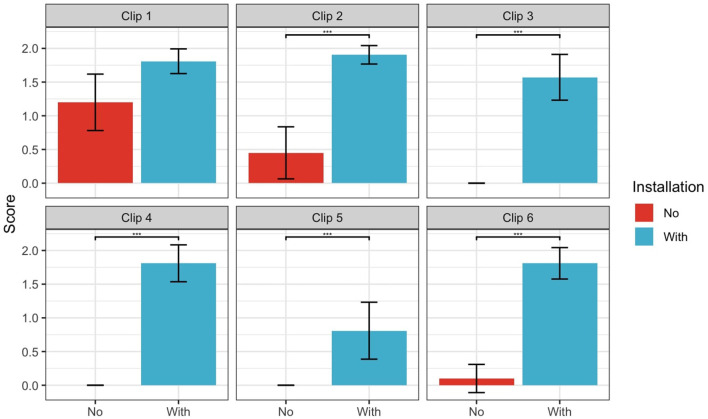
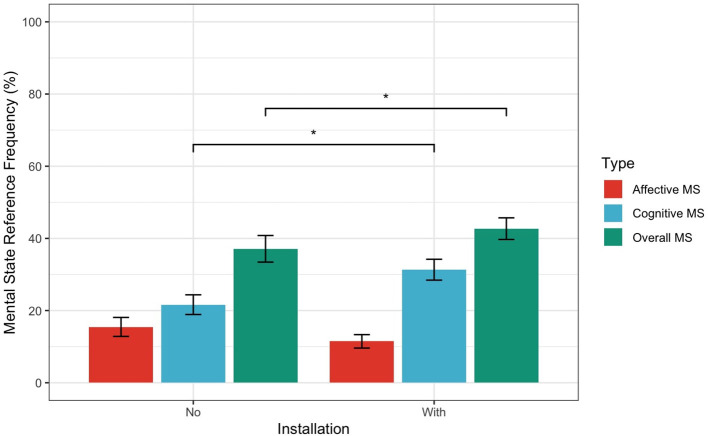
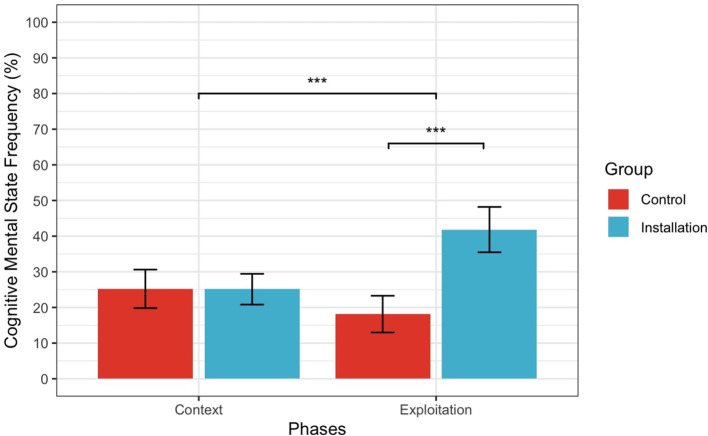
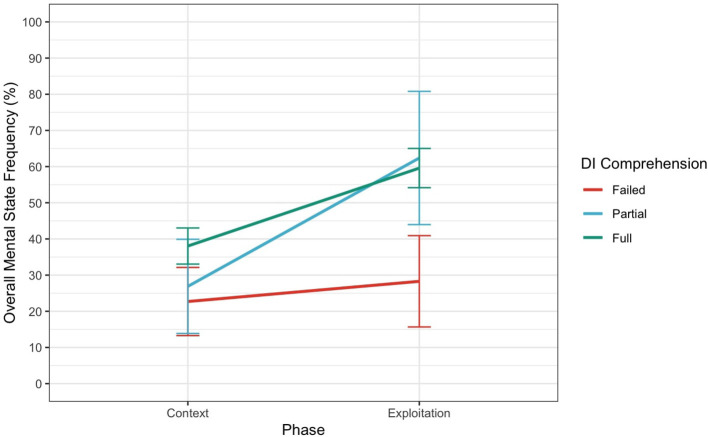
As in real life, cinema viewers rely on spontaneous theory of mind (SToM) to interpret characters' mental states. Thus, analyzing cinematic structures offers a unique opportunity to examine ecologically valid sociocognitive processes. We conducted a proof-of-concept study ( = 42) to explore how SToM inferences impact film event comprehension in dramatic irony scenes, where knowledge divergence exists between the audience and characters. We hypothesized that spectators would focus more on characters' mental states in such false-belief inducing scenarios compared to scenarios without such disparity. We used six Harold Lloyd silent comedy clips in a narrative comprehension and spontaneous mental state attribution study with a between-subject (Knowledge Manipulation: Installation vs. Control) and within-subject (Phase: Context vs. Exploitation) comparisons. We provided critical information unknown to the characters only to the Installation group and withheld it from the Control group. By comparing differences in participants' descriptions of the clips during the Context phase (varying across groups) and Exploitation phase (same across groups), we evaluated viewers' processing of the same scenes based on their false- or true-belief representations. Our findings indicate that the Installation group used more cognitive mental state words during the Exploitation phase relative to the Context phase, suggesting that exposure to undisclosed critical information enhances the frequency of spontaneous epistemic state inferences and integration into event models of the exploitation. This research advances neurocinematics by highlighting spontaneous sociocognitive processes in event perception and comprehension and provides a novel dramatic irony film corpus and measures for future moment-to-moment SToM processing studies across cognitive-behavioral, physiological, and neural levels.
如同在现实生活中一样,电影观众依靠自发心理理论(SToM)来解读角色的心理状态。因此,分析电影结构为检验具有生态效度的社会认知过程提供了独特的机会。我们进行了一项概念验证研究(N = 42),以探究在戏剧性反讽场景中,即观众与角色之间存在知识差异的情况下,自发心理理论推理如何影响电影事件理解。我们假设,与不存在这种差异的场景相比,观众在这种诱发错误信念的场景中会更关注角色的心理状态。在一项叙事理解和自发心理状态归因研究中,我们使用了六个哈罗德·劳埃德无声喜剧片段,采用组间比较(知识操纵:设置组与控制组)和组内比较(阶段:情境阶段与利用阶段)。我们仅向设置组提供了角色未知的关键信息,而对控制组隐瞒了这些信息。通过比较参与者在情境阶段(因组而异)和利用阶段(各组相同)对片段描述的差异,我们基于他们的错误信念或真实信念表征评估了观众对相同场景的处理方式。我们的研究结果表明,与情境阶段相比,设置组在利用阶段使用了更多认知心理状态词汇,这表明接触未公开的关键信息会提高自发认知状态推理的频率,并将其整合到利用阶段的事件模型中。这项研究通过突出事件感知和理解中的自发社会认知过程推动了神经电影学的发展,并为未来跨认知行为、生理和神经层面的逐刻自发心理理论处理研究提供了一个新颖的戏剧性反讽电影语料库和测量方法。