Department of Global Health, Boston University School of Public Health, Boston, Massachusetts, USA.
Department of Maternal, Newborn, Child and Adolescent Health and Ageing, World Health Organization, Geneva, Switzerland.
J Glob Health. 2023 Jul 21;13:04060. doi: 10.7189/jogh.13.04060.
Diarrhoea is the second most common cause of death among children under the age of five worldwide. The World Health Organization (WHO) recommends treating diarrhoea with oral rehydration therapy, intravenous fluids for severe dehydration, and zinc supplements. Antibiotics are only recommended to treat acute, invasive diarrhoea. Rising antibiotic resistance has led to a decrease in the effectiveness of treatments for diarrhoea.
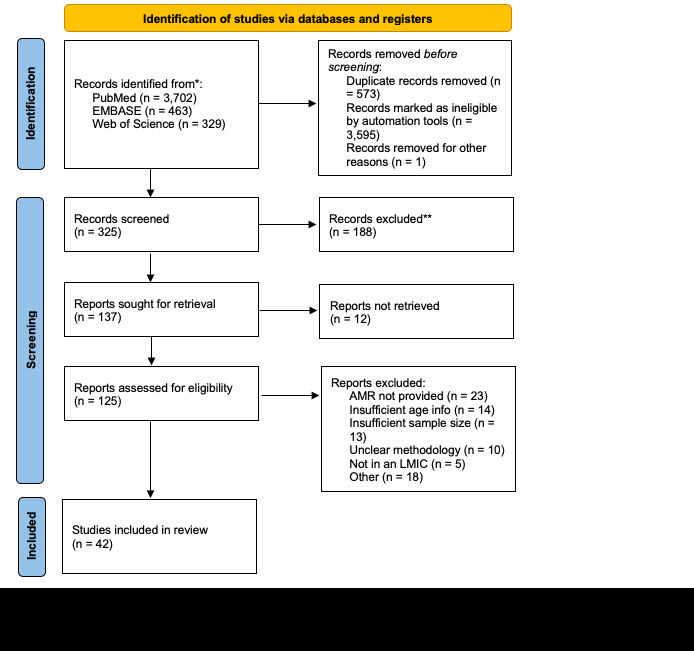
A systematic literature review in PubMed, Web of Science, and EMBASE was conducted to identify articles relevant to antibiotic-resistant childhood diarrhoea. Articles in English published between 1990 to 2020 that described antibiotic resistance patterns of common pathogens causing childhood diarrhoea in low- and middle-income countries were included. The studies were limited to papers that categorized children as 0-5 years or 0-10 years old. The proportion of isolates with resistance to major classes of antibiotics stratified by major WHO global regions and time was determined.
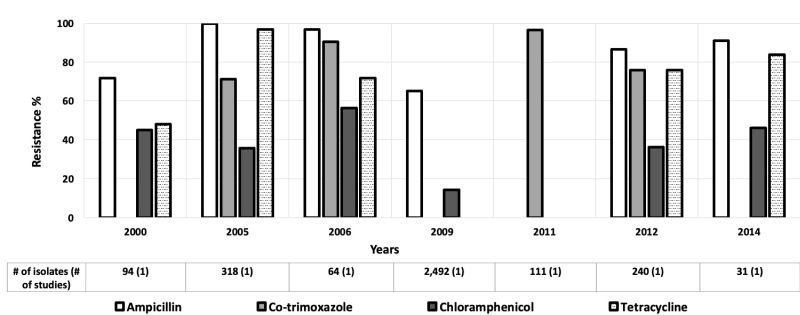
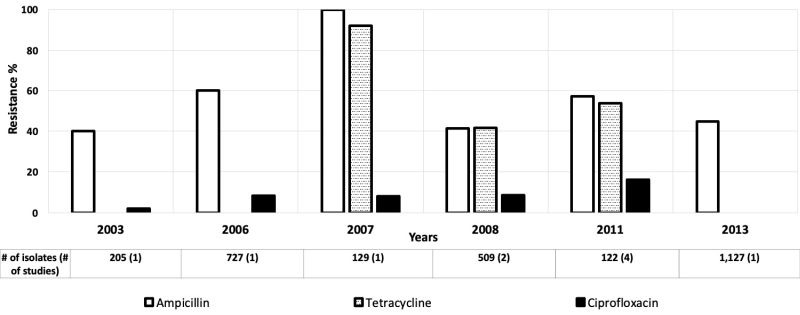
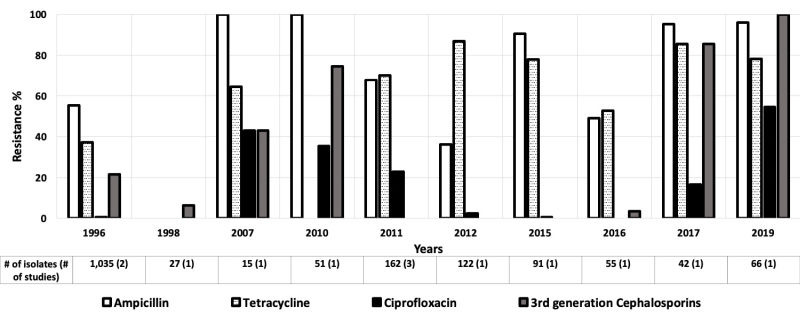
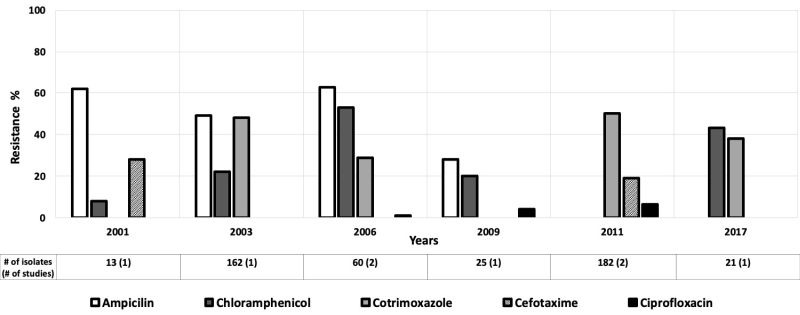
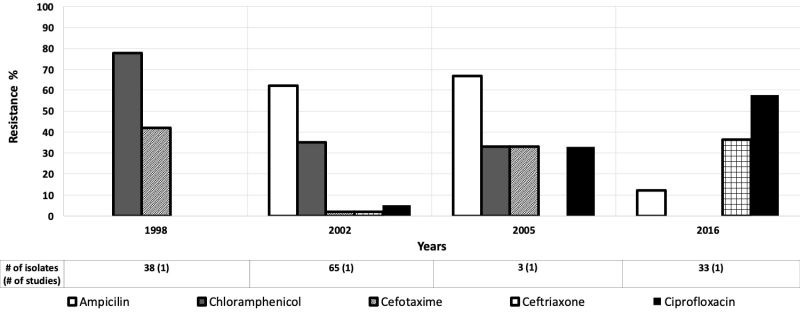
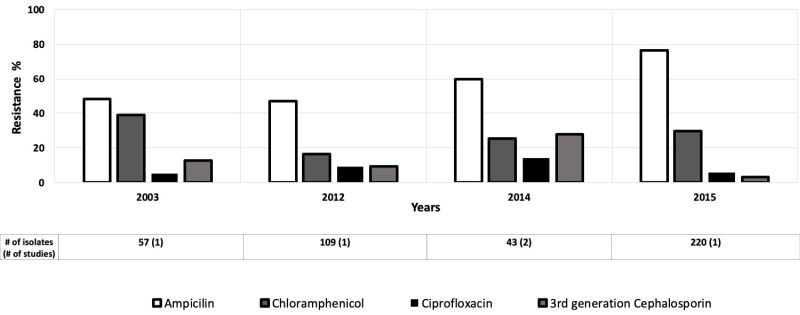
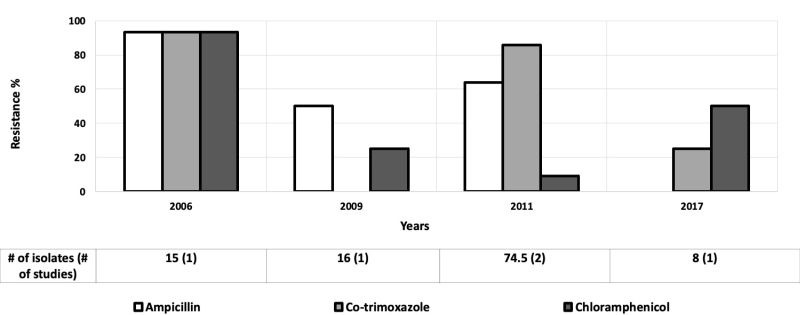
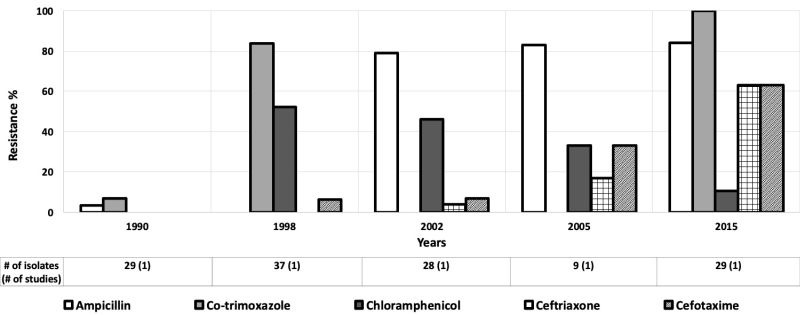
Quantitative data were extracted from 44 articles that met screening criteria; most focused on children under five years. Escherichia coli isolates had relatively high resistance rates to ampicillin and tetracycline in the African (AFR), American (AMR), and Eastern Mediterranean Regions (EMR). There was moderate to high resistance to ampicillin and third generation cephalosporins among Salmonella spp in the AFR, EMR, and the Western Pacific Region (WPR). Resistance rates for ampicillin, co-trimoxazole, and chloramphenicol for Shigella in the AFR started at an alarmingly high rate ( ~ 90%) in 2006 and fluctuated over time. There were limited antibiotic resistance data for Aeromonas, Yersinia, and V. cholerae. The 161 isolates of Campylobacter analysed showed initially low rates of fluoroquinolone resistance with high rates of resistance in recent years, especially in the Southeast Asian Region.
Resistance to inexpensive antibiotics for treatment of invasive diarrhoea in children under ten years is widespread (although data on 6- to 10-year-old children are limited), and resistance rates to fluoroquinolones and later-generation cephalosporins are increasing. A strong regional surveillance system is needed to carefully monitor trends in antibiotic resistance, future studies should include school-aged children, and interventions are needed to reduce inappropriate use of antibiotics for the treatment of community-acquired, non-invasive diarrhoea.
This systematic review was registered in Prospero (registration number CRD42020204004) in August 2020.
腹泻是全球 5 岁以下儿童死亡的第二大主要原因。世界卫生组织(WHO)建议使用口服补液疗法治疗腹泻,对严重脱水者使用静脉补液,并补充锌。仅建议使用抗生素治疗急性侵袭性腹泻。抗生素耐药性的上升导致腹泻治疗效果下降。
在 PubMed、Web of Science 和 EMBASE 中进行了系统文献综述,以确定与儿童抗生素耐药性腹泻相关的文章。纳入了 1990 年至 2020 年间发表的描述低收入和中等收入国家引起儿童腹泻的常见病原体抗生素耐药模式的英文文章。研究仅限于将儿童分为 0-5 岁或 0-10 岁的论文。按主要世界卫生组织全球区域和时间划分,确定了对主要抗生素类别具有耐药性的分离株的比例。
从符合筛选标准的 44 篇文章中提取了定量数据;大多数研究都集中在 5 岁以下儿童。在非洲(AFR)、美洲(AMR)和东地中海区域(EMR),大肠杆菌分离株对氨苄西林和四环素的耐药率相对较高。在 AFR、EMR 和西太平洋区域(WPR),沙门氏菌对氨苄西林和第三代头孢菌素的耐药率为中高度。2006 年,AFR 中志贺氏菌对氨苄西林、复方磺胺甲噁唑和氯霉素的耐药率开始处于惊人的高水平(~90%),并随时间波动。对气单胞菌、耶尔森菌和霍乱弧菌的抗生素耐药数据有限。分析的 161 株弯曲杆菌最初显示出氟喹诺酮类药物耐药率低,但近年来耐药率高,尤其是在东南亚区域。
10 岁以下儿童侵袭性腹泻治疗用廉价抗生素耐药现象普遍(尽管关于 6-10 岁儿童的数据有限),氟喹诺酮类和新一代头孢菌素的耐药率正在上升。需要建立一个强大的区域监测系统,以仔细监测抗生素耐药趋势,未来的研究应包括学龄儿童,需要采取干预措施,减少社区获得性非侵袭性腹泻治疗中抗生素的不当使用。
本系统评价于 2020 年 8 月在 Prospero(注册号 CRD42020204004)中进行了登记。