Morfino Paolo, Aimo Alberto, Castiglione Vincenzo, Chianca Michela, Vergaro Giuseppe, Cipolla Carlo Maria, Fedele Antonella, Emdin Michele, Fabiani Iacopo, Cardinale Daniela
Interdisciplinary Center for Health Sciences, Scuola Superiore Sant'Anna, Pisa, Italy.
Cardiology Division, Fondazione Toscana Gabriele Monasterio, Pisa, Italy.
Front Cardiovasc Med. 2023 Jul 5;10:1212983. doi: 10.3389/fcvm.2023.1212983. eCollection 2023.
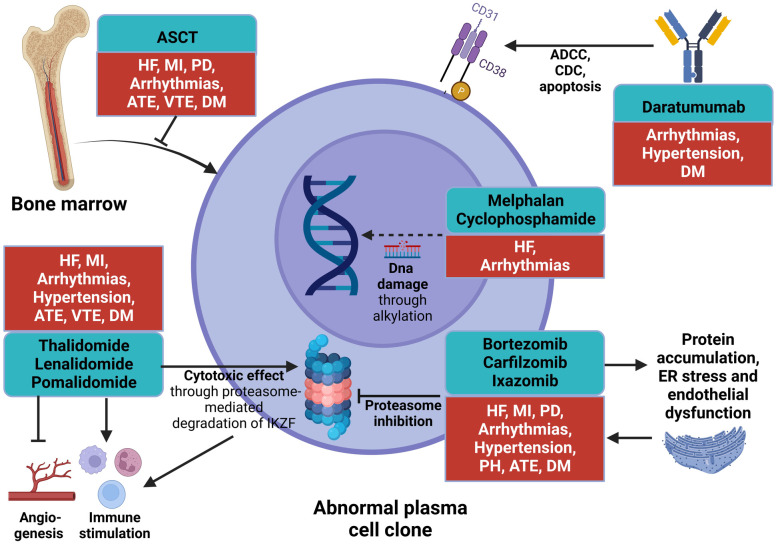
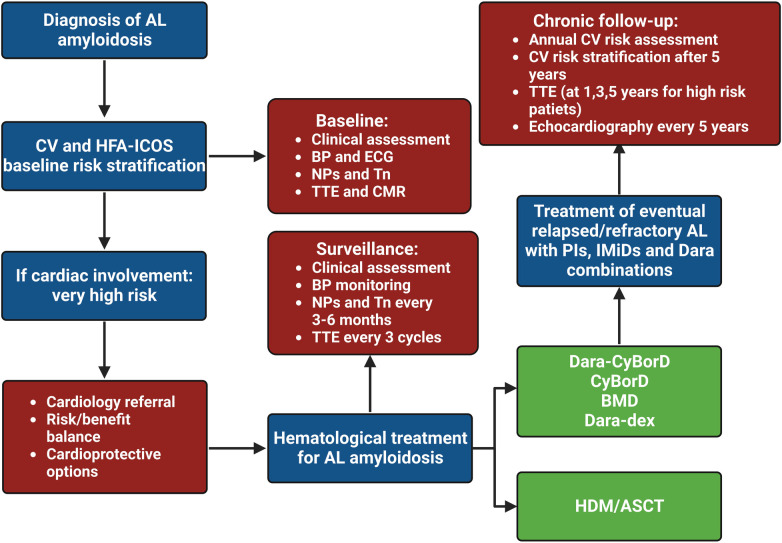
Amyloid light-chain (AL) amyloidosis is a hematological disorder characterized by abnormal proliferation of a plasma cell clone producing monoclonal free light chains that misfold and aggregate into insoluble fibrils in various tissues. Cardiac involvement is a common feature leading to restrictive cardiomyopathy and poor prognosis. Current first-line treatments aim at achieving hematological response by targeting the plasma cell clones, and these have been adapted from multiple myeloma therapy. Patients with AL amyloidosis often exhibit multiorgan involvement, making them susceptible to cancer therapy-related cardiovascular toxicity. Managing AL amyloidosis is a complex issue that requires enhanced knowledge of the cardio-oncological implications of hematological treatments. Future research should focus on implementing and validating primary and secondary prevention strategies and understanding the biochemical basis of oncological therapy-related damage to mitigate cardiovascular toxicity.
淀粉样轻链(AL)淀粉样变性是一种血液系统疾病,其特征为浆细胞克隆异常增殖,产生单克隆游离轻链,这些轻链错误折叠并在各种组织中聚集成不溶性纤维。心脏受累是导致限制性心肌病和预后不良的常见特征。目前的一线治疗旨在通过靶向浆细胞克隆实现血液学缓解,这些治疗方法借鉴了多发性骨髓瘤的治疗方案。AL淀粉样变性患者常表现为多器官受累,这使得他们易患癌症治疗相关的心血管毒性。管理AL淀粉样变性是一个复杂的问题,需要加强对血液学治疗的心脏肿瘤学影响的认识。未来的研究应专注于实施和验证一级和二级预防策略,并了解肿瘤治疗相关损伤的生化基础,以减轻心血管毒性。