University of Guam Marine Laboratory, 303 University Drive, 96923, Mangilao, Guam, USA.
Departament de Biologia Evolutiva, Ecologia i Ciències Ambientals, Facultat de Biologia, Universitat de Barcelona, Av. Diagonal 643, 08028, Barcelona, Spain.
Commun Biol. 2023 Jul 22;6(1):769. doi: 10.1038/s42003-023-05103-7.
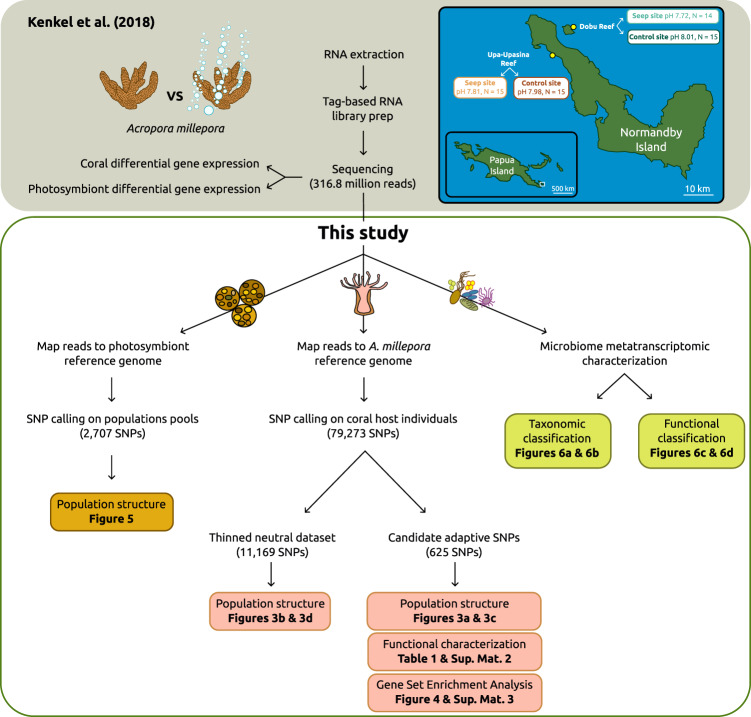
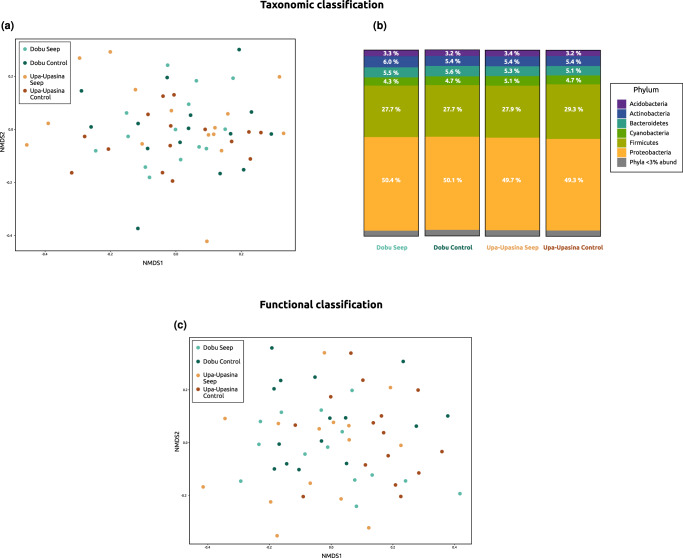
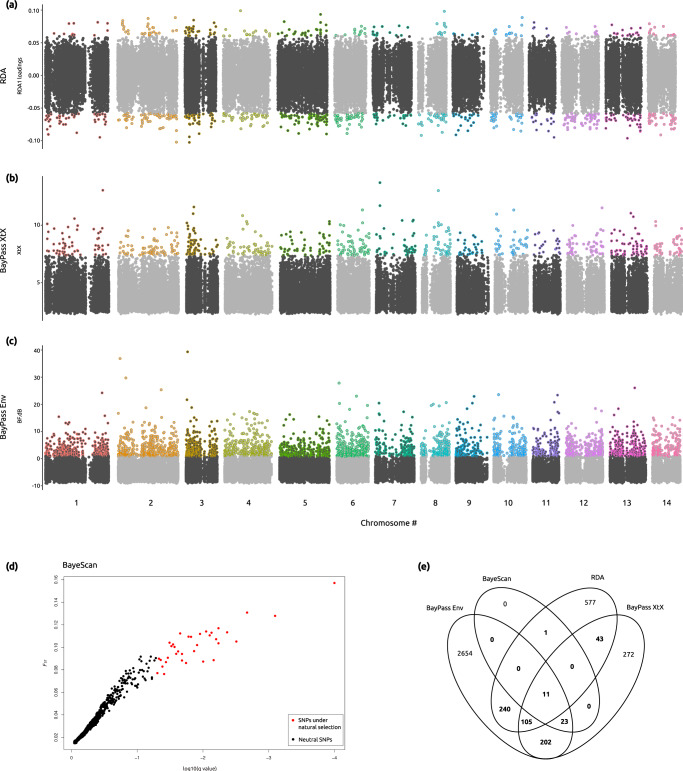
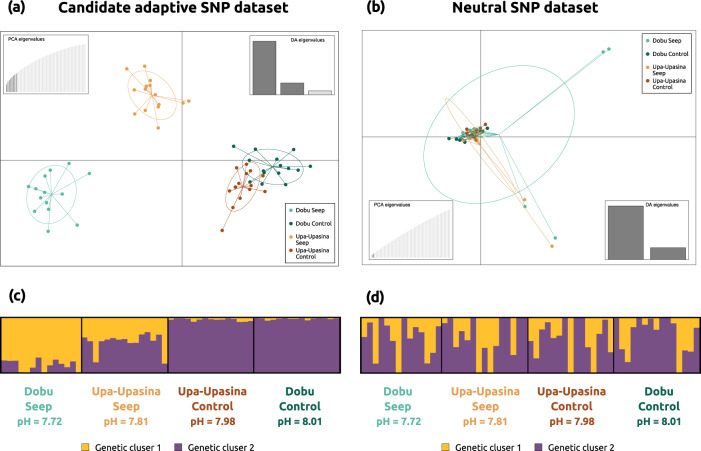
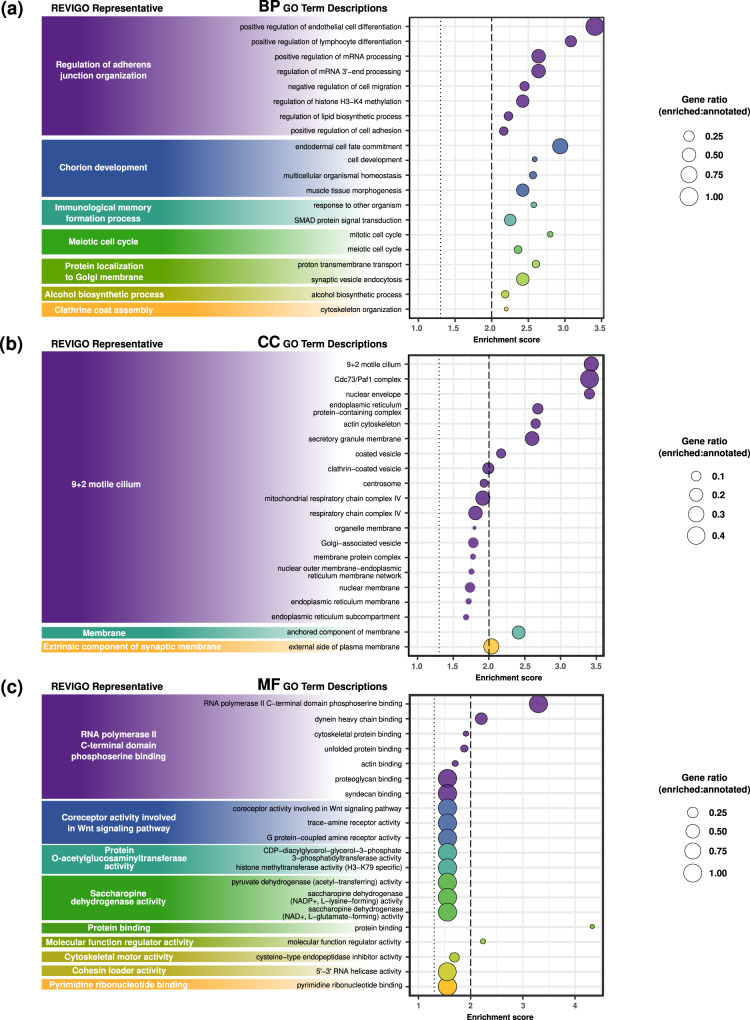
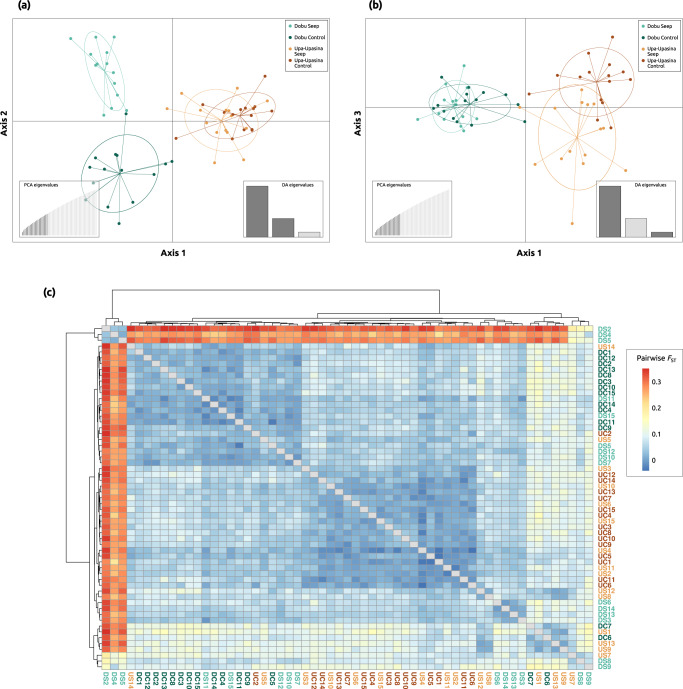
Ocean acidification, caused by anthropogenic CO emissions, is predicted to have major consequences for reef-building corals, jeopardizing the scaffolding of the most biodiverse marine habitats. However, whether corals can adapt to ocean acidification and how remains unclear. We addressed these questions by re-examining transcriptome and genome data of Acropora millepora coral holobionts from volcanic CO seeps with end-of-century pH levels. We show that adaptation to ocean acidification is a wholistic process involving the three main compartments of the coral holobiont. We identified 441 coral host candidate adaptive genes involved in calcification, response to acidification, and symbiosis; population genetic differentiation in dinoflagellate photosymbionts; and consistent transcriptional microbiome activity despite microbial community shifts. Coral holobionts from natural analogues to future ocean conditions harbor beneficial genetic variants with far-reaching rapid adaptation potential. In the face of climate change, these populations require immediate conservation strategies as they could become key to coral reef survival.
人为 CO 排放导致的海洋酸化预计将对造礁珊瑚产生重大影响,危及海洋生物多样性最丰富的生境的结构基础。然而,珊瑚能否适应海洋酸化以及如何适应仍不清楚。我们通过重新分析来自火山 CO 喷口的 Acropora millepora 珊瑚共生体的转录组和基因组数据来解决这些问题,这些数据模拟了本世纪末的 pH 值。我们表明,对海洋酸化的适应是一个整体过程,涉及珊瑚共生体的三个主要组成部分。我们鉴定了 441 个珊瑚宿主候选适应性基因,这些基因涉及钙化、酸化响应和共生;虫黄藻共生体中的种群遗传分化;以及尽管微生物群落发生变化,但转录微生物组活动仍保持一致。来自未来海洋条件的自然类似物的珊瑚共生体具有有益的遗传变异,具有深远的快速适应潜力。面对气候变化,这些种群需要立即采取保护策略,因为它们可能成为珊瑚礁生存的关键。