Khan Malik Ashfaq Ahmed, Ahmad Waqas, Younas Farhan, Badshah Haroon, Alharazy Shatha, Rehman Shafiq Ur, Naseer Muhammad Imran, Yousef Muthaffar Osama, Achakzai Rehmatullah, Ullah Ikram
Center for Interdisciplinary Research in Basic Sciences (CIRBS), International Islamic University Islamabad, Pakistan.
Department of Pharmacy, Abdul Wali Khan University, Mardan, Pakistan.
Heliyon. 2023 Jul 6;9(7):e18033. doi: 10.1016/j.heliyon.2023.e18033. eCollection 2023 Jul.
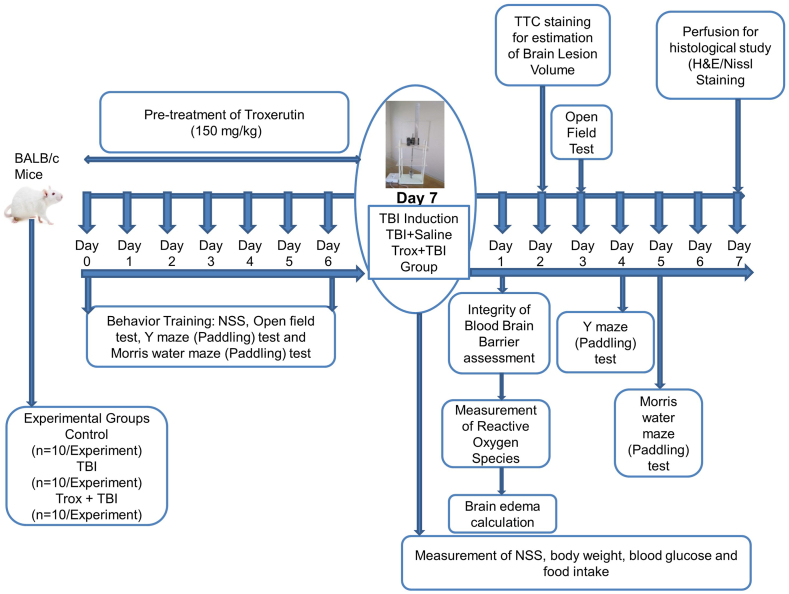
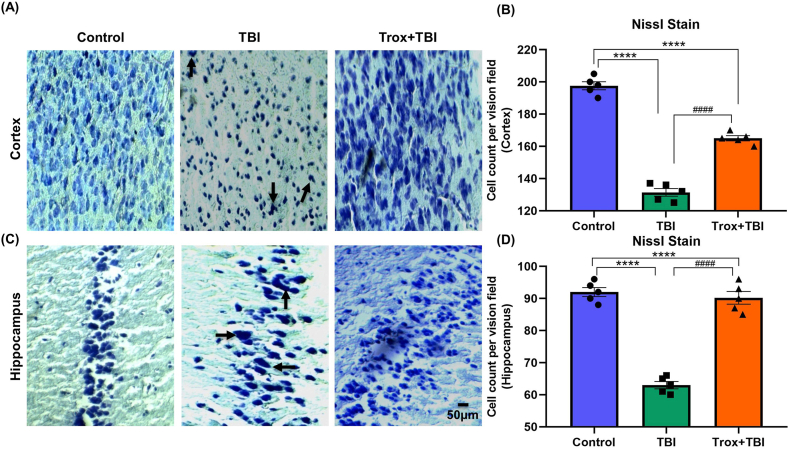
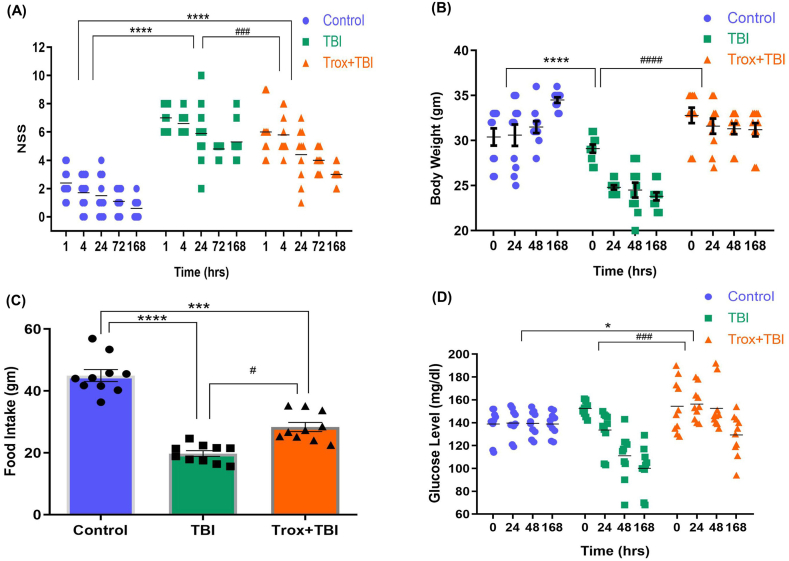
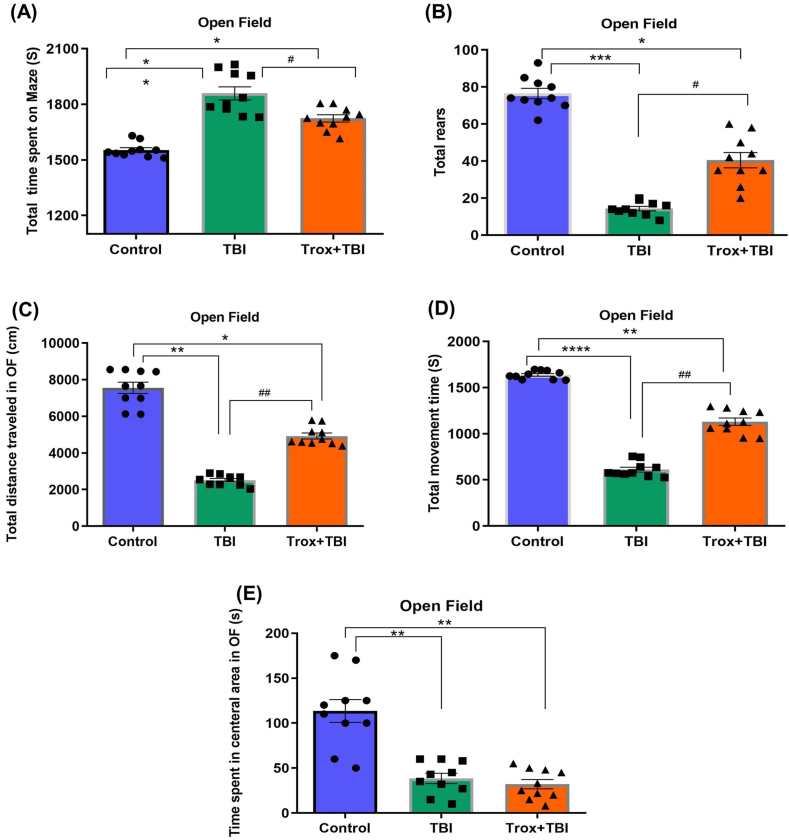
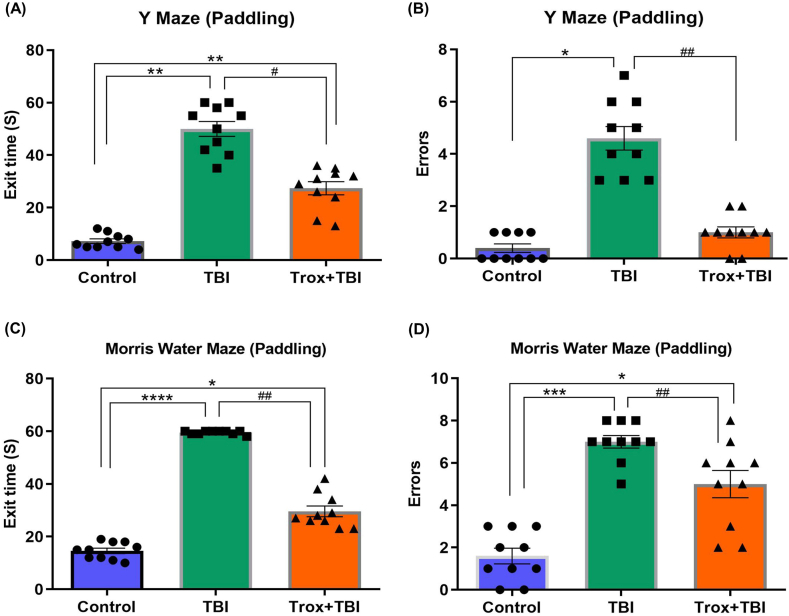
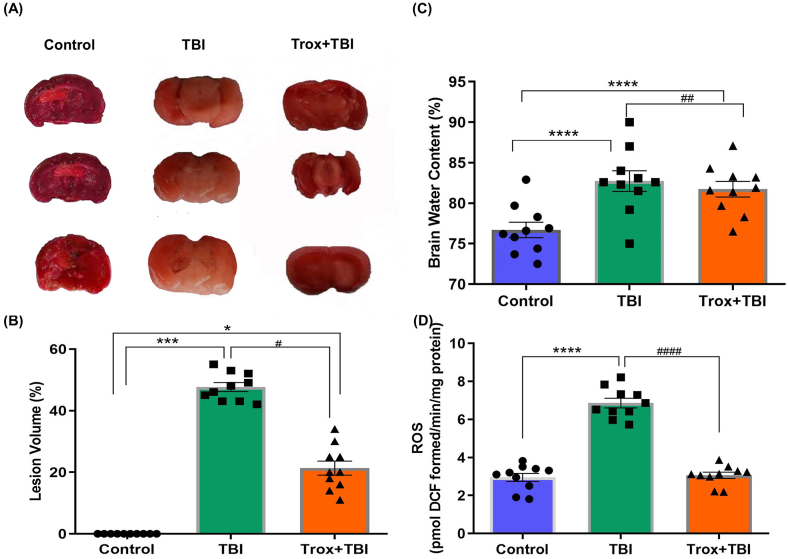
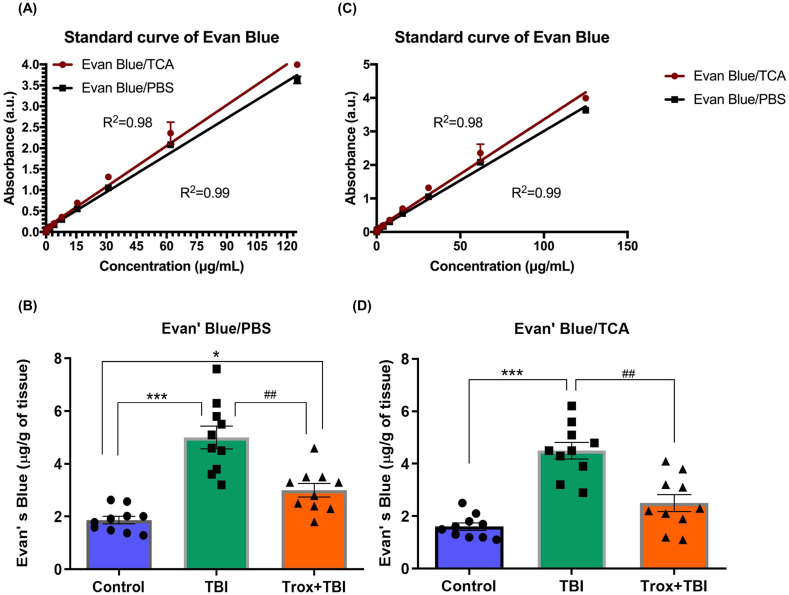
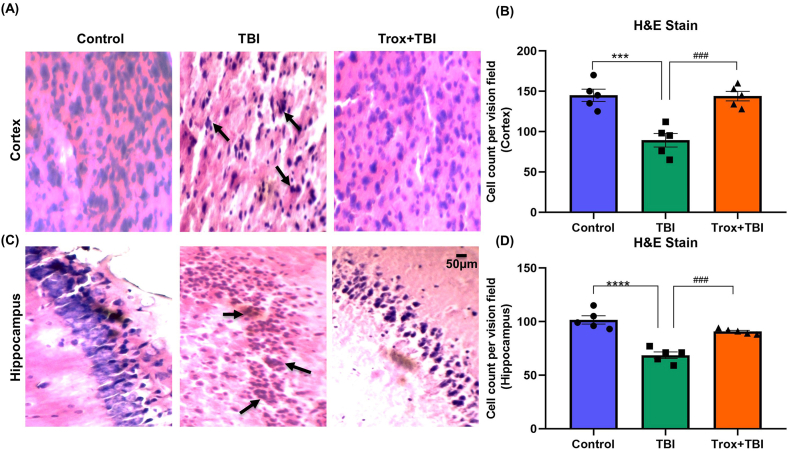
Traumatic brain injury (TBI) is the major and leading cause of mortality and an alarming public health challenge. TBI leads to permanent cognitive, motor, sensory and psychotic disabilities. Patients suffering from the various and long-term repercussions of TBI currently have limited therapy choices. The current research work was designed to evaluate the beneficial and neuroprotective role of Troxerutin (Trox) (a natural flavonoid) in a closed brain injury mouse model. The male BALB/c 8-weeks old mice (n꞊150) were randomly distributed in three experimental groups. Control group of mice (n꞊50), TBI group (n꞊50) and Trox pre-treated mice group (Trox + TBI, n꞊50). The mice in Trox + TBI were pre-treated with Trox (150 mg/kg, 7 days) before TBI. The weight-drop mechanism was used to induce mild-moderate injury in mice in both the groups. Our results showed that the mice pre-treated with troxerutin significantly improved neurological severity score, blood glucose level, food intake and brain edema as compared to the mice in the TBI group. Furthermore, compared to the TBI group, the mice treated with troxerutin improved cognitive behavior as evaluated by Open field test, Shallow Water Maze and Y-Maze, decreased brain-infarct volume and blood-brain barrier (BBB) permeability, significantly decreased Reactive Oxygen Species (ROS), improved neuronal morphology and survival in the brain regions such as cortex and hippocampus. In summary, our data provided evidence that pre-treatment with troxerutin improved neurological functions, decreased the BBB permeability, improved behavior, reduced ROS and increased neuronal survival in the weight-drop close head traumatic injury mouse model.
创伤性脑损伤(TBI)是死亡的主要和首要原因,也是一项令人担忧的公共卫生挑战。TBI会导致永久性的认知、运动、感觉和精神残疾。目前,遭受TBI各种长期影响的患者治疗选择有限。当前的研究工作旨在评估曲克芦丁(Trox)(一种天然类黄酮)在闭合性脑损伤小鼠模型中的有益和神经保护作用。将8周龄雄性BALB/c小鼠(n = 150)随机分为三个实验组。小鼠对照组(n = 50)、TBI组(n = 50)和曲克芦丁预处理小鼠组(Trox + TBI,n = 50)。Trox + TBI组的小鼠在TBI前用曲克芦丁(150 mg/kg,7天)进行预处理。采用重物坠落法在两组小鼠中诱导轻-中度损伤。我们的结果表明,与TBI组小鼠相比,用曲克芦丁预处理的小鼠神经严重程度评分、血糖水平、食物摄入量和脑水肿均有显著改善。此外,与TBI组相比,用曲克芦丁治疗的小鼠在旷场试验、浅水迷宫和Y迷宫评估中认知行为得到改善,脑梗死体积和血脑屏障(BBB)通透性降低,活性氧(ROS)显著减少,神经元形态改善,大脑皮质和海马等脑区的神经元存活率提高。总之,我们的数据表明,在重物坠落致闭合性头部创伤性损伤小鼠模型中,曲克芦丁预处理可改善神经功能,降低BBB通透性,改善行为,减少ROS并提高神经元存活率。