Panfil Claudia, Chauchat Laure, Guerin Camille, Rebika Hayette, Sahyoun Marwan, Schrage Norbert
Aachen Centre of Technology Transfer in Ophthalmology (ACTO E.V.), An-Institute of RWTH, Aachen, Germany.
Laboratoires Horus Pharma, Nice, France.
Ophthalmol Ther. 2023 Oct;12(5):2641-2655. doi: 10.1007/s40123-023-00769-y. Epub 2023 Jul 24.
Corneal epithelial toxicity and delayed healing process have already been attributed to preservatives or some excipients. We study the effects of galenic components in antiglaucoma drugs such as benzalkonium chloride (BAC) or surfactants like macrogolglycerol hydroxystearate 40 (MGHS 40) on corneal toxicity in an ex vivo system mimicking chronic use.
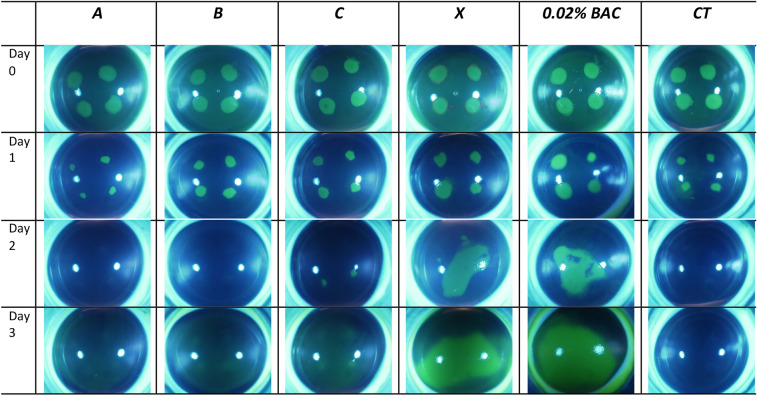
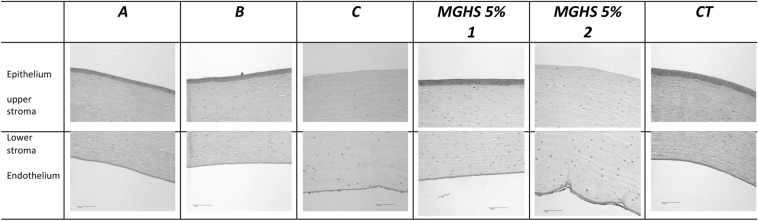
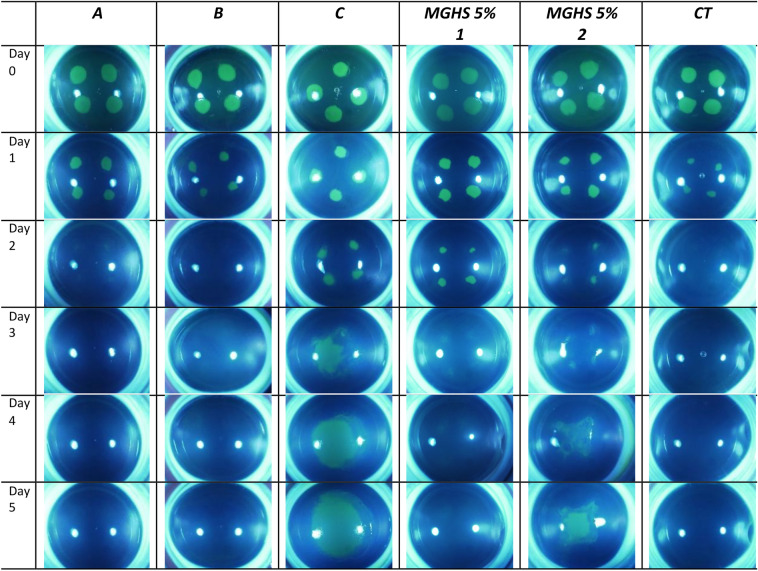
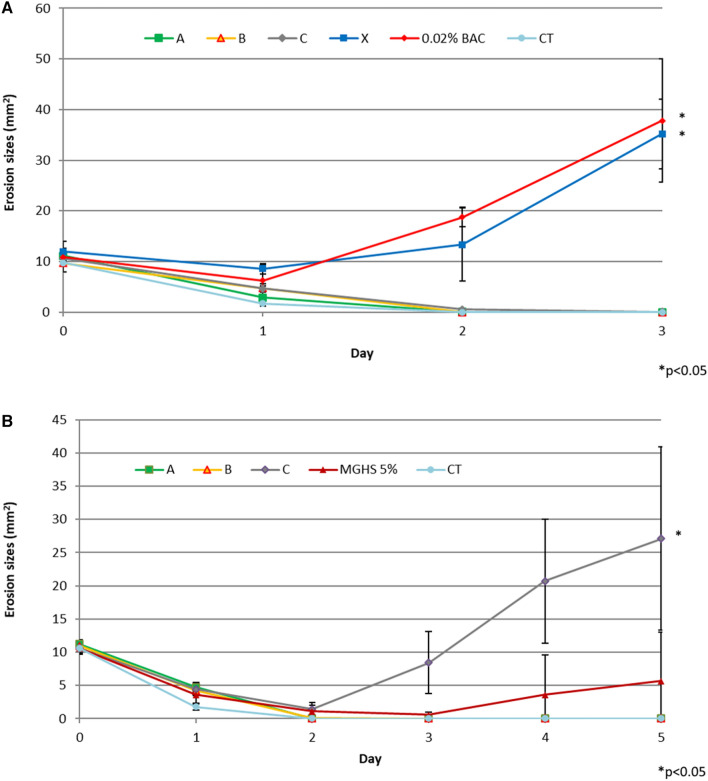
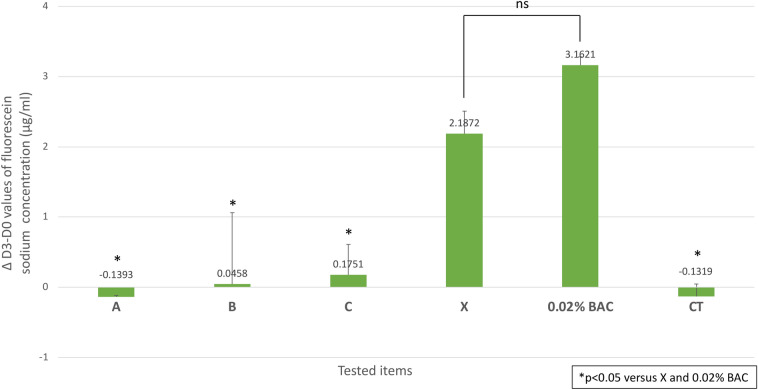
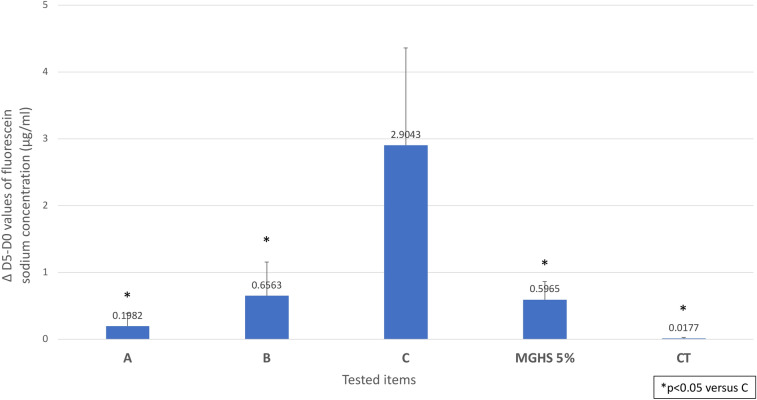
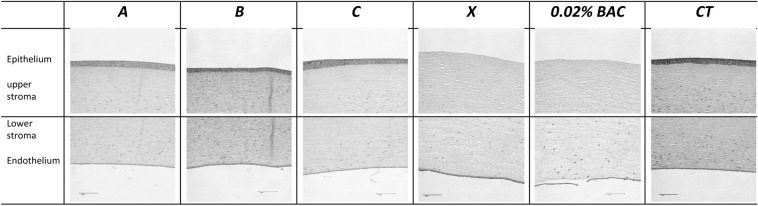
Latanoprost-containing eyedrops are available with and without preservatives on the market. Unpreserved, they are available in different formulations with various excipients like MGHS at different concentrations (0%, 2.5%, and 5%). We studied these in the ex vivo bioreactor (EVEIT) on initially injured rabbit corneas. The drugs were applied six times daily for observation periods of 3 or 5 days. BAC, 5% MGHS 40 solution, and 0.18% hyaluronic acid served as controls. Macroscopic photographic, biochemical methods and corneal integrity quantification were used for evaluation. Toxicity was assessed by measuring wound healing and corneal fluorescein sodium permeability and was confirmed by histology studies.
The BAC-preserved formulation resulted in high corneal toxicity, which was expected. Interestingly, the preservative-free (PF) formulation containing 5% MGHS 40, carbomer, macrogol 4000, and sorbitol showed the highest corneal toxicity, followed by the control formulation with equal MGHS 40 concentration, which presented significantly less damage. No toxicity was shown by eyedrops containing 2.5% MGHS 40 or salts only.
Our study demonstrates a significant corneal toxicity of certain formulations of PF antiglaucoma ophthalmic drugs containing 5% MGHS 40 with other excipients compared to other formulations with lower MGHS 40 concentrations (2.5% or 0%), or even compared to the solution containing 5% MGHS alone. This suggests a concentration-dependent toxicity of MGHS 40, especially in interaction with other excipients, which may increase its epithelial toxicity, and that has to be considered in clinical glaucoma therapy. Further single-component formulation trials are needed to support this interpretation.
角膜上皮毒性和愈合过程延迟已被归因于防腐剂或某些辅料。我们在模拟长期使用的体外系统中研究了抗青光眼药物中的药剂成分,如苯扎氯铵(BAC)或表面活性剂聚乙二醇氢化蓖麻油40(MGHS 40)对角膜毒性的影响。
含拉坦前列素的眼药水在市场上有无防腐剂两种类型。不含防腐剂的眼药水有不同配方,含有不同浓度(0%、2.5%和5%)的辅料如MGHS。我们在体外生物反应器(EVEIT)中对最初受损的兔角膜进行了研究。药物每天给药6次,观察期为3天或5天。BAC、5% MGHS 40溶液和0.18%透明质酸作为对照。采用宏观摄影、生化方法和角膜完整性定量进行评估。通过测量伤口愈合和角膜荧光素钠通透性评估毒性,并通过组织学研究进行确认。
含BAC的配方导致了较高的角膜毒性,这在意料之中。有趣的是,含5% MGHS 40、卡波姆、聚乙二醇4000和山梨醇的无防腐剂(PF)配方显示出最高的角膜毒性,其次是MGHS 40浓度相同的对照配方,其损伤明显较小。含2.5% MGHS 40或仅含盐的眼药水未显示出毒性。
我们的研究表明,与MGHS 40浓度较低(2.5%或0%)的其他配方相比,甚至与仅含5% MGHS的溶液相比,某些含5% MGHS 40及其他辅料的PF抗青光眼眼科药物配方具有显著的角膜毒性。这表明MGHS 40具有浓度依赖性毒性,尤其是与其他辅料相互作用时,可能会增加其上皮毒性,这在临床青光眼治疗中必须予以考虑。需要进一步的单一组分配方试验来支持这一解释。