Department of Chemistry, University of Massachusetts, Amherst, MA 01003, USA.
School of Chemistry and Chemical Engineering, Nanjing University of Science and Technology, Nanjing 210094, China.
Nucleic Acids Res. 2023 Sep 8;51(16):8337-8347. doi: 10.1093/nar/gkad621.
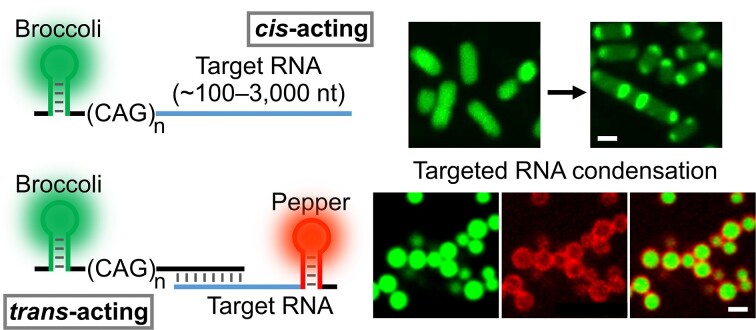
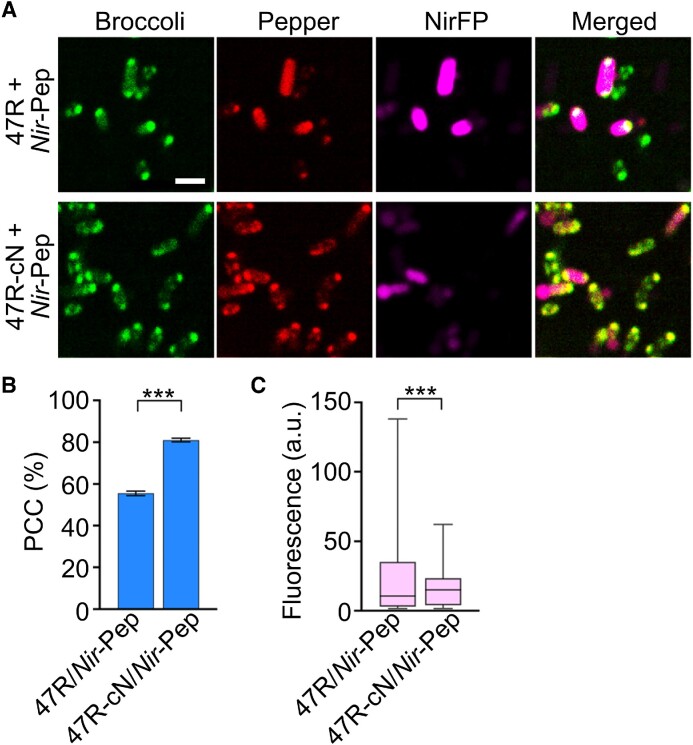
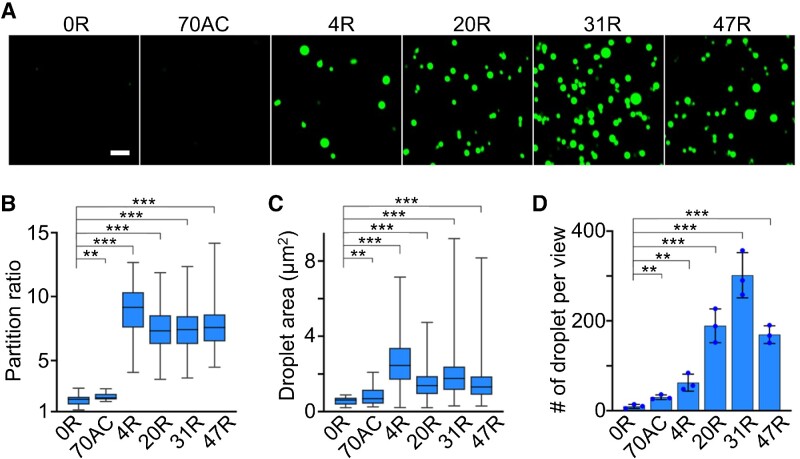
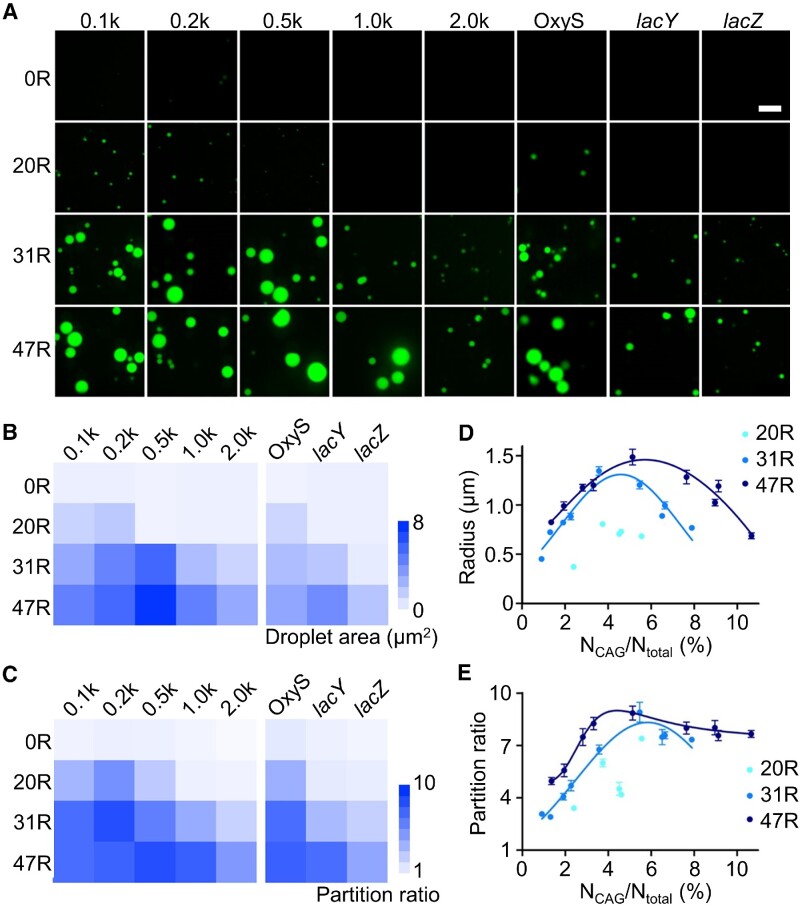
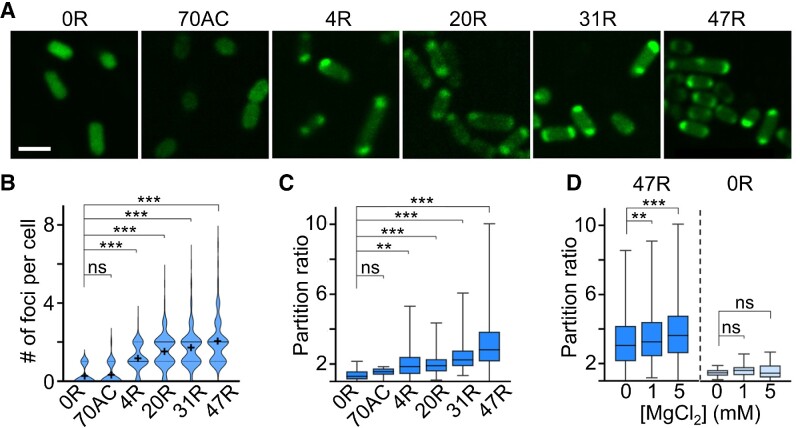
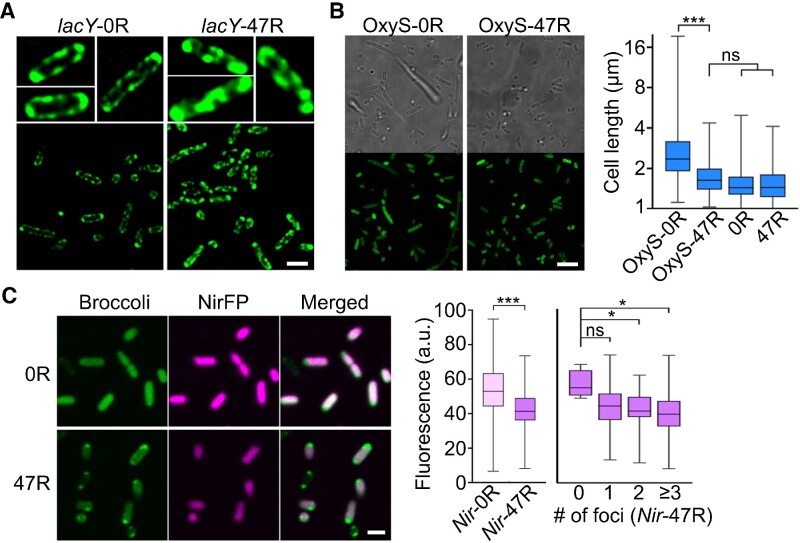
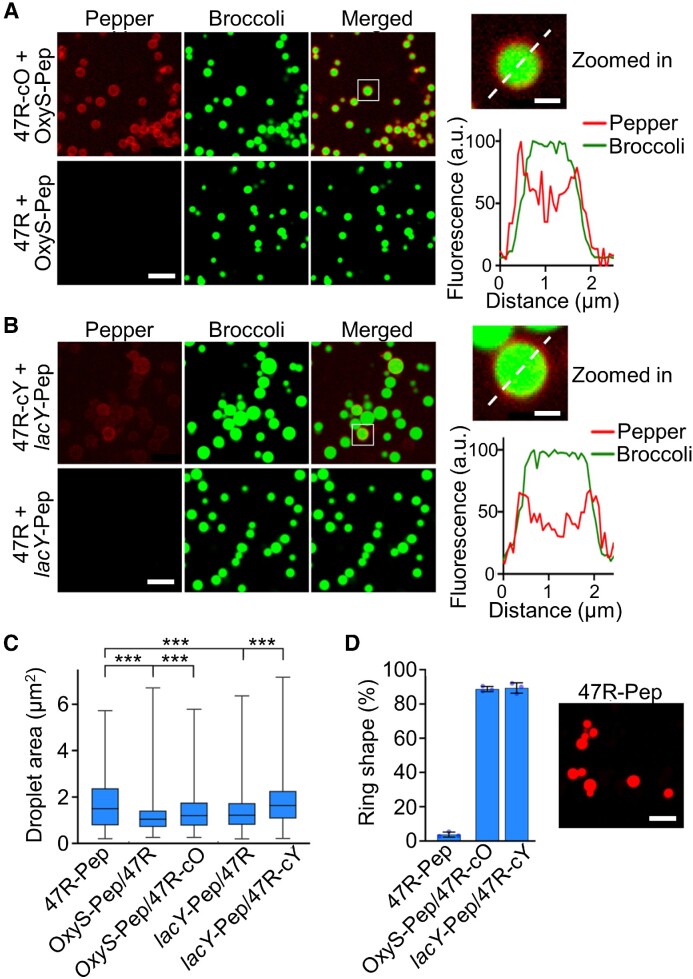
Living systems contain various membraneless organelles that segregate proteins and RNAs via liquid-liquid phase separation. Inspired by nature, many protein-based synthetic compartments have been engineered in vitro and in living cells. Here, we introduce a genetically encoded CAG-repeat RNA tag to reprogram cellular condensate formation and recruit various non-phase-transition RNAs for cellular modulation. With the help of fluorogenic RNA aptamers, we have systematically studied the formation dynamics, spatial distributions, sizes and densities of these cellular RNA condensates. The cis- and trans-regulation functions of these CAG-repeat tags in cellular RNA localization, life time, RNA-protein interactions and gene expression have also been investigated. Considering the importance of RNA condensation in health and disease, we expect that these genetically encodable modular and self-assembled tags can be widely used for chemical biology and synthetic biology studies.
生命系统包含各种无膜细胞器,通过液-液相分离来分隔蛋白质和 RNA。受自然启发,许多基于蛋白质的合成隔室已在体外和活细胞中被设计出来。在这里,我们引入了一种遗传编码的 CAG 重复 RNA 标签,以重新编程细胞凝聚物的形成,并招募各种非相变 RNA 进行细胞调节。借助荧光 RNA 适体,我们系统地研究了这些细胞 RNA 凝聚物的形成动力学、空间分布、大小和密度。我们还研究了这些 CAG 重复标签在细胞 RNA 定位、寿命、RNA-蛋白质相互作用和基因表达中的顺式和反式调控功能。考虑到 RNA 凝聚在健康和疾病中的重要性,我们期望这些遗传可编码的模块化和自组装标签可以广泛用于化学生物学和合成生物学研究。