Division of Gastroenterology and Hematology, Department of Medicine, Shiga University of Medical Science, Seta-Tsukinowa, Otsu, Shiga, 520-2192, Japan.
Sci Rep. 2023 Jul 24;13(1):11908. doi: 10.1038/s41598-023-38952-7.
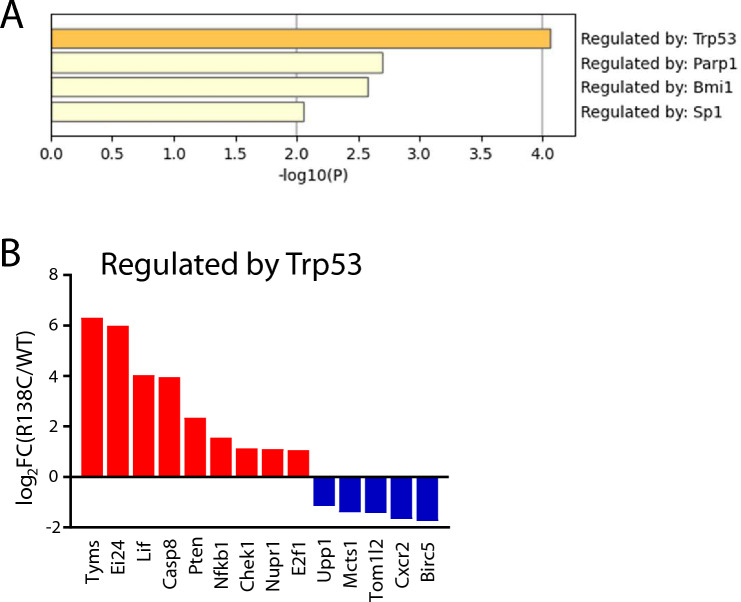
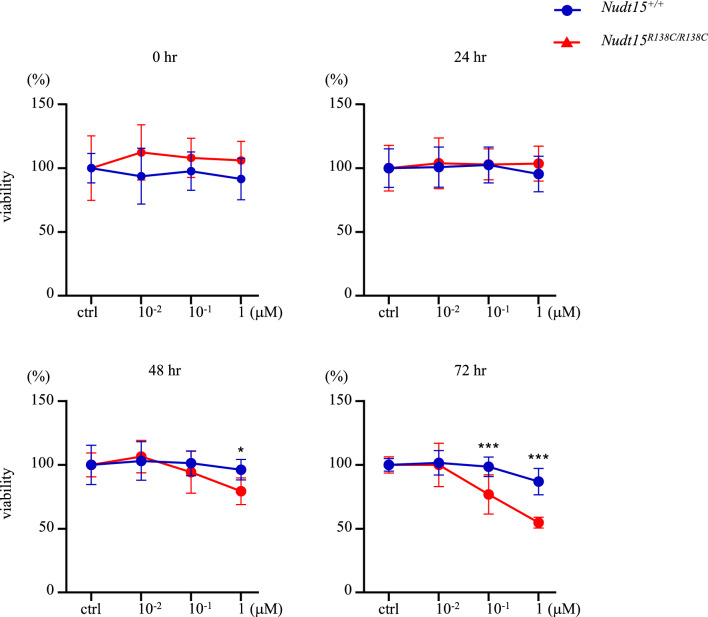
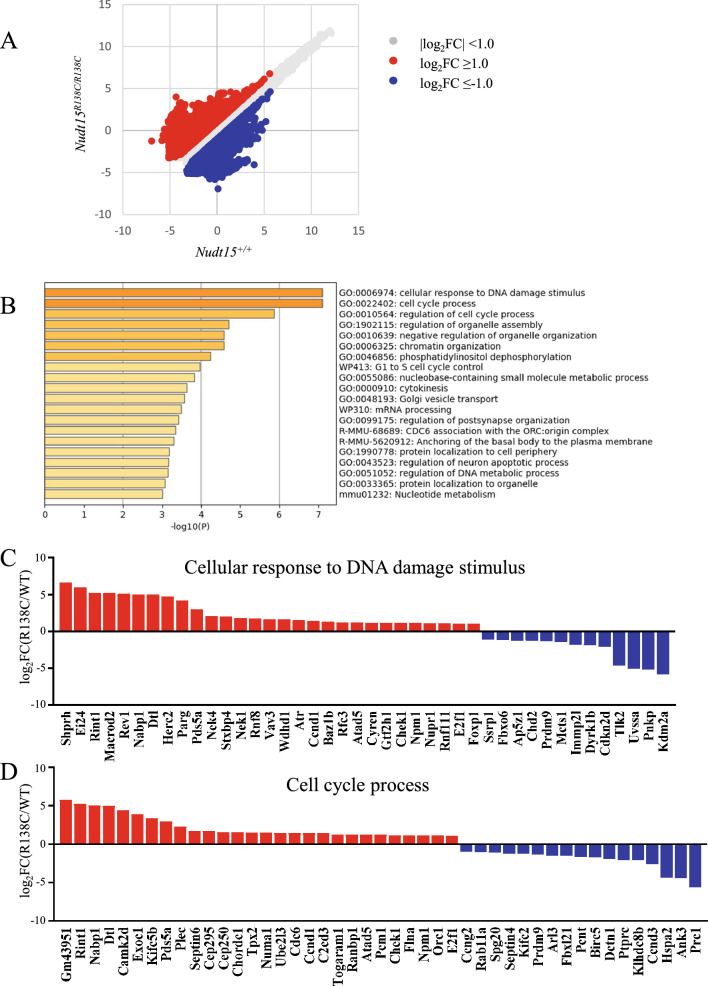
Thiopurines, such as 6-mercaptopurine (6-MP), are widely used as cytotoxic agents and immunosuppressants for leukemia and autoimmune or inflammatory diseases. A nonsynonymous single nucleotide polymorphism (p.Arg139Cys; R139C) of the nucleoside diphosphate-linked moiety X-type motif 15 (NUDT15) gene causes the loss of thiopurine detoxification, inducing myelosuppression. To understand such hematotoxicity, we investigate the effects of NUDT15 R139C on hematopoietic stem cells (HSCs) upon thiopurine administration. Using previously established Nudt15 knock-in mice, which mimic myelosuppression in NUDT15 homozygous or heterozygous patients following thiopurine administration, we investigated the numerical changes of HSCs and hematopoietic progenitor cells following 6-MP administration using in vivo flowcytometry and ex vivo HSC expansion. Genes differentially expressed between Nudt15 HSCs and Nudt15 HSCs were identified using RNA-sequencing before the emergence of 6-MP-induced HSC-damage. Gene Ontology (GO) and Transcriptional Regulatory Relationships Unraveled by Sentence-based Text Mining (TRRUST) analyses were performed to elucidate the molecular effects of 6-MP on HSCs. In Nudt15 mice, 6-MP induced exhaustion of HSCs faster than that of multipotent progenitors and as fast as that of myeloid-committed progenitors. Ex vivo-expanded Nudt15 HSCs were dose- and time-dependently damaged by 6-MP. GO analysis identified the DNA damage response and cell cycle process as the most strongly influenced processes in Nudt15 HSCs. TRRUST analysis revealed that the Trp53-regulated transcriptional regulatory network is influenced prior to HSC exhaustion in Nudt15 HSCs. The loss of NUDT15 thiopurine detoxification enhances thiopurine-mediated DNA damage via the Trp53 networks in HSCs. Therefore, caution is required in long-term thiopurine use in patients with NUDT15 R139C in view of its adverse effects on HSCs in the form of DNA damage.
硫嘌呤类药物,如 6-巯基嘌呤(6-MP),广泛用于白血病和自身免疫或炎症性疾病的细胞毒性药物和免疫抑制剂。核苷二磷酸连接部分 X 型基序 15(NUDT15)基因的非同义单核苷酸多态性(p.Arg139Cys;R139C)导致硫嘌呤解毒丧失,诱导骨髓抑制。为了了解这种血液毒性,我们研究了 NUDT15 R139C 在硫嘌呤给药后对造血干细胞(HSCs)的影响。使用先前建立的 Nudt15 敲入小鼠,这些小鼠模拟了 NUDT15 纯合或杂合患者在硫嘌呤给药后骨髓抑制的情况,我们使用体内流式细胞术和体外 HSC 扩增来研究 6-MP 给药后 HSCs 和造血祖细胞的数量变化。在 6-MP 诱导的 HSC 损伤出现之前,使用 RNA-seq 鉴定了 Nudt15 HSCs 和 Nudt15 HSCs 之间差异表达的基因。进行了基因本体论(GO)和基于句子的文本挖掘(TRRUST)转录调控关系分析,以阐明 6-MP 对 HSCs 的分子影响。在 Nudt15 小鼠中,6-MP 诱导 HSCs 衰竭的速度快于多能祖细胞,与髓系定向祖细胞一样快。体外扩增的 Nudt15 HSCs 被 6-MP 以剂量和时间依赖的方式损伤。GO 分析确定 DNA 损伤反应和细胞周期过程是 Nudt15 HSCs 受影响最强烈的过程。TRRUST 分析表明,在 Nudt15 HSCs 中,Trp53 调节的转录调控网络在 HSCs 衰竭之前就受到影响。NUDT15 硫嘌呤解毒的丧失通过 Trp53 网络增强了 HSCs 中硫嘌呤介导的 DNA 损伤。因此,鉴于 NUDT15 R139C 患者长期使用硫嘌呤可能对 HSCs 造成的不良影响,如 DNA 损伤,应谨慎使用。