Institute for Aging and Clinical Nutrition Research, Gachon University, Seongnam-Si, 13120, Gyeonggi-Do, Korea.
Department of Food and Nutrition, College of BioNano Technology, Gachon University, Seongnam-Si, 13120, Gyeonggi-Do, Korea.
BMC Complement Med Ther. 2023 Jul 24;23(1):264. doi: 10.1186/s12906-023-04033-5.
Type 2 diabetes mellitus (T2DM), a growing health problem worldwide, is a metabolic disorder characterized by hyperglycemia due to insulin resistance and defective insulin secretion by pancreatic β-cells. The skeletal muscle is a central organ that consumes most of the insulin-stimulated glucose in the body, and insulin resistance can damage muscles in T2DM. Based on a strong correlation between diabetes and muscles, we investigated the effects of stevia extract (SE) and stevioside (SV) on the skeletal muscle of diabetic db/db mice.
The mice were administered saline, metformin (200 mg/kg/day), SE (200 and 500 mg/kg/day), and SV (40 mg/kg/day) for 35 days. During administration, we checked the levels of fasting blood glucose twice a week and conducted the oral glucose tolerance test (OGTT) and insulin tolerance test (ITT). After administration, we analyzed serum biochemical parameters, triglyceride (TG), total cholesterol (TC), insulin and antioxidant enzymes, and the cross-sectional area of skeletal muscle fibers of db/db mice. Western blots were conducted using the skeletal muscle of mice to examine the effect of SE and SV on protein expression of insulin signaling, mitochondrial function, and oxidative stress.
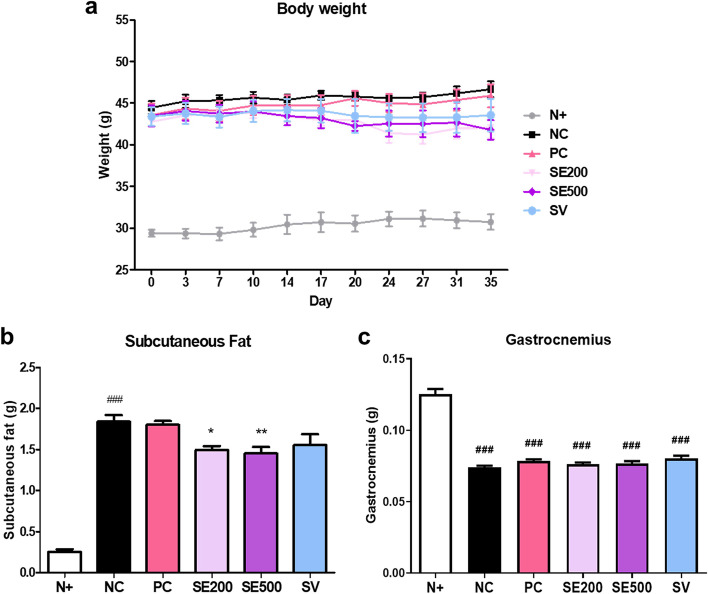
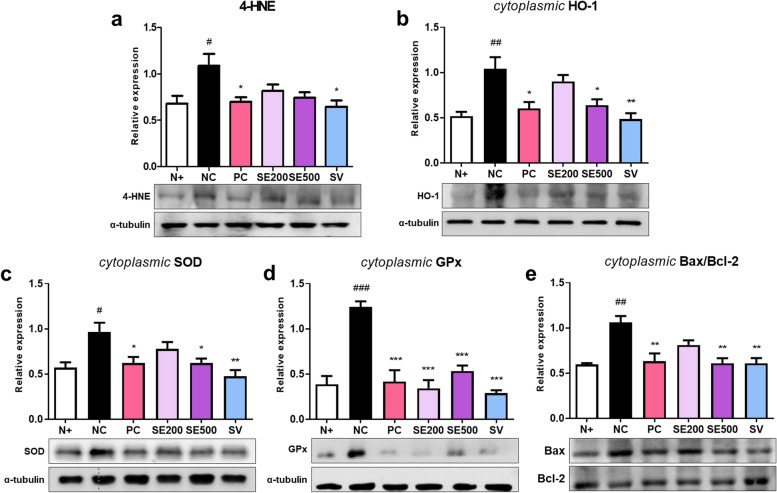
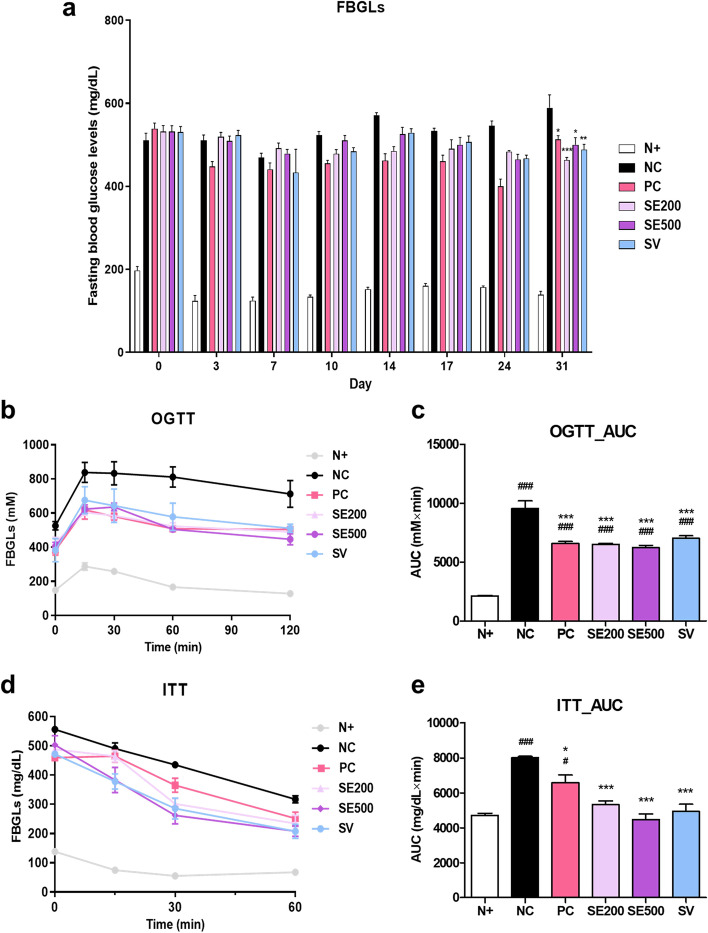
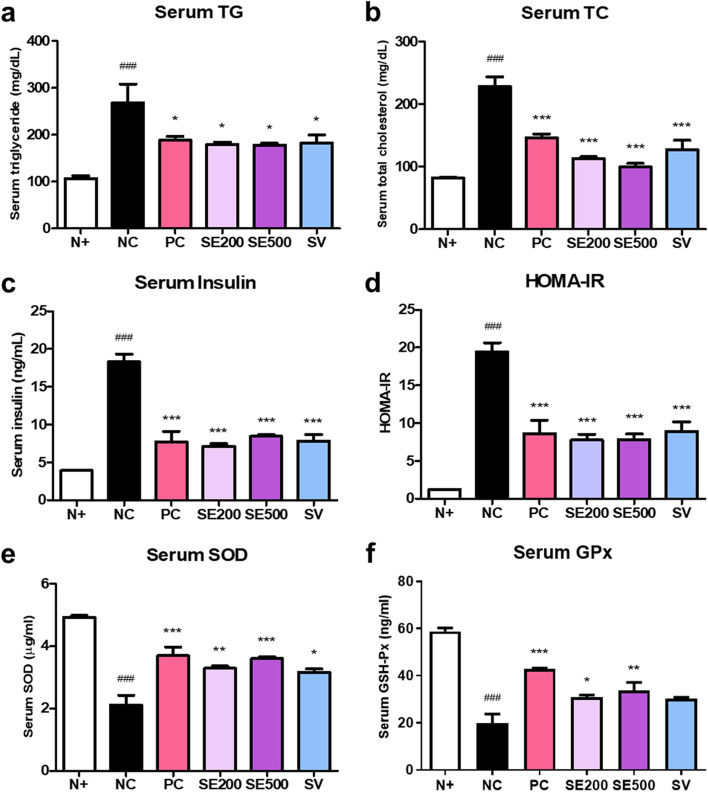
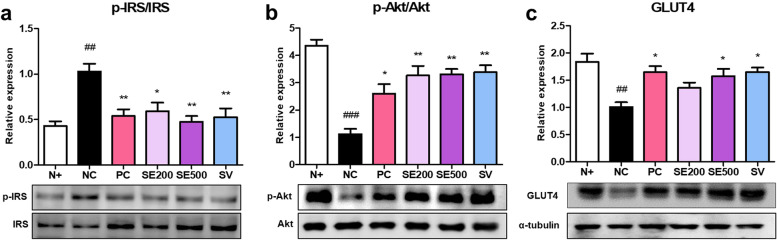
SE and SV administration lowered the levels of fasting blood glucose, OGTT, and ITT in db/db mice. The administration also decreased serum levels of TG, TC, and insulin while increasing those of superoxide dismutase (SOD) and glutathione peroxidase (GPx). Interestingly, muscle fiber size was significantly increased in db/db mice treated with SE500 and SV. In the skeletal muscle of db/db mice, SE and SV administration activated insulin signaling by increasing the protein expression of insulin receptor substrate, Akt, and glucose transporter type 4. Furthermore, SE500 administration markedly increased the protein expression of AMP-activated protein kinase-α, sirtuin-1, and peroxisome proliferator-activated receptor-γ coactivator-1α. SV administration significantly reduced oxidative stress by down-regulating the protein expression of 4-hydroxynonenal, heme oxygenase-1, SOD, and GPx. In addition, SE500 and SV administration suppressed the expression of apoptosis-related proteins in the skeletal muscle of db/db mice.
SE and SV administration attenuated hyperglycemia in diabetic mice. Moreover, the administration ameliorated insulin resistance by regulating mitochondrial function and oxidative stress, increasing muscle fiber size. Overall, this study suggests that SE and SV administration may serve as a potential strategy for the treatment of diabetic muscles.
2 型糖尿病(T2DM)是一种全球性的日益严重的健康问题,是一种代谢紊乱,其特征是由于胰岛素抵抗和胰腺β细胞胰岛素分泌缺陷导致的高血糖。骨骼肌是消耗体内大部分胰岛素刺激葡萄糖的重要器官,胰岛素抵抗可损害 T2DM 中的肌肉。基于糖尿病与肌肉之间的强相关性,我们研究了甜菊提取物(SE)和甜菊糖苷(SV)对糖尿病 db/db 小鼠骨骼肌的影响。
将小鼠给予生理盐水、二甲双胍(200mg/kg/天)、SE(200 和 500mg/kg/天)和 SV(40mg/kg/天),共 35 天。在给药期间,我们每周检查两次空腹血糖水平,并进行口服葡萄糖耐量试验(OGTT)和胰岛素耐量试验(ITT)。给药后,我们分析了 db/db 小鼠的血清生化参数、甘油三酯(TG)、总胆固醇(TC)、胰岛素和抗氧化酶以及骨骼肌纤维的横截面积。使用小鼠骨骼肌进行 Western blot 分析,以检查 SE 和 SV 对胰岛素信号、线粒体功能和氧化应激相关蛋白表达的影响。
SE 和 SV 给药降低了 db/db 小鼠的空腹血糖、OGTT 和 ITT 水平。给药还降低了血清 TG、TC 和胰岛素水平,同时增加了超氧化物歧化酶(SOD)和谷胱甘肽过氧化物酶(GPx)水平。有趣的是,SE500 和 SV 处理的 db/db 小鼠的肌纤维大小显著增加。在 db/db 小鼠的骨骼肌中,SE 和 SV 给药通过增加胰岛素受体底物、Akt 和葡萄糖转运蛋白 4 的蛋白表达来激活胰岛素信号。此外,SE500 给药显著增加了 AMP 激活的蛋白激酶-α、Sirtuin-1 和过氧化物酶体增殖物激活受体-γ共激活物-1α的蛋白表达。SV 给药通过下调 4-羟基壬烯醛、血红素加氧酶-1、SOD 和 GPx 的蛋白表达显著减轻氧化应激。此外,SE500 和 SV 给药抑制了 db/db 小鼠骨骼肌中与细胞凋亡相关蛋白的表达。
SE 和 SV 给药可减轻糖尿病小鼠的高血糖。此外,给药通过调节线粒体功能和氧化应激,增加肌纤维大小,改善胰岛素抵抗。总的来说,这项研究表明,SE 和 SV 给药可能是治疗糖尿病肌肉的一种潜在策略。