Department of Biliary-Pancreatic Surgery, Renji Hospital, Shanghai Jiao Tong University School of Medicine, Shanghai 200127, China.
State Key Laboratory of Oncogenes and Related Genes, Shanghai Cancer Institute, School of Medicine, Shanghai Jiao Tong University, Shanghai 200127, China.
Chin Med J (Engl). 2023 Sep 20;136(18):2210-2220. doi: 10.1097/CM9.0000000000002675. Epub 2023 Jul 24.
Gallbladder cancer (GBC) is the most common malignant tumor of biliary tract. Isoliquiritigenin (ISL) is a natural compound with chalcone structure extracted from the roots of licorice and other plants. Relevant studies have shown that ISL has a strong anti-tumor ability in various types of tumors. However, the research of ISL against GBC has not been reported, which needs to be further investigated.
The effects of ISL against GBC cells in vitro and in vivo were characterized by cytotoxicity test, RNA-sequencing, quantitative real-time polymerase chain reaction, reactive oxygen species (ROS) detection, lipid peroxidation detection, ferrous ion detection, glutathione disulphide/glutathione (GSSG/GSH) detection, lentivirus transfection, nude mice tumorigenesis experiment and immunohistochemistry.
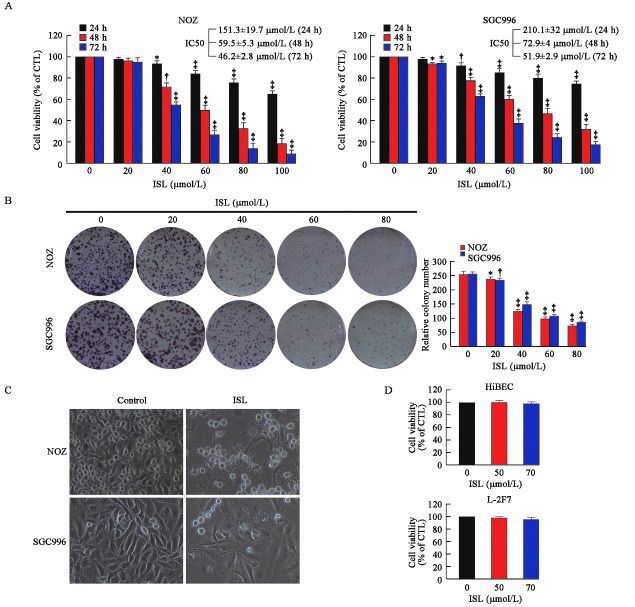
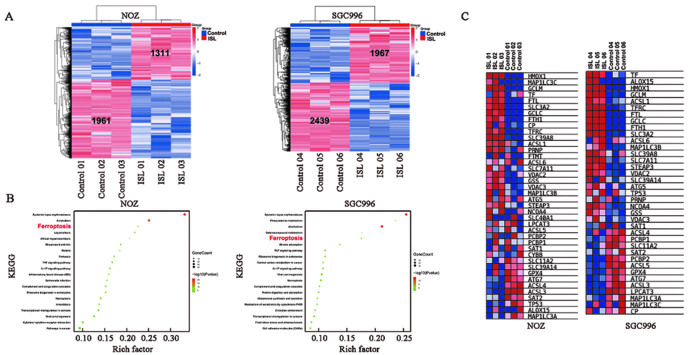
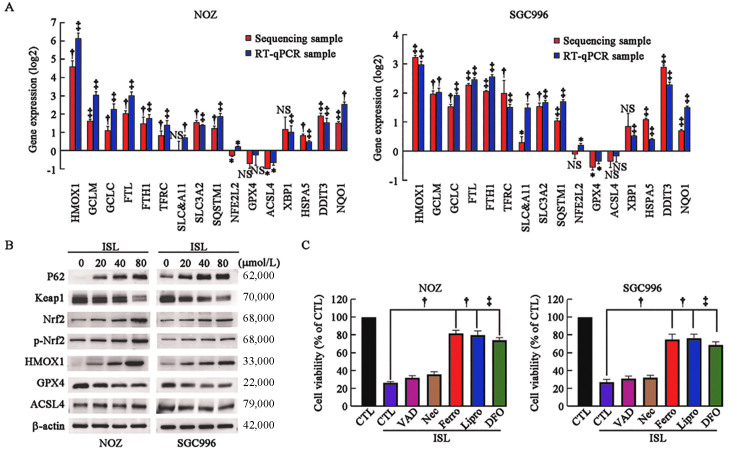
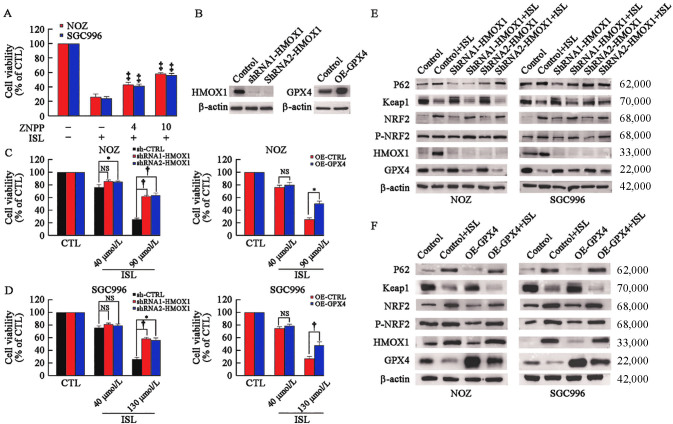
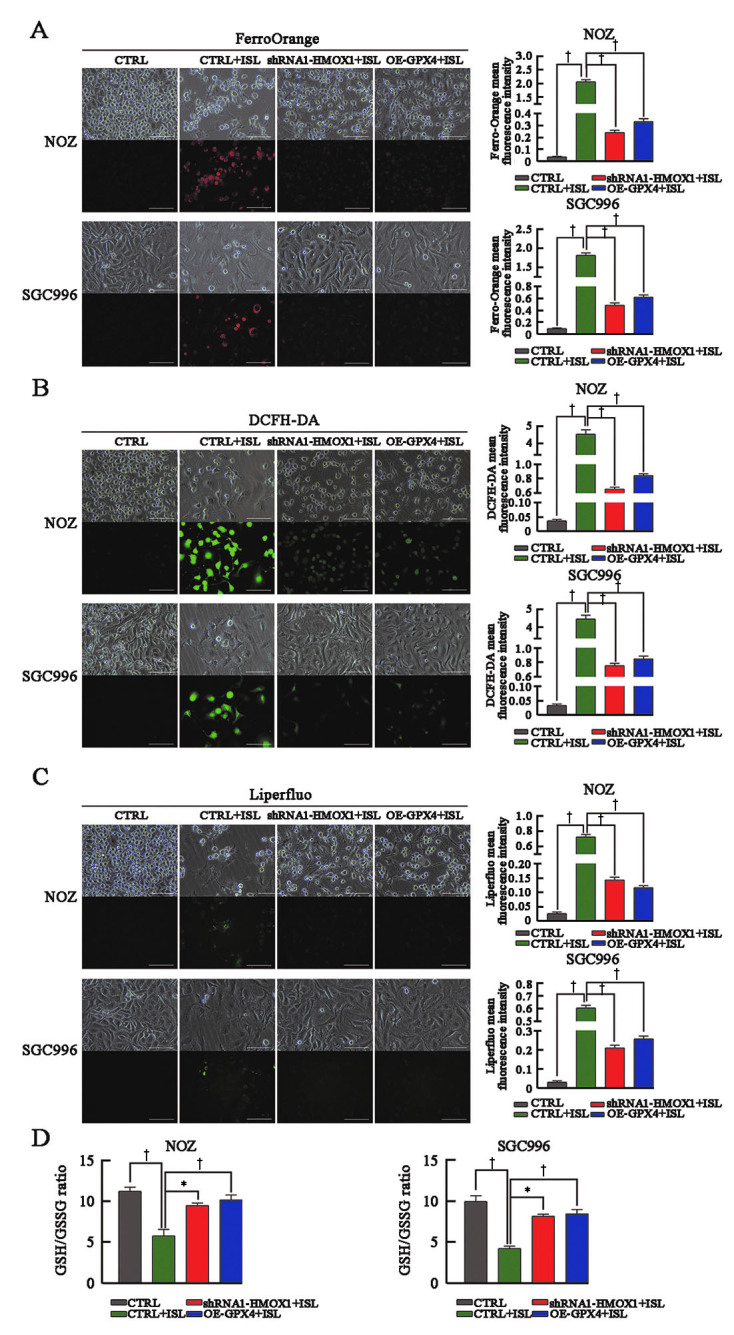
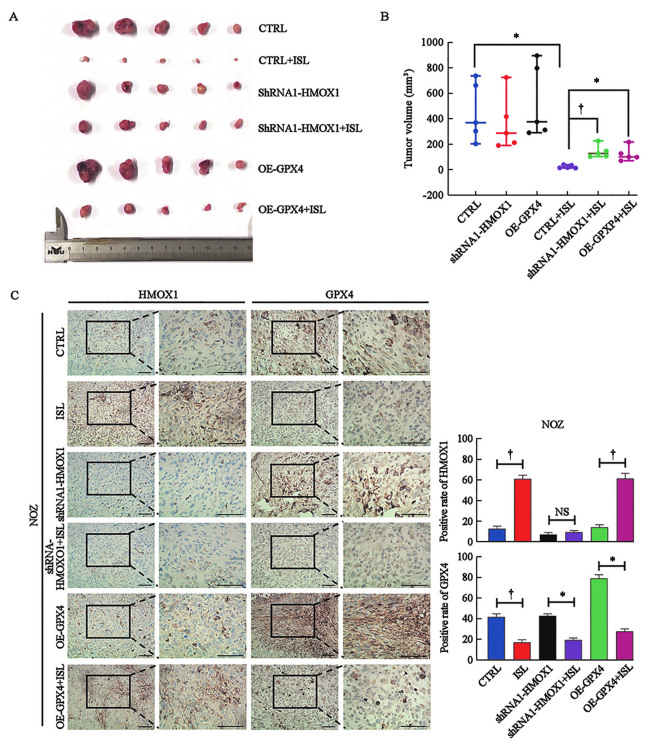
ISL significantly inhibited the proliferation of GBC cells in vitro . The results of transcriptome sequencing and bioinformatics analysis showed that ferroptosis was the main pathway of ISL inhibiting the proliferation of GBC, and HMOX1 and GPX4 were the key molecules of ISL-induced ferroptosis. Knockdown of HMOX1 or overexpression of GPX4 can reduce the sensitivity of GBC cells to ISL-induced ferroptosis and significantly restore the viability of GBC cells. Moreover, ISL significantly reversed the iron content, ROS level, lipid peroxidation level and GSSG/GSH ratio of GBC cells. Finally, ISL significantly inhibited the growth of GBC in vivo and regulated the ferroptosis of GBC by mediating HMOX1 and GPX4 .
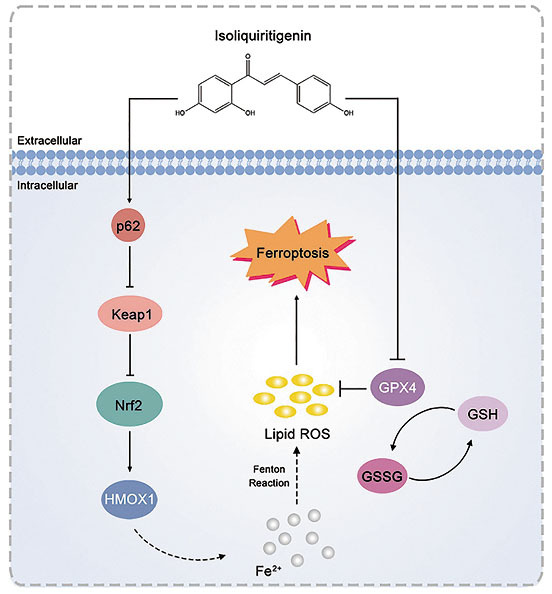
ISL induced ferroptosis in GBC mainly by activating p62-Keap1-Nrf2-HMOX1 signaling pathway and down-regulating GPX4 in vitro and in vivo . This evidence may provide a new direction for the treatment of GBC.
胆囊癌(GBC)是胆道最常见的恶性肿瘤。甘草查尔酮是从甘草等植物根部提取的一种具有查尔酮结构的天然化合物。相关研究表明,甘草查尔酮在多种类型的肿瘤中均具有较强的抗肿瘤能力。然而,关于甘草查尔酮对 GBC 的研究尚未见报道,需要进一步研究。
采用细胞毒性试验、RNA 测序、实时定量聚合酶链反应、活性氧(ROS)检测、脂质过氧化检测、亚铁离子检测、谷胱甘肽二硫化物/谷胱甘肽(GSSG/GSH)检测、慢病毒转染、裸鼠肿瘤发生实验和免疫组织化学方法,研究 ISL 对体外和体内 GBC 细胞的作用。
ISL 显著抑制 GBC 细胞的体外增殖。转录组测序和生物信息学分析结果表明,铁死亡是 ISL 抑制 GBC 增殖的主要途径,HMOX1 和 GPX4 是 ISL 诱导铁死亡的关键分子。HMOX1 敲低或 GPX4 过表达可降低 GBC 细胞对 ISL 诱导铁死亡的敏感性,显著恢复 GBC 细胞的活力。此外,ISL 可显著逆转 GBC 细胞的铁含量、ROS 水平、脂质过氧化水平和 GSSG/GSH 比值。最后,ISL 显著抑制 GBC 在体内的生长,并通过调节 HMOX1 和 GPX4 来调节 GBC 的铁死亡。
ISL 在体外和体内通过激活 p62-Keap1-Nrf2-HMOX1 信号通路和下调 GPX4 诱导 GBC 发生铁死亡。这一证据可能为 GBC 的治疗提供新的方向。