Division of Physiology, Pharmacology and Neuroscience, School of Life Sciences, Queen's Medical Centre, University of Nottingham, Nottingham, UK.
Centre of Membrane Proteins and Receptors, Universities of Nottingham and Birmingham, Midlands, UK.
Br J Pharmacol. 2023 Dec;180(24):3160-3174. doi: 10.1111/bph.16199. Epub 2023 Aug 22.
Opioid-induced respiratory depression limits the use of μ-opioid receptor agonists in clinical settings and is the main cause of opioid overdose fatalities. The relative potential of different opioid agonists to induce respiratory depression at doses exceeding those producing analgesia is understudied despite its relevance to assessments of opioid safety. Here we evaluated the respiratory depressant and anti-nociceptive effects of three novel opioids and relate these measurements to their in vitro efficacy.
Respiration was measured in awake, freely moving male CD-1 mice using whole body plethysmography. Anti-nociception was measured using the hot plate test. Morphine, oliceridine and tianeptine were administered intraperitoneally, whereas methadone, oxycodone and SR-17018 were administered orally. Receptor activation and arrestin-3 recruitment were measured in HEK293 cells using BRET assays.
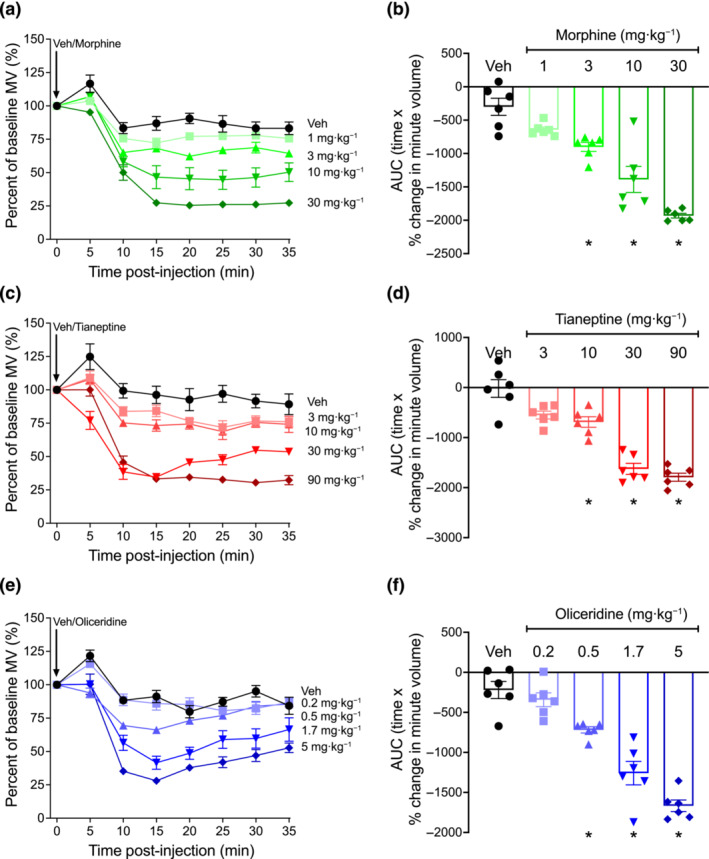
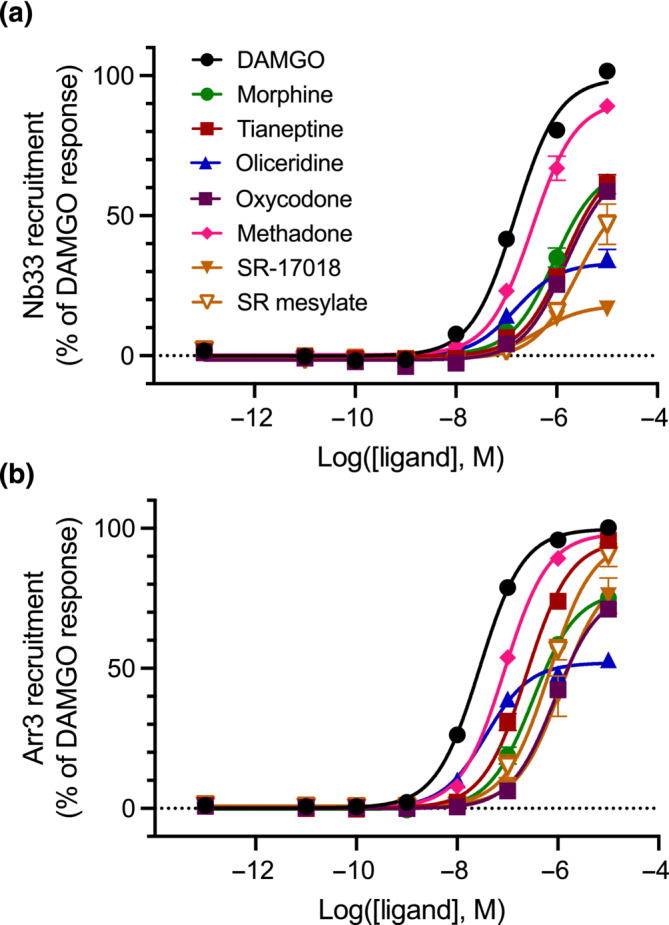
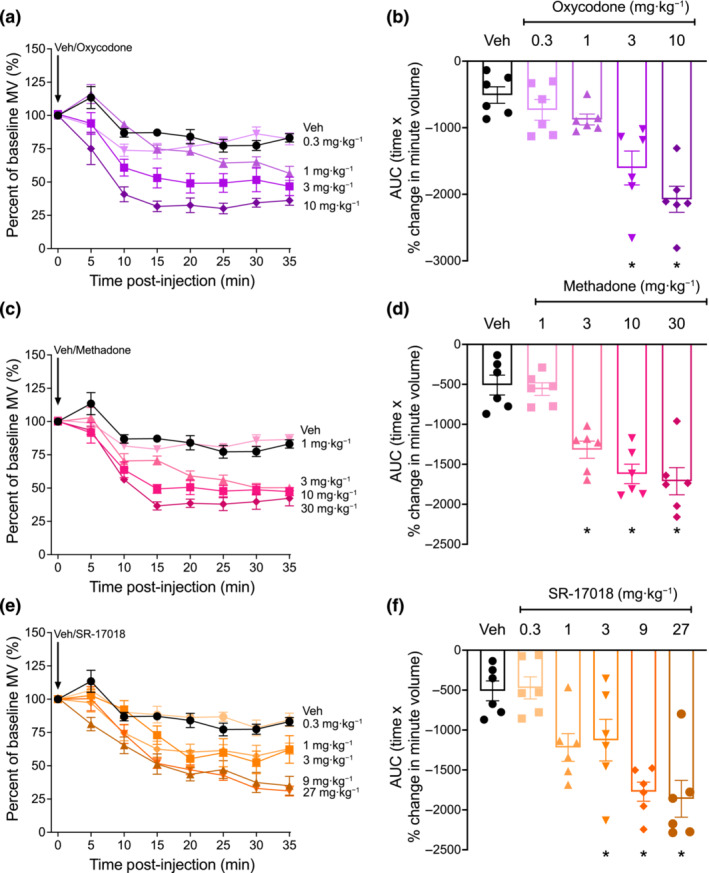
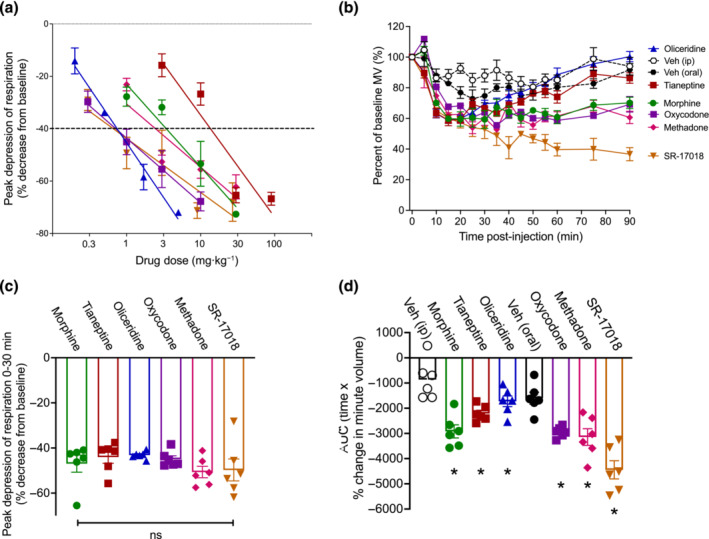
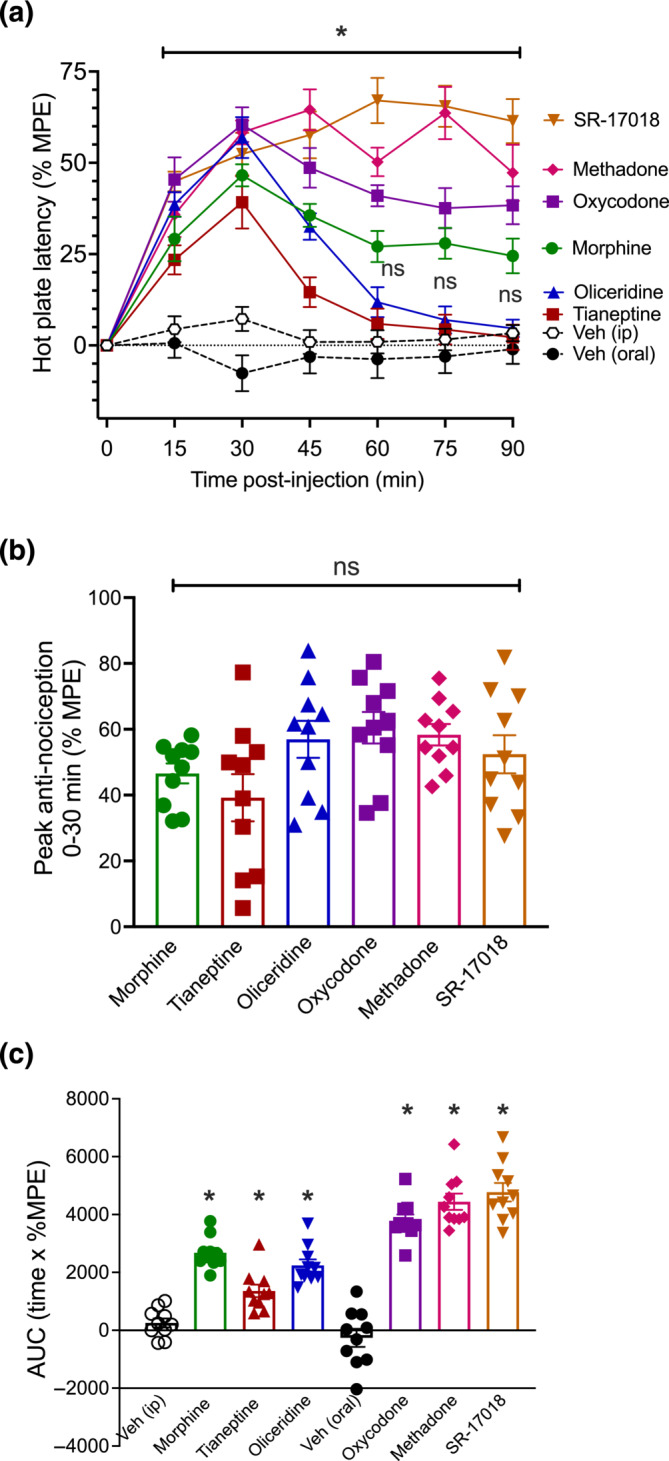
Across the dose ranges examined, all opioids studied depressed respiration in a dose-dependent manner, with similar effects at the highest doses, and with tianeptine and oliceridine showing reduced duration of effect, when compared with morphine, oxycodone, methadone and SR-17018. When administered at doses that induced similar respiratory depression, all opioids induced similar anti-nociception, with tianeptine and oliceridine again showing reduced duration of effect. These data were consistent with the in vitro agonist activity of the tested compounds.
In addition to providing effective anti-nociception, the novel opioids, oliceridine, tianeptine and SR-17018 depress respiration in male mice. However, the different potencies and kinetics of effect between these novel opioids may be relevant to their therapeutic application in different clinical settings.
阿片类药物引起的呼吸抑制限制了μ-阿片受体激动剂在临床环境中的应用,是阿片类药物过量致死的主要原因。尽管评估阿片类药物安全性时需要考虑这一点,但不同阿片类药物激动剂在产生镇痛作用的剂量以上引起呼吸抑制的相对潜力仍研究不足。在这里,我们评估了三种新型阿片类药物的呼吸抑制和镇痛作用,并将这些测量结果与其体外功效相关联。
使用全身 plethysmography 在清醒、自由活动的雄性 CD-1 小鼠中测量呼吸。使用热板试验测量镇痛作用。吗啡、奥利塞定和噻奈普汀通过腹腔内给药,而美沙酮、羟考酮和 SR-17018 则通过口服给药。使用 BRET 测定法在 HEK293 细胞中测量受体激活和 arrestin-3 募集。
在所研究的剂量范围内,所有研究的阿片类药物均以剂量依赖性方式抑制呼吸,在最高剂量下效果相似,与吗啡、羟考酮、美沙酮和 SR-17018 相比,噻奈普汀和奥利塞定的作用持续时间更短。当以引起相似呼吸抑制的剂量给药时,所有阿片类药物都引起相似的镇痛作用,而噻奈普汀和奥利塞定的作用持续时间再次更短。这些数据与测试化合物的体外激动活性一致。
除了提供有效的镇痛作用外,新型阿片类药物奥利塞定、噻奈普汀和 SR-17018 在雄性小鼠中还会抑制呼吸。然而,这些新型阿片类药物之间的不同效力和作用动力学可能与它们在不同临床环境中的治疗应用有关。