Liu Tzu-Yu, Hughes Michael W, Wang Hao-Ven, Yang Wei-Cheng, Chuong Cheng-Ming, Wu Ping
Department of Life Sciences, National Cheng Kung University, Tainan 701, Taiwan.
Marine Biology and Cetacean Research Center, National Cheng Kung University, Tainan 701, Taiwan.
J Dev Biol. 2023 Jul 3;11(3):30. doi: 10.3390/jdb11030030.
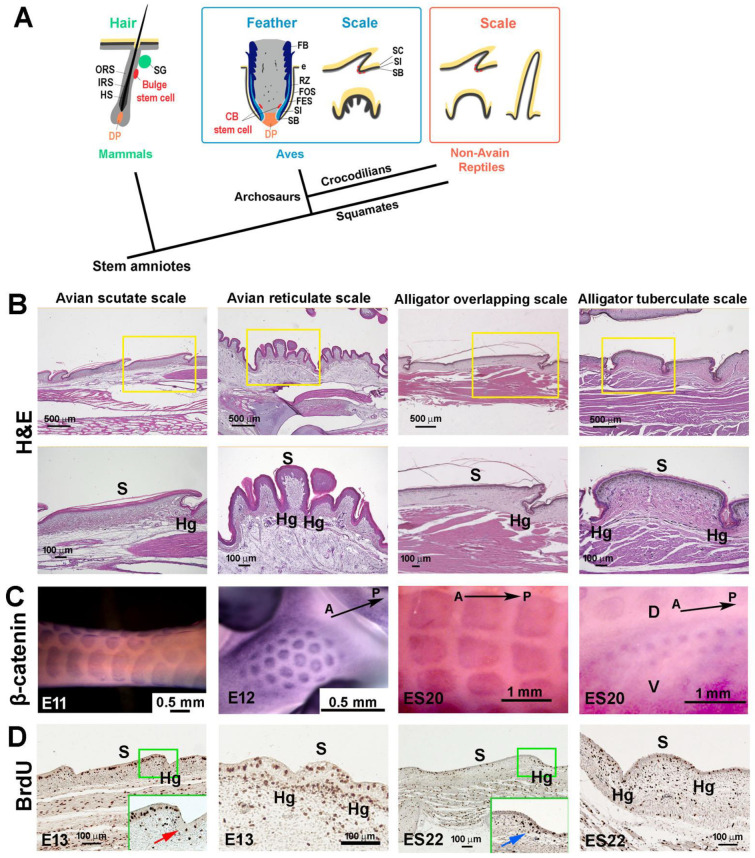
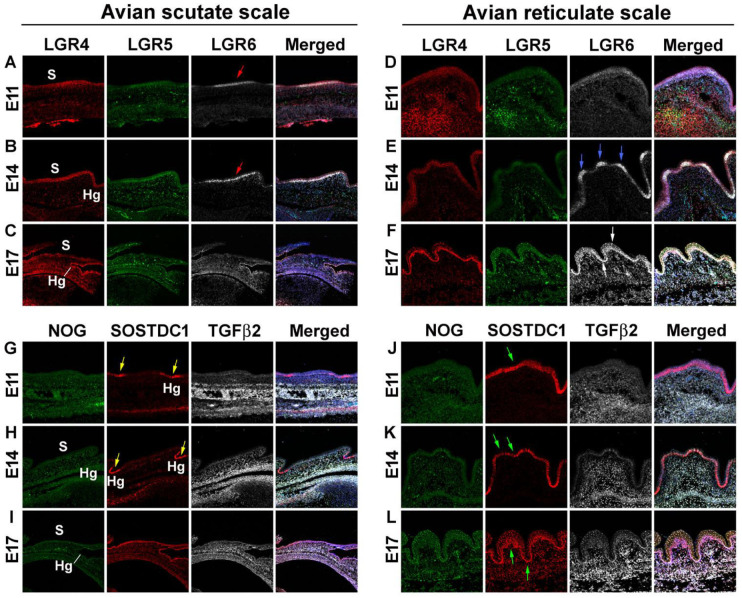
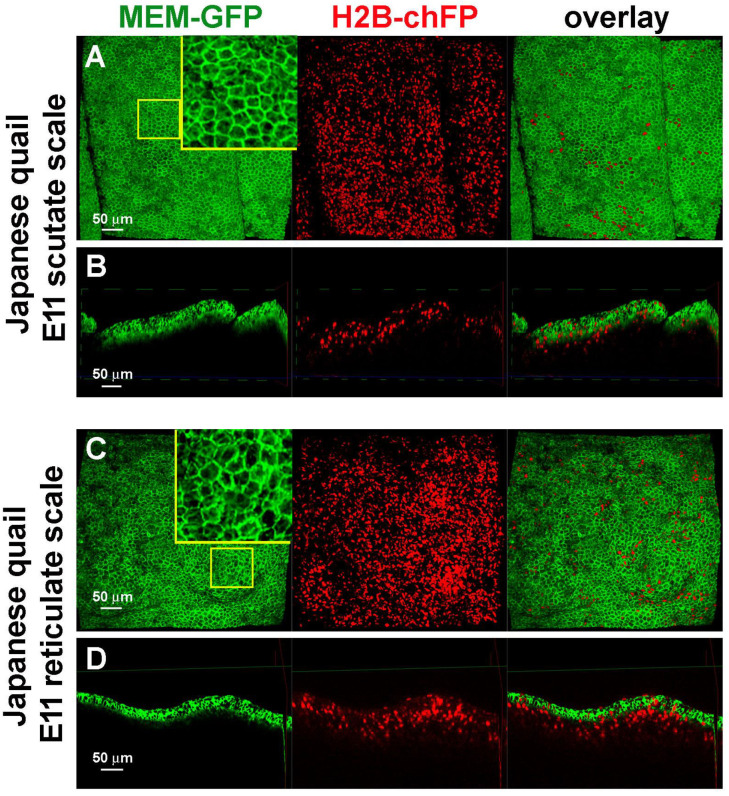
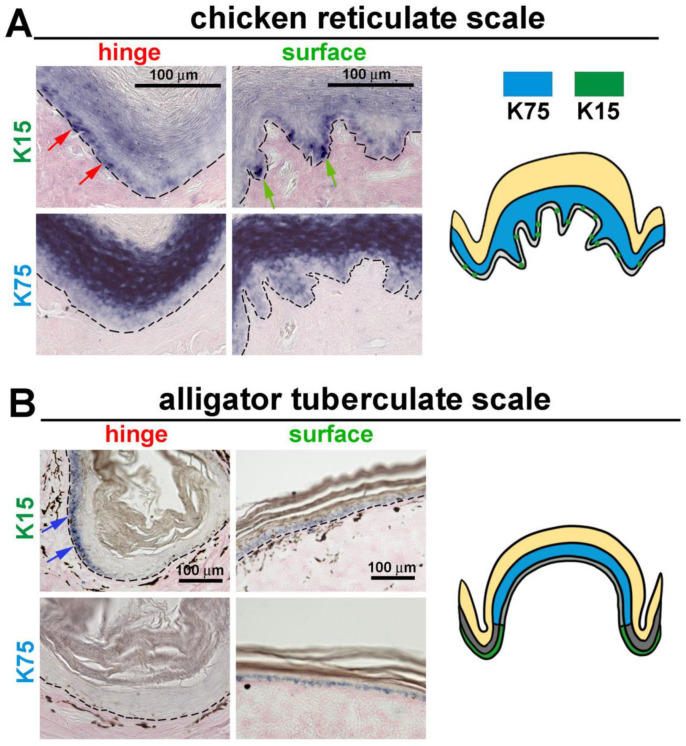
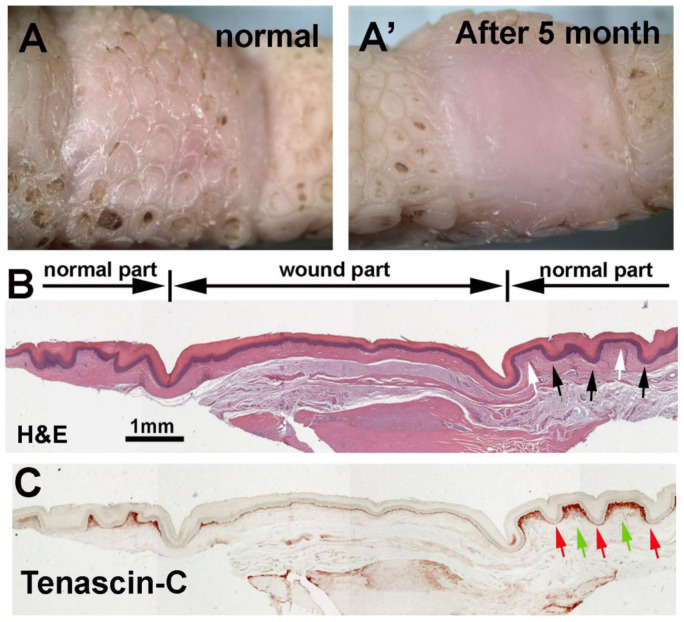
Among amniotic skin appendages, avian feathers and mammalian hairs protect their stem cells in specialized niches, located in the collar bulge and hair bulge, respectively. In chickens and alligators, label retaining cells (LRCs), which are putative stem cells, are distributed in the hinge regions of both avian scutate scales and reptilian overlapping scales. These LRCs take part in scale regeneration. However, it is unknown whether other types of scales, for example, symmetrically shaped reticulate scales, have a similar way of preserving their stem cells. In particular, the foot sole represents a special interface between animal feet and external environments, with heavy mechanical loading. This is different from scutate-scale-covered metatarsal feet that function as protection. Avian reticulate scales on foot soles display specialized characteristics in development. They do not have a placode stage and lack β-keratin expression. Here, we explore the molecular and cellular characteristics of avian reticulate scales. RNAscope analysis reveals different molecular profiles during surface and hinge determination compared with scutate scales. Furthermore, reticulate scales express Keratin 15 () sporadically in both surface- and hinge-region basal layer cells, and LRCs are not localized. Upon wounding, the reticulate scale region undergoes repair but does not regenerate. Our results suggest that successful skin appendage regeneration requires localized stem cell niches to guide regeneration.
在羊膜皮肤附属器中,鸟类羽毛和哺乳动物毛发分别在位于毛球隆起和毛囊隆突的特殊微环境中保护其干细胞。在鸡和短吻鳄中,作为假定干细胞的标记滞留细胞(LRCs)分布在鸟类盾鳞和爬行动物重叠鳞片的铰链区域。这些LRCs参与鳞片再生。然而,其他类型的鳞片,例如对称形状的网鳞,是否具有类似的干细胞保存方式尚不清楚。特别是,足底代表了动物足部与外部环境之间的一个特殊界面,承受着巨大的机械负荷。这与起到保护作用的覆盖着盾鳞的跖部不同。足底的鸟类网鳞在发育过程中表现出特殊的特征。它们没有基板阶段且缺乏β-角蛋白表达。在这里,我们探究鸟类网鳞的分子和细胞特征。RNAscope分析显示,与盾鳞相比,在表面和铰链确定过程中存在不同的分子谱。此外,网鳞在表面和铰链区域的基底层细胞中偶尔表达角蛋白15(),并且LRCs没有定位。受伤后,网鳞区域会进行修复但不会再生。我们的结果表明,成功的皮肤附属器再生需要局部干细胞微环境来引导再生。