Madaci Lamia, Gard Charlyne, Nin Sébastien, Venton Geoffroy, Rihet Pascal, Puthier Denis, Loriod Béatrice, Costello Régis
TAGC, INSERM, UMR1090, Aix Marseille University, Parc Scientifique de Luminy, 13009 Marseille, France.
Hematology and Cellular Therapy Department, Conception Hospital, 13005 Marseille, France.
Diseases. 2023 Jul 12;11(3):96. doi: 10.3390/diseases11030096.
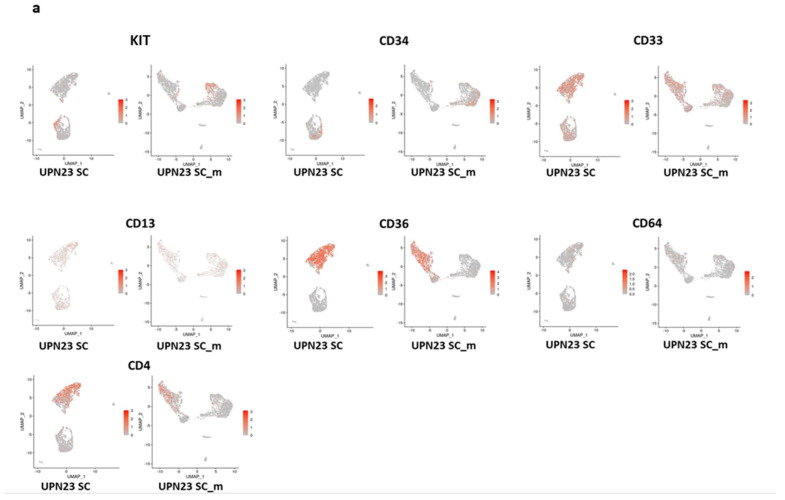
Decades ago, the treatment for acute myeloid leukemia relied on cytarabine and anthracycline. However, advancements in medical research have introduced targeted therapies, initially employing monoclonal antibodies such as ant-CD52 and anti-CD123, and subsequently utilizing specific inhibitors that target molecular mutations like anti-IDH1, IDH2, or FLT3. The challenge lies in determining the role of these therapeutic options, considering the inherent tumor heterogeneity associated with leukemia diagnosis and the clonal drift that this type of tumor can undergo. Targeted drugs necessitate an examination of various therapeutic targets at the individual cell level rather than assessing the entire population. It is crucial to differentiate between the prognostic value and therapeutic potential of a specific molecular target, depending on whether it is found in a terminally differentiated cell with limited proliferative potential or a stem cell with robust capabilities for both proliferation and self-renewal. However, this cell-by-cell analysis is accompanied by several challenges. Firstly, the scientific aspect poses difficulties in comparing different single cell analysis experiments despite efforts to standardize the results through various techniques. Secondly, there are practical obstacles as each individual cell experiment incurs significant financial costs and consumes a substantial amount of time. A viable solution lies in the ability to process multiple samples simultaneously, which is a distinctive feature of the cell hashing technique. In this study, we demonstrate the applicability of the cell hashing technique for analyzing acute myeloid leukemia cells. By comparing it to standard single cell analysis, we establish a strong correlation in various parameters such as quality control, gene expression, and the analysis of leukemic blast markers in patients. Consequently, this technique holds the potential to become an integral part of the biological assessment of acute myeloid leukemia, contributing to the personalized and optimized management of the disease, particularly in the context of employing targeted therapies.
几十年前,急性髓系白血病的治疗依赖于阿糖胞苷和蒽环类药物。然而,医学研究的进展引入了靶向治疗,最初使用抗CD52和抗CD123等单克隆抗体,随后使用针对抗IDH1、IDH2或FLT3等分子突变的特异性抑制剂。挑战在于确定这些治疗选择的作用,考虑到与白血病诊断相关的内在肿瘤异质性以及这类肿瘤可能发生的克隆漂移。靶向药物需要在单个细胞水平上检查各种治疗靶点,而不是评估整个细胞群体。根据特定分子靶点是存在于增殖潜力有限的终末分化细胞还是具有强大增殖和自我更新能力的干细胞中,区分其预后价值和治疗潜力至关重要。然而,这种逐个细胞的分析伴随着几个挑战。首先,尽管通过各种技术努力使结果标准化,但在比较不同的单细胞分析实验时,科学方面仍存在困难。其次,存在实际障碍,因为每个单细胞实验都产生巨大的财务成本并消耗大量时间。一个可行的解决方案在于能够同时处理多个样本,这是细胞哈希技术的一个独特特征。在本研究中,我们证明了细胞哈希技术在分析急性髓系白血病细胞方面的适用性。通过将其与标准单细胞分析进行比较,我们在质量控制、基因表达以及患者白血病原始细胞标志物分析等各种参数方面建立了很强的相关性。因此,这项技术有可能成为急性髓系白血病生物学评估的一个组成部分,有助于对该疾病进行个性化和优化管理,特别是在采用靶向治疗的背景下。