Center for Molecular Medicine Cologne, University of Cologne, Robert-Koch Strasse 21, 50931, Cologne, Germany.
MRC Toxicology Unit, University of Cambridge, Tennis Court Road, Cambridge, CB2 1QR, UK.
Sci Adv. 2023 Jul 28;9(30):eadg2829. doi: 10.1126/sciadv.adg2829. Epub 2023 Jul 26.
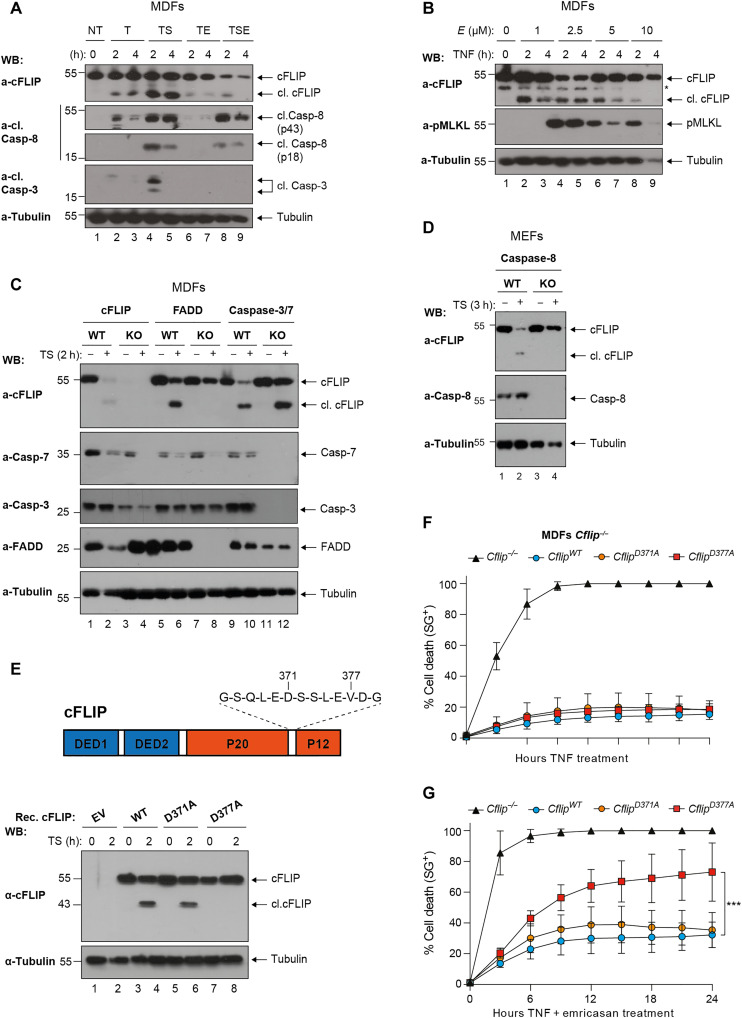
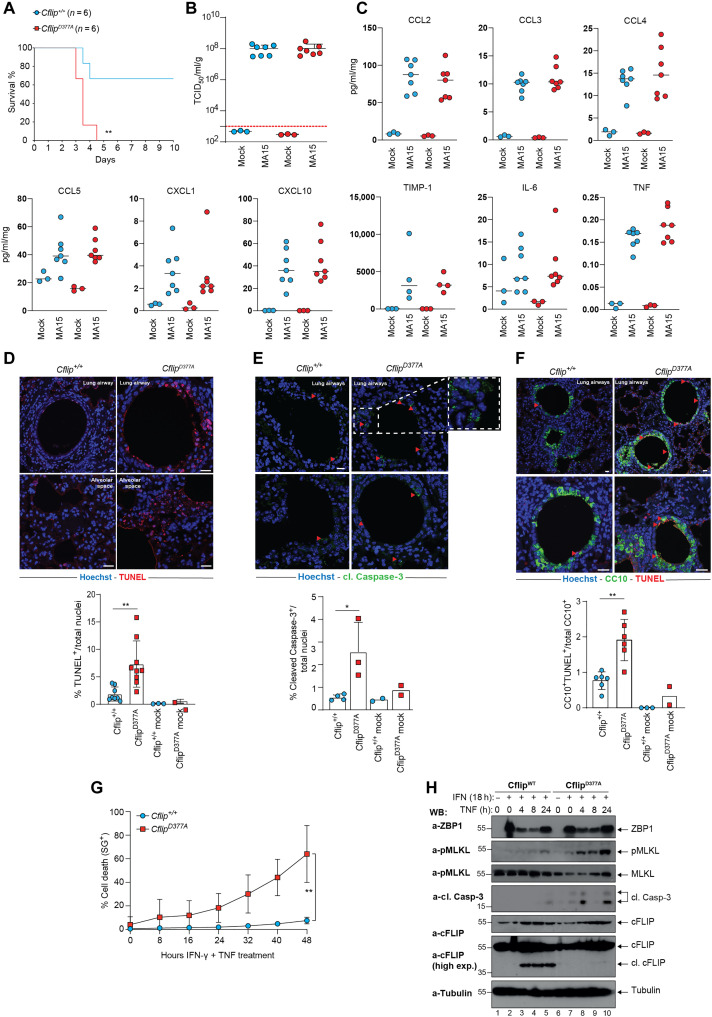
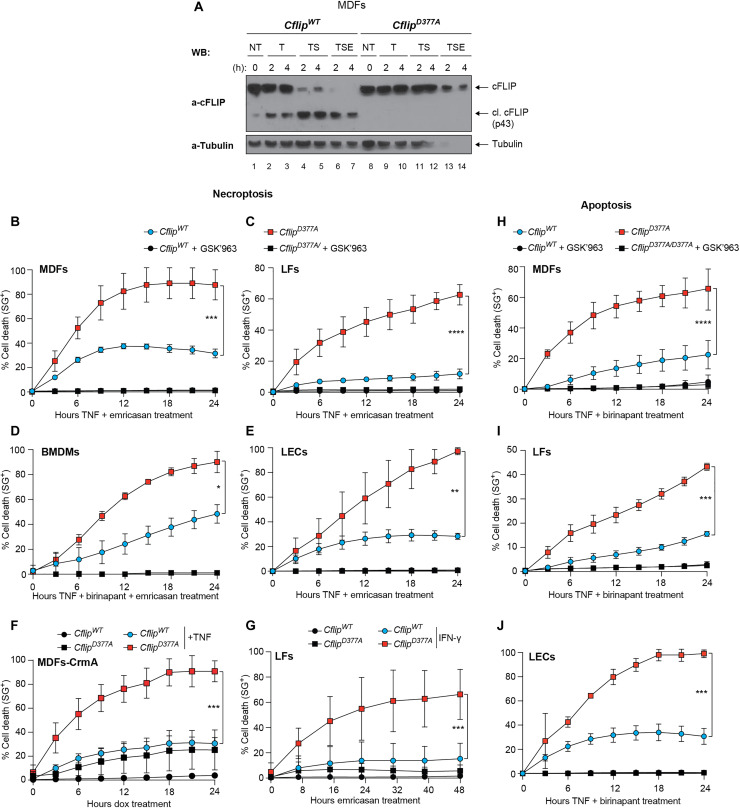
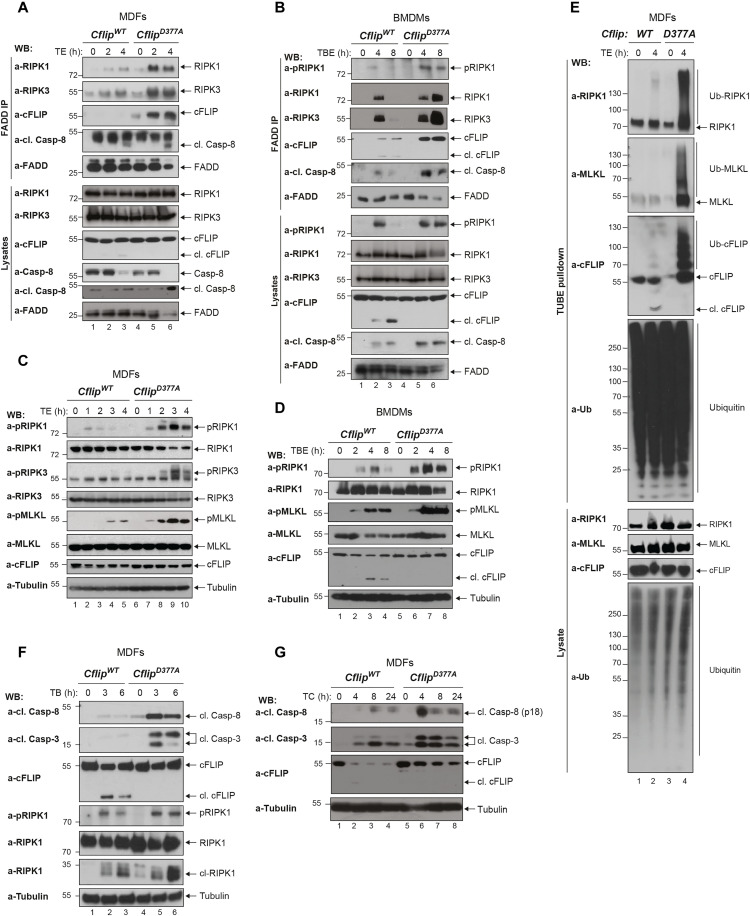
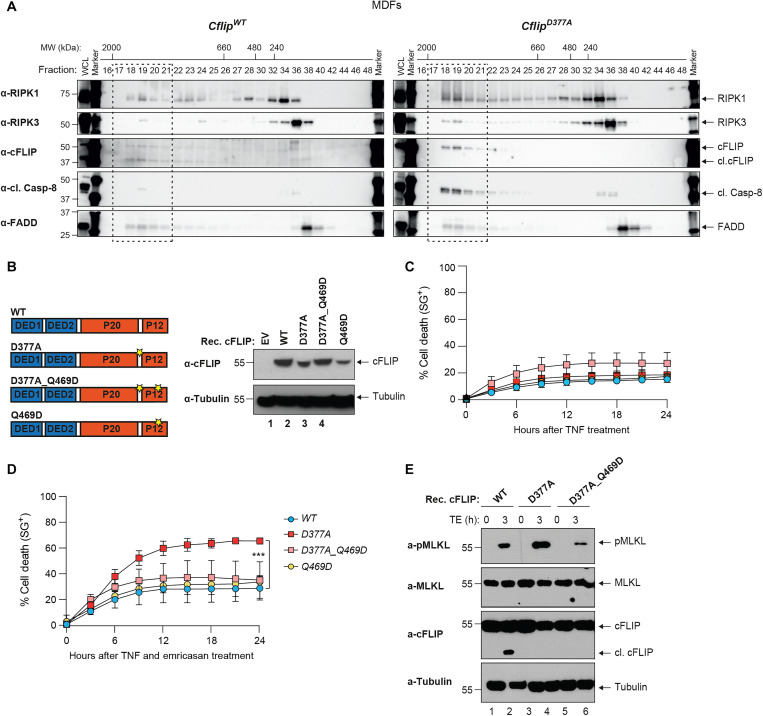
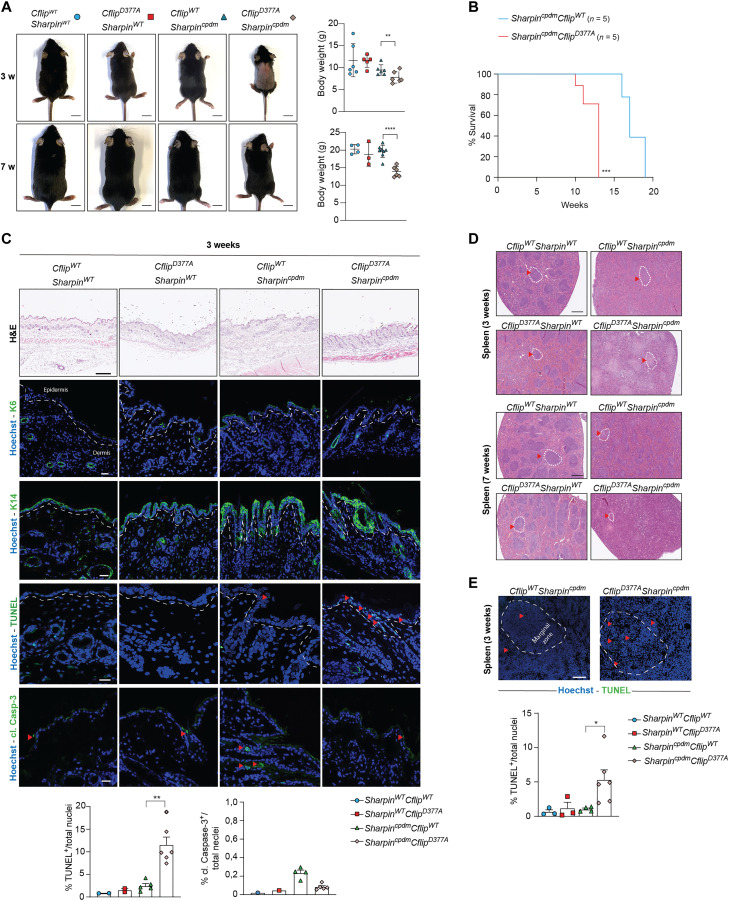
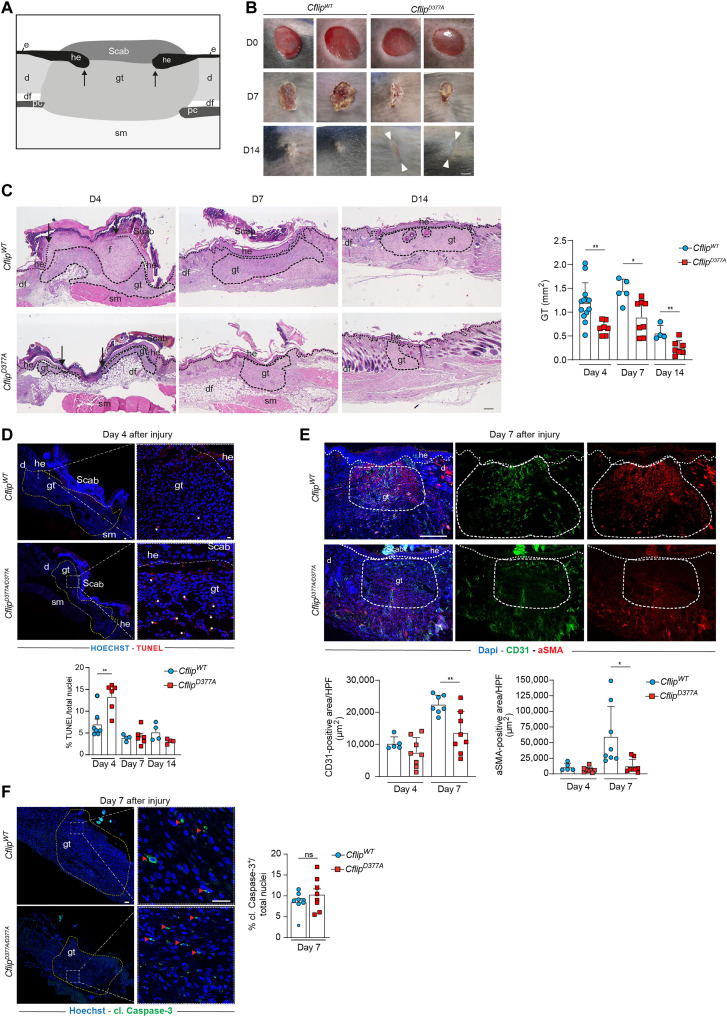
Cell death coordinates repair programs following pathogen attack and tissue injury. However, aberrant cell death can interfere with such programs and cause organ failure. Cellular FLICE-like inhibitory protein (cFLIP) is a crucial regulator of cell death and a substrate of Caspase-8. However, the physiological role of cFLIP cleavage by Caspase-8 remains elusive. Here, we found an essential role for cFLIP cleavage in restraining cell death in different pathophysiological scenarios. Mice expressing a cleavage-resistant cFLIP mutant, , exhibited increased sensitivity to severe acute respiratory syndrome coronavirus (SARS-CoV)-induced lethality, impaired skin wound healing, and increased tissue damage caused by deficiency. In vitro, abrogation of cFLIP cleavage sensitizes cells to tumor necrosis factor(TNF)-induced necroptosis and apoptosis by favoring complex-II formation. Mechanistically, the cell death-sensitizing effect of the D377A mutation depends on glutamine-469. These results reveal a crucial role for cFLIP cleavage in controlling the amplitude of cell death responses occurring upon tissue stress to ensure the execution of repair programs.
细胞死亡协调病原体攻击和组织损伤后的修复程序。然而,异常的细胞死亡会干扰这些程序并导致器官衰竭。细胞 FLICE 样抑制蛋白(cFLIP)是细胞死亡的关键调节剂,也是 Caspase-8 的底物。然而,Caspase-8 切割 cFLIP 的生理作用仍不清楚。在这里,我们发现 Caspase-8 切割 cFLIP 在抑制不同病理生理情况下的细胞死亡中起着至关重要的作用。表达一种不易被切割的 cFLIP 突变体的小鼠,对严重急性呼吸综合征冠状病毒(SARS-CoV)诱导的致死性、皮肤伤口愈合受损以及 缺乏引起的组织损伤表现出更高的敏感性。在体外,通过有利于复合物-II 的形成,cFLIP 切割的缺失使细胞对肿瘤坏死因子(TNF)诱导的坏死性凋亡和凋亡更加敏感。从机制上讲,D377A 突变的细胞死亡敏感效应取决于谷氨酰胺 469。这些结果揭示了 cFLIP 切割在控制组织应激时发生的细胞死亡反应幅度中的关键作用,以确保修复程序的执行。