Bartikofsky Dylan, Hertz Mikayla Jade, Bauer David S, Altschuler Richard, King W Michael, Stewart Courtney Elaine
Lieutenant Colonel Charles S. Kettles VA Medical Center, Ann Arbor, MI, United States.
Department of Otolaryngology/Head-Neck Surgery, Kresge Hearing Research Institute, University of Michigan, Ann Arbor, MI, United States.
Front Integr Neurosci. 2023 Jul 11;17:1196477. doi: 10.3389/fnint.2023.1196477. eCollection 2023.
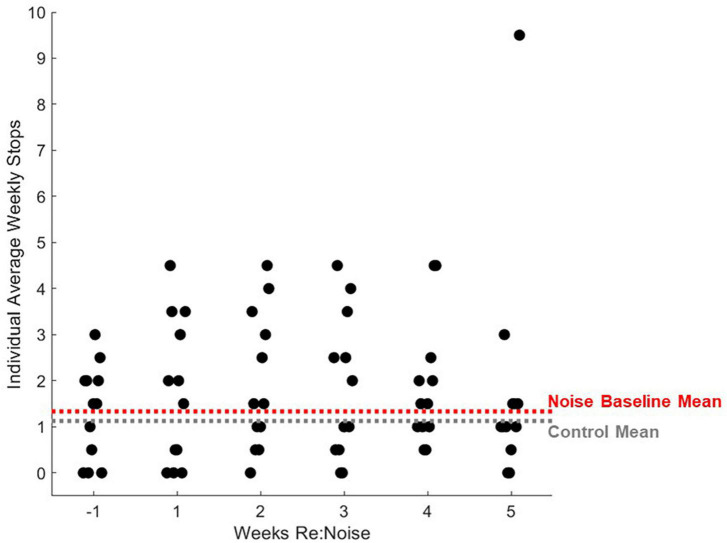
The vestibular system integrates signals related to vision, head position, gravity, motion, and body position to provide stability during motion through the environment. Disruption in any of these systems can reduce agility and lead to changes in ability to safely navigate one's environment. Causes of vestibular decline are diverse; however, excessive noise exposure can lead to otolith organ dysfunction. Specifically, 120 decibel (dB) sound pressure level (SPL) 1.5 kHz-centered 3-octave band noise (1.5 kHz 3OBN) causes peripheral vestibular dysfunction in rats, measured by vestibular short-latency evoked potential (VsEP) and reduced calretinin-immunolabeling of calyx-only afferent terminals in the striolar region of the saccule. The present study examined the functional impact of this noise exposure condition, examining changes in motor performance after noise exposure with a balance beam crossing task.
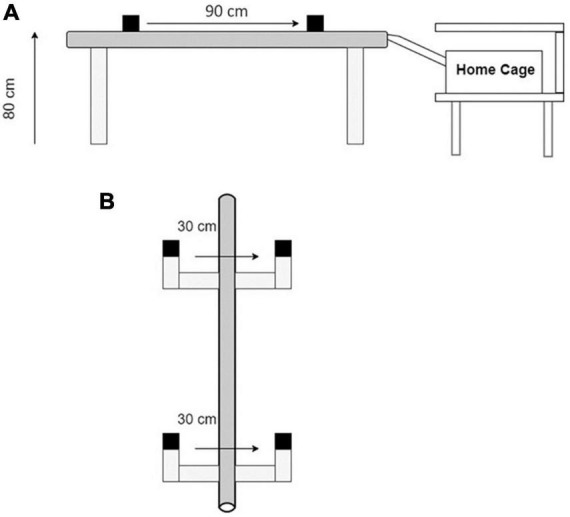
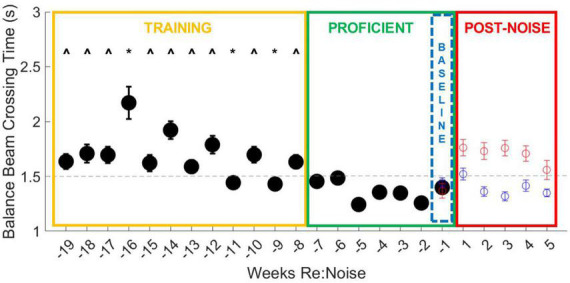
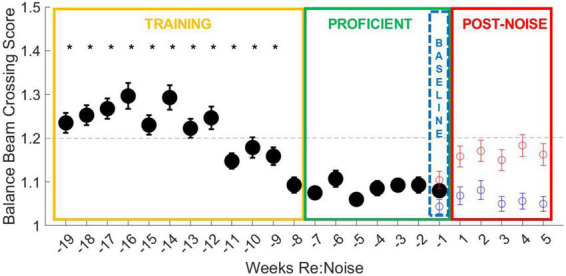
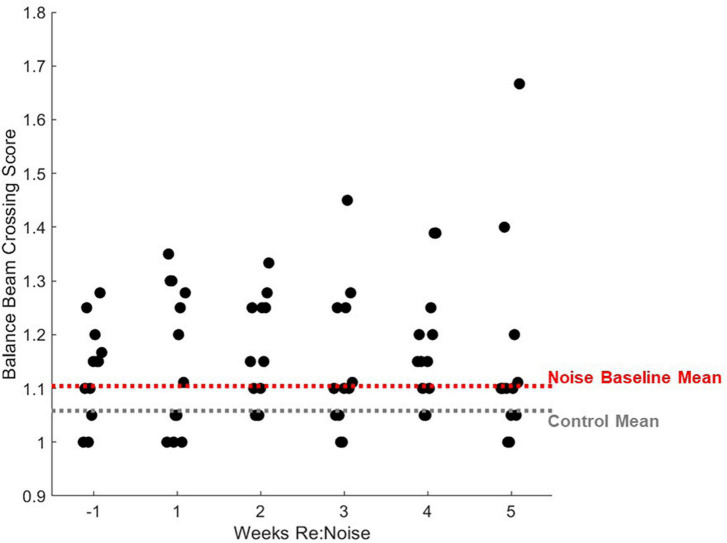
Balance beam crossing time in rats was assessed for 19 weeks before and 5 weeks after noise exposure. Balance beam crossings were scored to assess proficiency in the task. When animals were proficient, they received a single exposure to 120 dB SPL 3-octave band noise.
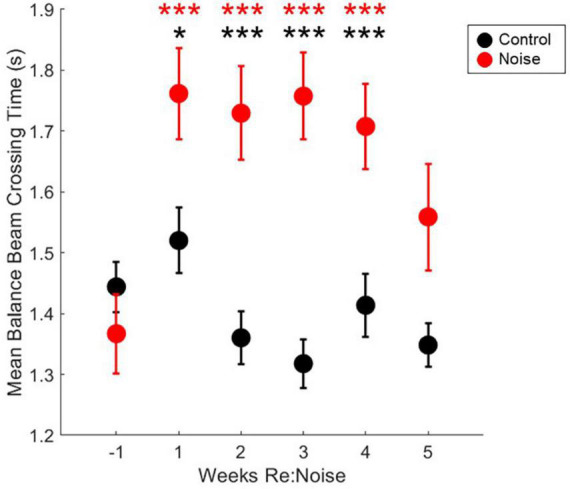
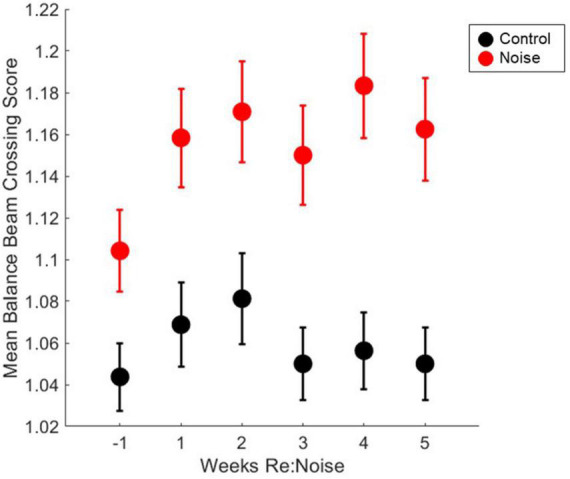
During the initial training phase slower crossing times and higher scores, including multiple failures were observed. This was followed by a period of significant improvement leading to proficiency, characterized by fast and stable crossing times and consistently low scores. After noise exposure, crossing times were significantly elevated from baseline for 4-weeks. A total of 5 weeks after noise exposure, crossing times improved, and though still trending higher than baseline, they were no longer significantly different from baseline.
These findings show that the noise-induced peripheral vestibular changes we previously observed at cellular and electro-physiological levels also have an impact at a functional level. It has been previously shown that imbalance is associated with slower walking speed in older adults and aged rats. These findings in noise-exposed rats may have implications for people who experience noisy environments and for seniors with a history of noise exposure who also experience balance disorders and may be at increased fall risk.
前庭系统整合与视觉、头部位置、重力、运动及身体位置相关的信号,以便在穿越环境的运动过程中提供稳定性。这些系统中任何一个出现紊乱都可能降低敏捷性,并导致安全应对周围环境能力的改变。前庭功能衰退的原因多种多样;然而,过度暴露于噪声中会导致耳石器官功能障碍。具体而言,120分贝(dB)声压级(SPL)、以1.5千赫兹(kHz)为中心的3倍频程带噪声(1.5 kHz 3OBN)会导致大鼠外周前庭功能障碍,这可通过前庭短潜伏期诱发电位(VsEP)以及球囊纹状区仅含花萼传入终末的钙视网膜蛋白免疫标记减少来测量。本研究检测了这种噪声暴露情况的功能影响,通过平衡木穿越任务检测噪声暴露后运动表现的变化。
在噪声暴露前19周和暴露后5周评估大鼠的平衡木穿越时间。对平衡木穿越情况进行评分以评估任务熟练程度。当动物熟练后,它们接受一次120 dB SPL 3倍频程带噪声暴露。
在初始训练阶段,观察到穿越时间较慢且得分较高,包括多次失败。随后是一段显著改善直至熟练的时期,其特征为快速且稳定的穿越时间以及始终较低的得分。噪声暴露后,穿越时间在4周内显著高于基线水平。噪声暴露后总共5周时,穿越时间有所改善,尽管仍高于基线水平,但与基线不再有显著差异。
这些发现表明,我们之前在细胞和电生理水平观察到的噪声诱导的外周前庭变化在功能水平上也有影响。先前已表明,失衡与老年人和老龄大鼠行走速度较慢有关。这些在噪声暴露大鼠中的发现可能对身处嘈杂环境的人以及有噪声暴露史且同时患有平衡障碍并可能有更高跌倒风险的老年人有影响。