Orfanidis S, Kosarli M, Karagianni M, Paipetis A S, Papavassiliou G, Fardis M
Institute of Nanoscience and Nanotechnology, NCSR Demokritos, 15310 Aghia Paraskevi, Attiki, Greece.
Department of Materials Science and Engineering, University of Ioannina, 45110, Ioannina, Greece.
Sci Rep. 2023 Jul 27;13(1):12189. doi: 10.1038/s41598-023-39302-3.
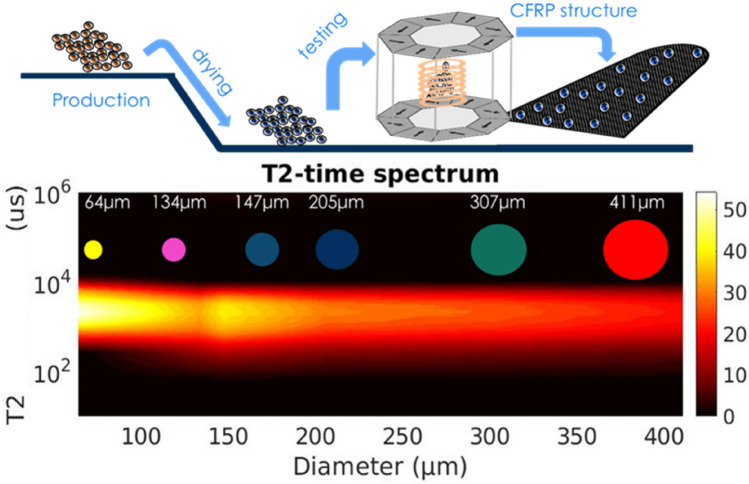
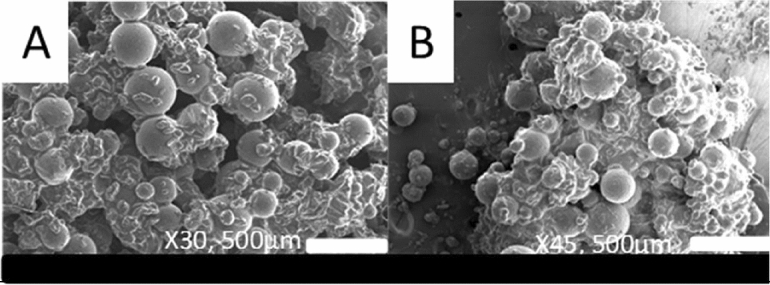
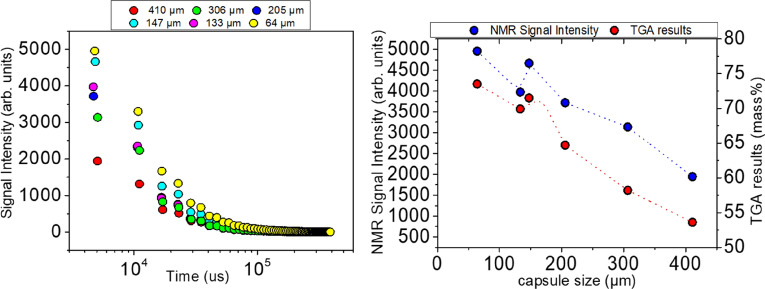
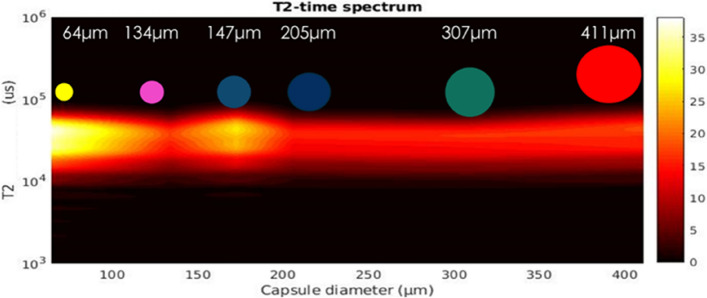
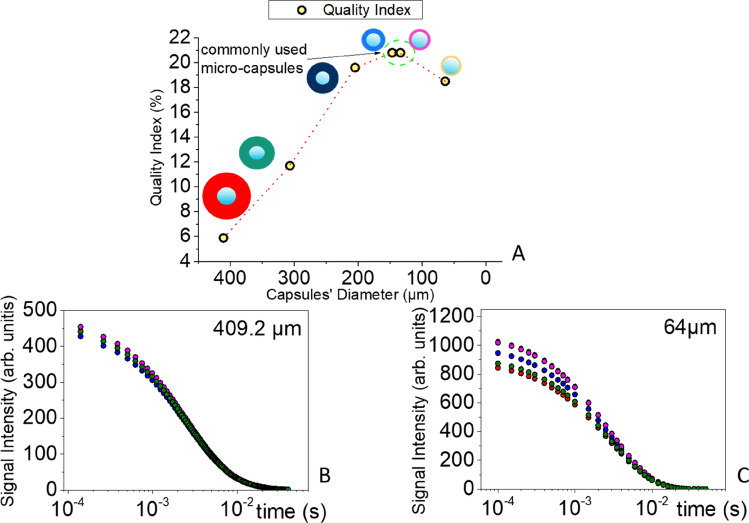
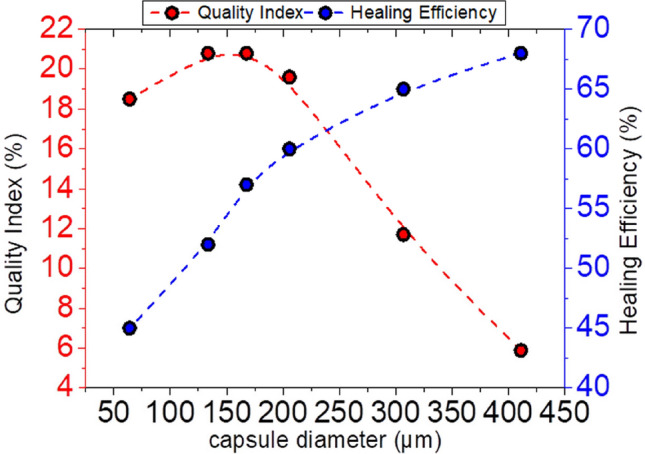
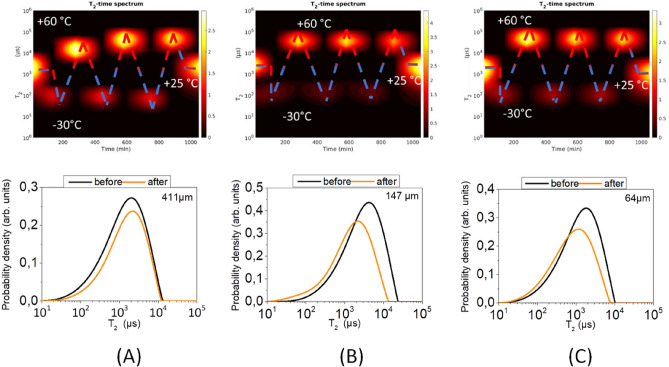
In this work we present a novel approach utilizing nuclear magnetic resonance (NMR) relaxometry to assess the structural stability of microcapsules employed as self-healing agents in advanced aerospace composites both in ambient and harsh environmental conditions. We successfully correlate the amount of the encapsulated self-healing agent with the signal intensity and confirm non-destructively the quantity of the encapsulated self-healing agent mass for the first time in the literature using H NMR spin-spin relaxation techniques on urea-formaldehyde (UF) microcapsules of different diameters containing an epoxy healing agent. The amount of self-healing agent is shown to increase by reducing the capsule diameter; however, the reduced shell mass renders the capsules more fragile and prone to failure. Most notably, via NMR experiments conducted during thermal cycling simulating flight conditions, we demonstrate that the microcapsule integrity under thermal fatigue varies according to their size. Especially we experimentally verify that the microcapsules with the most sensitive shells are the 147 nm and 133 nm diameter microcapsules, which are the most commonly used in self-healing systems. Finally, we were able to retrieve the same results using a portable NMR spectrometer developed in-house for in situ microcapsule testing, thus demonstrating the potential of NMR relaxometry as a powerful non-destructive evaluation tool for the microcapsule production line.
在这项工作中,我们提出了一种新颖的方法,利用核磁共振(NMR)弛豫测量法来评估用作先进航空航天复合材料自修复剂的微胶囊在环境条件和恶劣环境条件下的结构稳定性。我们成功地将封装的自修复剂的量与信号强度相关联,并首次在文献中使用H NMR自旋 - 自旋弛豫技术,对含有环氧修复剂的不同直径的脲醛(UF)微胶囊,无损地确认了封装的自修复剂质量的数量。结果表明,通过减小胶囊直径,自修复剂的量会增加;然而,壳质量的减少使胶囊更易碎且更容易失效。最值得注意的是,通过在模拟飞行条件的热循环过程中进行的NMR实验,我们证明了微胶囊在热疲劳下的完整性会根据其尺寸而变化。特别是我们通过实验验证,壳最敏感的微胶囊是直径为147 nm和133 nm的微胶囊,它们是自修复系统中最常用的。最后,我们使用自行开发的便携式NMR光谱仪进行原位微胶囊测试,也得到了相同结果, 从而证明了NMR弛豫测量法作为微胶囊生产线强大的无损评估工具的潜力。