Department of Surgery, City of Hope National Medical Center, Duarte, CA, USA.
Department of Surgery, Northwell Health, New York, NY, USA.
Ann Surg Oncol. 2023 Nov;30(12):7814-7824. doi: 10.1245/s10434-023-13941-2. Epub 2023 Jul 27.
Pressurized intraperitoneal aerosolized chemotherapy (PIPAC) is a laparoscopic locoregional treatment for peritoneal metastases (PM) from colorectal cancer (CRC) or appendiceal cancer (AC) in patients who cannot undergo cytoreductive surgery (CRS). While PIPAC has been studied in Europe and Asia, it has not been investigated in the USA.
We evaluated PIPAC with 90 mg/m oxaliplatin alone (cycle 1) and preceded by systemic chemotherapy with fluorouracil (5-FU) and leucovorin (LV) (cycle 2-3) as a multicenter prospective phase I clinical trial (NCT04329494). The primary endpoint was treatment-related adverse events (AEs). Secondary endpoints included survival and laparoscopic, histologic, and radiographic response.
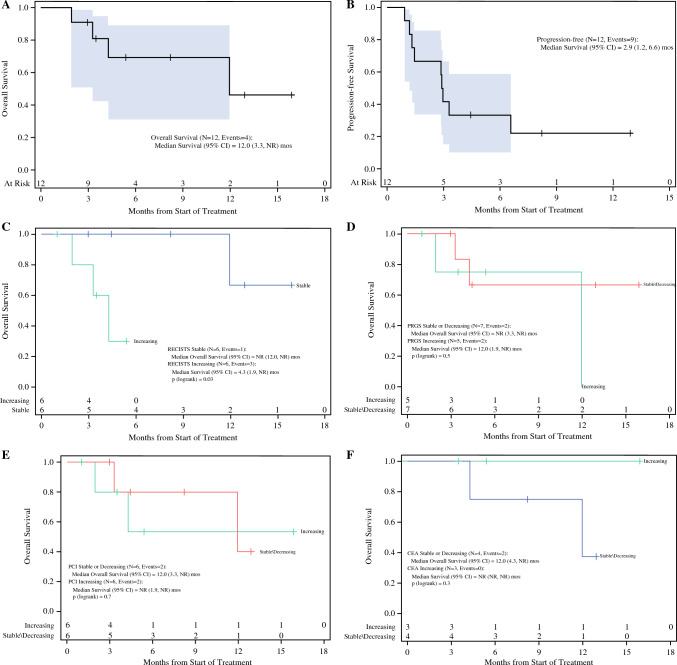
12 patients were included: 8 with CRC and 4 with AC. Median prior chemotherapy cycles was 2 (interquartile range (IQR) 2-3). All patients were refractory to systemic oxaliplatin-based chemotherapy. Median peritoneal carcinomatosis index (PCI) was 28 (IQR 19-32). Six (50%) of twelve patients completed three PIPAC cycles. No surgical complications or dose-limiting toxicities were observed. Two patients developed grade 3 treatment-related toxicities (one abdominal pain and one anemia). Median overall survival (OS) was 12.0 months, and median progression-free survival (PFS) was 2.9 months. OS was correlated with stable disease by Response Evaluation Criteria in Solid Tumors (RECIST) criteria but not with laparoscopic response by PCI or histologic response by peritoneal regression grading system (PRGS).
This phase I trial in the USA demonstrated safety, feasibility, and early efficacy signal of PIPAC with oxaliplatin and chemotherapy in patients with PM from AC or CRC who are refractory to standard lines of systemic chemotherapy.
加压腹腔内气溶胶化疗(PIPAC)是一种腹腔镜局部治疗结直肠癌(CRC)或阑尾癌(AC)患者腹膜转移(PM)的方法,这些患者不能进行细胞减灭术(CRS)。虽然 PIPAC 已在欧洲和亚洲进行了研究,但尚未在美国进行研究。
我们评估了单独使用 90mg/m 奥沙利铂(第 1 周期)和之前用氟尿嘧啶(5-FU)和亚叶酸(LV)进行全身化疗(第 2-3 周期)的 PIPAC,这是一项多中心前瞻性 I 期临床试验(NCT04329494)。主要终点是治疗相关不良事件(AE)。次要终点包括生存、腹腔镜、组织学和影像学反应。
共纳入 12 例患者:8 例 CRC 和 4 例 AC。中位既往化疗周期数为 2(四分位距(IQR)2-3)。所有患者均对奥沙利铂为基础的全身化疗耐药。中位腹膜癌指数(PCI)为 28(IQR 19-32)。12 例患者中有 6 例(50%)完成了 3 个 PIPAC 周期。未观察到手术并发症或剂量限制毒性。2 例患者发生 3 级治疗相关毒性(1 例腹痛,1 例贫血)。中位总生存期(OS)为 12.0 个月,中位无进展生存期(PFS)为 2.9 个月。OS 与实体瘤反应评估标准(RECIST)标准的稳定疾病相关,但与腹腔镜反应(根据 PCI)或腹膜消退分级系统(PRGS)的组织学反应无关。
这项在美国进行的 I 期试验表明,在对标准全身化疗耐药的 PM 患者中,PIPAC 联合奥沙利铂和化疗具有安全性、可行性和早期疗效信号。