Department of Orthopedics, Ningbo No.2 Hospital, Ningbo, 315000, Zhejiang, China.
Department of Gastroenterology, The Affiliated People's Hospital of Ningbo University, Ningbo, 315040, Zhejiang, China.
BMC Musculoskelet Disord. 2023 Jul 27;24(1):614. doi: 10.1186/s12891-023-06725-y.
Meta-analyses on the use of tranexamic acid (TXA) in intertrochanteric fractures have shown inconsistent results due to variations in inclusion criteria and clinical heterogeneity. To address these limitations, we conducted a rigorous analysis of recent randomized controlled trials (RCTs) with strict inclusion criteria. The aim of this study was to objectively evaluate the effects and safety of intravenous TXA administration in the treatment of geriatric intertrochanteric femoral fractures with intramedullary nailing.
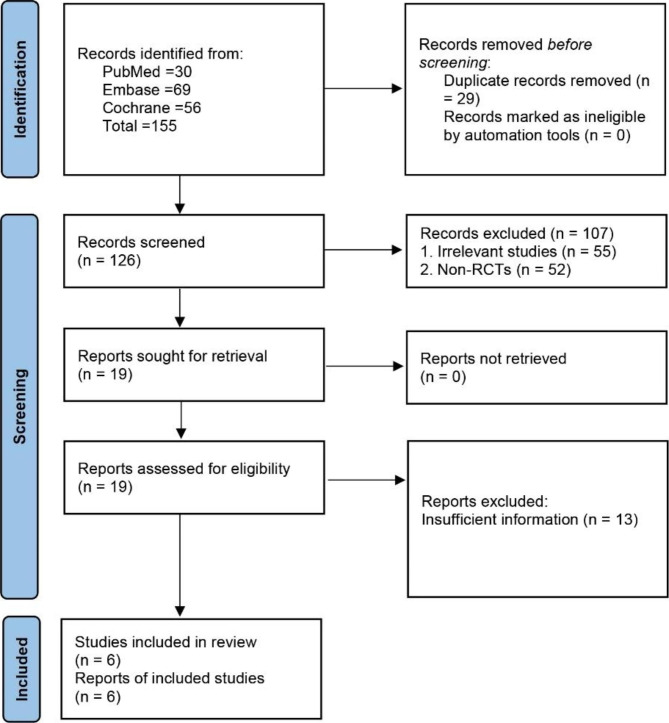
PubMed, Embase, and the Cochrane Library were searched for RCTs published from the database inception to August 2022. The date of total blood loss (TBL), intra-operative blood loss (IBL), hidden blood loss (HBL), transfusion rate, transfusion units, thromboembolic events, and mortality were extracted. Review Manager 5.3 was used for the analysis.
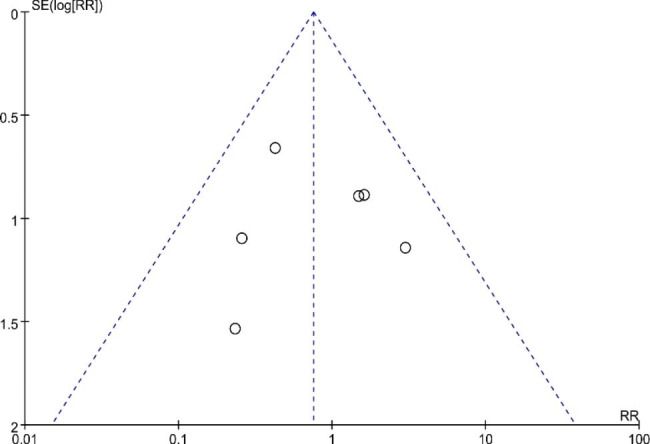
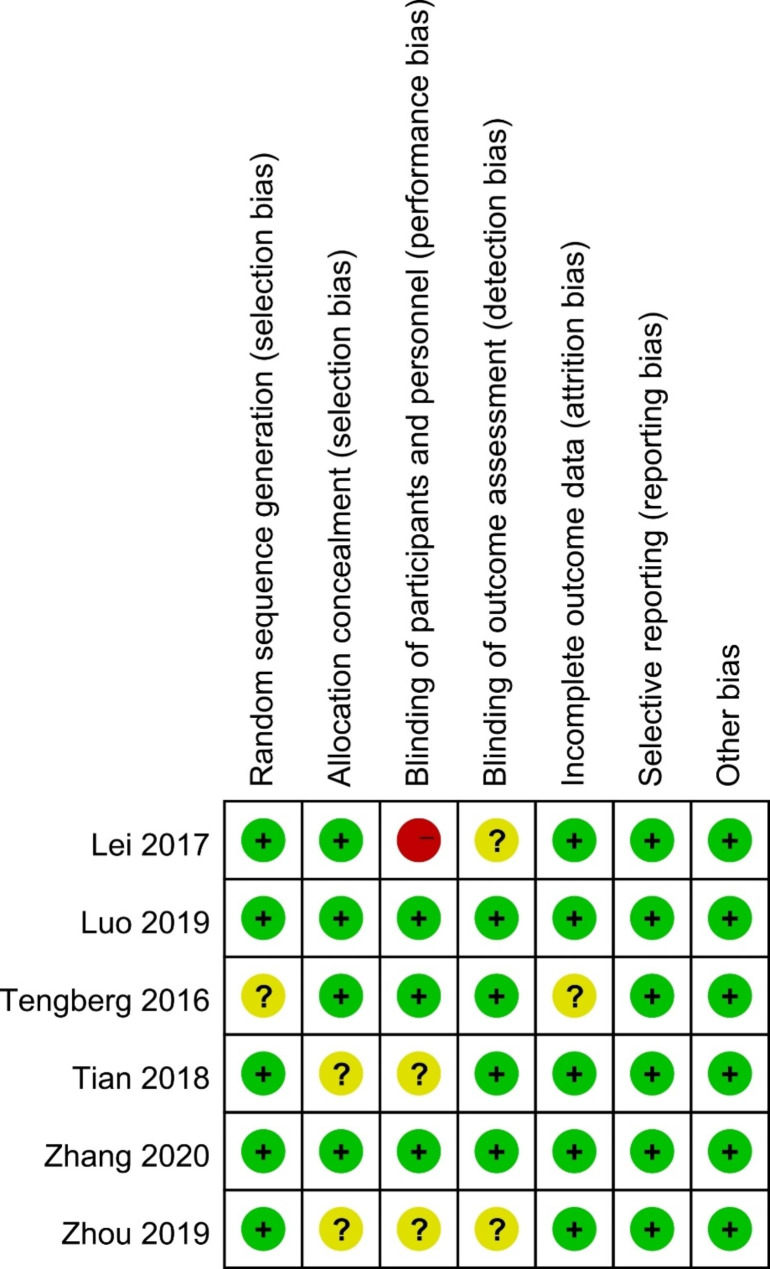
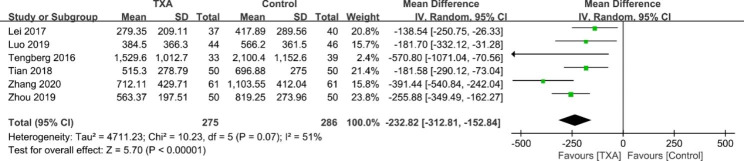
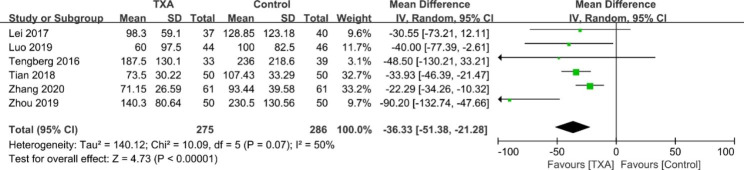
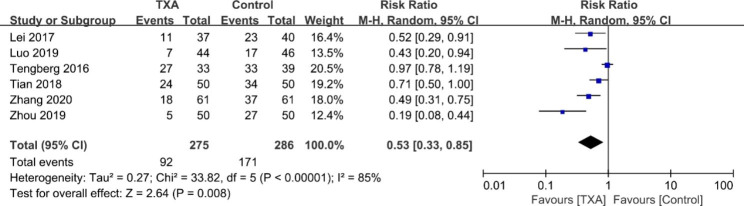
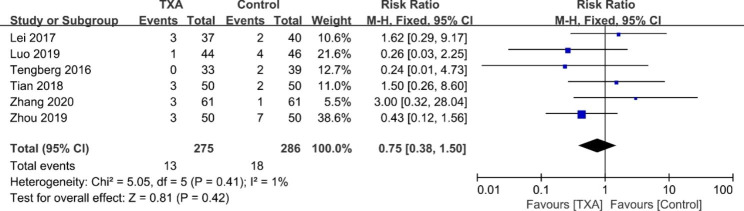
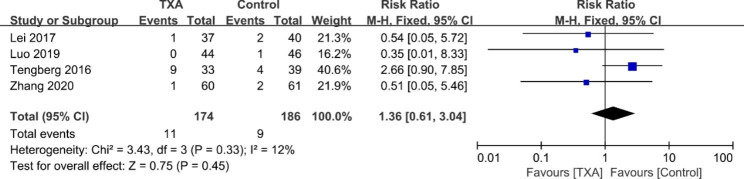
A total of six RCTs involving 689 patients were included. Meta-analyses indicated that TXA can significantly reduce TBL (WMD = -232.82; 95% CI -312.81 to -152.84; p < 0.00001), IBL (WMD = -36.33; 95% CI -51.38 to -21.28; p < 0.00001), HBL (WMD = -189.23; 95% CI -274.92 to -103.54; p < 0.0001), transfusion rate (RR = 0.53; 95% CI 0.33 to 0.85; p = 0.008), and transfusion units (WMD = -0.58; 95% CI -0.75 to -0.41; p < 0.01). No increase in thromboembolic events rate (RR = 0.75; 95% CI 0.38 to 1.50; p = 0.42) and mortality (RR = 1.36; 95% CI 0.61 to 3.04; p = 0.45) was observed.
Our meta-analysis provides robust evidence supporting the efficacy and safety of intravenous TXA administration in treating geriatric intertrochanteric femoral fractures with intramedullary nailing. TXA significantly reduces blood loss and transfusion requirements without increasing the risk of thromboembolic events or mortality.
由于纳入标准和临床异质性的差异,关于氨甲环酸(TXA)在股骨转子间骨折中应用的荟萃分析结果不一致。为了解决这些局限性,我们对纳入标准严格的最新随机对照试验(RCT)进行了严格的分析。本研究旨在客观评价静脉注射 TXA 治疗老年股骨转子间骨折髓内钉固定的效果和安全性。
检索 PubMed、Embase 和 Cochrane 图书馆从数据库成立到 2022 年 8 月发表的 RCTs。提取总失血量(TBL)、术中失血量(IBL)、隐性失血量(HBL)、输血率、输血量、血栓栓塞事件和死亡率。采用 Review Manager 5.3 进行分析。
共纳入 6 项 RCTs 共 689 例患者。荟萃分析表明,TXA 可显著减少 TBL(WMD=-232.82;95%CI-312.81 至-152.84;p<0.00001)、IBL(WMD=-36.33;95%CI-51.38 至-21.28;p<0.00001)、HBL(WMD=-189.23;95%CI-274.92 至-103.54;p<0.0001)、输血率(RR=0.53;95%CI 0.33 至 0.85;p=0.008)和输血量(WMD=-0.58;95%CI-0.75 至-0.41;p<0.01)。血栓栓塞事件发生率(RR=0.75;95%CI 0.38 至 1.50;p=0.42)和死亡率(RR=1.36;95%CI 0.61 至 3.04;p=0.45)无增加。
本荟萃分析提供了强有力的证据支持静脉注射 TXA 治疗老年股骨转子间骨折髓内钉固定的疗效和安全性。TXA 可显著减少失血和输血需求,而不增加血栓栓塞事件或死亡率的风险。