Ezura Masayuki, Kimura Naoto, Sakata Hiroyuki, Ishida Tomohisa, Inoue Takashi, Uenohara Hiroshi
Department of Neurosurgery, NHO Sendai Medical Center, Sendai, Miyagi, Japan.
Department of Neurosurgery, Iwate Prefectual Central Hospital, Morioka, Iwate, Japan.
J Neuroendovasc Ther. 2021;15(5):301-309. doi: 10.5797/jnet.oa.2020-0148. Epub 2020 Dec 29.
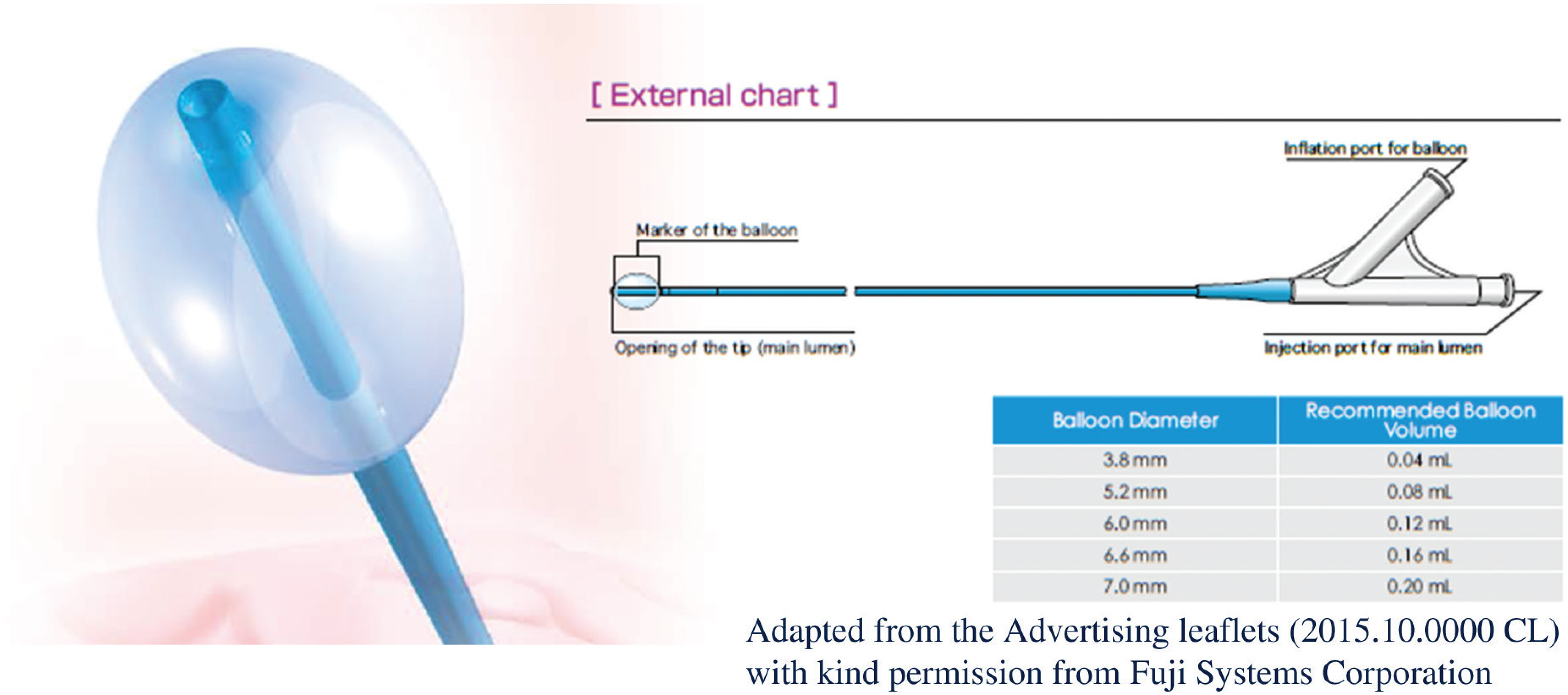
While wide-neck aneurysms can be treated with several methods, we report the specific technique of intraaneurysmal neck plasty (IANP) with a super compliant double-lumen balloon microcatheter (Super-Masamune).
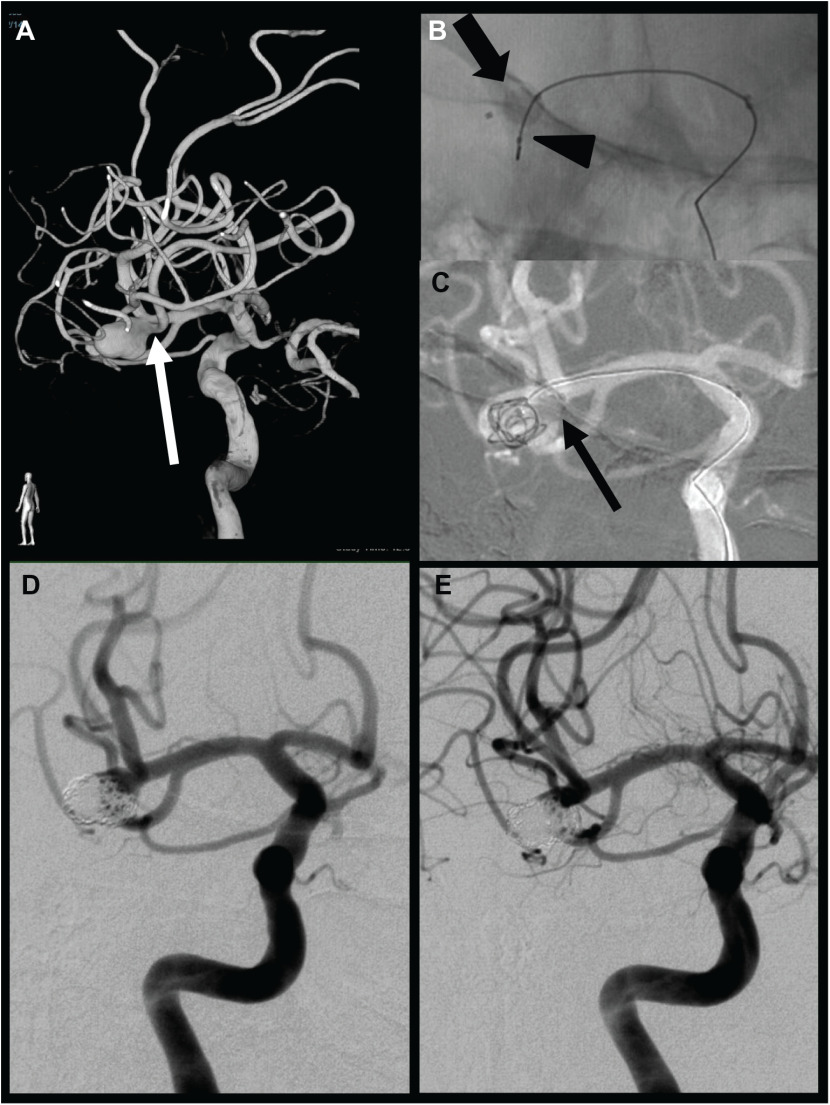
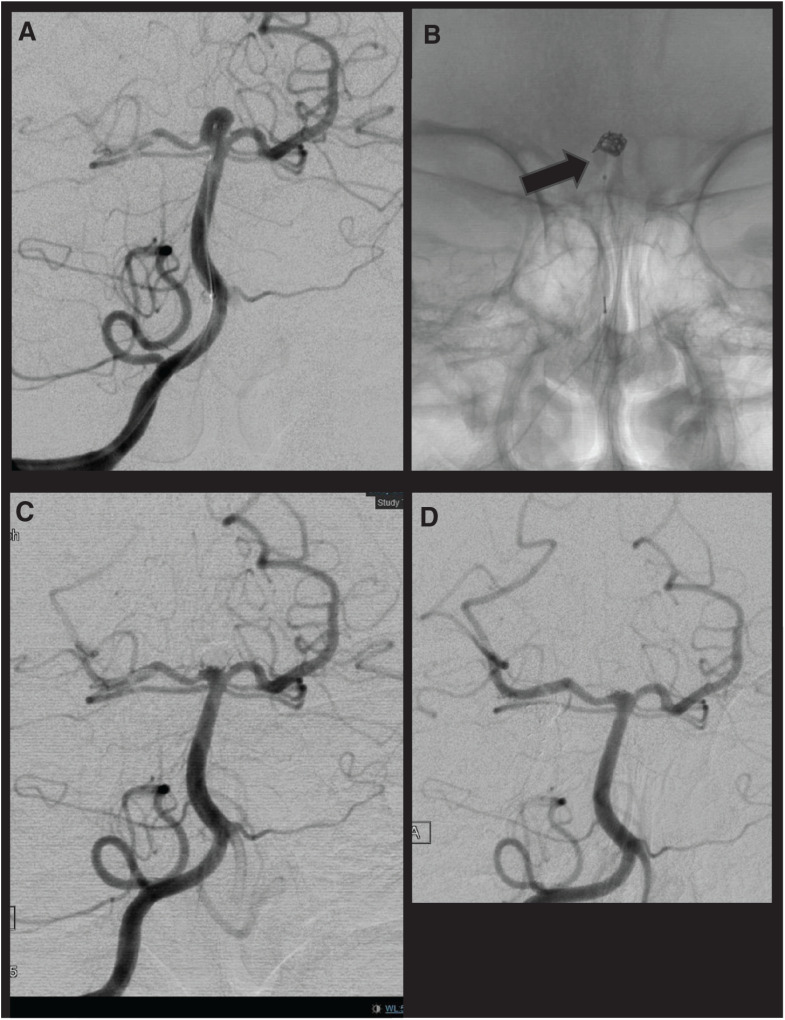
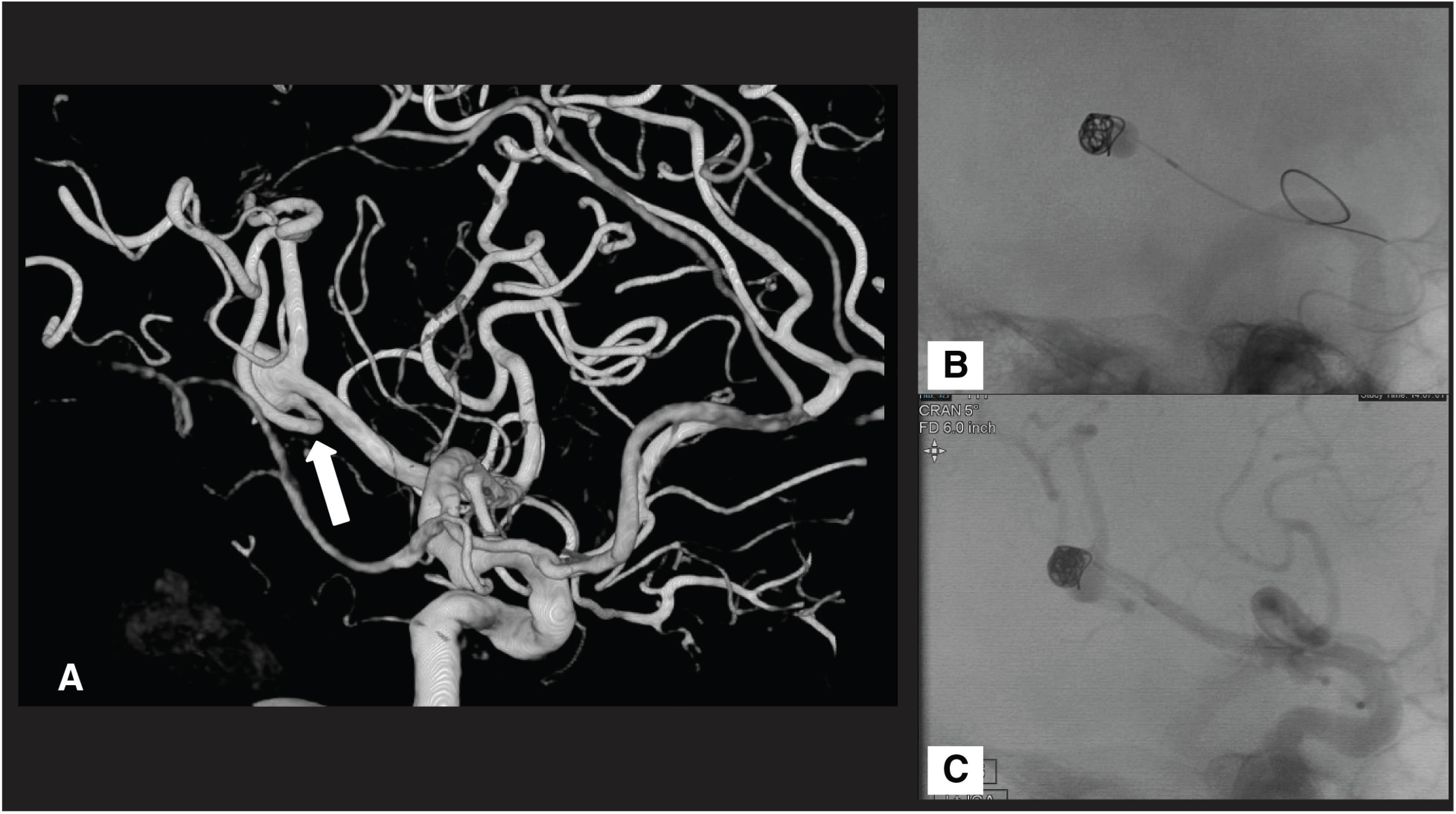
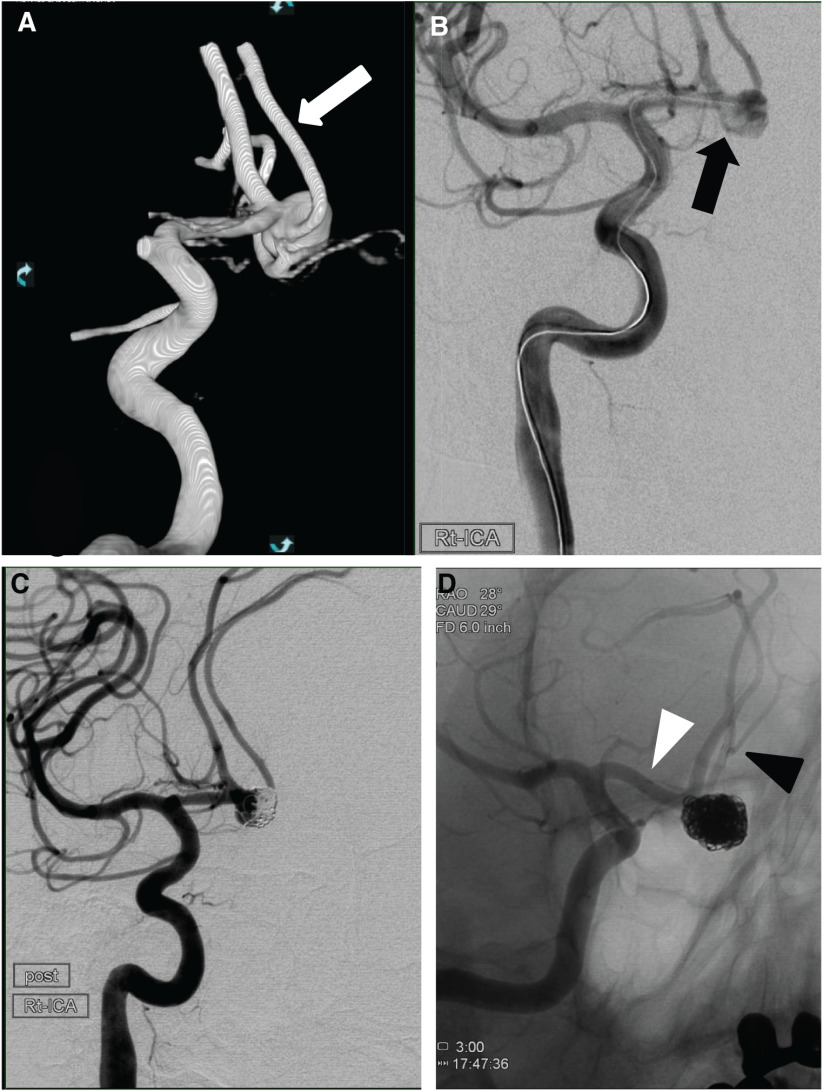
The Super-Masamune was inflated inside 18 aneurysms. Cases in which the tip of the Super-Masamune was located in the aneurysm were included. Embolization methods were the same as those used in the application of other balloons/stents. The use of the Super-Masamune for the performance of IANP followed two patterns: (1) the Super-Masamune was used not only as a balloon but also for coil insertion (simple IANP); (2) the Super-Masamune was used only as a balloon, and a microcatheter for coil insertion was separately introduced coaxially (coaxial IANP).
The aneurysms were located in the anterior communicating artery (n = 6), middle cerebral artery (MCA; n = 4), anterior cerebral artery (n = 1), internal carotid artery (n = 5), basilar artery (n = 1), and vertebral artery (n = 1). Eight of the aneurysms were ruptured, while 10 were unruptured. Simple and coaxial IANP were both performed in seven cases. Embolization was not performed after inflating the Super-Masamune inside the aneurysm in four cases. Embolization grades following the procedure included eight neck remnants (NRs) and six body fillings (BFs). There was one complication of intraoperative rerupture; however, there was no rupture/rerupture in the follow-up period. Retreatment of the target aneurysm was performed in two cases. The embolization grade assessed in the follow-up period reached complete occlusion for one patient, NR for five, and BF for two patients.
IANP using the Super-Masamune is useful for the treatment of wide-neck aneurysms in which the introduction of a guidewire and/or microcatheter into the branching artery is difficult.
虽然宽颈动脉瘤可用多种方法治疗,但我们报告使用超顺应性双腔球囊微导管(Super-Masamune)进行瘤内颈部成形术(IANP)的具体技术。
在18个动脉瘤内充盈Super-Masamune。纳入Super-Masamune尖端位于动脉瘤内的病例。栓塞方法与应用其他球囊/支架时相同。使用Super-Masamune进行IANP有两种模式:(1)Super-Masamune不仅用作球囊,还用于插入弹簧圈(单纯IANP);(2)Super-Masamune仅用作球囊,另行同轴引入用于插入弹簧圈的微导管(同轴IANP)。
动脉瘤位于前交通动脉(n = 6)、大脑中动脉(MCA;n = 4)、大脑前动脉(n = 1)、颈内动脉(n = 5)、基底动脉(n = 1)和椎动脉(n = 1)。其中8个动脉瘤破裂,10个未破裂。单纯IANP和同轴IANP均在7例中进行。4例在动脉瘤内充盈Super-Masamune后未进行栓塞。术后栓塞分级包括8例颈部残留(NR)和6例瘤体填充(BF)。有1例术中再破裂并发症;然而,随访期间无破裂/再破裂。2例对目标动脉瘤进行了再次治疗。随访期间评估的栓塞分级中,1例患者达到完全闭塞,5例为NR,2例为BF。
使用Super-Masamune进行IANP对治疗难以将导丝和/或微导管引入分支动脉的宽颈动脉瘤有用。