Hamada Yuki, Ikeda Mei, Shimotakahara Shinju, Tahara Sayaka, Onobuchi Nao, Kanda Yoshiki, Takaguchi Go, Matsuoka Hideki
Department of Strokology, Stroke Center, National Hospital Organization Kagoshima Medical Center, Kagoshima, Kagoshima, Japan.
J Neuroendovasc Ther. 2022;16(10):503-509. doi: 10.5797/jnet.cr.2022-0023. Epub 2022 Jun 28.
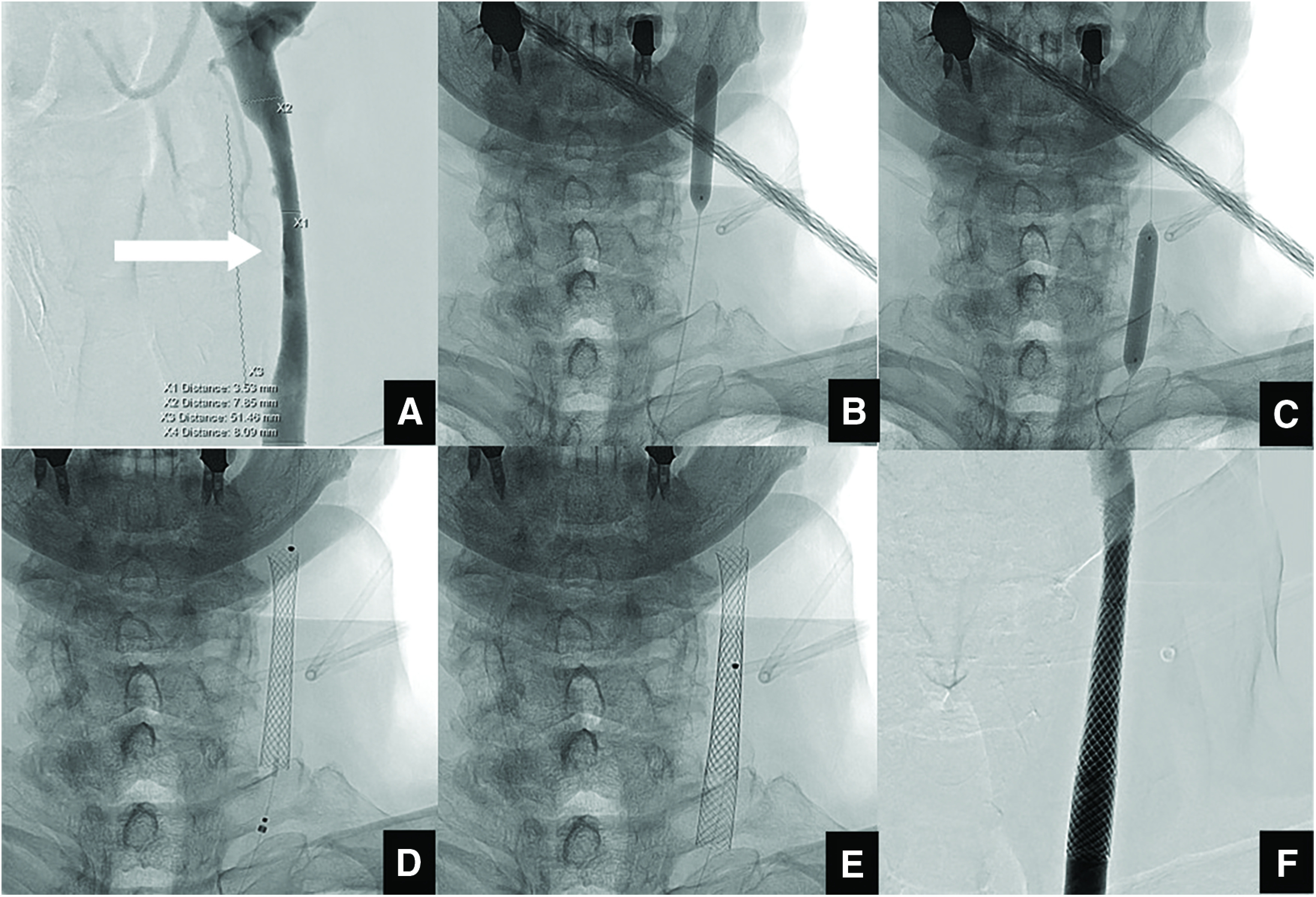
We report a case of additional carotid artery stenting (CAS) for plaque protrusion occurring after initial CAS for radiation-induced common carotid artery (CCA) stenosis.
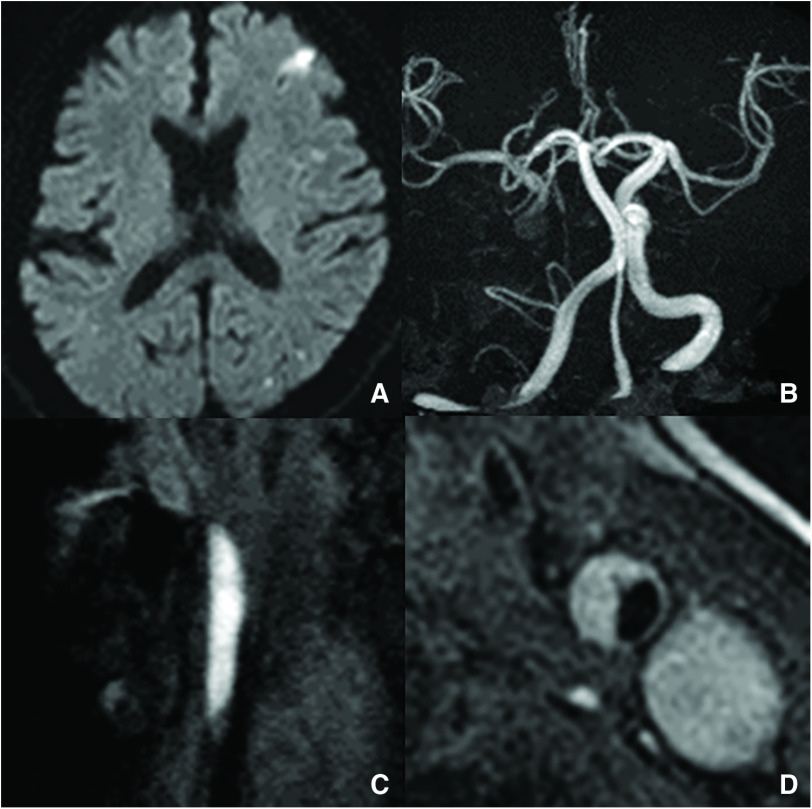
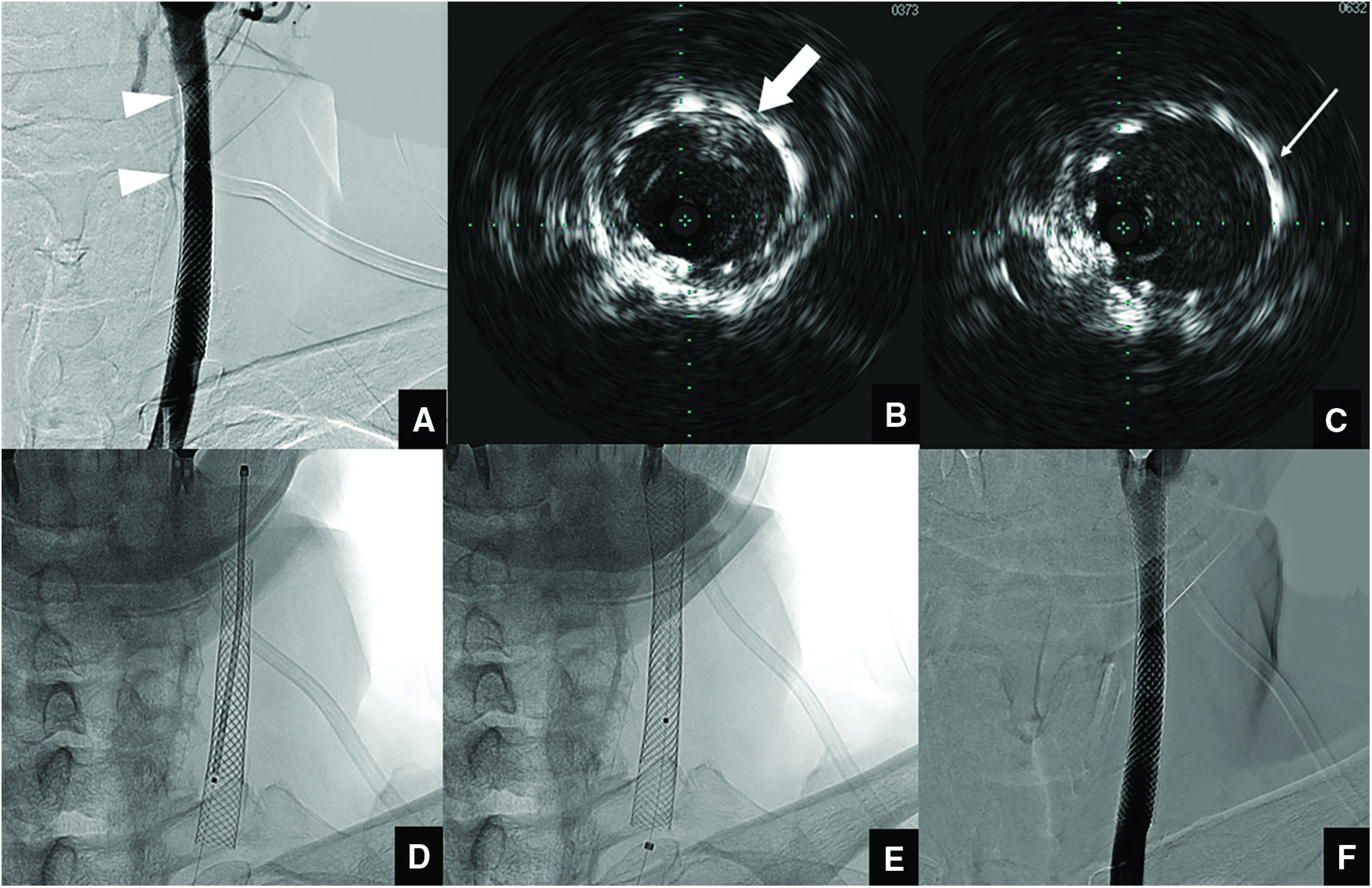
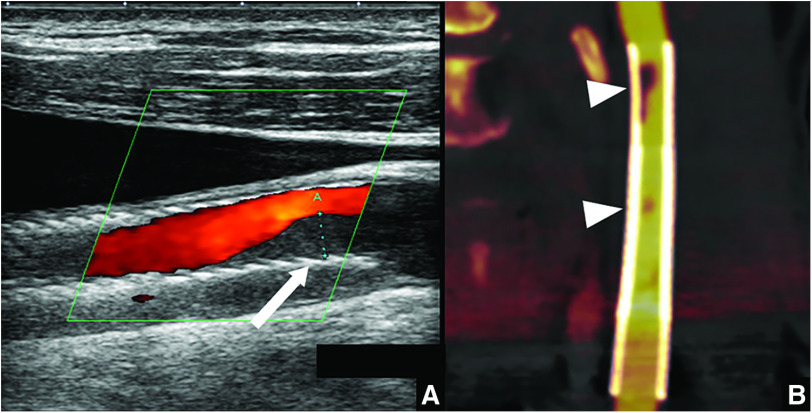
A 69-year-old man with a history of radiotherapy for laryngeal cancer presented to our hospital with sudden-onset right hemiparesis. Since vulnerable plaque of the left CCA was considered the embolic source for ischemic stroke, CAS was performed for left CCA stenosis. No perioperative complications were observed and the patient was discharged with a modified Rankin Scale score of 0. However, 1 month after CAS, cerebral embolism recurred. As protruding plaque was found on CTA, additional endovascular treatment was performed with intravascular ultrasonography. He was discharged without complications and showed a good outcome at 3 months.
In CCA stenosis after radiotherapy, accelerated arteriosclerosis may cause drug-resistant cerebral embolism and plaque protrusion after CAS, making determination of the treatment strategy difficult. Appropriate treatment options need to be based on individual underlying diseases and plaque instability.
我们报告一例因放疗导致的颈总动脉(CCA)狭窄初次行颈动脉支架置入术(CAS)后出现斑块突出而再次行CAS的病例。
一名69岁男性,有喉癌放疗史,因突发右侧偏瘫入住我院。由于左侧CCA易损斑块被认为是缺血性卒中的栓子来源,遂对左侧CCA狭窄行CAS治疗。未观察到围手术期并发症,患者出院时改良Rankin量表评分为0分。然而,CAS术后1个月,脑栓塞复发。由于CTA发现有突出斑块,遂采用血管内超声进行了额外的血管内治疗。他出院时无并发症,3个月时预后良好。
在放疗后的CCA狭窄中,加速的动脉硬化可能导致CAS术后出现耐药性脑栓塞和斑块突出,使得治疗策略的确定变得困难。合适的治疗方案需要基于个体的基础疾病和斑块不稳定性。