Rawls Eric, Marquardt Craig A, Fix Spencer T, Bernat Edward, Sponheim Scott R
Department of Psychiatry and Behavioral Sciences, University of Minnesota.
Minneapolis Veterans Affairs Health Care System.
bioRxiv. 2023 Dec 18:2023.07.12.547253. doi: 10.1101/2023.07.12.547253.
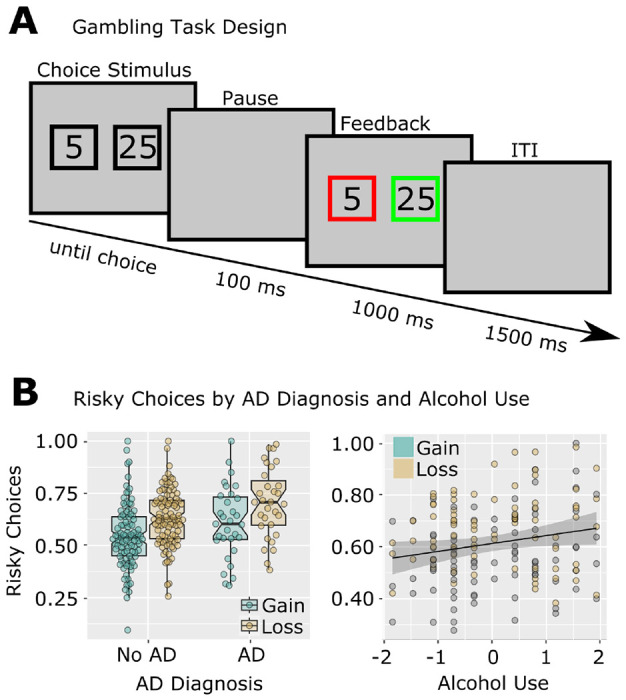
Over half of US military veterans with posttraumatic stress disorder (PTSD) use alcohol heavily, potentially to cope with their symptoms. This study investigated the neural underpinnings of PTSD symptoms and heavy drinking in veterans. We focused on brain responses to salient outcomes within predictive coding theory. This framework suggests the brain generates prediction errors (PEs) when outcomes deviate from expectations. Alcohol use might provide negative reinforcement by reducing the salience of negatively-valenced PEs and dampening experiences like loss.
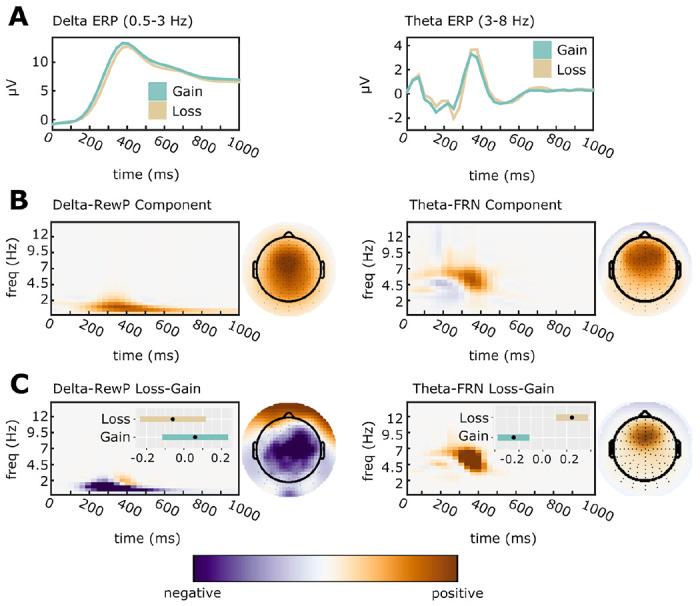
We analyzed electroencephalography (EEG) responses to unpredictable gain/loss feedback in veterans of Operations Enduring and Iraqi Freedom. We used time-frequency principal components analysis of event-related potentials to isolate neural responses indicative of PEs, identifying mediofrontal theta linked to losses (feedback-related negativity, FRN) and central delta associated with gains (reward positivity, RewP).
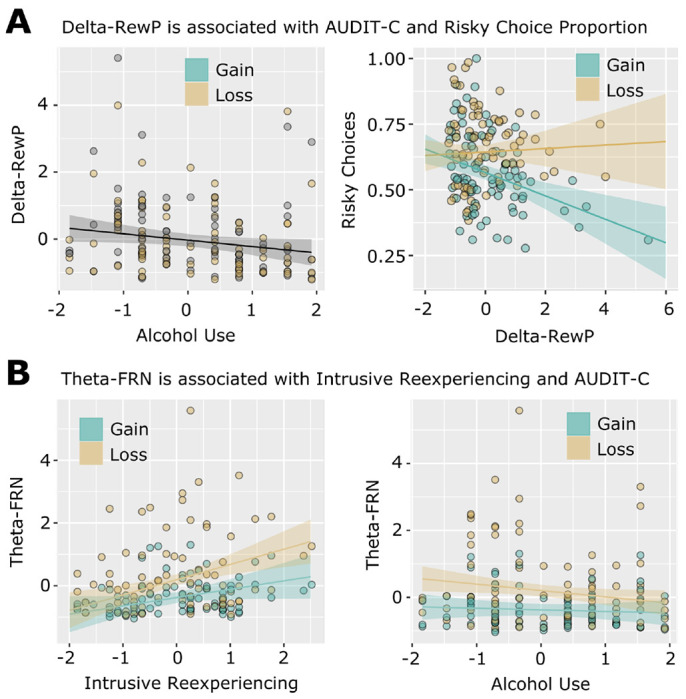
Intrusive reexperiencing symptoms of PTSD were associated with intensified mediofrontal theta signaling during losses, suggesting heightened negative PE sensitivity. Conversely, increased hazardous alcohol use was associated with reduced theta responses, implying a dampening of these negative PEs. The separate delta-RewP component showed associations with alcohol use but not PTSD symptoms.
Findings suggest a common neural component of PTSD and hazardous alcohol use involving altered PE processing. We suggest that reexperiencing enhances the intensity of salient negative PEs, while chronic alcohol use may reduce their intensity, thereby providing negative reinforcement by muting emotional disruption from reexperienced trauma. Modifying the mediofrontal theta response could address the intertwined nature of PTSD symptoms and alcohol use, providing new avenues for treatment.
超过半数患有创伤后应激障碍(PTSD)的美国退伍军人大量饮酒,可能是为了应对其症状。本研究调查了退伍军人中PTSD症状和大量饮酒的神经基础。我们聚焦于预测编码理论中对显著结果的大脑反应。该框架表明,当结果偏离预期时,大脑会产生预测误差(PEs)。饮酒可能通过降低负价PEs的显著性并减轻如失落等体验来提供负强化。
我们分析了持久自由行动和伊拉克自由行动退伍军人对不可预测的得失反馈的脑电图(EEG)反应。我们使用事件相关电位的时频主成分分析来分离指示PEs的神经反应,确定与损失相关的额中theta波(反馈相关负波,FRN)和与收益相关的中央delta波(奖励正波,RewP)。
PTSD的侵入性重现症状与损失期间额中theta波信号增强有关,表明负PE敏感性增强。相反,危险饮酒增加与theta波反应减少有关,这意味着这些负PEs受到抑制。单独的delta-RewP成分显示与饮酒有关,但与PTSD症状无关。
研究结果表明,PTSD和危险饮酒存在共同的神经成分,涉及PE处理的改变。我们认为,重现会增强显著负PEs的强度,而长期饮酒可能会降低其强度,从而通过减轻重现创伤带来的情绪干扰来提供负强化。改变额中theta波反应可以解决PTSD症状和饮酒之间的交织性质,为治疗提供新途径。