Lady Davis Institute for Medical Research (LDI), Jewish General Hospital, Montreal, QC H3T 1E2, Canada.
Research Center, Centre Hospitalier de l'Université de Montréal (CRCHUM), Montreal, QC H2X 0A9, Canada.
Curr Oncol. 2023 Jul 24;30(7):7055-7072. doi: 10.3390/curroncol30070512.
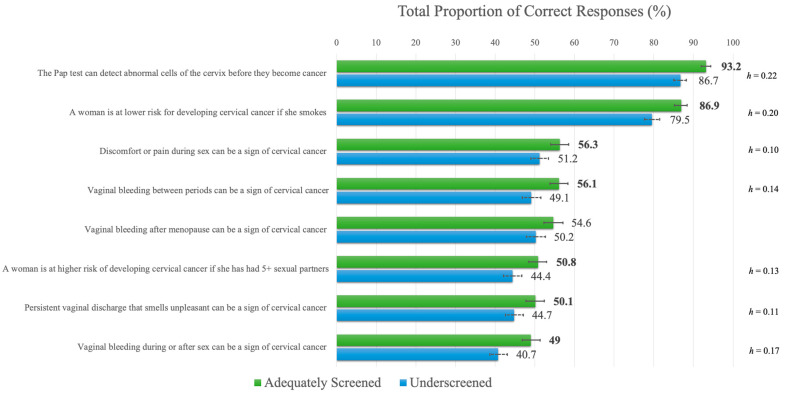
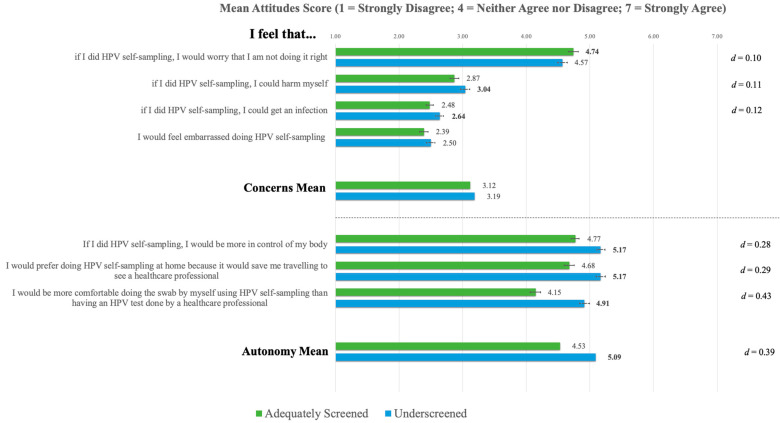
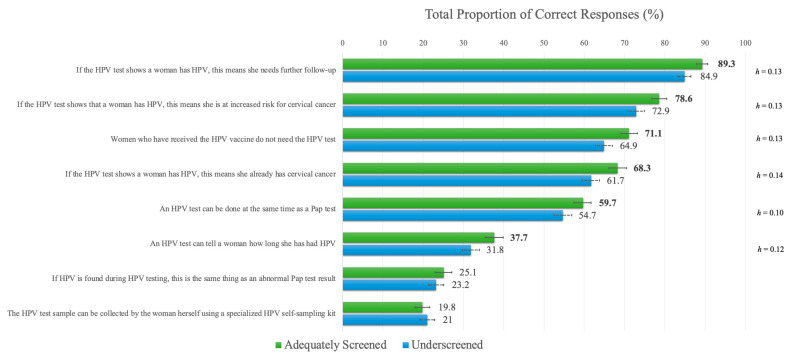
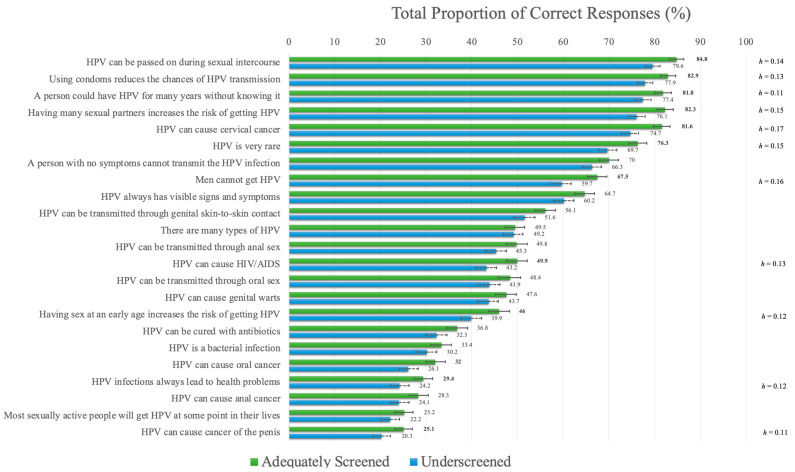
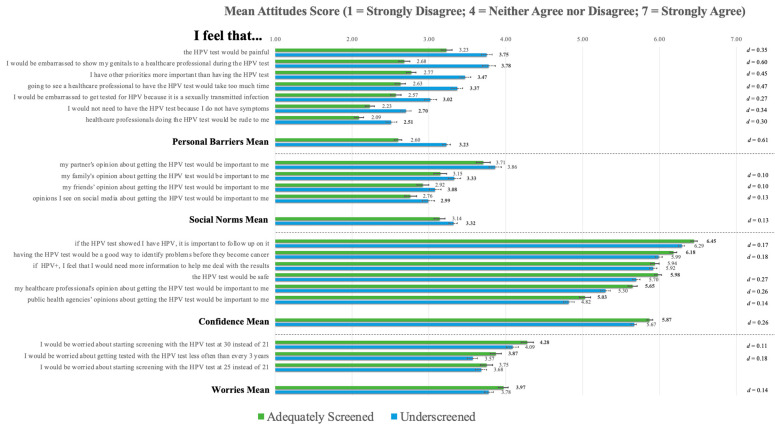
As Canadian provinces and territories prepare to transition to HPV-based primary screening for cervical cancer, failure to identify and address potential barriers to screening could hinder program implementation. We examined screening-eligible Canadians' attitudes towards and knowledge of cervical screening. A nationally representative sample of screening-eligible Canadians ( = 3724) completed a web-based survey in the summer of 2022. Oversampling ensured that half of the sample were underscreened for cervical cancer (>3 years since previous screening or never screened). The participants completed validated scales of cervical cancer, HPV, and HPV test knowledge and HPV test and self-sampling attitudes and beliefs. Between-group differences (underscreened vs. adequately screened) were calculated for scales and items using independent sample -tests or chi-square tests. The underscreened participants ( = 1871) demonstrated significantly lower knowledge of cervical cancer, HPV, and the HPV test. The adequately screened participants ( = 1853) scored higher on the and subscales of the HPV Test Attitudes and Beliefs Scale. The underscreened participants scored higher on the and subscales. The underscreened participants also endorsed greater conferred by self-sampling. Our findings suggest important differential patterns of knowledge, attitudes, and beliefs between the underscreened and adequately screened Canadians. These findings highlight the need to develop targeted communication strategies and promote patient-centered, tailored approaches in cervical screening programs.
随着加拿大各省份和地区准备转向基于 HPV 的宫颈癌初级筛查,未能识别和解决潜在的筛查障碍可能会阻碍项目的实施。我们调查了符合筛查条件的加拿大人对宫颈癌筛查的态度和认知。在 2022 年夏天,一个具有代表性的符合筛查条件的加拿大人(n = 3724)的样本完成了一项基于网络的调查。对样本进行了过度抽样,以确保一半的样本存在宫颈癌筛查不足(上次筛查后>3 年或从未筛查过)。参与者完成了宫颈癌、HPV 和 HPV 检测知识以及 HPV 检测和自我采样态度和信念的验证量表。使用独立样本 t 检验或卡方检验计算了组间差异(筛查不足与充分筛查)。筛查不足的参与者(n = 1871)在宫颈癌、HPV 和 HPV 检测方面的知识明显较低。充分筛查的参与者(n = 1853)在 HPV 检测态度和信念量表的 和 分量表上得分更高。筛查不足的参与者在 和 分量表上得分更高。筛查不足的参与者也更认可自我采样带来的更大的 。我们的研究结果表明,筛查不足和充分筛查的加拿大人之间存在重要的知识、态度和信念的差异模式。这些发现强调了在宫颈癌筛查项目中需要制定有针对性的沟通策略并促进以患者为中心、量身定制的方法。