Graska Jakub, Fidler Justyna, Gietler Marta, Prabucka Beata, Nykiel Małgorzata, Labudda Mateusz
Department of Biochemistry and Microbiology, Institute of Biology, Warsaw University of Life Sciences-SGGW, Nowoursynowska 159, 02-776 Warsaw, Poland.
Biology (Basel). 2023 Jun 28;12(7):927. doi: 10.3390/biology12070927.
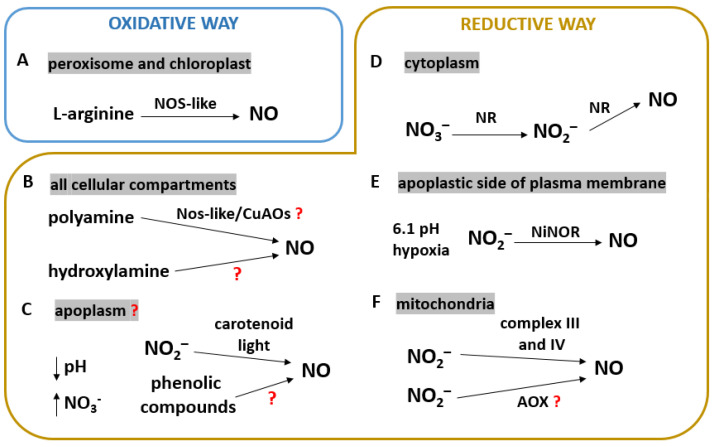
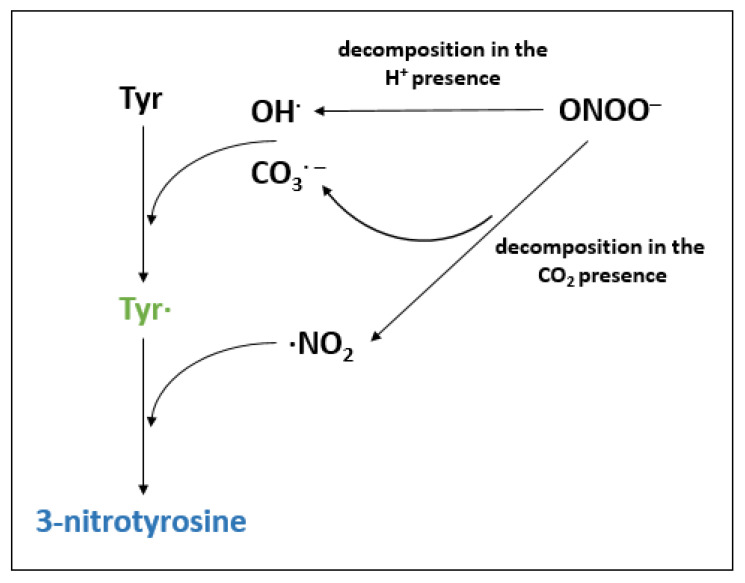
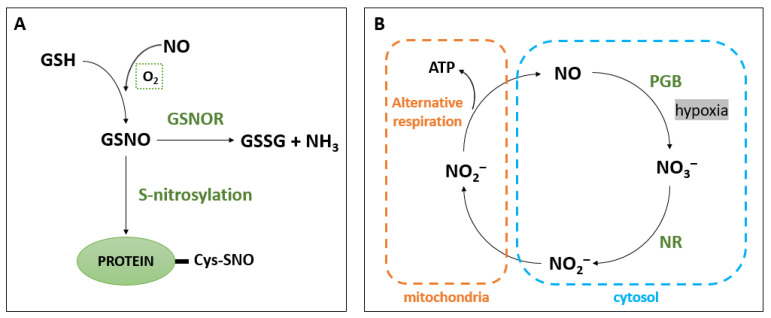
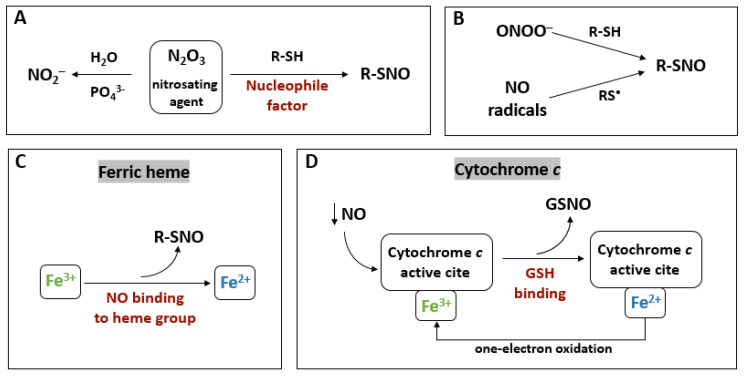
Nitric oxide (NO) is an important signaling molecule that is involved in a wide range of physiological processes in plants, including responses to biotic and abiotic stresses. Changes in endogenous NO concentration lead to activation/deactivation of NO signaling and NO-related processes. This paper presents the current state of knowledge on NO biosynthesis and scavenging pathways in plant cells and highlights the role of NO in post-translational modifications of proteins (S-nitrosylation, nitration, and phosphorylation) in plants under optimal and stressful environmental conditions. Particular attention was paid to the interactions of NO with other signaling molecules: reactive oxygen species, abscisic acid, auxins (e.g., indole-3-acetic acid), salicylic acid, and jasmonic acid. In addition, potential common patterns of NO-dependent defense responses against attack and feeding by parasitic and molting Ecdysozoa species such as nematodes, insects, and arachnids were characterized. Our review definitely highlights the need for further research on the involvement of NO in interactions between host plants and Ecdysozoa parasites, especially arachnids.
一氧化氮(NO)是一种重要的信号分子,参与植物的多种生理过程,包括对生物和非生物胁迫的响应。内源性NO浓度的变化会导致NO信号传导及与NO相关过程的激活/失活。本文介绍了植物细胞中NO生物合成和清除途径的当前知识状态,并强调了在最佳和胁迫环境条件下,NO在植物蛋白质翻译后修饰(S-亚硝基化、硝化和磷酸化)中的作用。特别关注了NO与其他信号分子的相互作用:活性氧、脱落酸、生长素(如吲哚-3-乙酸)、水杨酸和茉莉酸。此外,还对NO依赖的针对寄生性和蜕皮类蜕皮动物(如线虫、昆虫和蛛形纲动物)攻击和取食的防御反应的潜在共同模式进行了表征。我们的综述明确强调了需要进一步研究NO在宿主植物与蜕皮动物寄生虫,特别是蛛形纲动物相互作用中的作用。