Ko Shu-Huan, Hsieh Min-Chih, Huang Run-Feng
Department of Marketing and Logistics Management, Vanung University, Taoyuan 320313, Taiwan.
Department of Industrial Engineering, University of Shanghai for Science and Technology, Shanghai 200093, China.
Healthcare (Basel). 2023 Jul 19;11(14):2063. doi: 10.3390/healthcare11142063.
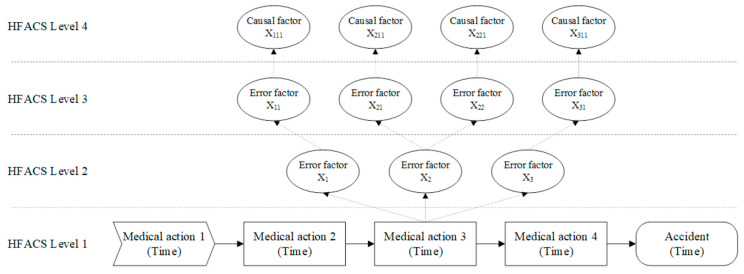
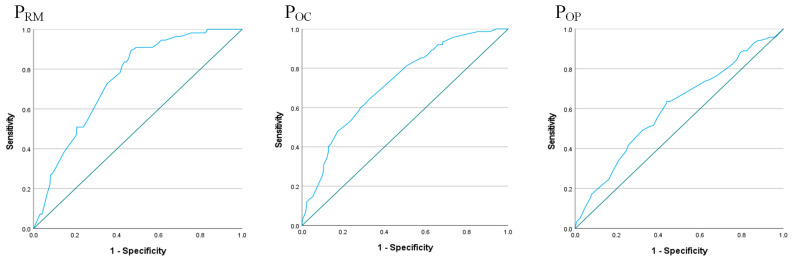
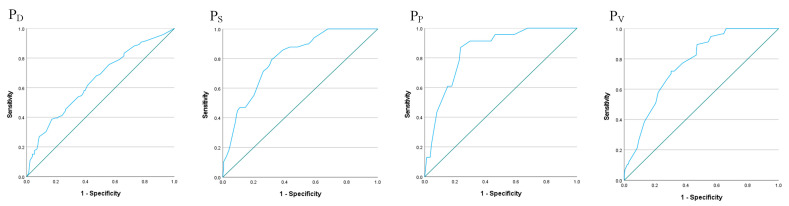
Medical institutions worldwide strive to avoid adverse medical events, including adverse medication-related events. However, studies on the comprehensive analysis of medication-related adverse events are limited. Therefore, we aimed to identify the error factors contributing to medication-related adverse events using the Human Factors Analysis and Classification System (HFACS) and to develop error models through logistic regression. These models calculate the probability of a medication-related adverse event when a healthcare system defect occurs. Seven experts with at least 12 years of work experience (four nurses and three pharmacists) were recruited to analyze thirty-seven medication-related adverse events. The findings indicate that decision errors, physical/mental limitations, failure to correct problems, and organizational processes were the four factors that most frequently contributed to errors at the four levels of the HFACS. Seven error models of two types (error occurrence and error analysis pathways) were established using logistic regression models, and the relative probabilities of failure factor occurrences were calculated. Based on our results, medical staff can use the error models as a new analytical approach to improve and prevent adverse medication events, thereby improving patient safety.
全球医疗机构都在努力避免不良医疗事件,包括与用药相关的不良事件。然而,关于用药相关不良事件综合分析的研究有限。因此,我们旨在使用人为因素分析和分类系统(HFACS)来识别导致用药相关不良事件的错误因素,并通过逻辑回归建立错误模型。这些模型计算医疗系统出现缺陷时用药相关不良事件的发生概率。招募了七名具有至少12年工作经验的专家(四名护士和三名药剂师)来分析37起用药相关不良事件。研究结果表明,决策错误、身体/精神限制、未能纠正问题以及组织流程是在HFACS四个层面上最常导致错误的四个因素。使用逻辑回归模型建立了两种类型(错误发生和错误分析途径)的七个错误模型,并计算了失败因素发生的相对概率。根据我们的结果,医务人员可以将错误模型作为一种新的分析方法,以改善和预防用药不良事件,从而提高患者安全。