Suchodolska Grażyna, Koelmer Anna, Puchowska Monika, Senkus Elżbieta
Department of Oncology & Radiotherapy, Faculty of Medicine, Medical University of Gdańsk, Smoluchowskiego 17, 80-214 Gdańsk, Poland.
Centre of Biostatistics and Bioinformatics Analysis, Medical University of Gdańsk, Dębinki 1, 80-211 Gdańsk, Poland.
Healthcare (Basel). 2023 Jul 24;11(14):2114. doi: 10.3390/healthcare11142114.
The population of individuals affected by breast cancer is growing, and with advances in cancer treatment implemented into usual care, there is an urgent need to improve the recognition, monitoring and treatment of therapy-induced adverse effects. This study aims to explore the use of an in-app electronic questionnaire to assess and monitor chemotherapy-related symptoms in early breast cancer patients treated with perioperative chemotherapy.
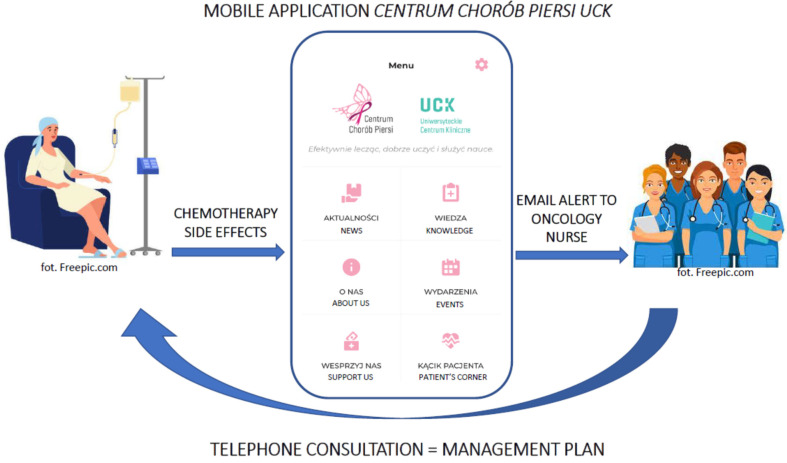
Between December 2019 and June 2021, 72 female study participants used the mobile app and completed an in-app questionnaire about the 14 most common chemotherapy-related symptoms. Replies including symptoms with a critical value triggered automatic email alerts to the nursing team.
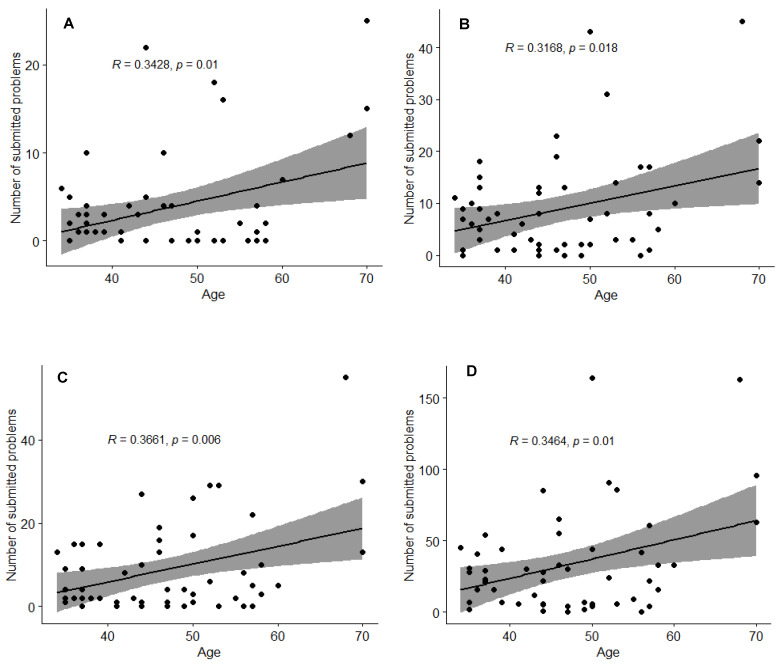
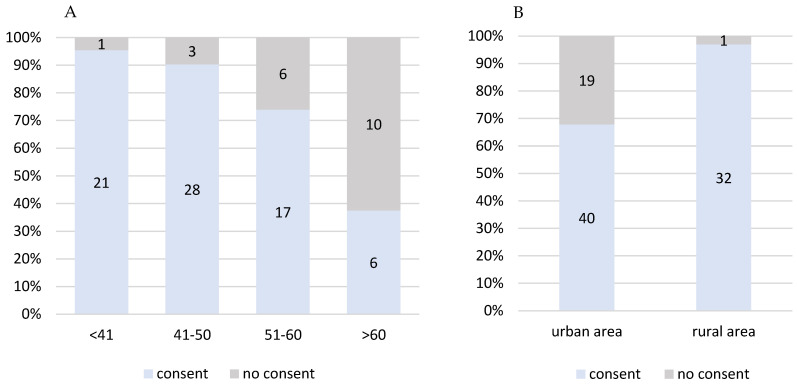
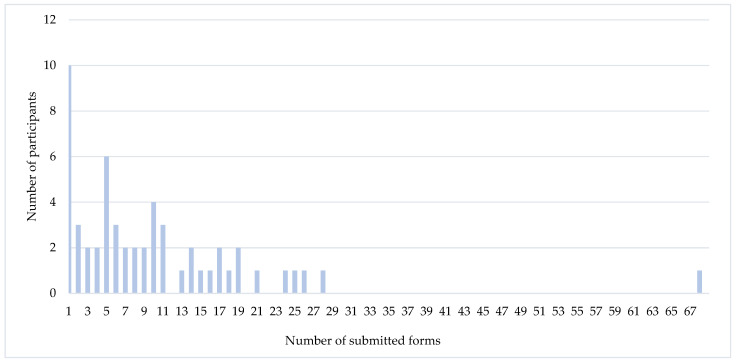
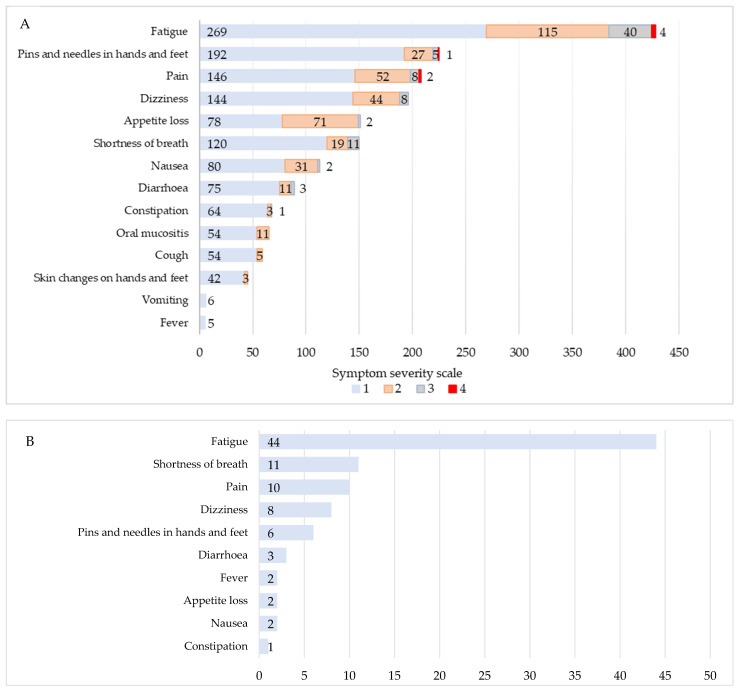
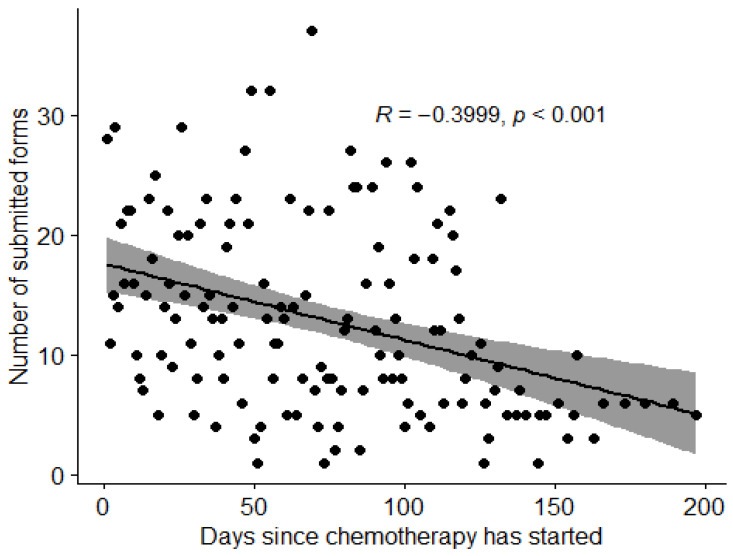
Acceptance of the study was higher among younger women and patients originating from rural areas, while possible digital exclusion among patients >60 years was observed during the enrolment process. A total of 55 participants completed the electronic questionnaire at least once and generated 553 responses with 1808 specific problems reported. Fatigue (n = 428) was the most common problem, and fever (n = 5) the least reported problem. A total of 21 participants triggered alerts with responses containing symptoms with critical value assessment (n = 89). Significant negative correlation was observed between the number of responses and time from the first chemotherapy administration; however, the number of responses was not determined by any sociodemographic or medical factors. Significant positive correlations were identified between the number of communicated problems and participants' age. The usage of our electronic symptom assessment questionnaire decreased substantially after the period of active encouragement during the study enrolment.
Not all societies are ready for innovative eHealth solutions. Patients' age should be carefully considered when app-based interventions are introduced to usual cancer care. Additional support is suggested for older patients to improve their awareness and participation in eHealth interventions. More research involving older participants is needed to explore and address their particular needs and perspectives on eHealth solutions.
受乳腺癌影响的人群正在增加,随着癌症治疗进展应用于常规护理中,迫切需要改善对治疗引起的不良反应的识别、监测和治疗。本研究旨在探讨使用应用程序内电子问卷来评估和监测接受围手术期化疗的早期乳腺癌患者的化疗相关症状。
2019年12月至2021年6月期间,72名女性研究参与者使用了该移动应用程序,并完成了一份关于14种最常见化疗相关症状的应用程序内问卷。包括具有临界值症状的回复会触发自动电子邮件警报给护理团队。
年轻女性和来自农村地区的患者对该研究的接受度较高,而在招募过程中观察到60岁以上患者可能存在数字排斥情况。共有55名参与者至少完成了一次电子问卷,并产生了553份回复,报告了1808个具体问题。疲劳(n = 428)是最常见的问题,发热(n = 5)是报告最少的问题。共有21名参与者触发了警报,其回复包含具有临界值评估的症状(n = 89)。观察到回复数量与首次化疗给药后的时间之间存在显著负相关;然而,回复数量不受任何社会人口统计学或医学因素的影响。在沟通的问题数量与参与者年龄之间发现了显著正相关。在研究招募期间积极鼓励阶段之后,我们的电子症状评估问卷的使用量大幅下降。
并非所有社会都准备好接受创新的电子健康解决方案。在将基于应用程序的干预措施引入常规癌症护理时,应仔细考虑患者的年龄。建议为老年患者提供额外支持,以提高他们对电子健康干预措施的认识和参与度。需要更多涉及老年参与者的研究来探索和解决他们对电子健康解决方案的特殊需求和观点。