Department of Physiopathology, Medical University of Gdańsk, 80-211 Gdansk, Poland.
Nutrients. 2023 Jul 17;15(14):3174. doi: 10.3390/nu15143174.
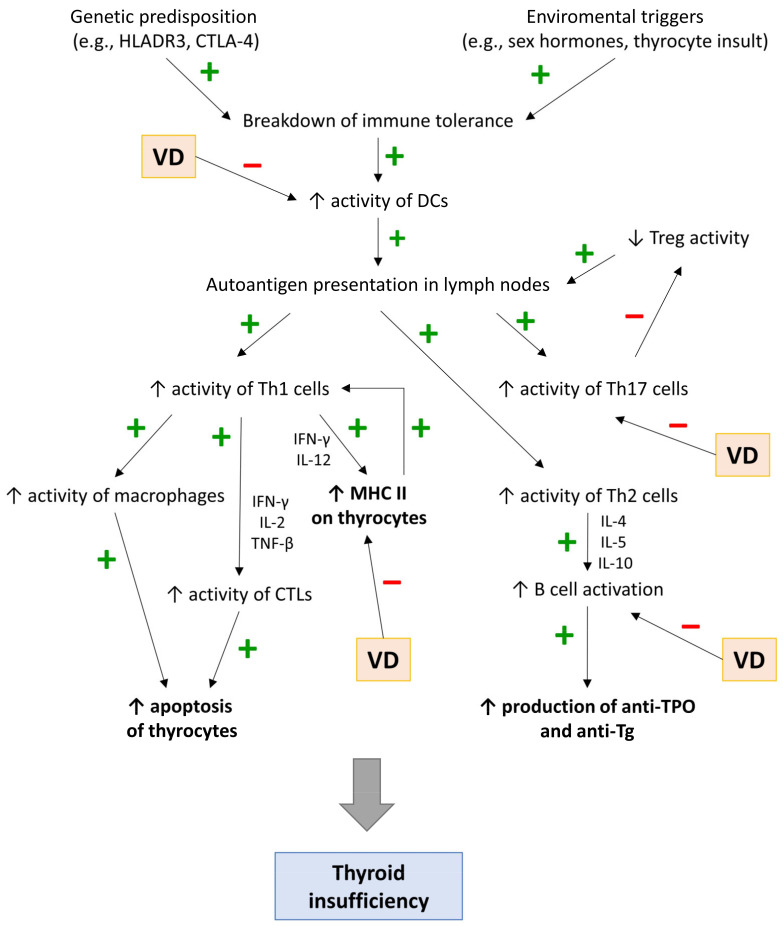
Hashimoto's thyroiditis (HT) is a common autoimmune disease affecting the thyroid gland, characterized by lymphocytic infiltration, damage to thyroid cells, and hypothyroidism, and often requires lifetime treatment with levothyroxine. The disease has a complex etiology, with genetic and environmental factors contributing to its development. Vitamin D deficiency has been linked to a higher prevalence of thyroid autoimmunity in certain populations, including children, adolescents, and obese individuals. Moreover, vitamin D supplementation has shown promise in reducing antithyroid antibody levels, improving thyroid function, and improving other markers of autoimmunity, such as cytokines, e.g., IP10, TNF-α, and IL-10, and the ratio of T-cell subsets, such as Th17 and Tr1. Studies suggest that by impacting various immunological mechanisms, vitamin D may help control autoimmunity and improve thyroid function and, potentially, clinical outcomes of HT patients. The article discusses the potential impact of vitamin D on various immune pathways in HT. Overall, current evidence supports the potential role of vitamin D in the prevention and management of HT, although further studies are needed to fully understand its mechanisms of action and potential therapeutic benefits.
桥本甲状腺炎(HT)是一种常见的自身免疫性疾病,影响甲状腺,其特征为淋巴细胞浸润、甲状腺细胞损伤和甲状腺功能减退,通常需要终身服用左旋甲状腺素治疗。该疾病病因复杂,遗传和环境因素都促成了其发展。维生素 D 缺乏与某些人群(包括儿童、青少年和肥胖人群)中更高的甲状腺自身免疫发生率有关。此外,维生素 D 补充已显示出降低抗甲状腺抗体水平、改善甲状腺功能和改善其他自身免疫标志物(如细胞因子,如 IP10、TNF-α 和 IL-10)以及 T 细胞亚群比例(如 Th17 和 Tr1)的潜力。研究表明,通过影响各种免疫机制,维生素 D 可能有助于控制自身免疫和改善甲状腺功能,并可能改善 HT 患者的临床结局。本文讨论了维生素 D 对 HT 中各种免疫途径的潜在影响。总的来说,目前的证据支持维生素 D 在预防和管理 HT 中的潜在作用,尽管需要进一步的研究来充分了解其作用机制和潜在的治疗益处。