Bamminger Karsten, Pichler Verena, Vraka Chrysoula, Nehring Tina, Pallitsch Katharina, Lieder Barbara, Hacker Marcus, Wadsak Wolfgang
CBmed GmbH-Center for Biomarker Research in Medicine, 8010 Graz, Austria.
Department of Biomedical Imaging and Image-Guided Therapy, Division of Nuclear Medicine, Medical University of Vienna, 1090 Vienna, Austria.
Pharmaceuticals (Basel). 2023 Jul 24;16(7):1051. doi: 10.3390/ph16071051.
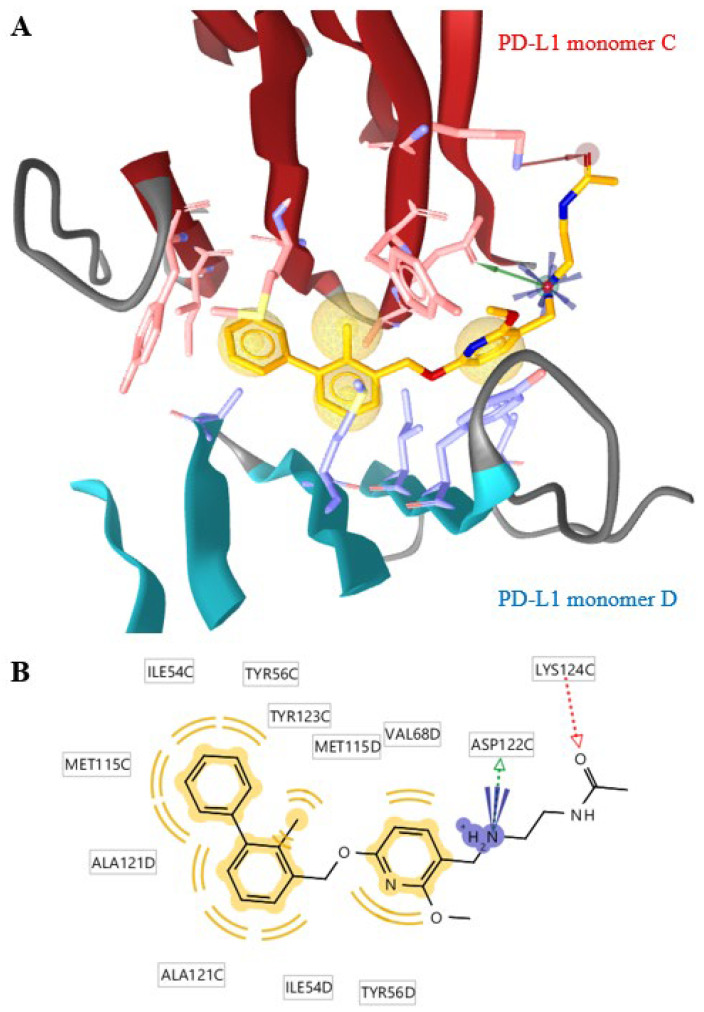
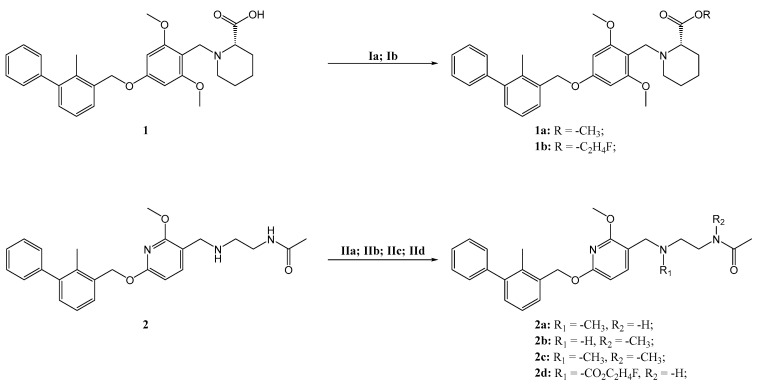
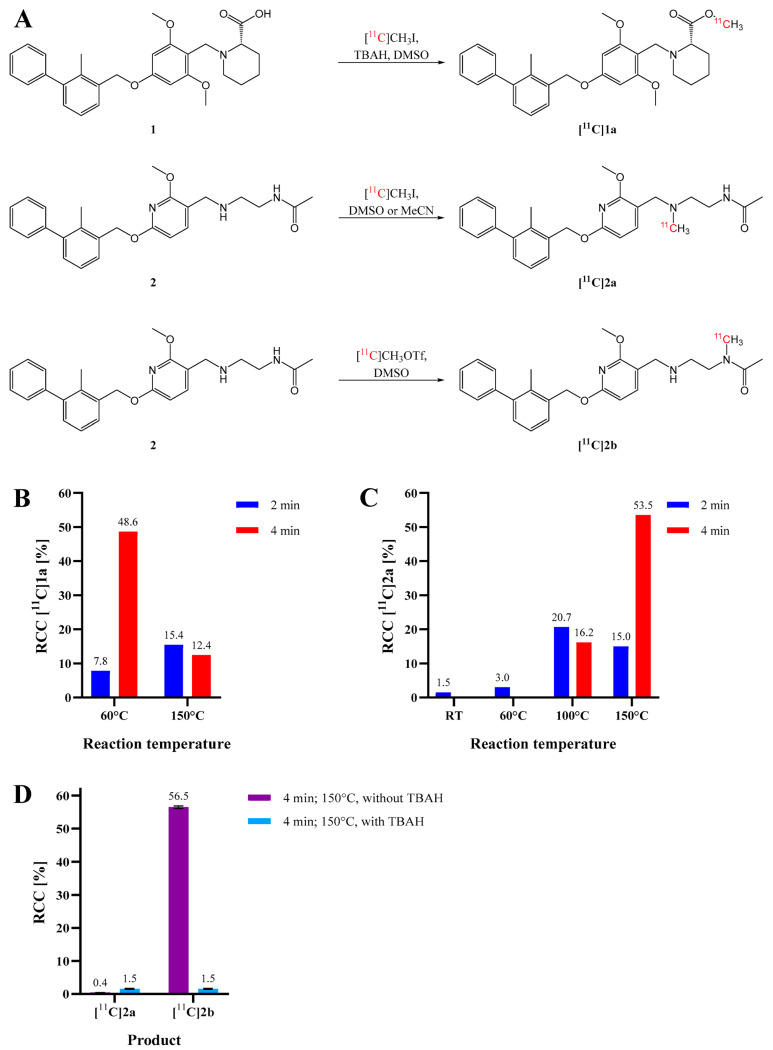
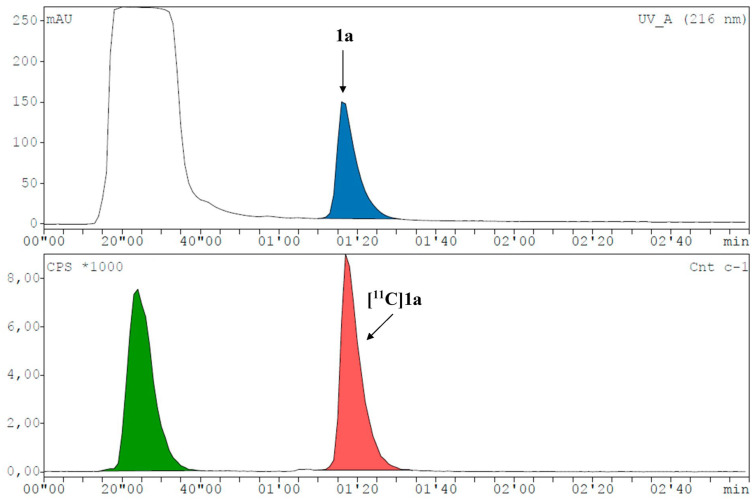
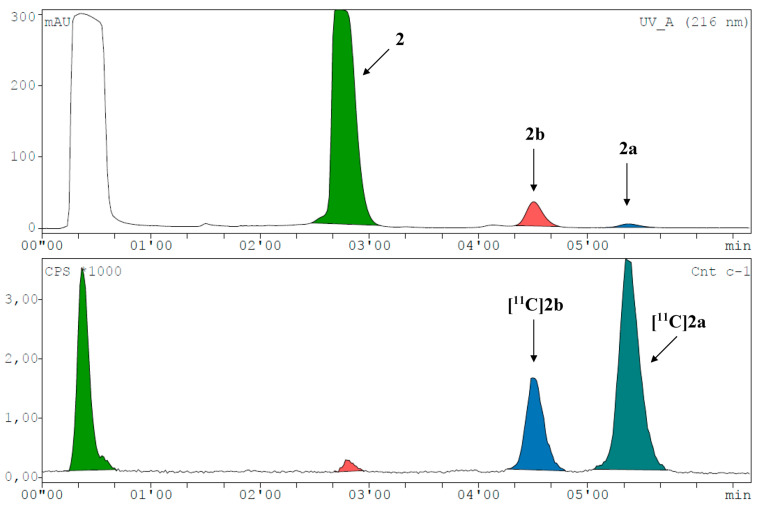
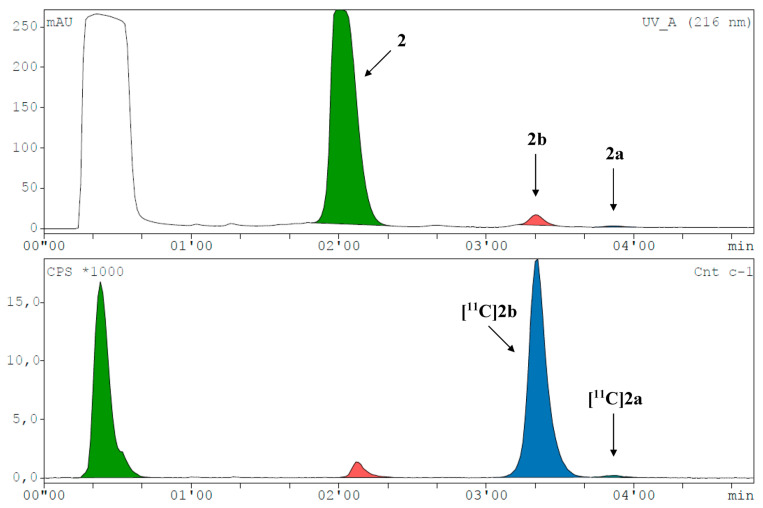
PD-1/PD-L1 immune checkpoint blockade for cancer therapy showed promising results in clinical studies. Further endeavors are required to enhance patient stratification, as, at present, only a small portion of patients with PD-L1-positive tumors (as determined by PD-L1 targeted immunohistochemistry; IHC) benefit from anti-PD-1/PD-L1 immunotherapy. This can be explained by the heterogeneity of tumor lesions and the intrinsic limitation of multiple biopsies. Consequently, non-invasive in vivo quantification of PD-L1 on tumors and metastases throughout the entire body using positron emission tomography (PET) imaging holds the potential to augment patient stratification. Within the scope of this work, six new small molecules were synthesized by following a ligand-based drug design approach supported by computational docking utilizing lead structures based on the (2-methyl-[1,1'-biphenyl]-3-yl)methanol scaffold and evaluated in vitro for potential future use as PD-L1 PET tracers. The results demonstrated binding affinities in the nanomolar to micromolar range for lead structures and newly prepared molecules, respectively. Carbon-11 labeling was successfully and selectively established and optimized with very good radiochemical conversions of up to 57%. The obtained insights into the significance of polar intermolecular interactions, along with the successful radiosyntheses, could contribute substantially to the future development of small-molecule PD-L1 PET tracers.
用于癌症治疗的PD-1/PD-L1免疫检查点阻断在临床研究中显示出有前景的结果。由于目前只有一小部分PD-L1阳性肿瘤患者(通过PD-L1靶向免疫组织化学;IHC确定)能从抗PD-1/PD-L1免疫治疗中获益,因此需要进一步努力来加强患者分层。这可以通过肿瘤病变的异质性和多次活检的内在局限性来解释。因此,使用正电子发射断层扫描(PET)成像对全身肿瘤和转移灶上的PD-L1进行非侵入性体内定量,有可能增强患者分层。在这项工作的范围内,通过基于配体的药物设计方法合成了六种新的小分子,该方法由基于(2-甲基-[1,1'-联苯]-3-基)甲醇支架的先导结构的计算对接支持,并在体外进行了评估,以备将来用作PD-L1 PET示踪剂。结果表明,先导结构和新制备的分子的结合亲和力分别在纳摩尔到微摩尔范围内。成功地选择性地建立并优化了碳-11标记,放射化学转化率高达57%,效果非常好。对极性分子间相互作用重要性的深入了解以及成功的放射性合成,可能会对小分子PD-L1 PET示踪剂的未来发展做出重大贡献。