Budiman Arif, Nurani Neng Vera, Laelasari Eli, Muchtaridi Muchtaridi, Sriwidodo Sriwidodo, Aulifa Diah Lia
Department of Pharmaceutics and Pharmaceutical Technology, Faculty of Pharmacy, Universitas Padjadjaran, Jl. Raya Bandung-Sumedang Km. 21, Bandung 45363, Indonesia.
Department of Pharmaceutical Analysis and Medicinal Chemistry, Faculty of Pharmacy, Universitas Padjadjaran, Jl. Raya Bandung-Sumedang Km. 21, Bandung 45363, Indonesia.
Polymers (Basel). 2023 Jul 13;15(14):3034. doi: 10.3390/polym15143034.
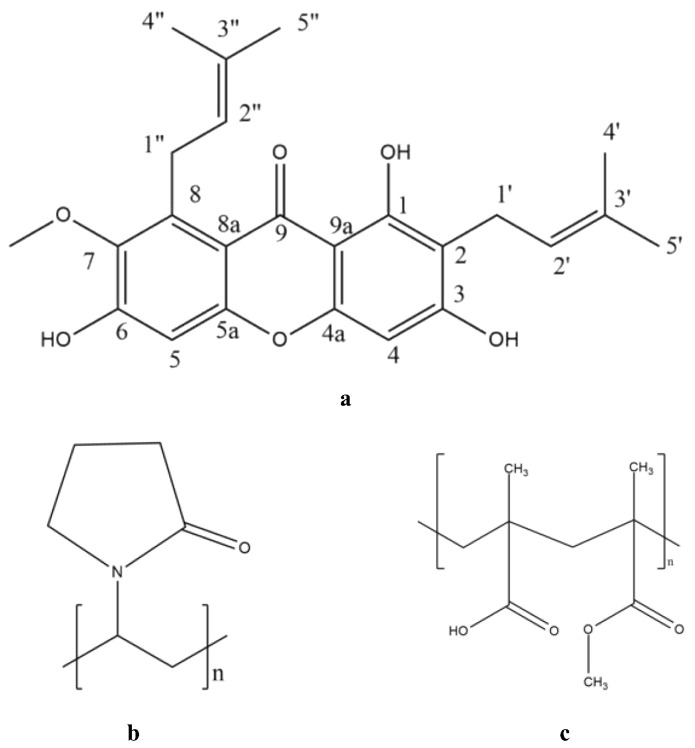
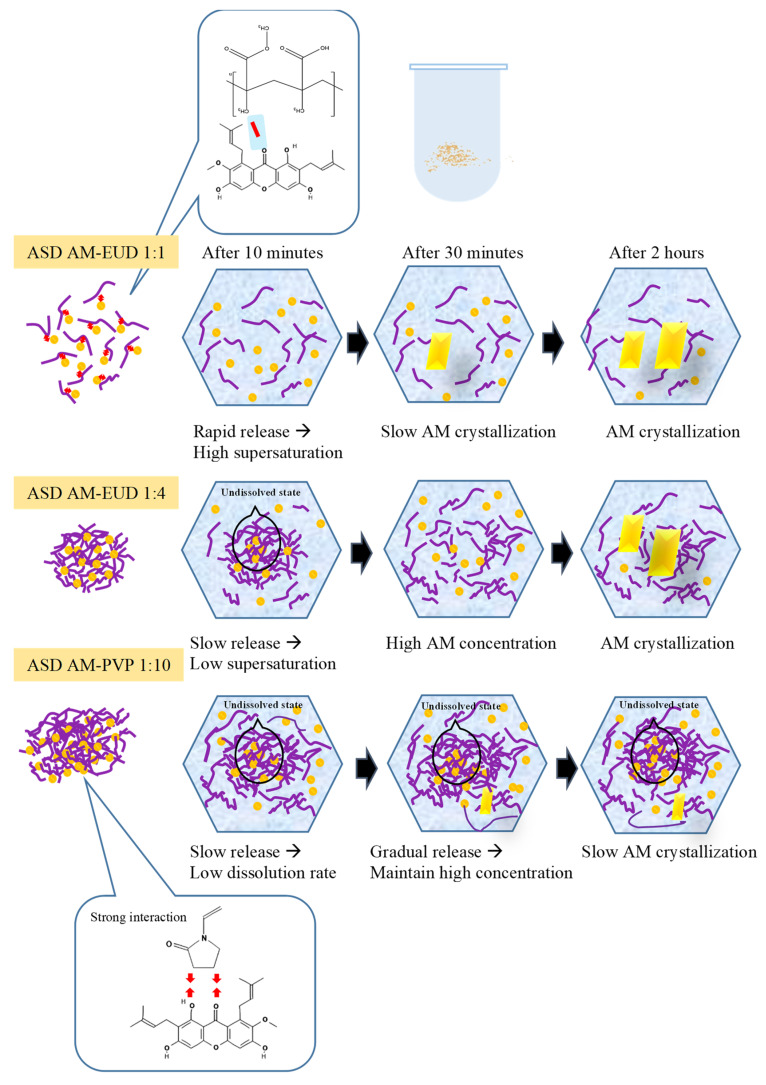
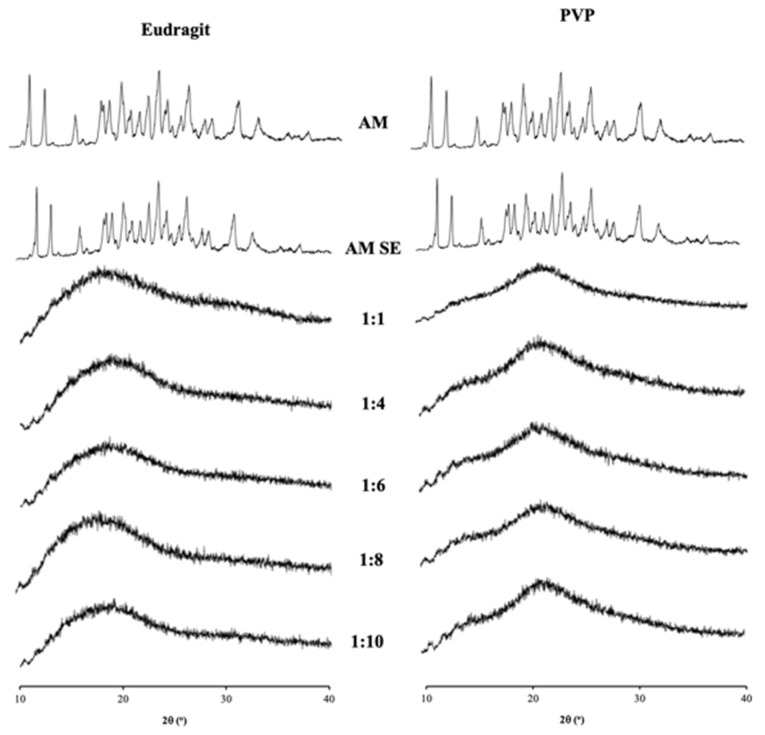
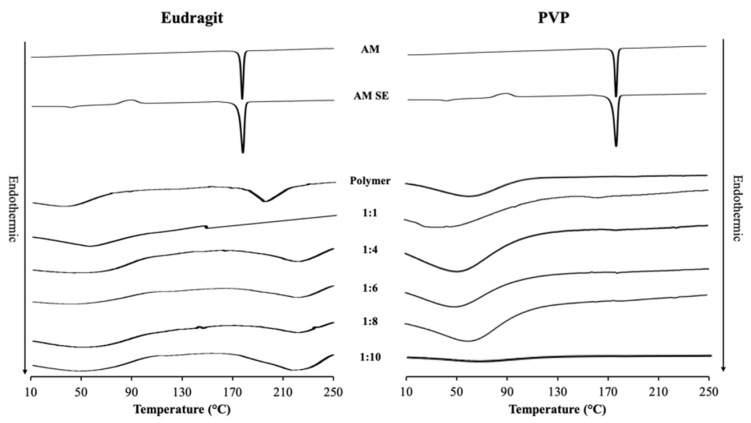
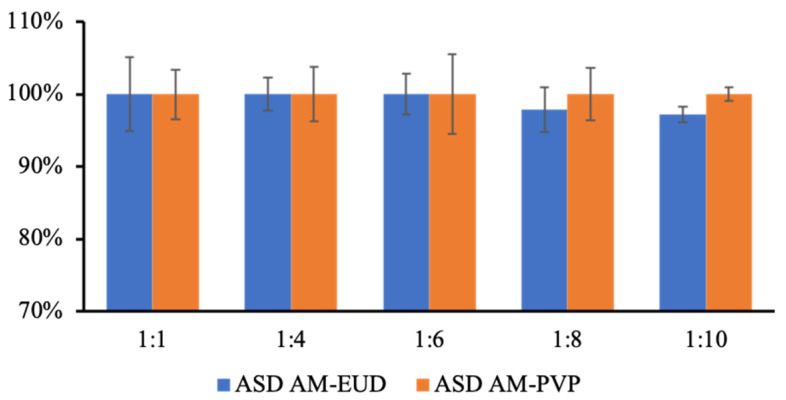
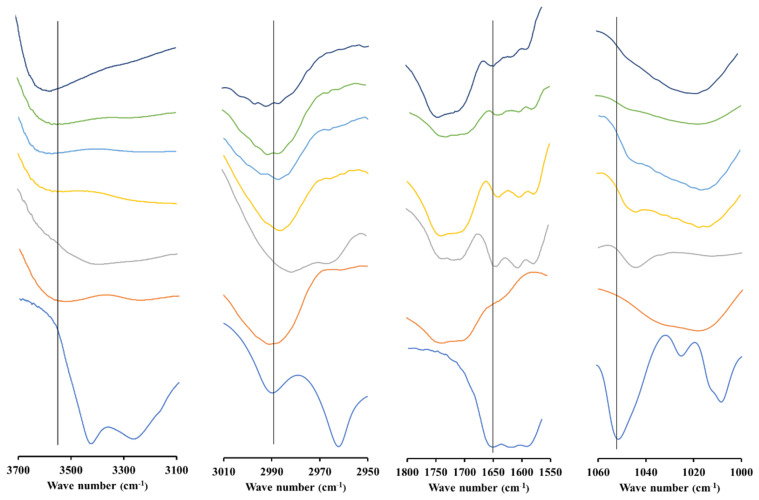
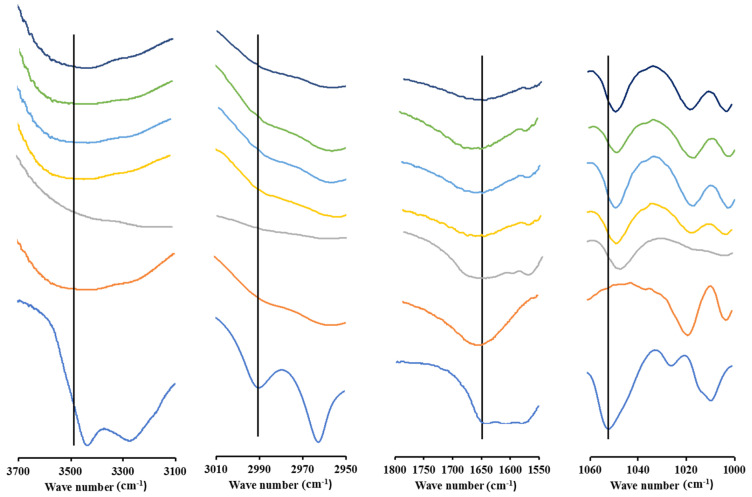
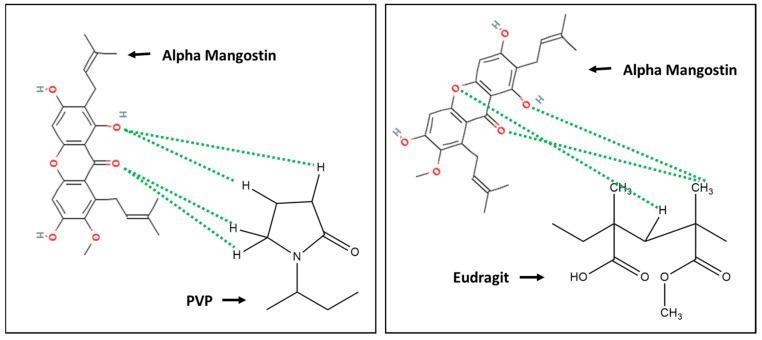
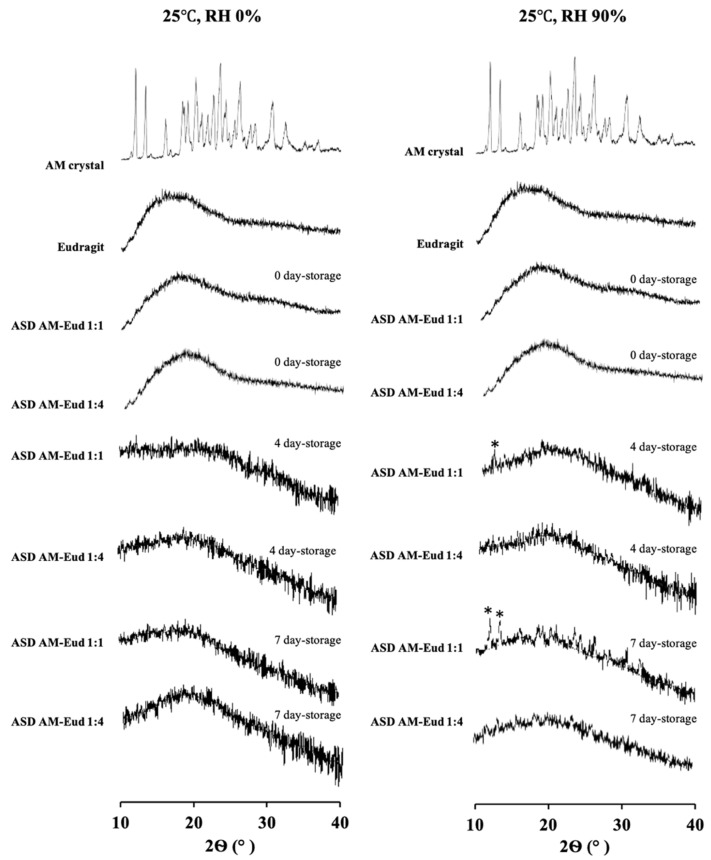
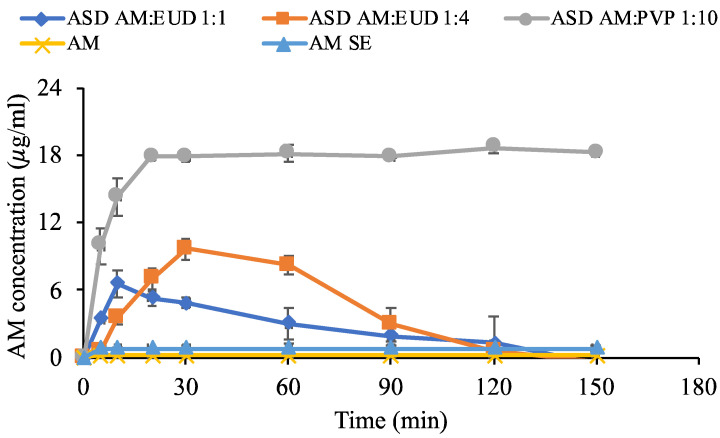
Improving drug solubility is necessary for formulations of poorly water-soluble drugs, especially for oral administration. Amorphous solid dispersions (ASDs) are widely used in the pharmaceutical industry to improve the physical stability and solubility of drugs. Therefore, this study aims to characterize interaction between a drug and polymer in ASD, as well as evaluate the impact on the physical stability and dissolution of alpha-mangostin (AM). AM was used as a model of a poorly water-soluble drug, while polyvinylpyrrolidone (PVP) and eudragit were used as polymers. The amorphization of AM-eudragit and AM-PVP was confirmed as having a halo pattern with powder X-ray diffraction measurements and the absence of an AM melting peak in the differential scanning calorimetry (DSC) curve. The solubility of amorphous AM increased in the presence of either eudragit or PVP due to amorphization and interactions of AM-polymer. Furthermore, FT-IR spectroscopy and in silico studies revealed hydrogen bond interactions between the carbonyl group of AM and the proton of eudragit as well as PVP. AM-eudragit with a ratio of 1:1 recrystallized after 7 days of storage at 25 °C and 90% RH, while the AM-PVP 1:4 and 1:10 samples retained the X-ray halo patterns, even under humid conditions. In a dissolution test, the presence of polymer in ASD significantly improved the dissolution profile due to the intermolecular interaction of AM-polymer. AM-eudragit 1:4 maintained AM supersaturation for a longer time compared to the 1:1 sample. However, a high supersaturation was not achieved in AM-PVP 1:10 due to the formation of large agglomerations, leading to a slow dissolution rate. Based on the results, interaction of AM-polymer in ASD can significantly improve the pharmaceutical properties of AM including the physical stability and dissolution.
提高难溶性药物的溶解度对于其制剂而言是必要的,尤其是口服制剂。无定形固体分散体(ASD)在制药工业中被广泛用于改善药物的物理稳定性和溶解度。因此,本研究旨在表征ASD中药物与聚合物之间的相互作用,并评估其对α-山竹素(AM)物理稳定性和溶出度的影响。AM用作难溶性药物的模型,而聚乙烯吡咯烷酮(PVP)和丙烯酸树脂用作聚合物。通过粉末X射线衍射测量证实AM-丙烯酸树脂和AM-PVP的非晶化具有晕圈图案,并且在差示扫描量热法(DSC)曲线中没有AM熔融峰。由于AM的非晶化和AM-聚合物之间的相互作用,无定形AM在丙烯酸树脂或PVP存在下的溶解度增加。此外,傅里叶变换红外光谱(FT-IR)和计算机模拟研究揭示了AM的羰基与丙烯酸树脂以及PVP的质子之间的氢键相互作用。AM与丙烯酸树脂比例为1:1的样品在25℃和90%相对湿度下储存7天后发生重结晶,而AM-PVP 1:4和1:10的样品即使在潮湿条件下仍保留X射线晕圈图案。在溶出度试验中,由于AM-聚合物的分子间相互作用,ASD中聚合物的存在显著改善了溶出曲线。与1:1的样品相比,AM-丙烯酸树脂1:4能使AM保持过饱和状态的时间更长。然而,AM-PVP 1:10由于形成大的团聚物而未实现高过饱和度,导致溶出速率缓慢。基于这些结果,ASD中AM-聚合物的相互作用可以显著改善AM的药学性质,包括物理稳定性和溶出度。