Say Dalila, Zidi Salah, Qaisar Saeed Mian, Krichen Moez
Hatem Bettaher Laboratory, IResCoMath, University of Gabes, Gabes 6029, Tunisia.
CESI LINEACT, 69100 Lyon, France.
Sensors (Basel). 2023 Jul 14;23(14):6422. doi: 10.3390/s23146422.
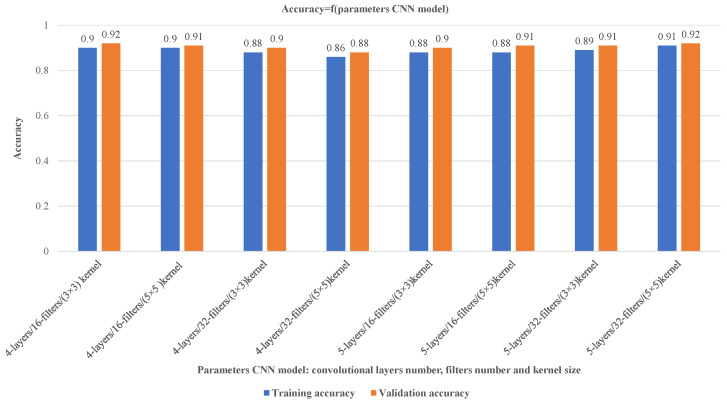
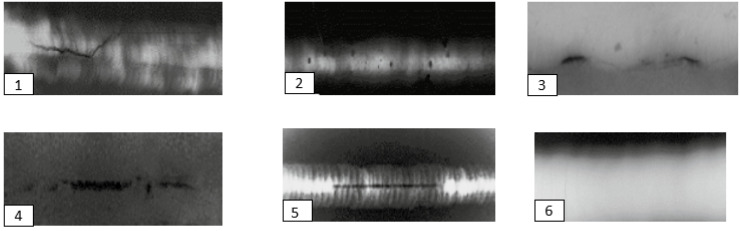
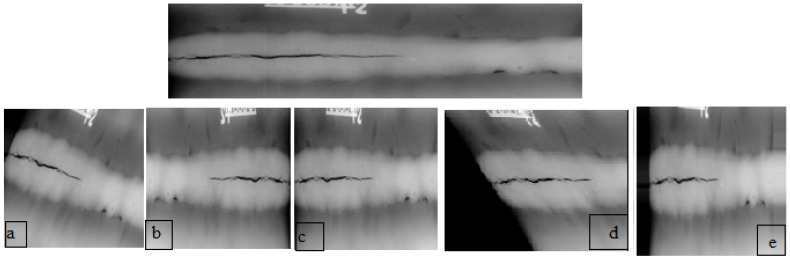
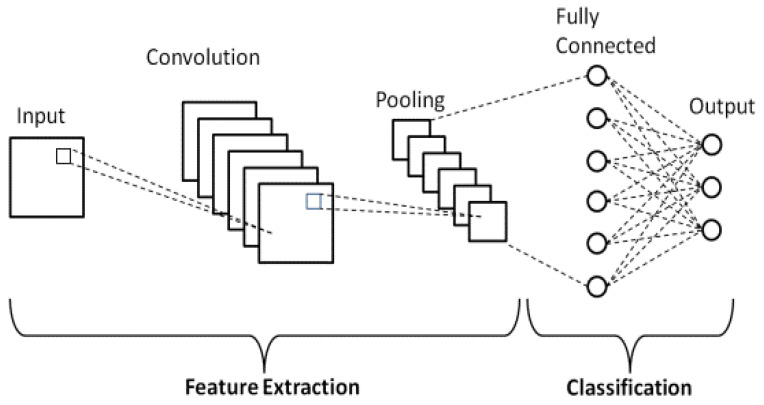
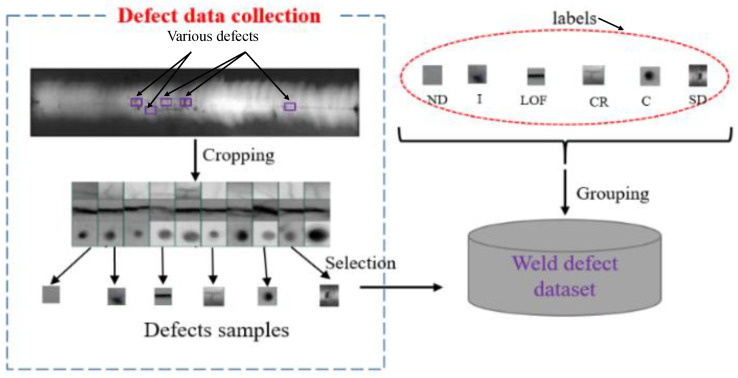
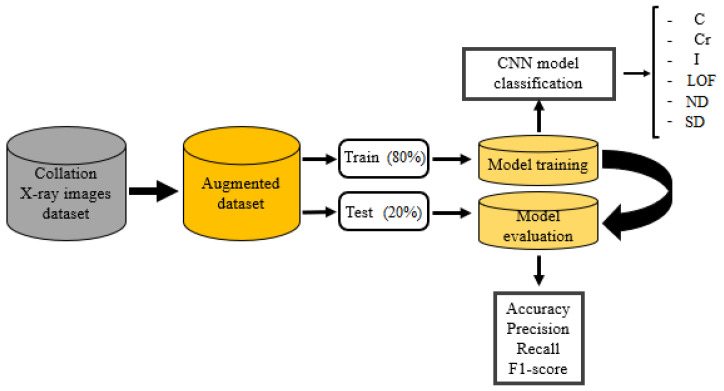
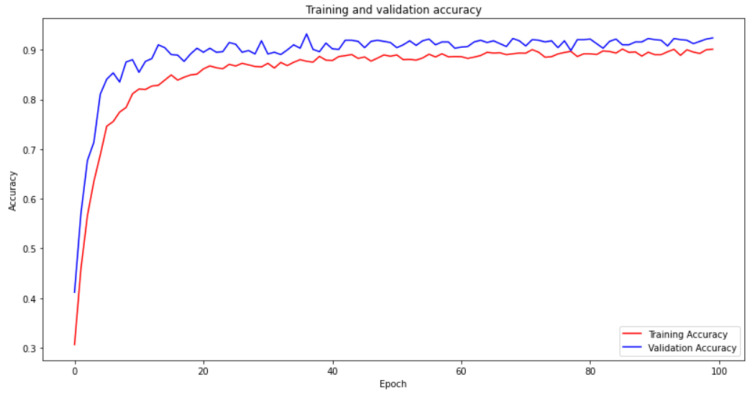
The detection of weld defects by using X-rays is an important task in the industry. It requires trained specialists with the expertise to conduct a timely inspection, which is costly and cumbersome. Moreover, the process can be erroneous due to fatigue and lack of concentration. In this context, this study proposes an automated approach to identify multi-class welding defects by processing the X-ray images. It is realized by an intelligent hybridization of the data augmentation techniques and convolutional neural network (CNN). The proposed data augmentation mainly performs random rotation, shearing, zooming, brightness adjustment, and horizontal flips on the intended images. This augmentation is beneficial for the realization of a generalized trained CNN model, which can process the multi-class dataset for the identification of welding defects. The effectiveness of the proposed method is confirmed by testing its performance in processing an industrial dataset. The intended dataset contains 4479 X-ray images and belongs to six groups: cavity, cracks, inclusion slag, lack of fusion, shape defects, and normal defects. The devised technique achieved an average accuracy of 92%. This indicates that the approach is promising and can be used in contemporary solutions for the automated detection and categorization of welding defects.
利用X射线检测焊接缺陷是工业中的一项重要任务。这需要训练有素的专家凭借专业知识进行及时检测,成本高昂且繁琐。此外,由于疲劳和注意力不集中,该过程可能会出现错误。在此背景下,本研究提出一种通过处理X射线图像来识别多类焊接缺陷的自动化方法。它通过数据增强技术与卷积神经网络(CNN)的智能融合来实现。所提出的数据增强主要对目标图像进行随机旋转、剪切、缩放、亮度调整和水平翻转。这种增强有利于实现经过广义训练的CNN模型,该模型可以处理多类数据集以识别焊接缺陷。通过在处理工业数据集时测试其性能,证实了所提方法的有效性。目标数据集包含4479张X射线图像,分为六组:气孔、裂纹、夹渣、未熔合、形状缺陷和正常情况。所设计的技术实现了92%的平均准确率。这表明该方法很有前景,可用于当代焊接缺陷自动检测和分类的解决方案中。