Shevchik Sergey, Le-Quang Tri, Meylan Bastian, Farahani Farzad Vakili, Olbinado Margie P, Rack Alexander, Masinelli Giulio, Leinenbach Christian, Wasmer Kilian
Laboratory for Advanced Materials Processing (LAMP), Swiss Federal Laboratories for Materials Science and Technology (Empa), Thun, Switzerland.
Coherent Switzerland, Belp, CH-3125, Switzerland.
Sci Rep. 2020 Feb 25;10(1):3389. doi: 10.1038/s41598-020-60294-x.
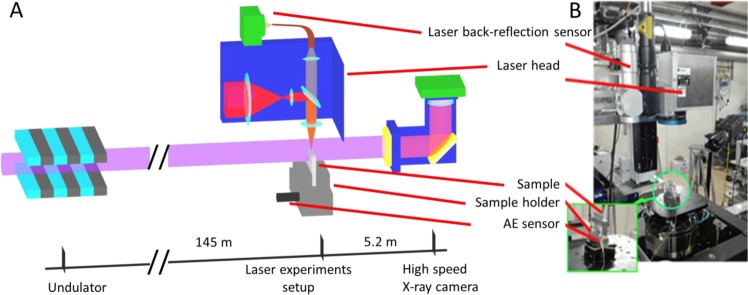
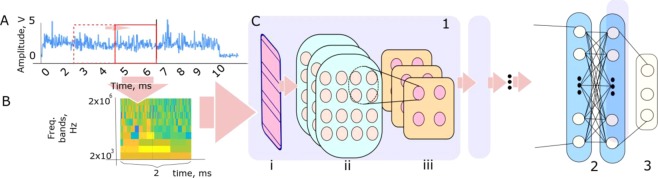
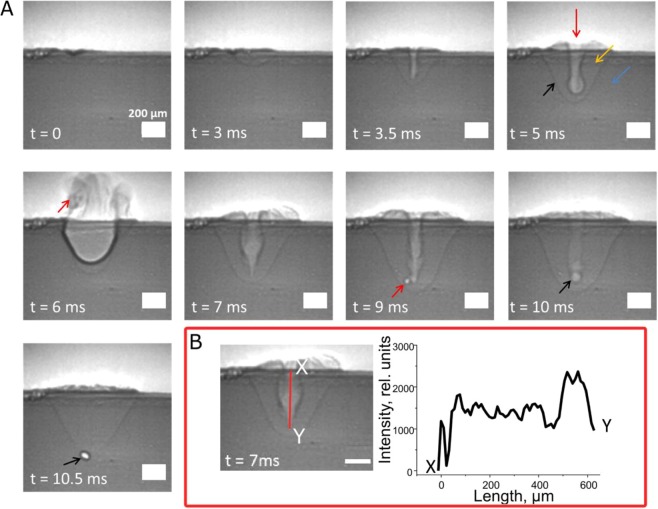
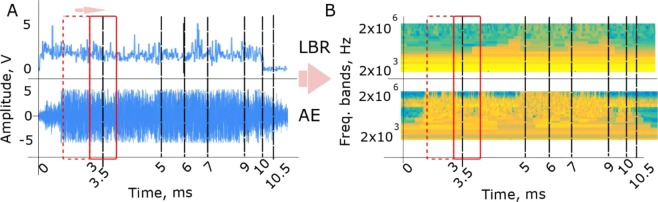
Laser welding is a key technology for many industrial applications. However, its online quality monitoring is an open issue due to the highly complex nature of the process. This work aims at enriching existing approaches in this field. We propose a method for real-time detection of process instabilities that can lead to defects. Hard X-ray radiography is used for the ground truth observations of the sub-surface events that are critical for the quality. A deep artificial neural network is applied to reveal the unique signatures of those events in wavelet spectrograms from the laser back-reflection and acoustic emission signals. The autonomous classification of the revealed signatures is tested on real-life data, while the real-time performance is reached by means of parallel computing. The confidence of the quality classification ranges between 71% and 99%, with a temporal resolution down to 2 ms and a computation time per classification task as low as 2 ms. This approach is a new paradigm in the digitization of industrial processes and can be exploited to provide feedbacks in a closed-loop quality control system.
激光焊接是许多工业应用中的关键技术。然而,由于该过程的高度复杂性,其在线质量监测仍是一个悬而未决的问题。这项工作旨在丰富该领域现有的方法。我们提出了一种实时检测可能导致缺陷的过程不稳定的方法。硬X射线成像用于对质量至关重要的次表面事件的地面真实观测。应用深度人工神经网络从激光背反射和声发射信号中揭示小波频谱图中这些事件的独特特征。在实际数据上测试所揭示特征的自主分类,同时通过并行计算实现实时性能。质量分类的置信度在71%至99%之间,时间分辨率低至2毫秒,每个分类任务的计算时间低至2毫秒。这种方法是工业过程数字化的一种新范式,可用于在闭环质量控制系统中提供反馈。