Hong Soonil, Park Byoungwook, Balamurugan Chandran, Lee Jinho, Kwon Sooncheol
Division of Advanced Materials, Korea Research Institute of Chemical Technology (KRICT), Daejeon 34114, Republic of Korea.
Department of Energy and Materials Engineering, Dongguk University-Seoul, Seoul 04620, Republic of Korea.
Heliyon. 2023 Jul 12;9(7):e18209. doi: 10.1016/j.heliyon.2023.e18209. eCollection 2023 Jul.
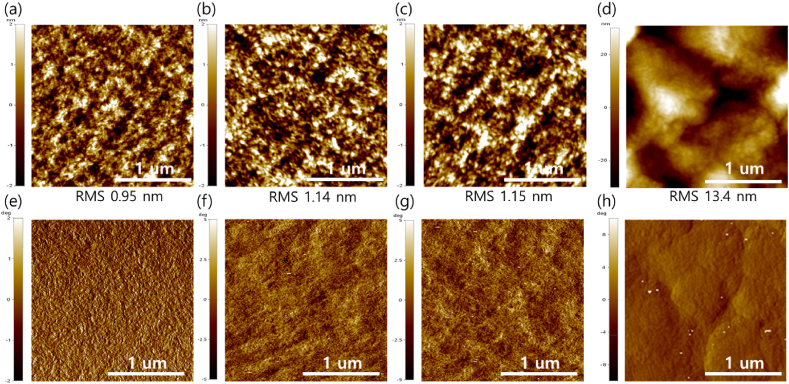
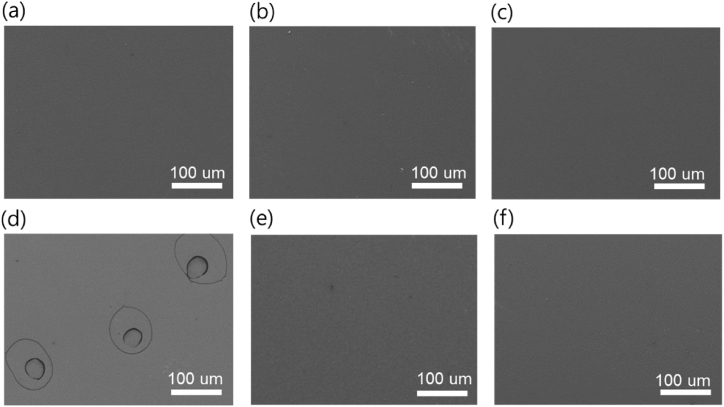
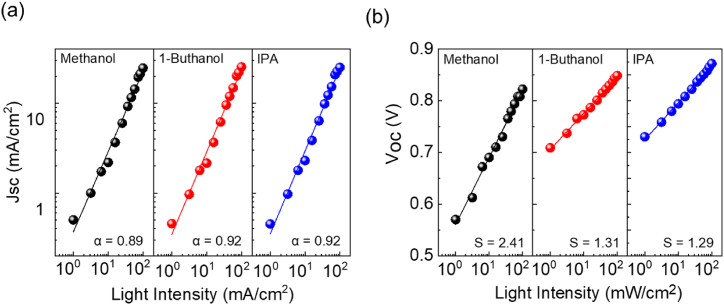
Efforts to commercialize organic solar cells (OSCs) by developing roll-to-roll compatible modules have encountered challenges in optimizing printing processes to attain laboratory-level performance in fully printable OSC architectures. In this study, we present efficient OSC modules fabricated solely through printing methods. We systematically evaluated the impact of processing solvents on the morphology of crucial layers, such as the hole transport, photoactive, and electron transport layers, applied using the doctor blade coating method, with a particular focus on processability. Notably, deposition of charge transport layer using printing techniques is still a challenging task, mainly due to the hydrophobic characteristic of the organic photoactive layer. To overcome this issue, we investigated the solvent effect of a well-studied cathode interlayer, bathocuproine (BCP). We were able to form a uniform thin BCP film (∼10 nm) on a non-fullerene based organic photoactive layer using the doctor bladed coating method. Our results showed that the use of volatile alcohols in the BCP processing required a delicate balance between wettability and vaporization, which contrasted with the results for spin-coated films. These findings provide important insights into improving the efficiency of printing techniques for depositing charge transport layers. The fully printed OSC modules, featuring uniform and continuous BCP layer formation, achieved an impressive power conversion efficiency of 10.8% with a total area of 10.0 cm and a geometrical fill factor of 86.5%.
通过开发卷对卷兼容模块将有机太阳能电池(OSC)商业化的努力,在优化印刷工艺以在完全可印刷的OSC架构中实现实验室级性能方面遇到了挑战。在本研究中,我们展示了仅通过印刷方法制造的高效OSC模块。我们系统地评估了加工溶剂对关键层形态的影响,这些关键层如使用刮刀法施加的空穴传输层、光活性层和电子传输层,特别关注可加工性。值得注意的是,使用印刷技术沉积电荷传输层仍然是一项具有挑战性的任务,主要是由于有机光活性层的疏水性。为了克服这个问题,我们研究了一种经过充分研究的阴极中间层——浴铜灵(BCP)的溶剂效应。我们能够使用刮刀法在基于非富勒烯的有机光活性层上形成均匀的BCP薄膜(约10纳米)。我们的结果表明,在BCP加工中使用挥发性醇类需要在润湿性和蒸发之间进行微妙的平衡,这与旋涂膜的结果形成对比。这些发现为提高沉积电荷传输层的印刷技术效率提供了重要见解。完全印刷的OSC模块,具有均匀且连续的BCP层形成,在总面积为10.0平方厘米且几何填充因子为86.5%的情况下,实现了令人印象深刻的10.8%的功率转换效率。